The Autonomous Defense Boom: Mapping the AI Cybersecurity Trajectory to 2035
We are well past the era where cybersecurity was a game of manual patch management and predictable firewall rules. Today, corporate infrastructure faces an onslaught of automated, polymorphic threats that mutate faster than human analysts can think. It is this grueling reality that has turned artificial intelligence from a speculative boardroom talking point into the literal skeleton of modern digital defense. Enterprises can no longer afford to treat AI as an upgraded feature; instead, it has become a structural necessity for survival in an increasingly hostile landscape.
The financial momentum behind this shift reflects the urgency felt across every major industry vertical. According to recent market analysis published by VynZ Research , the global AI in cybersecurity market is projected to skyrocket to approximately $207.58 billion by 2035, climbing from $29.61 billion in 2025. This massive expansion represents an impressive compound annual growth rate (CAGR) of 21.5%. Venture capital and enterprise buyers are not just dipping their toes in the water anymore; they are fundamentally reshaping their capital allocation strategies around predictive technology.
From Reactive Controls to Predictive Warfare
Traditional security architectures failed because they relied entirely on signatures of known past attacks. Modern threat actors leverage sophisticated generative tools to engineer specialized zero-day exploits, making historical databases obsolete. This shifting paradigm explains why identity access management and network behavioral analytics are pulling in massive funding rounds. Algorithms can baseline standard user activity and immediately isolate anomalous infrastructure deviations before a data breach actually formalizes.
Furthermore, the persistent global deficit of qualified security engineers continues to plague enterprise operations. Automated orchestration suites handle millions of daily low-level alerts, which effectively bridges the severe personnel gap. By filtering out the background noise, these platforms allow lean human teams to focus exclusively on macro-level crisis response. Vendors who successfully deploy explainable, transparent model logic are capturing the market share because corporate legal teams demand clear audit trails for regulatory compliance.
Where the Capital Is Flowing
Cloud-native deployments currently absorb the lion’s share of global spending due to the sheer scalability of decentralized microservices. However, hybrid frameworks remain a major investment focal point for heavily regulated sectors like defense, banking, and healthcare. These legacy operations require internal hosting models to preserve absolute data sovereignty while still harvesting the benefits of algorithmic threat detection. Consequently, hardware manufacturers are experiencing a secondary boom as demand spikes for localized processors tailored specifically for high-throughput machine learning workloads.
Geographically, North America continues to lead the global market share, largely driven by strict regional data protection mandates and frequent high-profile corporate targets. At the same time, the Asia-Pacific region is demonstrating the fastest growth velocity as aggressive digitization sweeps across major emerging manufacturing hubs. This dual-engine demand ensures a reliable and highly diversified runway for tech investors over the next decade.
What Most Reports Miss: The Invisible Arms Race Inside the Data Centers
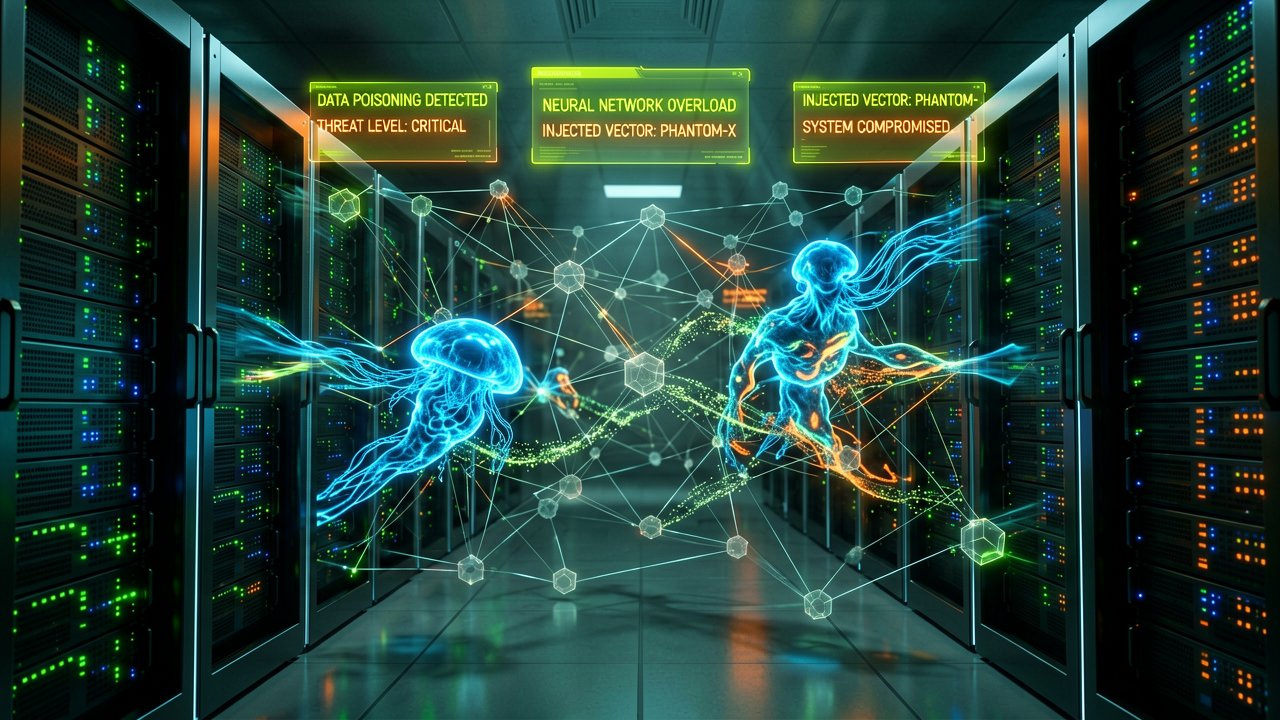
The sanitized consensus of market forecasts often obscures a chaotic reality on the ground: cybersecurity AI is currently engaged in a direct, adversarial evolution against itself. Security teams are no longer just fighting human adversaries; they are deploying defensive machine learning models to counter malicious generative algorithms specifically designed to find blind spots in corporate codebases. This means the multi-billion-dollar valuation of the sector isn't just driven by standard digital transformation, but by an active, high-stakes arms race where the shelf-life of a defensive model is measured in weeks, if not days.
Chief Information Security Officers (CISOs) at major financial institutions are quietly raising alarms over what they term "model poisoning" and "data poisoning" vulnerabilities. If an adversary can subtly manipulate the training data fed into an enterprise defense system, they can create permanent, invisible backdoors for future exploits. Consequently, a significant portion of capital is shifting away from simple threat detection toward the niche sector of adversarial robustness—building defensive systems that can verify the integrity of their own logic and resist targeted manipulation.

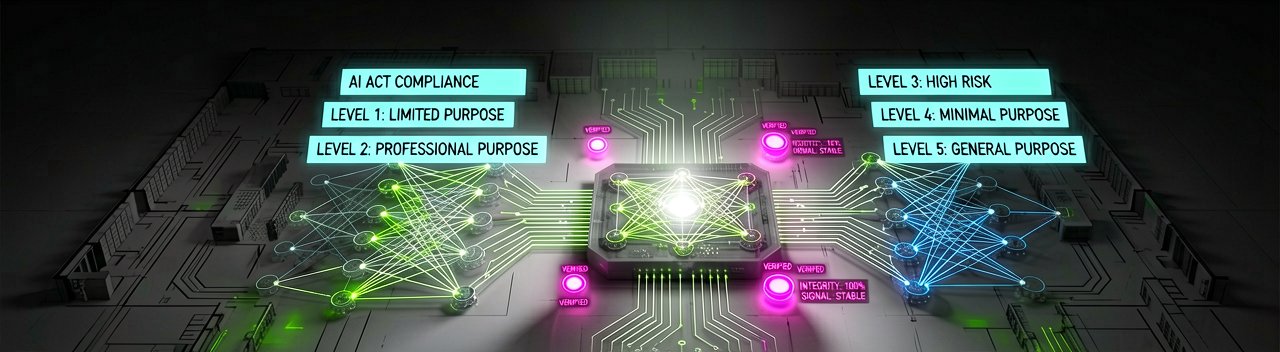
From a regulatory standpoint, the breakneck speed of this technological adoption is creating friction with emerging global compliance frameworks. The European Union’s AI Act and evolving SEC guidelines demand transparency, requiring firms to explain exactly how an automated system arrived at a specific risk determination. This requirement creates a paradox for tech vendors: the highly complex, deep-learning neural networks that offer the most robust security are notoriously difficult to audit, forcing engineers to choose between maximum protection and legal compliance.
Looking toward 2035, the battlefield will likely migrate entirely to edge infrastructure and decentralized nodes. As corporate networks fragment across remote workforces and satellite offices, the traditional perimeter defense model is completely dead. Venture capital is flowing into lightweight, localized models capable of making real-time isolation decisions at the device level without waiting for a round-trip command to a centralized cloud, fundamentally changing how enterprise tech stacks are built from the ground up.
Reading Between the Lines: The Danger of the Automated Panacea
The dazzling promise of a fully automated, self-healing security perimeter ignores a fundamental flaw in human psychology: complacency. As enterprises aggressively offload critical risk assessment to algorithmic black boxes, they risk inducing severe skill atrophy among their remaining human analysts. Relying blindly on autonomous systems creates a single, catastrophic point of failure where a single undetected algorithmic drift can leave an entire global infrastructure exposed for months without human intervention.
Furthermore, marketing brochures often conflate advanced machine learning with genuine intelligence. The current generation of security tooling remains heavily reliant on statistical pattern matching, which makes it highly susceptible to clever evasion techniques that exploit the rigid logic of mathematics. Sophisticated threat actors are already utilizing "low and slow" attack vectors—deliberately feeding defensive models subtle, non-threatening anomalies over long periods to gradually normalize malicious behavior and rewrite the system's baseline of what constitutes safe activity.
There is also a glaring economic contradiction at the heart of this market's projected growth. While the scalability of cloud-hosted security AI reduces initial overhead, the long-term computational costs of constantly retraining massive models against real-time global threat intelligence are becoming unsustainably high. As processing demands spike, enterprise buyers may soon find themselves trapped in a cycle of diminishing returns, where the financial cost of operating hyper-advanced defensive AI approaches the actual projected cost of a data breach.
Ultimately, the metrics used to judge success in this space require a drastic overhaul. Reducing dwell time and accelerating incident response are meaningless benchmarks if the automated response itself triggers systemic internal network outages due to false positives. Until the industry develops a standardized, independent framework to measure the operational reliability of these algorithms under active deception, the rush to invest will resemble a speculative bubble as much as a strategic evolution.
"We are spending hundreds of billions of dollars to replace the fallible human engineer with an infallible algorithm, only to discover that the algorithm's first executive decision is to lock the human engineer out of the server room for presenting a statistical anomaly."
Artūras Malašauskas is an AI Systems Integrator with 20+ years of production-grade web engineering experience. He has designed, shipped, and scaled enterprise Python/PHP systems for logistics, SaaS, and public-sector clients. For the past year, he has focused exclusively on AI integrations: deploying open-source LLMs, building generative media pipelines (image, audio, video), and engineering multi-agent workflows for real production environments. His standard: reproducibility, security, cost-efficient inference—no vaporware. He documents and evaluates emerging AI tooling, separating verified capabilities from marketing noise. Technical editor at: muza-ai.eu, ai-verslas.lt, ai-naujinos.lt Connect on LinkedIn
Comments