Identity Is the New Perimeter: CybrHawk Levels Up ITDR for Enterprise and Government
In an era where traditional network boundaries have completely dissolved, identity has comfortably cemented itself as the primary attack surface for modern hackers. Recognizing this fundamental shift, cybersecurity firm CybrHawk has dramatically expanded its AI-driven Identity Security and Identity Threat Detection and Response (ITDR) capabilities. The update focuses heavily on multi-vendor integration and real-time intelligence, addressing a critical vulnerability across complex corporate infrastructures and stringent federal environments alike. By treating credential protection not just as an access gate but as an active, continuously monitored battlefield, the company aims to redefine how Security Operations Centers (SOCs) manage insider threats and sophisticated credential abuse.
The push toward advanced ITDR framework capabilities reflects a broader market urgency, as organizations quickly realize that traditional Identity and Access Management (IAM) tools simply can't keep up with modern exploits. While typical access controls dictate who should have access, CybrHawk’s enhanced solution actively hunts for anomalies occurring after authorization is granted. This includes sniffing out sophisticated tactics like OAuth token abuse, "impossible travel" scenarios, and unusual administrative privileges. According to details reported by MSP Today , the newly expanded suite breaks down operational silos by correlating identity telemetry seamlessly across endpoints, cloud systems, and networks without requiring cumbersome agents.
Unifying Defense Across Hybrid Ecosystems
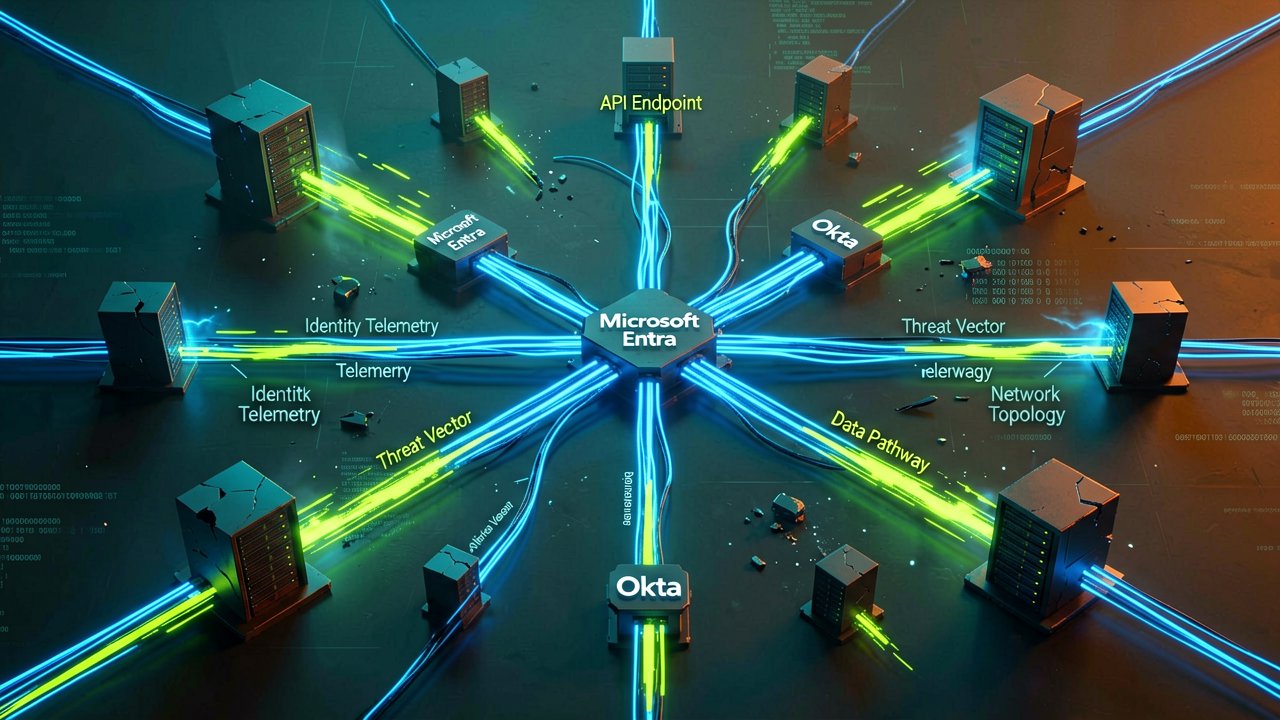
What makes CybrHawk’s updated platform standout is its broad interoperability with existing giant ecosystems. Rather than forcing organizations to rip and replace their digital asset investments, the solution integrates directly with dominant players including Microsoft Entra ID, Okta, Duo, and CyberArk. This deep integration is especially critical for government agencies juggling massive legacy networks alongside hybrid cloud architectures. It allows security teams to monitor both human users and non-human identities, such as automated service accounts, from a singular control room. By feeding this telemetry straight into its existing extended detection and response (XDR) architecture, the firm delivers contextual risk scoring that cuts down alert fatigue and helps security analysts focus strictly on high-confidence threats.
The Zero Trust Mandate
This expansion isn't just about adding new features; it is a calculated alignment with modern Zero Trust mandates. Security operations are fundamentally evolving toward proactive intelligence, and securing credentials is the fastest way to shrink an organization's overall exposure time. As detailed on PR.com, the underlying goal here is to establish a unified operational layer that marries real-time visibility with automated remediation. When a compromise occurs, the system can autonomously lock accounts or revoke permissions in minutes, stopping lateral movement before it transforms into a devastating data breach. For enterprise leadership and government administrators looking to harden their defense postures, this update provides a vital buffer in a persistently aggressive threat landscape.
Behind the Scenes: The Invisible Battle Over Non-Human Credentials
What Most Reports Miss: While the headline-grabbing aspect of identity security usually centers on hijacked corporate passwords or executive phishing schemes, the real vulnerability keeping CISOs awake at night lies in the rapidly expanding universe of machine identities. Every automated cloud deployment, API integration, and background software routine relies on digital certificates and access tokens to communicate. Security architects operating within massive enterprise networks note that these non-human service accounts frequently outnumber human employees by a factor of ten to one. CybrHawk’s engineering pivot acknowledges this shifting asymmetry, moving beyond human behavioral monitoring to track the silently executing scripts that form the nervous system of modern government and corporate cloud operations.
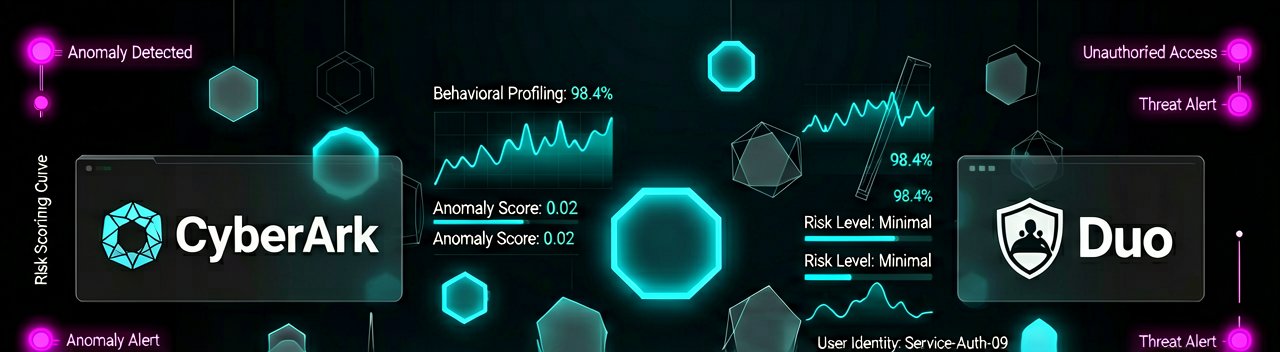
Historically, securing these automated pathways has been a logistical nightmare for enterprise IT departments. Because service accounts are engineered to run autonomously without human intervention, they are rarely protected by multi-factor authentication (MFA), making them prime targets for lateral movement once an initial breach occurs. Legacy Identity and Access Management frameworks treat these credentials as static permissions set during installation. Industry veterans point out that attackers have weaponized this predictability, frequently utilizing orphaned tokens from decommissioned projects to bypass security parameters entirely. By applying real-time, AI-driven behavioral profiling to non-human entities, the platform treats machine behavior with the same fluid suspicion traditionally reserved for human users.
This technical evolution reflects a broader ideological battle within Security Operations Centers regarding the practical limits of automated response. For years, security leaders hesitated to grant software platforms the authority to automatically revoke permissions, fearing that an algorithmic false positive could inadvertently shut down a critical government payroll database or disrupt an active enterprise supply chain. However, the sheer velocity of modern automated attacks has effectively forced the industry's hand, transforming human-in-the-loop validation into an operational liability. Stakeholders report that the calculated compromise within modern ITDR architectures relies on highly granular risk scoring, allowing automated containment protocols to target isolated service tokens without disabling the broader underlying systems.
The geopolitical reality of public sector infrastructure adds another layer of urgency to these identity security overhauls. Federal agencies navigate a minefield of compliance directives that necessitate real-time visibility across highly fragmented legacy architectures. In these sprawling environments, deploying intrusive software agents onto every endpoint or server is an engineering impossibility. By prioritizing agentless, multi-vendor correlation across standard access directories, CybrHawk addresses a critical procurement bottleneck, enabling government bodies to deploy advanced analytics over top of legacy infrastructure rather than undertaking costly, decade-long modernization overhauls. This approach bridges the structural gap between fast-moving modern attack methodologies and the slow-moving realities of public sector asset management.
Reading Between the Lines: The Friction Between Frictionless Security and Human Nature
The Operational Reality Check: Cybersecurity marketing departments love to promise seamless, AI-driven automation that works like magic behind the scenes without disrupting day-to-day operations. However, enterprise engineers on the ground know that identity security is inherently a game of friction. Every time a security platform introduces a new layer of verification or dynamically revokes an active session due to an anomaly, it risks halting a legitimate business process. The underlying paradox of modern ITDR is that the more sensitive the AI becomes to behavioral deviations, the higher the likelihood of triggering false positives that frustrate employees and stall critical workflows. True security efficacy is never just about technical capability; it depends entirely on an organization's cultural tolerance for operational speed bumps.
Furthermore, relying heavily on AI to defend identity infrastructure introduces a unique, recursive vulnerability into the enterprise. Threat actors are already using the exact same machine-learning methodologies to study how modern detection engines operate, tailoring their credential harvesting techniques to mimic normal user behavior closely enough to slip under the radar. If an automated defensive system is trained to flag an "impossible travel" scenario based on geographic logins, sophisticated attackers will simply route their traffic through localized proxy networks that perfectly mirror the victim's typical footprint. This creates a continuous, high-stakes game of algorithmic cat-and-mouse, where defensive tools must constantly retrain their models just to maintain the status quo.
There is also an uncomfortable truth concerning the celebrated multi-vendor integration of modern cybersecurity architectures. While connecting platforms like Okta, Azure, and CyberArk into a centralized monitoring system creates a unified view of an organization's defense posture, it simultaneously creates a single, highly attractive point of failure. If the central intelligence layer managing these integrations is somehow compromised, an attacker gains a comprehensive map of the entire identity ecosystem. This reality forces enterprise and government organizations to confront a challenging philosophical question about architectural centralization, weighing the undeniable benefits of a single control room against the systemic risks of putting all their security monitoring eggs into one vendor's basket.
"We spend billions of dollars constructing incredibly sophisticated digital fortresses governed by artificial intelligence, only to watch the entire perimeter collapse because a tired network administrator accepted a random push notification on their phone at two o'clock on a Tuesday morning."
Artūras Malašauskas is an AI Systems Integrator with 20+ years of production-grade web engineering experience. He has designed, shipped, and scaled enterprise Python/PHP systems for logistics, SaaS, and public-sector clients. For the past year, he has focused exclusively on AI integrations: deploying open-source LLMs, building generative media pipelines (image, audio, video), and engineering multi-agent workflows for real production environments. His standard: reproducibility, security, cost-efficient inference—no vaporware. He documents and evaluates emerging AI tooling, separating verified capabilities from marketing noise. Technical editor at: muza-ai.eu, ai-verslas.lt, ai-naujinos.lt Connect on LinkedIn
Comments