Beyond the Hype: How ReliaQuest is Grounding Agentic AI in the Real-World SOC at EXPONENT2026
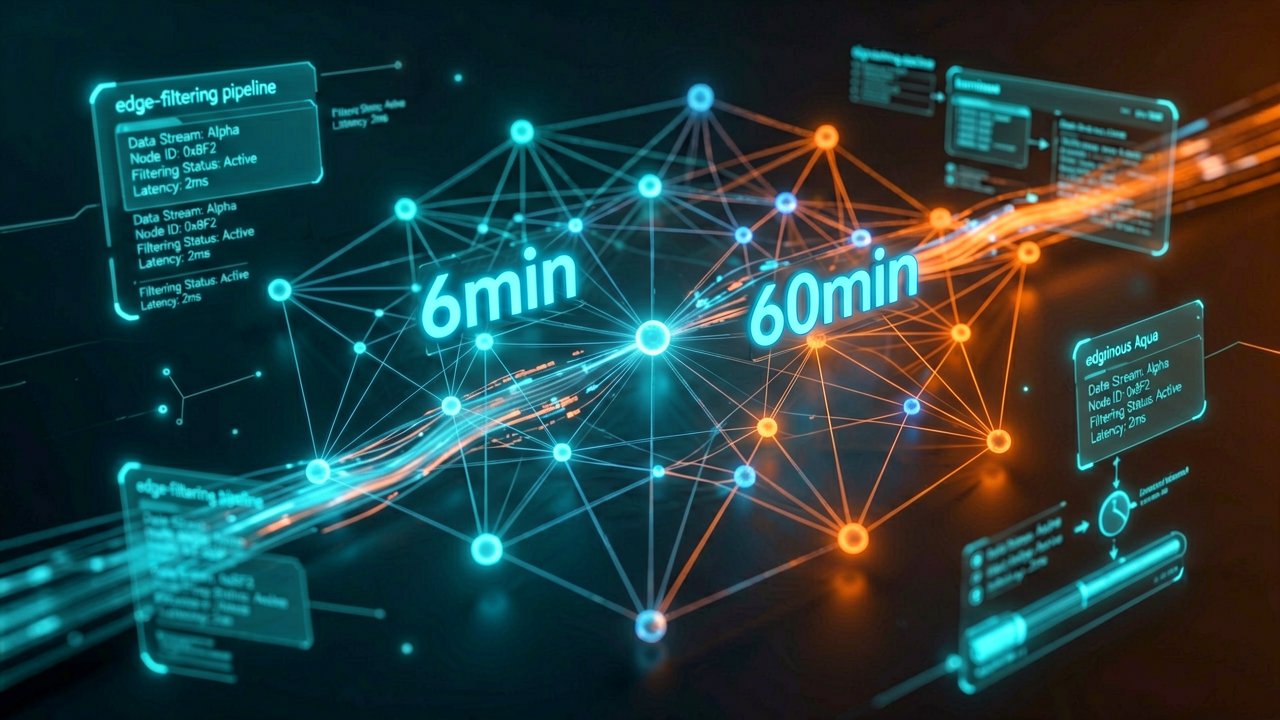
Every security vendor under the sun is currently selling some flavor of artificial intelligence, but there is a massive gulf between marketing slides and the brutal reality of an enterprise Security Operations Center (SOC). At the recent EXPONENT2026 conference in London, ReliaQuest skipped the boilerplate industry fluff to deliver a much-needed reality check on what it actually takes to defend modern infrastructure at machine speed. According to a recap by ReliaQuest, traditional SIEM-centric detection models are fundamentally upside-down; while the average SIEM takes nearly an hour to index and detect a threat, advanced adversaries are managing full intrusion-to-exfiltration cycles in as little as six minutes. To close this terrifying window, the conversation has to shift away from reactive data hoarding and toward continuous, intelligent automation.
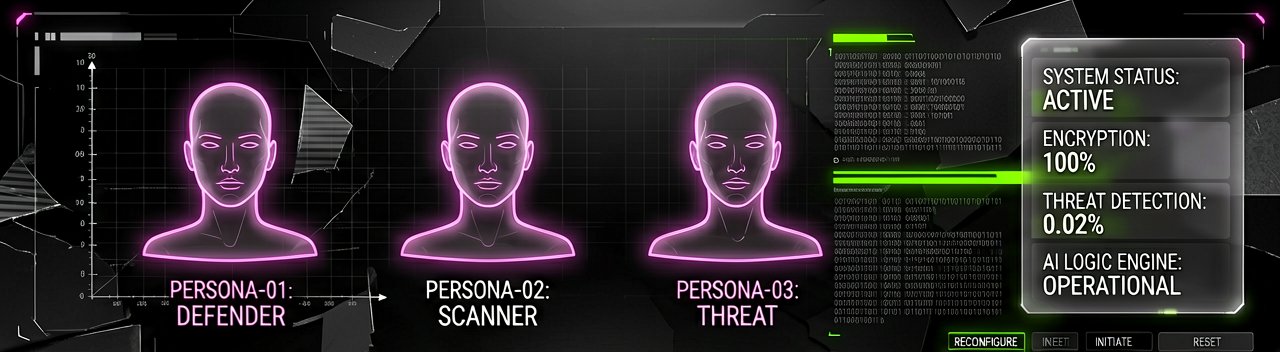
The star of the show was undoubtedly the company's evolution of its flagship platform, GreyMatter, which is doubling down on "agentic AI" to fundamentally re-architect how human analysts interact with telemetry. Rather than just deploying a passive chatbot to answer basic administrative questions, ReliaQuest showcased specialized, role-based AI personas that operate autonomously across the detection and response lifecycle. This approach recognizes that security is a team sport where human expertise must be multiplied rather than replaced. By injecting automation directly into the transit pipeline before data even reaches costly storage layers, enterprise teams can finally start predicting and intercepting threats in real time instead of just cleaning up the aftermath.
Flipping the Script on Attacker Velocity
The core message driving EXPONENT2026 is that enterprise environments have become far too complex for manual human triage to survive on its own. Attackers are aggressively adopting AI to scale phishing campaigns, automate reconnaissance, and exploit software vulnerabilities faster than traditional operations can issue a patch. ReliaQuest's answer isn't to dump more disjointed tools into an already fragmented tech stack, but to use agentic workflows to orchestrate existing security investments seamlessly. This strategy helps cash-strapped enterprises unlock hidden value from their current architecture, lowering total cost of ownership while driving mean times to contain down to mere minutes.
Operationalizing the Modern AI Teammate
What makes ReliaQuest's perspective refreshing is its focus on measurable outcomes over speculative tech trends. During the event's deep-dive sessions, product leaders demonstrated how these multi-agent AI systems take on the repetitive, high-time tasks that typically burn out human analysts—like asset discovery, threat hunting, and initial alert stitching. By offloading this cognitive load to autonomous agents that never experience fatigue, security leaders can finally pivot their engineering talent toward high-level strategy and proactive defense planning. Ultimately, EXPONENT2026 proved that the future of cybersecurity isn't about waiting for a single AI silver bullet, but about building a smarter, faster, and tightly integrated operational ecosystem.
What Most Reports Miss: The Friction of Frictionless Security
While marketing materials often paint a picture of a seamless, plug-and-play AI transition, the security leaders speaking on the sidelines of EXPONENT2026 acknowledged a much thornier reality. The transition from legacy SIEM environments to an agentic AI-driven SOC requires dismantling deeply entrenched corporate habits. Historically, security teams have been rewarded for data hoarding—collecting every scrap of server log and network flow "just in case." ReliaQuest's new model challenges this dynamic by forcing organizations to filter and act on telemetry at the edge, an operational shift that requires immense trust in automation. This structural shift can initially trigger anxiety among veteran analysts who are accustomed to manual validation at every single step of the incident response pipeline.
To overcome this cultural inertia, ReliaQuest is leaning heavily on the concept of human-in-the-loop validation for its autonomous agent personas. Chief Information Security Officers (CISOs) at the event emphasized that they cannot simply hand over the keys of their infrastructure to unmonitored algorithms. Instead, the GreyMatter platform is designed to act as a highly competent chief of staff rather than a rogue actor. The AI agents handle the grueling, multi-step investigation processes—such as cross-referencing user behavior with historical access logs across cloud environments—and then present a curated timeline to human supervisors. This approach keeps final containment authority squarely in human hands, striking a delicate balance between machine velocity and human accountability.
From a historical perspective, this pivot to agentic workflows represents the third major evolution of the modern SOC. The first era relied entirely on human-centric analysis of raw logs, which quickly became unsustainable as digital footprints exploded. The second era introduced basic Security Orchestration, Automation, and Response (SOAR) playbooks, which failed to scale because they were too rigid and broke whenever an attacker slightly altered their tactics. By moving into this third era of flexible, context-aware AI agents, defenders are finally gaining the adaptability needed to match the fluid nature of modern cyber threats.
Furthermore, stakeholder discussions highlighted the economic realities driving this technical evolution. With macroeconomic pressures tightening enterprise budgets, security leaders are facing intense scrutiny over their software spend and cloud storage bills. By filtering out the noise and prioritizing high-fidelity alerts before data hits expensive repositories, ReliaQuest's framework addresses a major financial pain point. It transforms AI from an expensive luxury item into a core tool for cost containment, allowing organizations to maximize the ROI of their existing tech stacks while simultaneously shrinking their digital attack surface.

Reading Between the Lines: The Illusion of Total Autonomy
The tech sector’s current infatuation with agentic AI assumes a level of deterministic reliability that LLM-backed systems simply do not possess in the wild. While ReliaQuest’s presentation at EXPONENT2026 offered a compelling blueprint for autonomous threat hunting, it glosses over the inherent unpredictability of multi-agent orchestration. In a complex enterprise environment, independent AI agents executing specialized tasks can inadvertently create feedback loops, misinterpreting each other’s automated actions as malicious behavior. This creates a paradox where tools deployed to eliminate alert fatigue could inadvertently generate an entirely new category of algorithmic noise that human teams must then deconstruct.
Moreover, there is a fundamental contradiction in trying to out-automate an adversary who operates without corporate or regulatory guardrails. Security vendors frequently boast about reducing containment windows to minutes, yet these metrics are typically measured against known attack patterns. When faced with highly novel, zero-day techniques, an AI agent trained on historical telemetry is just as blind as a legacy SIEM. The danger lies in over-reliance; a SOC that over-automates runs the risk of skill atrophy among its human staff, leaving junior analysts ill-equipped to handle the complex, edge-case anomalies that the AI inevitably drops or misclassifies.
The broader economic promise of lowering total cost of ownership also demands closer inspection. While filtering data before it reaches costly storage tiers is an excellent engineering concept, running continuous, multi-agent AI reasoning pipelines introduces significant API and compute overhead. Enterprises may find that the savings realized on their SIEM licenses are simply shifted over to cloud infrastructure and model inference costs. True operational efficiency will not be achieved by swapping one heavy budget line item for another, but by precisely defining where algorithmic speed ends and human intuition must take over.
"Ultimately, the modern enterprise is just trading an old nightmare for a shinier one; we used to worry that our analysts were sleeping through the alerts, and now we get to worry that our autonomous AI agents are hallucinating a breach based on a perfectly normal, late-night software update."
Artūras Malašauskas is an AI Systems Integrator with 20+ years of production-grade web engineering experience. He has designed, shipped, and scaled enterprise Python/PHP systems for logistics, SaaS, and public-sector clients. For the past year, he has focused exclusively on AI integrations: deploying open-source LLMs, building generative media pipelines (image, audio, video), and engineering multi-agent workflows for real production environments. His standard: reproducibility, security, cost-efficient inference—no vaporware. He documents and evaluates emerging AI tooling, separating verified capabilities from marketing noise. Technical editor at: muza-ai.eu, ai-verslas.lt, ai-naujinos.lt Connect on LinkedIn
Comments