Why KT and Seoul National University’s New Alliance Is the Blueprint for AI-Era Cyber Defense

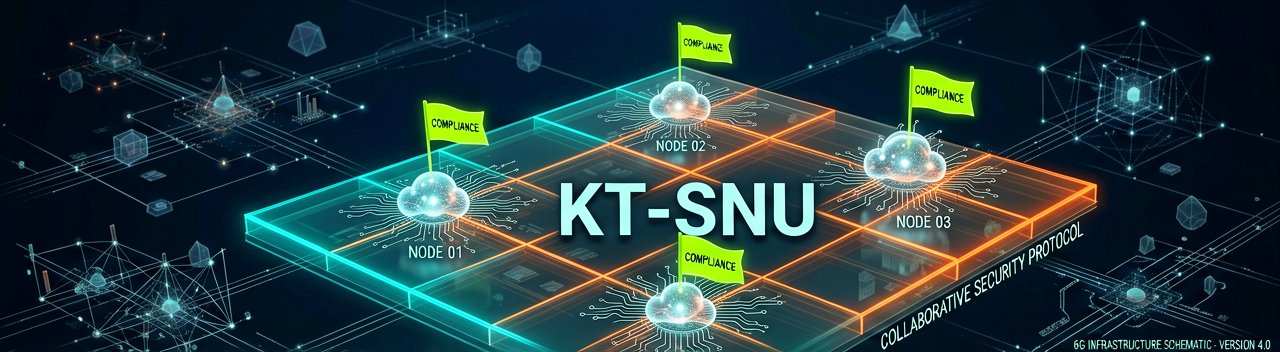
South Korea’s cybersecurity landscape is undergoing a massive shift, and the corporate-academic pipeline is scrambling to keep pace. Telecom giant KT Corporation has officially signed a memorandum of understanding with Seoul National University (SNU) to build a specialized talent pool for the artificial intelligence era. Reported by Seoul Economic Daily, this industry-academia partnership aims to establish a next-generation convergence security curriculum designed to train future leaders who understand both cutting-edge code and complex regulatory compliance.
The move comes at a critical time as the traditional boundary lines of data defense dissolve. Rather than merely teaching students how to patch legacy systems, this newly minted program will dive straight into the deep end of modern infrastructure, covering zero-trust architectures, cloud engineering, and 6G network security. This isn't just a basic corporate sponsorship; it is a calculated effort to tackle the escalating sophistication of automated, AI-driven cyber threats targeting Asian infrastructure.
Moving Beyond Patchwork Security
For years, enterprise defense relied on digital walls—firewalls, isolated networks, and localized software. But as generative AI models introduce new vulnerabilities like prompt injection, data poisoning, and deepfake-driven social engineering, those old perimeter defenses look increasingly outdated. KT and SNU are trying to build what they call "convergence talent." According to coverage by Asia Business Daily, KT CEO Park Yoon-young emphasized that competitiveness in this new era relies entirely on multi-disciplinary professionals who grasp technology, data networks, and policy simultaneously.
What makes this curriculum notable is its strict balance between technical expertise and administrative oversight. Trainees will study communication networks alongside personal information protection laws and corporate governance frameworks. By blending these fields, the initiative avoids producing highly specialized engineers who lack context on compliance, or policymakers who don't understand how cloud networks actually function.
The 6G and Zero-Trust Imperative
The timing of the partnership aligns perfectly with South Korea's aggressive timeline for next-generation telecommunications. KT currently chairs the nation's AI Network Alliance, which aims to finalize international 6G standards by 2028 and hit commercialization by 2030, as detailed by BigGo Finance . Securing an ultra-low-latency, hyper-connected 6G ecosystem requires entirely different security models than the ones we use today, demanding baked-in zero-trust protocols right from the development phase.
By embedding corporate engineers directly into SNU's research labs, KT gets a first look at emerging defensive technologies while steering academic research toward real-world commercial problems. If successful, this joint venture could give South Korean tech firms a distinct structural advantage, transforming raw academic research into defensive software capable of protecting public utilities and enterprise operations alike.
What Most Reports Miss: The Looming Sovereign Tech Divide
While mainstream coverage focuses heavily on the curriculum details, the underlying motivation for the KT-SNU alliance points to a far deeper anxiety within South Korea’s tech corridor. The nation is currently caught in a geopolitical pincer movement between Western tech giants and regional infrastructure threats. For South Korea, achieving "sovereign AI" isn't just about cultural preservation; it is a matter of strict national defense. By locking in a pipeline of elite security researchers with Seoul National University, KT is attempting to insulate domestic networks from foreign supply chain vulnerabilities before commercial 6G deployment even begins.
Historically, industry-academia partnerships in Seoul have operated like straightforward recruitment pipelines, with companies trading equipment funding for early access to resumes. This partnership breaks that mold by actively co-authoring security policies that will likely influence the Korea Internet & Security Agency (KISA). Insiders note that the inclusion of legal compliance and governance in a hardcore engineering track signals a shift toward strategic defense. The goal is to build a defensive brain trust capable of writing the rulebook for AI auditing, rather than just reacting to zero-day exploits discovered abroad.
Furthermore, the initiative addresses a glaring structural weakness in the domestic venture capital ecosystem. Small-to-medium enterprises and local AI startups in Korea frequently rush products to market without robust security architectures due to severe budget constraints. By establishing a formalized convergence framework at SNU, KT plans to create standardized, open-source security protocols that can be exported to smaller firms. This approach recognizes that in a hyper-connected network, the telecom provider is only as secure as the weakest third-party application plugging into its grid.
The human capital flight to Silicon Valley also looms large over this agreement. South Korea routinely loses its top-tier computer science talent to massive international firms offering compensation packages that local enterprises struggle to match. By embedding students into KT's core AI Network Alliance projects early in their academic careers, the partnership creates a sticky, prestigious track that keeps elite minds working on national infrastructure. The strategy shifts the value proposition for students from a mere paycheck to a stake in building the country's foundational cyber defense systems.
Reading Between the Lines: The Friction Point of Corporate Academics
The idealized narrative of corporate-academic harmony rarely survives its first encounter with quarterly earnings reports. While KT and Seoul National University talk a grand game about cultivating "convergence talent," a fundamental contradiction lies at the heart of this alliance. Universities exist to publish research and advance open science, whereas telecom monopolies operate on proprietary code, strict data silos, and competitive secrecy. Reconciling SNU’s academic mandate with KT’s commercial imperatives will likely trigger intellectual property disputes, particularly when a student-designed breakthrough could either plug a national security hole or become a lucrative, patented enterprise product.
There is also a measure of skepticism to be applied to the timeline of this talent pipeline. Training a truly capable AI security architect isn't an overnight endeavor; it takes years of rigorous, foundational study across competing disciplines. Meanwhile, the cyber threat landscape evolves in weeks, driven by malicious LLMs that automate exploit generation at machine speed. By the time the first cohort of this convergence curriculum graduates, the zero-trust and 6G methodologies they studied in their first semesters may already be obsolete legacy tech. This reality forces the partnership into a perpetual game of catch-up, chasing an adversary that doesn't need to clear its curriculum changes with a university faculty board.
Furthermore, relying on a single dominant telecom provider to anchor the nation's academic defense strategy introduces its own systemic vulnerability. Monocultures are notoriously fragile in cybersecurity. By embedding KT's specific architectural preferences and corporate compliance philosophy into the premier national university, South Korea risks creating a generation of defensive experts who view every security problem through a rigid corporate lens. True resilience demands diverse, adversarial thinking, something that structured corporate training modules—no matter how well-funded—are notoriously bad at fostering.
"In the race to secure the future, we are essentially asking ivory tower academics to build digital armor for corporate fortresses, all while using a map that changes every time an adversary hits 'refresh.' We can only hope the students learn how to improvise, because by the time the syllabus is approved, the hackers will have already rewritten the exam."
Artūras Malašauskas is an AI Systems Integrator with 20+ years of production-grade web engineering experience. He has designed, shipped, and scaled enterprise Python/PHP systems for logistics, SaaS, and public-sector clients. For the past year, he has focused exclusively on AI integrations: deploying open-source LLMs, building generative media pipelines (image, audio, video), and engineering multi-agent workflows for real production environments. His standard: reproducibility, security, cost-efficient inference—no vaporware. He documents and evaluates emerging AI tooling, separating verified capabilities from marketing noise. Technical editor at: muza-ai.eu, ai-verslas.lt, ai-naujinos.lt Connect on LinkedIn
Comments