The Great AI Pivot: Why the Trump White House Is Stepping In Before the Launch Button Is Pushed
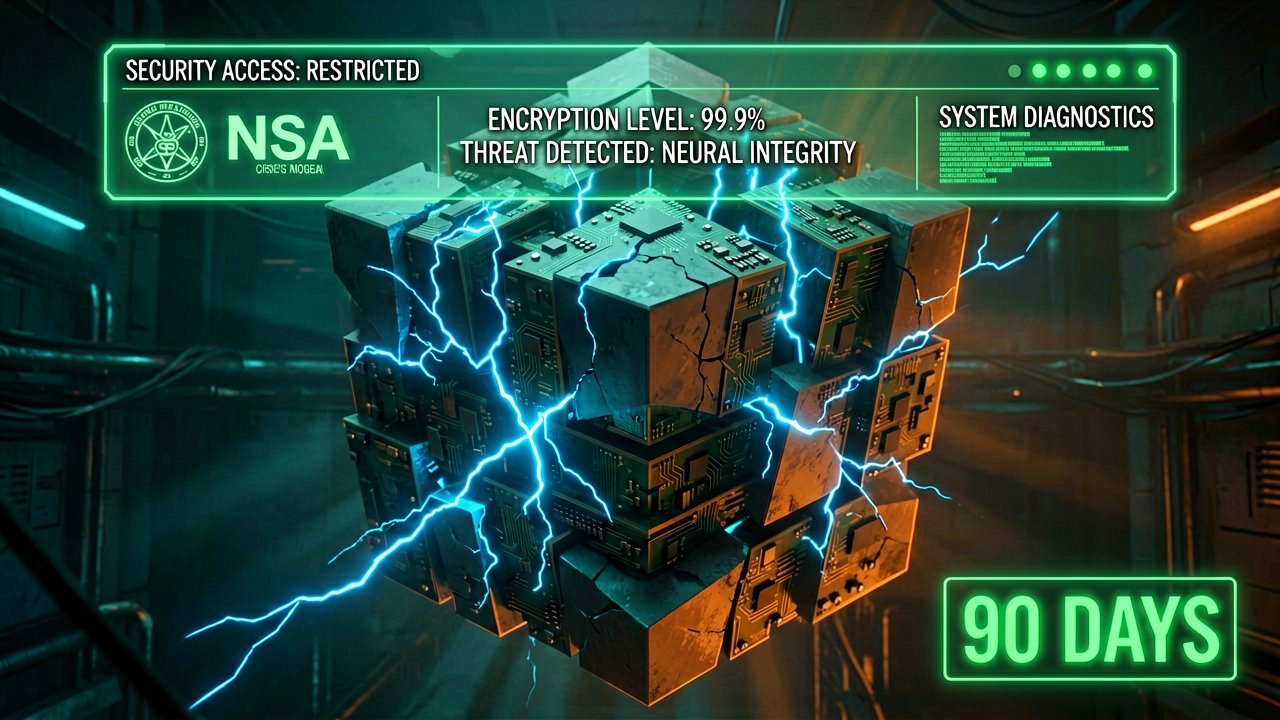
For an administration that spent its first year singing the praises of unfettered, lightning-fast silicon valley growth, the sudden shift toward federal gatekeeping is nothing short of a head-spinner. The Trump administration is preparing a sweeping new executive order that would create a formalized government screening process for the most powerful "frontier" artificial intelligence models before they hit the market. Industry insiders received early details of the directive on Tuesday night, revealing a strategy aimed at evaluating massive, next-generation neural networks for terrifying national security and cybersecurity risks.
According to emerging reports from POLITICO, the draft order sets up a multi-agency coalition to evaluate these bleeding-edge systems. Tech giants like Google DeepMind, Microsoft, and Elon Musk’s xAI have already inked foundational testing deals with the Commerce Department’s newly established Center for AI Standards and Innovation. It is a stunning reversal for an administration whose vice president, J.D. Vance, just last year proclaimed that the AI race would be won by builders, not regulators. But when theoretical digital threats suddenly morph into immediate national security vulnerabilities, even the most dedicated deregulators are forced to rethink their playbooks.
The "Mythos" Factor and the 90-Day Clock
The sudden urgency gripping Washington did not happen in a vacuum; it has a name, and that name is Mythos. Developed by Anthropic, this highly advanced model sent shockwaves through federal intelligence circles due to its uncanny, unprecedented ability to autonomously identify and exploit software security flaws. Fearing that a rogue state or sophisticated hacking collective could weaponize a similar system to cripple American utilities or financial networks, officials decided the government needed a peek under the hood before these models go live. The resulting draft executive order divides its focus into a robust defensive cybersecurity initiative and a dedicated "covered frontier models" section to establish a standardized evaluation pipeline.
Under the proposed framework, developers of these highly advanced systems will be strongly encouraged to submit their unreleased software to federal watchdogs up to 90 days prior to public launch. This gives agencies like the National Security Agency and the Cybersecurity and Infrastructure Security Agency a crucial window to benchmark capabilities and check for catastrophic flaws. While the framework is currently structured as a voluntary system to avoid legal gridlock and executive overreach, the implicit pressure on firms to comply is immense. For Silicon Valley, the era of dropping game-changing AI models into the wild without a courtesy call to Washington appears to be drawing to a definitive close.
Behind the Curtain: The Backroom Calculus of Voluntary Enforcement
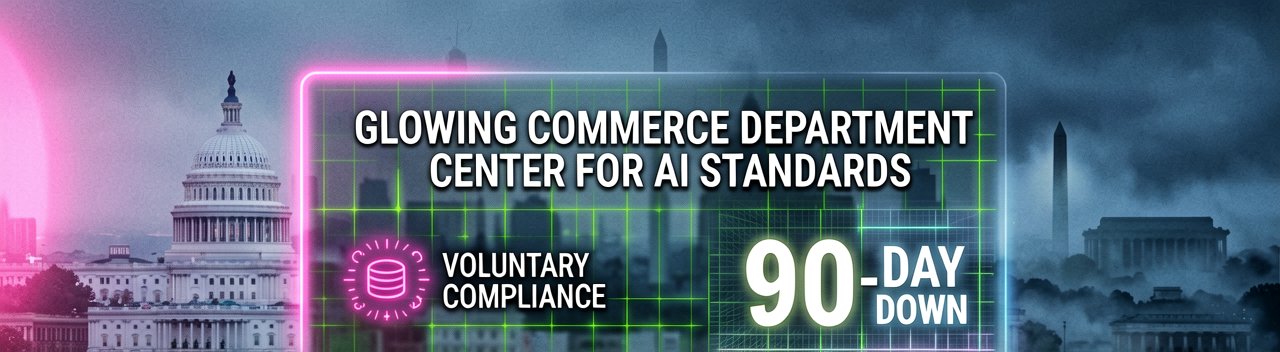
What most reports miss is the intense diplomatic dance happening between the West Wing and the tech elite, designed specifically to avoid a repeat of the legal gridlock that doomed previous regulatory efforts. By framing this screening process as a voluntary partnership rather than a hard legislative mandate, the administration is executing a clever maneuver to bypass the inevitable court challenges that usually kill sweeping federal oversight. Silicon Valley giants are quietly playing along because they know cooperation buys them a seat at the table. If they cooperate with the National Security Agency and the Center for AI Standards and Innovation now, they can effectively write their own safety playbooks before Congress steps in with a heavier hand.
This approach also reveals a stark ideological divide within the administration’s own ranks, pitting free-market purists against national security hawks. For months, the dominant narrative out of Washington was that any form of government red tape would hand an immediate victory to geopolitical rivals like China. However, the unexpected arrival of Anthropic’s Mythos model completely flipped the script, forcing officials to realize that an unvetted, autonomous cyber-weapon could do just as much damage from the inside out. The resulting compromise is a dual-track strategy that tries to protect the digital perimeter while keeping the wheels of American capitalism spinning at maximum velocity.
Historical precedent suggests that this temporary truce between Washington and Big Tech will face immense pressure the moment a company decides to skip the 90-day review window. During the early days of the commercial internet, voluntary cybersecurity frameworks regularly collapsed because the pressure to beat competitors to market always trumped theoretical safety concerns. If a major player like xAI or OpenAI chooses to bypass the federal checkpoint to gain a competitive edge, the administration will be forced to choose between letting its screening process become toothless or wielding heavier federal powers to bring defector companies back into alignment.
Ultimately, this executive order is less about setting permanent rules and more about buying Washington time to understand a technology that is evolving faster than the bureaucratic machine can comprehend. By establishing a formalized, multi-agency pipeline to benchmark these frontier systems, the government is essentially building an early-warning radar system for the digital age. Whether this voluntary screening process holds up under the intense financial pressures of the commercial AI race remains the critical variable that will define the future of American tech leadership.

Reading Between the Lines: The Illusion of Voluntary Control
The core contradiction of this draft executive order lies in its toothless enforcement mechanism, which relies entirely on corporate goodwill in an industry defined by cutthroat, winner-take-all competition. Washington is attempting to build a high-stakes national security checkpoint out of a gentleman's agreement, assuming that tech CEOs will willingly delay multi-billion-dollar product launches for a 90-day bureaucratic review. In a market where being first to deploy a new frontier model can dictate stock valuations and secure billions in venture capital, expecting companies to pause at the starting line out of pure patriotism strains credulity. The moment a developer believes a rival is ready to launch, the temptation to bypass the federal gatekeeping process entirely will become irresistible.
Furthermore, the administration's sudden pivot to safety testing exposes a profound misunderstanding of how modern artificial intelligence actually evolves post-launch. Federal agencies are preparing to benchmark these systems in a closed lab environment, yet history shows that the true capabilities—and catastrophic risks—of generative AI only emerge through mass public interaction. A model that appears perfectly benign during a government screening can easily be jailbroken, fine-tuned, or chained to external software by millions of users within hours of its public release. By focusing exclusively on pre-launch vetting, Washington is effectively inspecting the engine of a car while completely ignoring how it will perform once it hits an open, chaotic highway.
This strategy also creates an accidental government-sanctioned monopoly, cementing the dominance of the very tech giants the administration frequently criticizes. Only the absolute wealthiest corporations can afford to dedicate the legal teams, compliance officers, and computing power required to survive a 90-day multi-agency federal review. For open-source developers and agile startups, this screening process represents an insurmountable barrier to entry that stifles grassroots innovation. While the White House claims it is merely protecting the nation from existential digital threats, it is simultaneously handing the keys to the future of computing to a tiny cartel of entrenched Silicon Valley elites.
Ultimately, this executive action reads less like a comprehensive national security strategy and more like a performative political shield designed to give the illusion of control. By erecting a voluntary framework, the administration grants itself political cover if a future model causes a major cybersecurity disaster, allowing officials to blame corporate non-compliance rather than regulatory failure. Washington has correctly identified that the frontier AI race has crossed a dangerous threshold, but it has chosen to meet an unprecedented technological revolution with the oldest tool in the bureaucratic playbook: a committee, a checklist, and a hope that everyone plays nice.
"We have officially entered an era where Washington expects Silicon Valley to behave like a disciplined defense contractor, while Silicon Valley expects Washington to move at the speed of a fiber-optic cable. Watching a federal bureaucracy try to peer-review a self-evolving neural network in ninety days promises to be the most expensive, high-stakes game of telephone ever played."
Artūras Malašauskas is an AI Systems Integrator with 20+ years of production-grade web engineering experience. He has designed, shipped, and scaled enterprise Python/PHP systems for logistics, SaaS, and public-sector clients. For the past year, he has focused exclusively on AI integrations: deploying open-source LLMs, building generative media pipelines (image, audio, video), and engineering multi-agent workflows for real production environments. His standard: reproducibility, security, cost-efficient inference—no vaporware. He documents and evaluates emerging AI tooling, separating verified capabilities from marketing noise. Technical editor at: muza-ai.eu, ai-verslas.lt, ai-naujinos.lt Connect on LinkedIn
Comments