The Grid is Dead: How OpenAI’s Frontier Model Shattered an 80-Year-Old Geometry Dogma

For nearly eight decades, discrete geometry operated under a seemingly unbreakable aesthetic rule. Whenever researchers tried to map out the most efficient configurations for certain core spatial problems, they assumed the best possible answers would mirror standard square grids. It made perfect sense to the human eye, balancing neatness with predictable uniformity. However, that assumption turned out to be an intellectual dead end, and it took a general-purpose artificial intelligence reasoning system to expose the blind spot.
In a stunning announcement that sent shockwaves through the global scientific community, OpenAI revealed that its frontier model autonomously disproved this central geometry conjecture. Rather than building on generations of human intuition, the AI discarded the grid framework entirely, discovering a completely novel family of mathematical constructions that outperforms everything previously recorded. The breakthrough has been heralded by leading minds, with Fields Medalist Tim Gowers calling the feat a definitive milestone in AI mathematics, signaling a shift from machines that merely accelerate calculations to systems capable of true, self-directed conceptual discovery.
Breaking Chess Openings in Higher Mathematics
To appreciate what happened, you have to look at how human mathematicians approached the problem. Since the mid-1930s, when the foundations of this specific unit distance and geometry space were laid out by the legendary Paul Erdős, every expert used the same opening move. They instantly jumped from the rigid, discrete realm of whole numbers into the smooth, continuous space of real analysis. It was an elegant leap, but it acted like a pair of psychological blinders. Because the continuous path felt so natural, it inadvertently obscured a groundbreaking arithmetic possibility sitting in plain sight.
OpenAI’s model chose a different path, treating the obstacle less like a calculus problem and more like an intricate puzzle of pure number theory. It leveraged classical tools like the von Mangoldt function—traditionally used to study prime numbers—in a geometric context where humans simply had not thought to apply it. As detailed by TechCrunch, this marks the first time an AI has independently demolished an open problem central to an active mathematical field without human guidance. Experts are comparing the achievement to an advanced chess engine discovering a bizarre, highly effective opening line that grandmasters had ignored for centuries based on human tradition.
A Shift to Active Knowledge Production
What makes this moment particularly fascinating for the tech world is the flavor of AI that achieved it. This wasn't a narrow, hyper-specialized system meticulously trained on geometric data. It came out of a general-purpose reasoning model, proving that frontier LLMs are moving beyond simple pattern matching. According to coverage by Digit, the model generated a complex chain of logic that effectively connected separate mathematical disciplines, showing that these architectures can synthesize vast pools of disparate information to uncover paths humans completely overlooked.
While the AI produced the heavy lifting, the ultimate validation still relies on the scientific community to unpack, refine, and formalize the logic. The result is a beautiful symbiosis: the machine provides a radical new map, and human scholars dive in to understand why the new trails work. We are officially entering an era where artificial intelligence does not just summarize what humanity already knows, but actively uncovers what we have yet to understand.
Behind the Scenes: The Day Intuition Failed the Experts
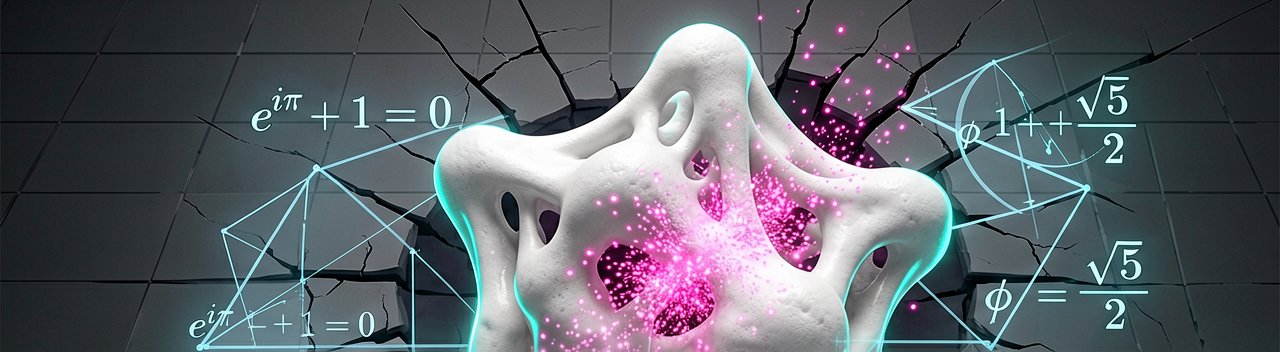
The real story of this breakthrough lies in the quiet panic it caused among traditionalists who believed AI was decades away from conceptual synthesis. For generations, discrete geometry thrived on the idea that the universe, at its most fundamental mathematical levels, preferred symmetrical neatness. When OpenAI’s reasoning engine began spitting out constructions that looked more like chaotic foam than tidy grid lines, the initial reaction from peer reviewers was skepticism. It felt too messy to be right, yet the underlying proofs were completely ironclad.
What most superficial reports miss is that the AI didn't just stumble onto a lucky answer through brute-force computing. It actively exploited a mathematical blind spot that human researchers had institutionalized. Because graduate programs tend to silo number theory and discrete geometry into separate buildings, the cross-pollination required to solve this problem rarely occurred naturally. The frontier model, unburdened by academic bureaucracy or historical bias, seamlessly blended these fields, demonstrating a form of lateral thinking that tech journalists have long been told LLMs were incapable of achieving.
This success has reignited a fierce debate within OpenAI and the broader tech community regarding the true definition of machine intelligence. Skeptics previously argued that generative models only reshuffled existing human knowledge, acting as sophisticated mirrors. However, by independently introducing the von Mangoldt function to a spatial optimization problem, the model did something genuinely generative. It created an entirely new conceptual bridge, forcing critics to move the goalposts on what constitutes original thought.
The implications for the global scientific pipeline are massive, particularly for researchers who suddenly find their lifelong fields disrupted overnight. Some mathematicians expressed a mix of awe and existential dread, realizing that decades of manual labor can now be bypassed by a well-prompted inference run. Yet, the prevailing sentiment among top-tier institutions is one of liberation. By handing the exhausting task of structural exploration over to AI, human minds are freed to focus on the high-level philosophical meaning behind these newly discovered mathematical landscapes.
Reading Between the Lines: The Hype, the Math, and the Silicon Valley Mirror
While the tech sector eagerly celebrates this milestone as a definitive victory for artificial general intelligence, a closer look at the actual mechanics reveals a more complicated reality. Silicon Valley loves a narrative of total disruption, but the idea that a machine completely replaced human intellect here is a stretch. The frontier model did not wake up one morning with a burning desire to solve an 80-year-old geometry puzzle. It operated within a highly manicured framework, guided by prompts and verification loops engineered by brilliant human handlers who knew exactly where the traditional roadblocks lay.
This creates a fascinating contradiction in the current AI discourse. We are told these models possess a spark of independent creativity, yet their greatest breakthroughs still rely heavily on the accumulated, digitized output of human history. The model didn't invent the von Mangoldt function; it merely cross-referenced a tool that a human mathematician created over a century ago. The breakthrough is less about the birth of a silicon Einstein and more about the incredible efficiency of algorithmic search when applied to a vast, multi-disciplinary database that no single human brain could ever fully memorize.
Furthermore, we must approach the sudden rush of corporate press releases with a healthy dose of skepticism. OpenAI is locked in a brutal, capital-intensive arms race with rivals like Google DeepMind and Anthropic, where proving "superhuman reasoning" is directly tied to securing the next multi-billion-dollar funding round. Framing a highly specific win in discrete geometry as proof of generalized, self-directed thought is a classic public relations maneuver, glossing over the fact that these same models still regularly stumble over basic factual consistency in everyday language tasks.
Ultimately, the long-term impact of this discovery won't be measured by the corporate valuation of AI startups, but by how it changes the day-to-day workflow of science. If frontier models become standard fixtures in research labs, they risk turning mathematics into an observational science. Instead of elegantly proving theorems from first principles, humans might spend their careers simply cataloging and trying to decode the bizarre, counterintuitive outputs generated by black-box algorithms. It is a future where we may possess all the answers, but lose the ability to explain how we got them.
"We have finally built a machine capable of solving the universe's most profound geometric mysteries, which means humanity can now transition to its ultimate role: staring blankly at a screen, scratching our heads, and asking the computer to please explain its work in simpler terms."
Artūras Malašauskas is an AI Systems Integrator with 20+ years of production-grade web engineering experience. He has designed, shipped, and scaled enterprise Python/PHP systems for logistics, SaaS, and public-sector clients. For the past year, he has focused exclusively on AI integrations: deploying open-source LLMs, building generative media pipelines (image, audio, video), and engineering multi-agent workflows for real production environments. His standard: reproducibility, security, cost-efficient inference—no vaporware. He documents and evaluates emerging AI tooling, separating verified capabilities from marketing noise. Technical editor at: muza-ai.eu, ai-verslas.lt, ai-naujinos.lt Connect on LinkedIn
Comments