Silicon Sentinels in the Hallway: New Jersey Schools Embrace AI Gun Detection
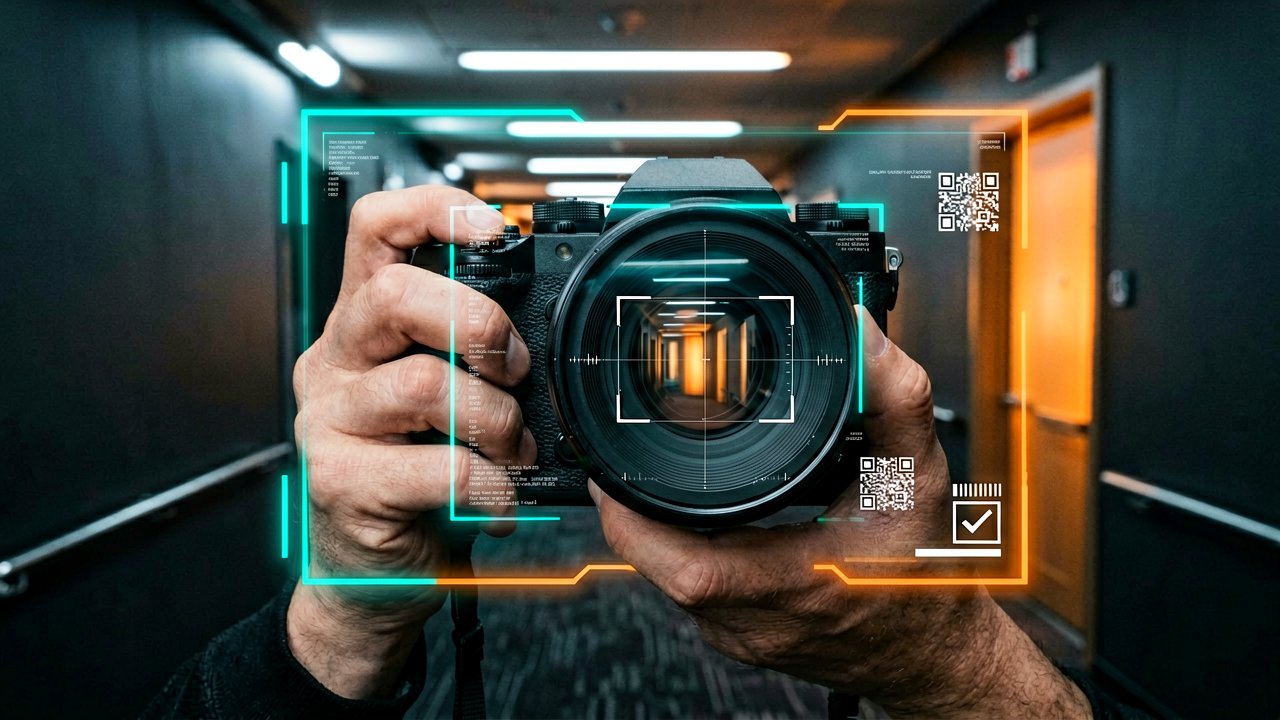
The modern American school hallway has long been a battleground for balancing student freedom with basic safety, but New Jersey is increasingly banking on artificial intelligence to tilt the scales toward security. In the latest expansion of algorithmic surveillance, the Sayreville Borough School District announced it has deployed an advanced AI weapons detection platform across its 10 campus buildings, which house roughly 6,500 students and 750 staff members. Rather than replacing existing hardware, the software overlays onto the digital security cameras the district already owns, turning passive recording devices into active, automated lookouts trained to spot brandished firearms the moment they enter a lens's line of sight.
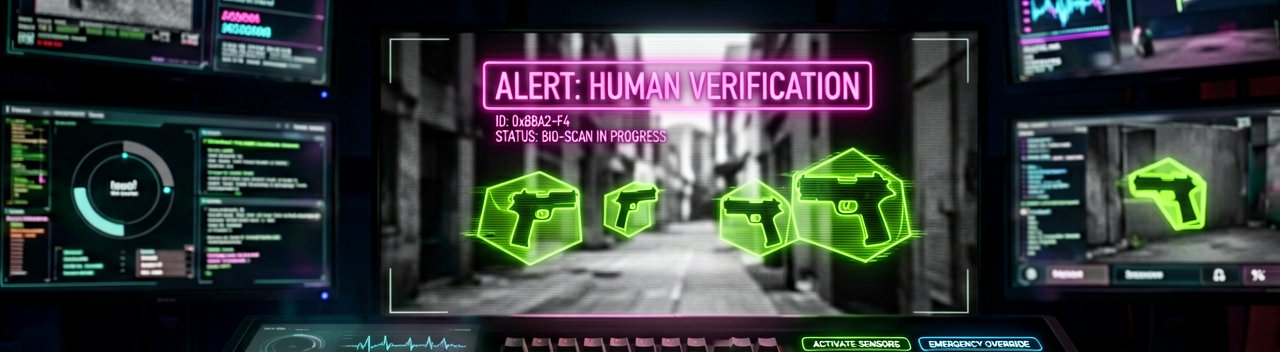
The technology driving this expansion comes from Pennsylvania-based security firm ZeroEyes, an enterprise founded by military veterans that has rapidly scaled its presence across American public infrastructure. According to details shared by News 12 New Jersey, the software scans video feeds for weapons and instantly routes suspicious frames to a human-verified operations center. If a threat is confirmed by the company's analysts, automated emergency alerts broadcast to school administrators and local police departments within three to five seconds. It is a rapid-fire pipeline designed to eradicate the terrifying, chaotic lag time that historically paralyzes campuses during the opening moments of an active shooter situation.
The Automation of Panic
Sayreville isn't the first New Jersey district to hand the watchman’s keys over to an algorithm, but it is riding a wave of deeper automated integration. Earlier deployments in districts like Glassboro Public Schools pioneered a partnership that paired the computer vision platform with emergency management software, as reported by CBS News Philadelphia . When a weapon is verified, the integrated system skips the human middleman at the school desk entirely—automatically locking down facility doors, sounding sirens, flashing strobe lights, and pinging the mobile phones of every law enforcement officer in the vicinity.
The Privacy Paradox in the Classroom
While school boards and administrators view these deployments as common-sense perimeter hardening, the rapid normalization of computer vision in public education has triggered predictable friction. Privacy advocates argue that layering military-grade detection software onto thousands of hallway cameras edges districts closer to permanent, omniscient student surveillance. There is a distinct uneasiness about algorithms constantly parsing human geometry in spaces meant for learning, even if the tech providers insist the software ignores students' faces and strictly catalogs the contours of steel and polymer firearms.
Nevertheless, the political and social momentum remains firmly on the side of the tech vendors. In an era where traditional security measures feel increasingly reactive, the promise of a proactive, silicon-backed shield is proving too enticing for school districts to ignore. For Sayreville and its peers, the calculation is clear: the psychological weight of an always-watching AI is a price worth paying if it buys first responders a few extra seconds when the unthinkable occurs.
Behind the Scenes of the Algorithmic Watchtower
The acceleration of AI gun detection in New Jersey schools highlights a profound shift in how districts view campus security, evolving from physical barriers to invisible digital nets. While standard security architectures rely on heavy infrastructure like bullet-resistant glass, metal detectors, and armed guards, school boards are increasingly seduced by the low friction of software. A major catalyst for this specific technological adoption is the state's generous funding landscape, which has allowed districts to divert capital from traditional security spending into high-tech line items. The integration of computer vision platforms effectively transforms a school’s existing, passive infrastructure into an active, proactive intelligence asset without the political headache of turning a public school into a visual fortress.
Yet, the reality of deploying weapon-recognition algorithms in crowded school environments involves a messy matrix of engineering and human triage. Hallways are not sterile laboratory environments; they are chaotic ecosystems filled with reflective lockers, loose clothing, sports equipment, and hundreds of moving bodies. To prevent a deluge of false positives—where a broom handle, a musical instrument case, or a metallic water bottle might trigger a high-alert SWAT response—tech vendors rely on human-in-the-loop verification centers. These remote war rooms, often staffed by military veterans, act as a crucial sanity check on the AI's math, verifying a weapon within fractions of a second before the automated alarms are allowed to panic an entire township.
This reliance on external verification hubs introduces a complicated knot of liability and corporate dependency that school boards are only beginning to parse. By outsourcing the initial threat assessment to a third-party algorithms-and-analysts pipeline, school districts are fundamentally changing the chain of custody for emergency response data. Local police departments are no longer responding solely to a frantic call to emergency services from a teacher on the ground; they are reacting to an automated, data-rich dispatch package sent from a remote corporate data center hundreds of miles away. If the system fails to detect a concealed weapon because it wasn't brandished openly, or if a lag in the verification loop delays an alert, the legal and moral finger-pointing will test uncharted waters in educational law.
Furthermore, the long-term psychological impact on students living under the gaze of predictive AI remains an ongoing experiment with no control group. Civil liberties groups caution that normalizing pervasive surveillance at a young age breeds an environment of compliance and subtle anxiety, fundamentally altering the school climate from an open sanctuary of learning to a space defined by latent threat. While parents and administrators naturally prioritize the immediate physical safety of their children, the gradual encroachment of military-grade monitoring tools into everyday civilian life represents a cultural trade-off that will reverberate long after the current generation of students has graduated.
Reading Between the Lines: The Illusion of Frictionless Security
The rush to blanket public classrooms in algorithmic armor presumes a flawless synergy between silicon and standard operating procedure, but seasoned security analysts know the real friction begins where the software ends. On paper, a three-second verification loop feels like a revolutionary shield against catastrophe. In practice, however, these platforms introduce a fragile layer of technological dependency into high-stress environments where human panic remains the ultimate wildcard. The core assumption of computer-vision security is that school shooters behave like rational military adversaries who brandish weapons far in advance of their breach, giving the digital eye ample time to sound the alarm before the first shot is fired.
This paradigm largely overlooks the grim reality that many school assaults are insider threats, launched by individuals who already sit inside the perimeter with weapons concealed until the moment of attack. When an algorithm triggers an instantaneous, automated lockdown based on a visual match, it eliminates the crucial window of human assessment. While shutting doors automatically can save lives, it can also trap students in hallways with an active threat or create catastrophic bottlenecks if a system suffers a false positive during a chaotic passing period. The industry’s marketing tends to gloss over these edge cases, framing the technology as a silver bullet rather than a niche component of a much larger, messier tactical puzzle.
Furthermore, the long-term financial implications of these subscriptions risk cannibalizing the very resources that experts argue actually prevent violence. Turning passive camera networks into active intelligence hubs requires recurring licensing fees that slice into tight municipal education budgets year after year. As districts pour capital into maintaining software contracts and upgrading hardware to support high-definition video processing, less funding remains available for school psychologists, guidance counselors, and community intervention programs. We are effectively choosing to fund the automated detection of a crisis rather than investing in the human infrastructure required to defuse the crisis before it ever reaches the schoolhouse door.
By transforming schools into panoptic environments where every movement is parsed for hostile intent, we are also running a massive, unregulated psychological experiment on a generation of students. Growing up under the constant gaze of military-veteran-managed artificial intelligence subtly shifts the educational landscape from a place of intellectual exploration to one of perpetual conditional safety. It conditions young minds to accept total surveillance as a baseline requirement for institutional life, normalizing a security apparatus that would have felt dystopian just a generation ago. In our desperate bid to harden the physical perimeter, we may be quietly softening the foundational open trust that makes a school a community in the first place.
"We have officially entered an era where we expect our school security cameras to be smarter than our policy debates, confidently tasking a handful of algorithms with solving a cultural crisis that adults have spent decades successfully ignoring."
Artūras Malašauskas is an AI Systems Integrator with 20+ years of production-grade web engineering experience. He has designed, shipped, and scaled enterprise Python/PHP systems for logistics, SaaS, and public-sector clients. For the past year, he has focused exclusively on AI integrations: deploying open-source LLMs, building generative media pipelines (image, audio, video), and engineering multi-agent workflows for real production environments. His standard: reproducibility, security, cost-efficient inference—no vaporware. He documents and evaluates emerging AI tooling, separating verified capabilities from marketing noise. Technical editor at: muza-ai.eu, ai-verslas.lt, ai-naujinos.lt Connect on LinkedIn
Comments