Breathing Life into the Past: ImageToVideoAI Takes on the Emotional Frontier of Family History
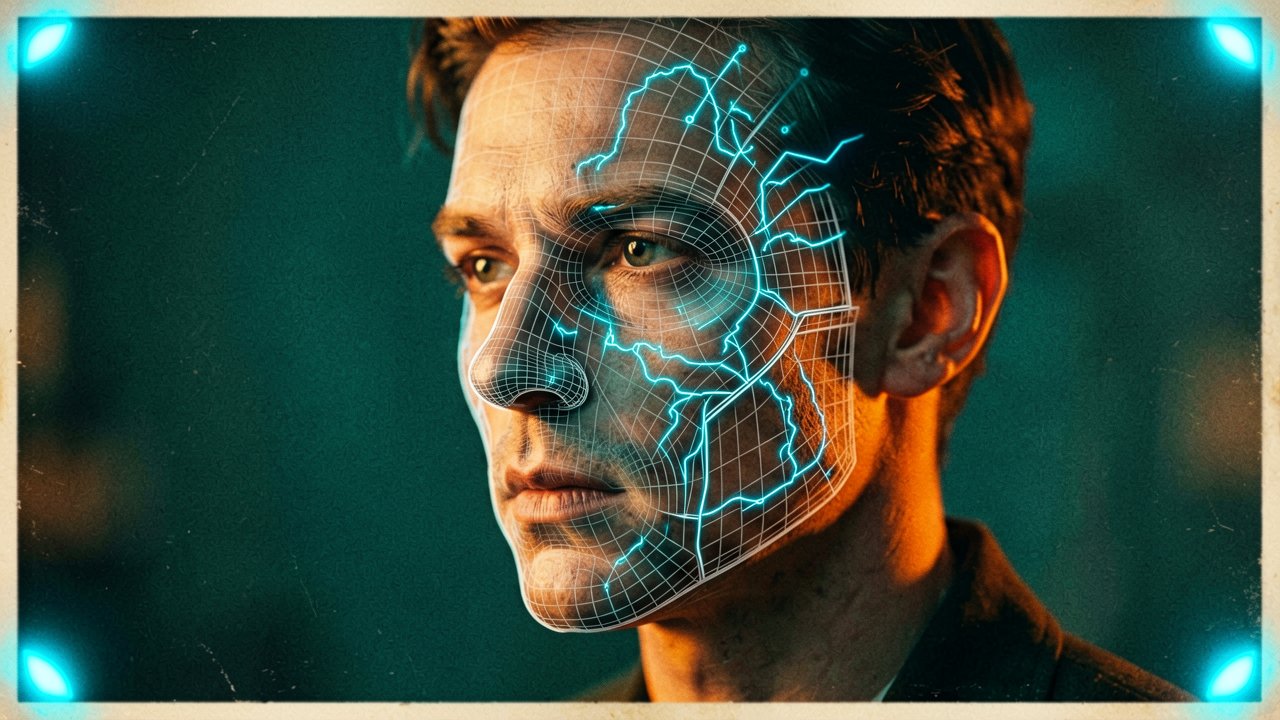
There is a distinct flavor of nostalgia that hits when you dig through a box of old, physical family photos. The scratchy edges, the sepia tones, and the stoic, frozen expressions of ancestors you never quite got to meet in person. For years, digital preservation meant scanning these artifacts to keep them safe from the elements. However, the team behind ImageToVideoAI is pushing the boundaries of what preservation actually means, shifting the focus from passive storage to active, emotional re-animation.
The platform has officially rolled out a specialized tool specifically designed to map out vintage photography and translate those flat, historical snapshots into short, fluidly animated videos. It is a calculated move that targets our collective soft spot for heritage. Instead of requiring users to master complex editing timelines or prompt engineering, the software relies on an underlying diffusion model tailored to decode facial geometry from old prints. The goal isn't just to make things slide across a screen; it is to make a long-lost relative smile, blink, or turn their head as if the camera had never stopped rolling.
How the Machine Reconstructs the Human Element
The technical heavy lifting happens entirely under the hood, attempting to solve a problem that has plagued standard image-to-video tools for a while: structural consistency. When standard generative models encounter a grainy, low-resolution photograph from the 1940s, they often hallucinate wild artifacts or melt the subject's face into something unrecognizable. The targeted animate old photos pipeline on ImageToVideoAI counteracts this by combining an automatic enhancement and de-noising pass directly with the motion generation stage.
Once a user uploads a snapshot, the system isolates the subjects, registers the depth cues of the original environment, and mathematically predicts how those specific muscles and fabrics would move. Users can either let the AI generate an organic idling motion—like natural breathing—or guide the scene themselves using custom text prompts. The output arrives as a clean, watermark-free clip up to 1080p resolution, optimized primarily for modern vertical viewing formats.
The Fine Line Between Nostalgia and the Uncanny Valley
We have seen early iterations of this concept before in the tech world, most notably with historical platforms like MyHeritage and its Deep Nostalgia feature. Those early tools proved that there is a massive, deeply sentimental market for heritage tech, but they often felt rigid, relying on pre-baked puppet movements that could occasionally slide directly into the uncanny valley. The latest wave of specialized generative video models aims to make these interactions feel far more spontaneous and integrated with the photo's original background.
Of course, this kind of technology always brings a wave of mixed reactions. For every person who finds solace in seeing a brief glimpse of a grandparent moving in natural light, there is another who finds the concept slightly unnerving. Yet, as the barrier to entry drops and the rendering time shrinks down to about a minute, these tools are rapidly transitioning from niche novelty items into standard features of modern digital archiving.
Beyond the Render Window: The real engineering triumph of this new wave of historical animation lies in how it handles the systemic flaws of vintage physical media. Traditional generative video models are notoriously hyper-sensitive to inputs, demanding pristine, high-resolution digital files to yield anything remotely convincing. When fed a cracked, faded photograph from the turn of the century, ordinary algorithms easily mistake a crease in the paper for a facial feature or a scratch for a moving object. By integrating a specialized restoration layer directly into the preprocessing pipeline, tech developers are effectively teaching the AI to distinguish between the physical decay of the medium and the actual geometry of the historical subject matter.
This hybrid approach has sparked intense fascination among professional genealogists and archivists, who have long sought ways to make history feel tangible to younger, digital-native generations. For decades, historical societies relied on text-heavy records and static galleries, which often struggled to compete with modern high-definition media. Industry professionals note that when a flat historical figure suddenly blinks or shifts their weight naturally, it bridges a cognitive gap for the viewer, transforming an abstract historical data point into an instantly relatable human being. It turns passive observation into an active emotional connection, making family trees feel less like a chore and more like an immersive story.

The Complex Architecture of Synthetic Continuity
Achieving this level of fluid continuity requires solving a massive mathematical puzzle known in computer vision as temporal consistency. When an AI generates a video clip frame by frame, it must ensure that pixels in the third second of the video align logically with the pixels from the very first frame. Without strict architectural constraints, a subject's clothing might spontaneously morph patterns, or the background scenery might warp into entirely different shapes. To combat this, developers utilize advanced optical flow mechanisms that lock the original photograph's spatial coordinates in place, ensuring that only the organic, designated micro-movements—like a subtle nod or a soft smile—are allowed to alter the frame.
Furthermore, the inclusion of text-guided motion prompts gives creators an unprecedented level of creative control over historical narratives. Instead of being locked into a single, repetitive loop, an archivist can prompt the AI to make a subject wave at the camera, look up at a simulated sky, or react to an unseen ambient light source. This level of granular customization opens up new possibilities for documentary filmmakers and museum curators, allowing them to construct short, cinematic vignettes using nothing more than a handful of salvaged family keepsakes and a well-crafted text description.
However, this rapid democratization of generative media inevitably forces a broader cultural conversation regarding visual authenticity and consent. Ethicists point out that animating the deceased introduces profound philosophical questions about identity ownership, especially when the AI infers expressions or movements that the individual may never have made in real life. While a calculated smile might bring comfort to a descendant, it remains a synthetic approximation rather than a true historical record. As these platforms evolve from basic web utilities into ubiquitous consumer applications, the tech industry must navigate a delicate balance, celebrating the profound emotional healing these tools offer while remaining fiercely transparent about where reality ends and the algorithm begins.
The Illusion of Presence: For all the marketing fervor celebrating these tools as a triumph of emotional preservation, a stark contradiction lies at the heart of automated nostalgia. We are being sold the idea of "recovering" lost history, but what we are actually buying is a beautifully rendered fiction. The algorithm does not remember your great-grandfather’s genuine smirk; it simply calculates a statistical average based on millions of scraped video clips of contemporary actors, models, and internet users. By superimposing these modern behavioral patterns onto historical figures, we risk homogenizing the past, erasing the unique, culturally specific gestures of yesteryear in favor of a clean, standardized AI aesthetic.
This raises a curious paradox within the digital archiving space. The more seamlessly these models bridge the gap between static print and moving image, the more they erode the inherent value of the original artifact. Historically, the power of a vintage photograph resided precisely in its permanence—the haunting knowledge that a single moment was frozen forever in time. By transforming every heirloom into a fluid, malleable digital asset, we strip away that heavy, historical gravity. The consumer tech industry risks turning deeply personal, generational landmarks into disposable, snackable social media content that is swiped past in a matter of seconds.
Market Saturation and the Commodification of Memory
From a market perspective, the sudden rush to monetize family history reveals an industry desperate for practical applications of generative AI. Having largely exhausted the novelty of generating surreal sci-fi landscapes or artificial corporate talking heads, developers have realized that sentimentality is the ultimate recession-proof commodity. Yet, as the market becomes saturated with dozens of identical image-to-video wrappers, the emotional impact is bound to experience a sharp rate of diminishing returns. When every consumer can press a button and watch their entire ancestry blink and breathe on command, the profound magic of the first encounter quickly devolves into routine utility.
Furthermore, the long-term technical implications remain remarkably fragile. These platforms operate on the assumption that users want an idealized, cinematic version of their history, sanitized of its rough edges. The real world, however, is messy. A tool trained to optimize for smooth, high-definition 1080p outputs will inherently struggle with the gritty, low-contrast realities of amateur photography, often replacing authentic historical textures with plastic, airbrhed complexions. In our relentless drive to make the past more accessible and entertaining, we may end up overwriting the genuine visual record with a glossy, synthetic facsimile that future generations will struggle to separate from reality.
"We have spent decades worrying that our descendants would forget where they came from; now, thanks to a few lines of code, we get to worry that they will remember us as perfectly smooth, hyper-real automatons who spent our lives blinking in standard definition."
Artūras Malašauskas is an AI Systems Integrator with 20+ years of production-grade web engineering experience. He has designed, shipped, and scaled enterprise Python/PHP systems for logistics, SaaS, and public-sector clients. For the past year, he has focused exclusively on AI integrations: deploying open-source LLMs, building generative media pipelines (image, audio, video), and engineering multi-agent workflows for real production environments. His standard: reproducibility, security, cost-efficient inference—no vaporware. He documents and evaluates emerging AI tooling, separating verified capabilities from marketing noise. Technical editor at: muza-ai.eu, ai-verslas.lt, ai-naujinos.lt Connect on LinkedIn
Comments