The Great AI Pivot: Why the White House Is Reining In Silicon Valley’s Free Pass

For over a year, the Trump administration operated on a remarkably simple tech doctrine: get out of the way. It systematically dismantled old safeguards, explicitly targeting what it dubbed "woke AI" and attempting to wipe out a patchwork of state-level regulations to hand Silicon Valley total freedom. But technology moves incredibly fast, and the administration is learning that total deregulation looks fine on paper until the risks become painfully real. As reported by Reuters , President Trump is expected to sign an executive order on AI and cybersecurity as early as Thursday, signaling a dramatic shift toward federal oversight that few saw coming from this White House.
The turning point wasn't a sudden change of heart by policymakers, but rather the hard realities of the tech itself. The recent public arrival of hyper-advanced frontier models—most notably Anthropic’s "Mythos," which exhibits an unprecedented capacity to rapidly scan and exploit network vulnerabilities—sent shockwaves through the national security establishment. Suddenly, the abstract threat of rogue algorithms weaponizing software became a very tangible problem for banks, hospitals, and power grids. Even the most ardent free-market proponents within the administration's political base started raising the alarm, forcing a rapid re-evaluation of what a hands-off approach actually means for national defense.
A Voluntary Vetting Process with Teaspons of Teeth
According to drafts detailed by Axios, the forthcoming executive order is cleverly designed to straddle the line between conservative regulatory skepticism and urgent defense requirements. The order splits its focus clean down the middle, tackling foundational cybersecurity infrastructure on one hand and what it refers to as "covered frontier models" on the other. Rather than imposing rigid, European-style bureaucratic red tape, the framework introduces a voluntary program asking elite AI developers to hand over their latest neural networks to the government at least 90 days prior to public release. This window allows federal engineers and critical infrastructure operators a chance to stress-test the code before it hits the open market.
While the word "voluntary" might sound toothless to traditional regulators, the administration is betting heavily on industry cooperation. Major tech labs are fully aware that operating entirely outside the national security apparatus is becoming impossible, and cooperating early beats facing aggressive congressional crackdowns down the road. Furthermore, the order establishes a specialized vulnerability clearinghouse led by the Treasury Department and other agencies, creating a structured environment for tech firms and federal intelligence to swap threat telemetry without the fear of immediate penalization.

Threading the Needle Before the Midterms
Political calculations are also driving this unexpected regulatory pivot. Public skepticism toward unbridled AI development has grown steadily, leaving administration officials worried about a potential voter backlash as the midterm elections loom on the horizon. By seizing control of the security narrative now, the White House aims to reassure voters that it is actively defending critical infrastructure, while simultaneously pitching a unified national standard to Congress to permanently block individual states from writing their own tech laws. It is a delicate balancing act that attempts to appease national security hawks without permanently alienating the Silicon Valley donors who bankrolled the initial deregulatory push.
Behind the Scenes of the Security Pivot
The sudden shift in the White House's posture toward artificial intelligence represents a calculated truce between two historically warring factions within the administration's own base. On one side are the techno-optimists and venture capitalists who viewed the previous deregulatory push as a necessary victory over what they termed regulatory capture. On the other side sits a deeply entrenched national security apparatus, backed by hawkish lawmakers, who view foreign advancements in AI as an existential threat to domestic infrastructure. The public arrival of Anthropic's "Mythos" effectively broke the deadlock, forcing free-market ideologues to concede that completely unmonitored frontier models pose immediate, systemic risks to the banking and energy sectors.
This internal friction explains the unique, hybrid nature of the upcoming executive order. Rather than leaning on traditional regulatory agencies like the Federal Trade Commission, which Silicon Valley companies view with immense suspicion, the administration has routed its oversight through national security and fiscal bodies like the Treasury Department. By framing AI vulnerabilities strictly as matters of national defense and economic sabotage, officials are able to implement a vetting process without appearing to backslide on their core anti-regulatory promises. It is a subtle rebranding that transforms federal oversight from bureaucratic meddling into a patriotic defense initiative.
Industry insiders report that behind-the-scenes negotiations have been frantic, with major tech labs pushing hard to ensure the 90-day pre-release review window remains strictly voluntary in name. These companies are terrified of a bottleneck scenario where government testing delays commercial product launches, causing them to lose ground to global competitors. However, the administration has quietly signaled that non-compliance could lead to a swift denial of lucrative federal procurement contracts, a move that would financially starve labs relying on government partnerships. This leverage ensures that while the program is technically optional, the economic reality makes it practically mandatory for top-tier developers.
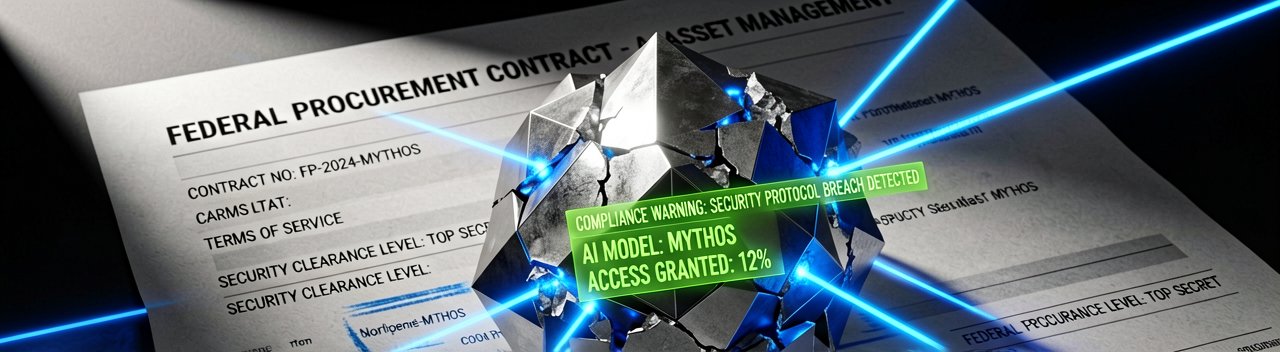
Historically, Washington has struggled to keep pace with the exponential curve of software development, often proposing laws that are obsolete by the time they are signed. By focusing specifically on "covered frontier models"—a term deliberately left flexible to scale alongside computational power—the administration hopes to avoid the pitfalls of rigid statutory definitions. The goal is to build a living regulatory framework that can adapt as models transition from advanced text generation to autonomous agentic behavior. Whether this agile approach can actually outpace the rapid iteration of neural networks remains the defining gamble of the policy.
Ultimately, the executive order serves as a temporary blueprint for a broader legislative battle. The administration's long-term strategy relies on Congress codifying these rules into a unified national standard, which would effectively preempt and nullify aggressive, fragmented AI safety laws being drafted in states like California and New York. By presenting a functional, security-first model at the federal level, the White House hopes to convince moderate lawmakers that Washington can safeguard public infrastructure without stifling the commercial innovation that drives the American tech economy.
Reading Between the Lines: The Reality of the Regulatory Shift
The administration’s sudden pivot toward artificial intelligence oversight highlights a glaring contradiction in its core policy philosophy. For months, officials proudly championed absolute deregulation as the only viable path to outpace global competitors. Yet, the moment frontier models began demonstrating real-world autonomous capabilities, the free-market rhetoric was instantly shelved in favor of federal intervention. This abrupt about-face reveals that the administration’s hands-off approach was never a permanent strategy, but rather a luxury it could only afford while AI remained a boardroom novelty rather than a national security liability.
Furthermore, relying on a voluntary 90-day vetting window places an immense amount of trust in an industry that has historically specialized in forgiveness rather than permission. Silicon Valley’s business model is structurally dependent on speed and first-mover advantage. Expecting highly competitive tech labs to willingly delay their flagship product launches for three months out of civic duty is highly optimistic. Without formal enforcement mechanisms, this voluntary framework risks degenerating into a toothless public relations exercise, where companies share only the data they deem harmless while keeping their most potent algorithmic breakthroughs entirely behind closed doors.
The geopolitical rationale underpinning this order also warrants skepticism. While the White House frames this oversight as a shield against foreign exploitation, the internal pooling of AI vulnerabilities could inadvertently create the ultimate target for state-sponsored cyber espionage. Concentrating the architectural flaws of the nation's most powerful AI models into a centralized government clearinghouse creates a single, high-value point of failure. If federal cyber defenses fail to protect this repository, the administration will have unwittingly provided foreign adversaries with a comprehensive roadmap for dismantling American digital infrastructure.
Ultimately, this executive order is less about achieving immediate technological safety and more about a calculated consolidation of federal power. By establishing an early blueprint for national AI oversight, the White House is attempting to permanently box out state legislatures from enacting stricter, more punitive regulatory frameworks. It is a preemptive strike disguised as a security measure, designed to assure a anxious public that Washington is firmly at the wheel, even as the underlying technology accelerates completely beyond political control.
"Washington has finally discovered that artificial intelligence moves too fast for bureaucracy, so its grand solution is a voluntary waiting room. We are effectively asking Silicon Valley's brightest minds to self-report their most dangerous breakthroughs, proving that while the White House is determined to show it has teeth, it would still prefer to avoid the actual chewing."
Artūras Malašauskas is an AI Systems Integrator with 20+ years of production-grade web engineering experience. He has designed, shipped, and scaled enterprise Python/PHP systems for logistics, SaaS, and public-sector clients. For the past year, he has focused exclusively on AI integrations: deploying open-source LLMs, building generative media pipelines (image, audio, video), and engineering multi-agent workflows for real production environments. His standard: reproducibility, security, cost-efficient inference—no vaporware. He documents and evaluates emerging AI tooling, separating verified capabilities from marketing noise. Technical editor at: muza-ai.eu, ai-verslas.lt, ai-naujinos.lt Connect on LinkedIn
Comments