The Automation Paradox: Why Cyber Professionals Can’t Decide if AI Is a Lifeline or a Liability
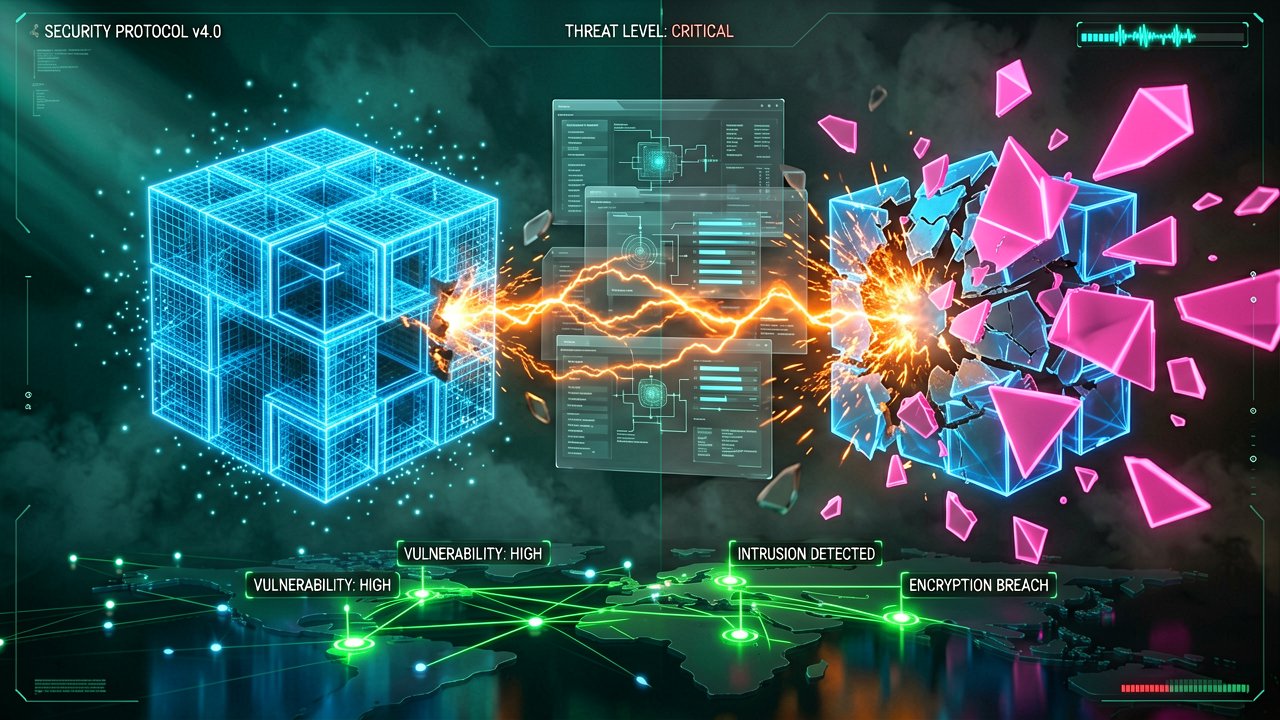
For years, the promise of artificial intelligence in cybersecurity was clear-cut: machines would handle the data deluge while humans focused on high-level strategy. Instead, the reality of managing enterprise defense has turned into an unpredictable, high-stakes arms race. Security teams find themselves caught in a profound paradox, watching the exact same models that optimize threat detection get effortlessly weaponized by adversarial actors.
This deep ambivalence is not just a theoretical debate. It is a daily operational headache for chief information security officers who have to authorize tools that feel increasingly like double-edged swords. Recent data released by ISACA highlights this industry-wide anxiety, showing that more than half of European IT and cybersecurity professionals name AI-driven threats and deepfakes as the primary concern keeping them awake at night. The discomfort stems from an uncomfortable truth: defense requires meticulous planning, but malicious actors only need a clever prompt injection to bypass traditional defenses.
The Double-Edged Sword of Machine-Speed Defense
On one side of the ledger, automation has saved modern security operations centers from drowning in noise. Large language models and predictive algorithms triage thousands of alerts in seconds, uncovering malicious patterns that human analysts would miss entirely. This capacity to operate at machine speed is no longer a luxury, especially given that enterprise attack surfaces are expanding faster than standard internal teams can monitor.
The problem is that the bad guys have the same technology, and they do not have to worry about regulatory compliance or algorithmic bias. Adversarial AI now generates hyper-realistic, targeted phishing campaigns at scale and autonomously hunts for unauthenticated network vulnerabilities. When an attack can pivot, escalate privileges, and exfiltrate data faster than an engineer can open an incident ticket, relying solely on human intervention is a recipe for disaster.

The Realities of a Widening Preparedness Gap
While marketing materials claim that deploying an AI firewall solves enterprise risk, actual implementation tells a much messier story. A striking research report from Kiteworks reveals that nearly half of security defenders acknowledge they are not adequately prepared for AI-powered threats. The vulnerability is worsened by employees pulling unsanctioned generative tools into their daily workflows, creating a massive wave of shadow AI that quietly leaks sensitive enterprise data to external models.
This dynamic has forced a radical shift in how executive leadership evaluates digital resilience. Governance framework implementations have historically lagged behind tech adoption, but organizations can no longer afford to treat model monitoring as an afterthought. According to insights by The World Economic Forum, the percentage of organizations proactively assessing the security of their AI tools has surged from 37% previously up to 64%. Security professionals are beginning to realize that the ultimate winner of this technological shift will not be the company with the most complex models, but the one that implements the most rigid human oversight and architectural constraints.
Behind the Scenes: The Invisible Friction in the Trenches
The split personality of cybersecurity’s AI adoption becomes obvious when you step away from executive boardrooms and look at day-to-day operations. Junior analysts face a sudden shift in their job descriptions, transforming overnight from active threat hunters into passive algorithm auditors. This change creates a unique kind of fatigue, where engineers spend their shifts validating machine-generated alerts rather than building creative defense architectures. When the technology works seamlessly it is a massive relief, but when it hallucinates a threat actor inside a critical database, it triggers hours of unnecessary panic.
Veteran practitioners view this shift with a healthy dose of historical skepticism, drawing parallels to the early days of automated security orchestration a decade ago. Back then, over-reliance on rigid scripts caused catastrophic network lockouts because the software lacked human context. Today, the stakes are exponentially higher because deep learning models function as black boxes, offering security recommendations without explaining their underlying logic. Security teams are hesitant to hand over automated mitigation powers—like shutting down an entire cloud region—to an algorithm that cannot explain its reasoning.
This lack of transparency has created an adversarial dynamic between corporate security teams and software vendors. Sales pitches claim autonomous defense platforms can replace human staff, a promise that frustrates overworked professionals who know software cannot replace institutional knowledge. Enterprise networks are messy ecosystems filled with legacy code and custom configurations that commercial artificial intelligence models simply cannot predict. Relying too heavily on these tools risks creating a single point of failure where a single clever bypass compromise can blind an entire organization.
The threat landscape is also shifting because malicious actors are using these models for internal testing before launching an attack. Hackers feed stolen defense software into localized language models to discover exactly which behaviors trigger an alarm, allowing them to craft malware that bypasses detection. This optimization pipeline shortens the time between a vulnerability disclosure and its active exploitation from weeks to mere hours. Defenders are forced to buy more processing power just to keep up with the automated scanning hitting their firewalls.
Ultimately, the industry is moving toward a tense compromise centered on strict verification rather than blind trust. Forward-thinking companies are building internal sandboxes to continuously test their security models with simulated adversarial attacks. They are realizing that machine learning is a powerful force multiplier for existing talent, not a shortcut to skip foundational defense practices. Navigating this transition successfully requires accepting that while machines can spot anomalies at an incredible scale, understanding intent remains an exclusively human skill.
Reading Between the Lines: The Fallacy of the Autonomous Firewall
The prevailing narrative pushed by venture-backed security startups suggests that the industry can simply algorithmize its way out of structural vulnerabilities. This assumption fundamentally misinterprets the nature of digital warfare, treating threat mitigation as a static math problem rather than an evolving game of strategy. By convincing enterprises that automated tools reduce the need for senior engineering talent, vendors are inadvertently widening the exact security gaps they promise to close. An algorithm trained exclusively on historical telemetry will always struggle to anticipate the creative leaps of an inventive human adversary.
This reality exposes a glaring contradiction in corporate spending priorities. Organizations are investing millions into generative defensive suites while simultaneously starving the foundational infrastructure work—like network segmentation and rigorous patch management—that prevents intrusions in the first place. A sophisticated machine-learning layer sitting on top of poorly configured cloud buckets is little more than an expensive security theater. True resilience is built on boring architectural hygiene, yet the industry remains fixated on flashy, autonomous solutions that offer diminishing marginal returns.
The long-term economic implications of this trend point toward a highly centralized threat landscape. Because training and maintaining reliable, secure large language models requires astronomical computational budgets, only a handful of tech conglomerates can afford to develop foundational cybersecurity AI. This concentrates the world's digital defenses into a dangerous monoculture, where a single structural flaw or poisoned training set within a dominant vendor's model could instantly leave thousands of global enterprises exposed to the exact same exploit.
Furthermore, the current regulatory push for algorithmic accountability will inevitably collide with operational realities. Governments are demanding that corporations explain how their automated systems process and protect user data, but the inner workings of deep learning remain inherently opaque. CISOs will soon find themselves in the impossible position of being legally liable for security incidents handled by automated defense tools whose decision-making processes cannot be audited. This regulatory friction will likely slow down incident response times, erasing the exact speed advantage that made artificial intelligence attractive in the first place.
"We are rushing to replace human error with machine precision, only to realize that when an algorithm makes a mistake, it does so at a million iterations per second and with a corporate credit card attached."
Artūras Malašauskas is an AI Systems Integrator with 20+ years of production-grade web engineering experience. He has designed, shipped, and scaled enterprise Python/PHP systems for logistics, SaaS, and public-sector clients. For the past year, he has focused exclusively on AI integrations: deploying open-source LLMs, building generative media pipelines (image, audio, video), and engineering multi-agent workflows for real production environments. His standard: reproducibility, security, cost-efficient inference—no vaporware. He documents and evaluates emerging AI tooling, separating verified capabilities from marketing noise. Technical editor at: muza-ai.eu, ai-verslas.lt, ai-naujinos.lt Connect on LinkedIn
Comments