The Balancing Act: Inside Trump’s Impending Pre-Release AI Scrutiny Order
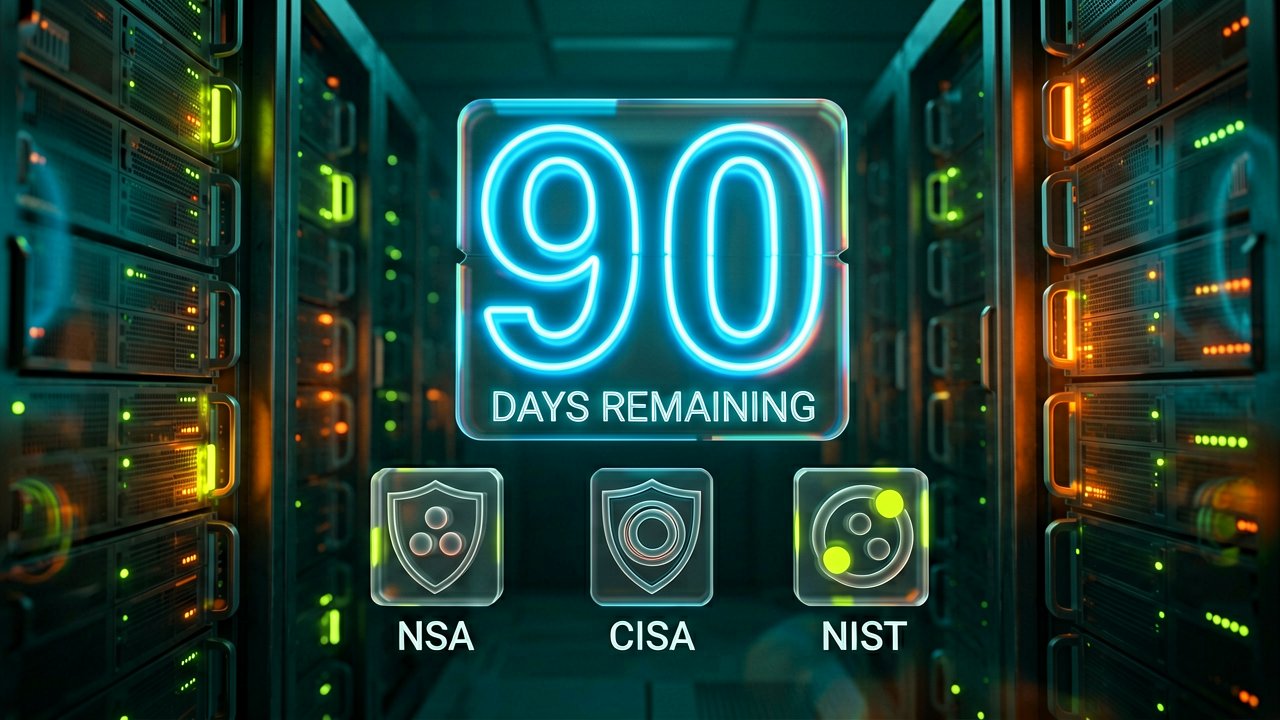
The White House is on the verge of reshaping how cutting-edge artificial intelligence reaches the public. President Donald Trump is expected to sign a sweeping cybersecurity and AI executive order as early as Thursday, setting up a specialized review system for advanced models before they launch. According to reports from POLITICO, the directive relies on a voluntary framework where AI developers are asked to give the federal government a 90-day heads-up before deploying covered models. This represents a delicate political compromise for an administration that has spent the last year preaching a gospel of aggressive tech deregulation.
Under the drafted framework, a coalition of national security and civilian agencies will be tasked with identifying what exactly qualifies as a "covered frontier model." Heavy hitters like the National Security Agency (NSA), the Cybersecurity and Infrastructure Security Agency (CISA), and the National Institute of Standards and Technology (NIST) will have 60 days to nail down a classified benchmarking process. Beyond giving federal agencies early access to poke and prod at the code, developers will also be asked to share pre-public access with critical infrastructure operators, such as major banks, to prevent systemic digital meltdowns before a model goes live.
What Most Reports Miss: The Tug-of-War for MAGA’s Tech Soul
Behind the scenes, this executive order is less about standard bureaucratic oversight and more about a fierce ideological battle raging within the president's inner circle. For months, prominent MAGA activists like Steve Bannon and right-wing organizer Amy Kremer have pressured the administration to implement strict, mandatory national security testing on highly capable systems, fearing that unchecked AI could pose existential or sovereign threats. They want teeth, enforcement, and hard boundaries around the labs building next-generation models like Anthropic's Mythos, as detailed by Reuters.
On the flip side, the administration’s tech-heavy advisory contingent—led by venture capitalist Marc Andreessen and former White House lead AI official David Sacks—has pushed back fiercely against anything resembling mandatory compliance. Sacks, who recently stepped into a co-chair role on the president’s tech advisory committee, has championed a "light-touch" philosophy designed to keep Silicon Valley moving at breakneck speed. By keeping the 90-day review period entirely voluntary, the administration has managed to nod toward national security anxieties without alienating the powerful venture capitalists and tech founders who backed Trump's return to Washington.
This upcoming directive also highlights a notable pivot from the administration's earlier actions, which focused almost exclusively on clearing the runway for corporate America. Just months ago, the administration made waves by issuing a federal framework designed to dismantle state-level AI rules, creating a specialized Justice Department task force to sue states like California that attempted to pass aggressive safety laws. That push, aimed at avoiding a confusing patchwork of local restrictions, was all about speed and securing global dominance over geopolitical rivals like China.
Now, the White House is realizing that unchecked speed comes with its own set of political risks. While the administration's AI Action Plan has successfully triggered massive federal infrastructure spending and fast-tracked data center construction, the underlying technology is evolving faster than Washington can process. By leaning into a voluntary pre-release window, the administration hopes to create an early warning system that keeps critical infrastructure safe while keeping its pro-innovation, anti-regulatory credentials firmly intact.
Reading Between the Lines: The Illusion of Voluntary Guardrails
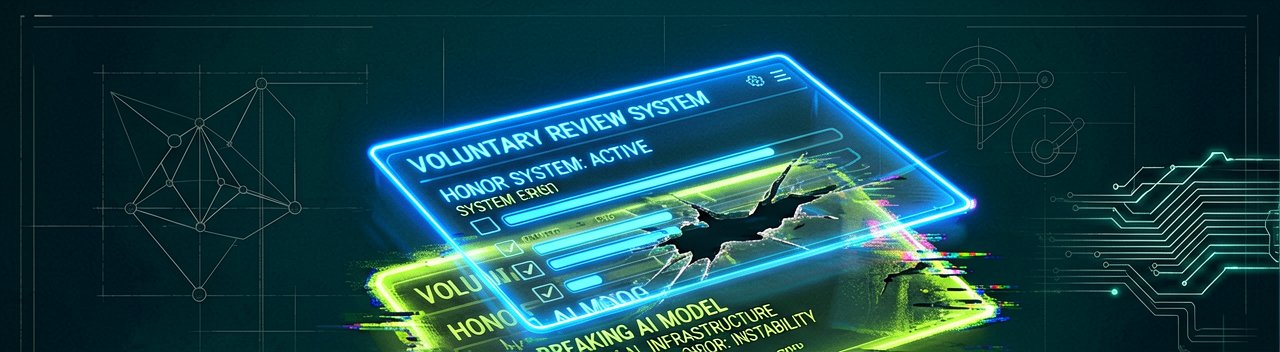
The core tension of this upcoming executive order lies in its reliance on the honor system. In a Washington obsessed with maintaining technological supremacy over Beijing, expecting hyper-competitive tech giants to willingly pause their most lucrative product launches for a 90-day federal colonoscopy is naive at best. If a major AI lab believes a rival is days away from shipping a smarter model, the temptation to bypass a voluntary national security review will be overwhelming, rendering the entire framework a toothless exercise in corporate public relations.
Furthermore, the administration’s strategy exposes a glaring contradiction in its broader tech policy. Just weeks after launching a federal crusade to sue states like California for attempting to regulate AI, the White House is now building its own ad-hoc, classified review bureaucracy. The administration is essentially arguing that state-level oversight is a catastrophic threat to innovation, but secret federal benchmark testing by the NSA and CISA is somehow entirely benign, presenting a clear double standard that will likely alienate both tech libertarians and safety advocates alike.
The logistical reality of the 60-day deadline for agencies like NIST and CISA to define "covered frontier models" also invites skepticism. Government agencies are notoriously slow, underfunded, and struggling to retain top-tier machine learning talent, which instead flows directly to Silicon Valley for seven-figure salaries. Expecting these bureaucratic bodies to outsmart the engineering teams at OpenAI or Anthropic and build a robust, classified benchmarking system in under two months is a recipe for rushed, superficial guidelines that will fail to keep pace with the actual velocity of the industry.
Ultimately, this executive order looks less like a definitive national security strategy and more like a clever political holding action. By offering a voluntary, light-touch review process, the White House can claim it is taking existential threats seriously to satisfy its populist base, while simultaneously signaling to its billionaire tech donors that the deregulatory party is still very much on. It is a masterclass in political optics, but as a mechanism for genuinely securing critical infrastructure against the unpredictable risks of advanced artificial intelligence, it leaves almost everything to chance.
"Washington has finally discovered the perfect compromise for the AI age: a system where the government pretends to regulate, tech companies pretend to comply, and everyone agrees to act surprised when the code inevitably breaks things anyway."
Artūras Malašauskas is an AI Systems Integrator with 20+ years of production-grade web engineering experience. He has designed, shipped, and scaled enterprise Python/PHP systems for logistics, SaaS, and public-sector clients. For the past year, he has focused exclusively on AI integrations: deploying open-source LLMs, building generative media pipelines (image, audio, video), and engineering multi-agent workflows for real production environments. His standard: reproducibility, security, cost-efficient inference—no vaporware. He documents and evaluates emerging AI tooling, separating verified capabilities from marketing noise. Technical editor at: muza-ai.eu, ai-verslas.lt, ai-naujinos.lt Connect on LinkedIn
Comments