The Pentagon’s High-Stakes Gamble to Put Frontier AI Inside the War Room
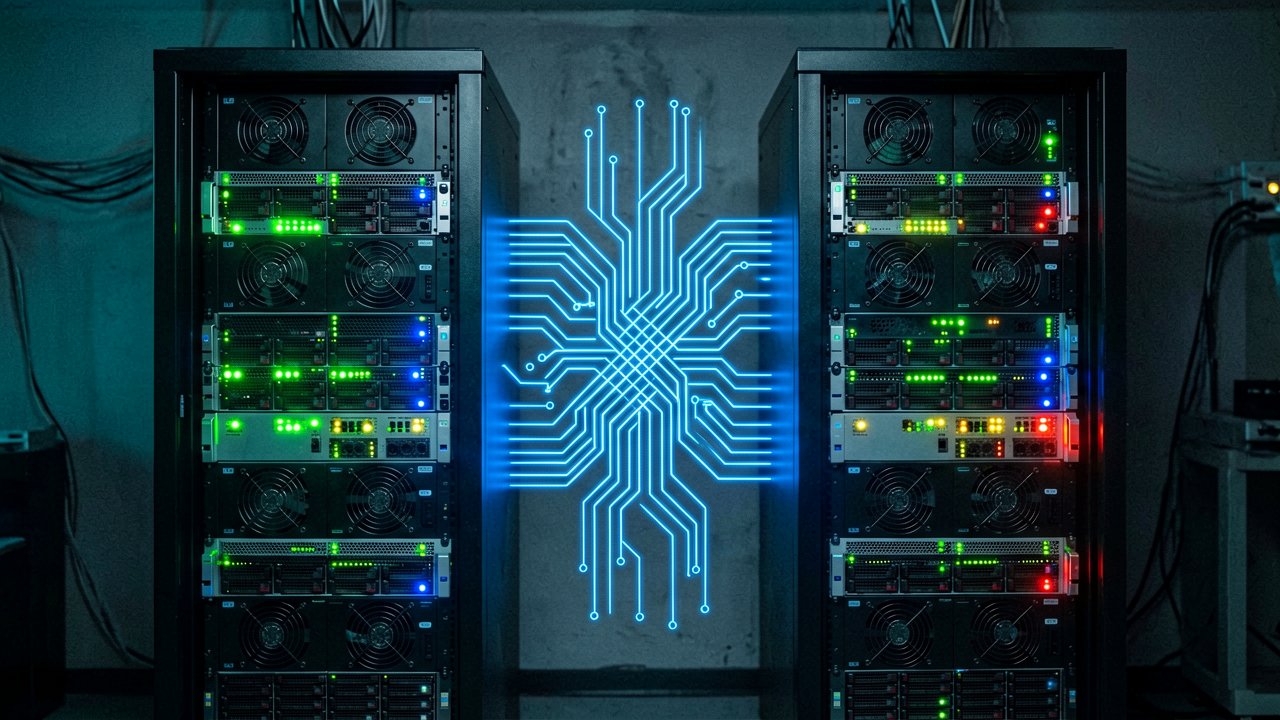
The Pentagon isn't waiting around for the perfect, hallucination-free artificial intelligence to emerge from Silicon Valley. Instead, the U.S. military is aggressively pushing to embed frontier large language models directly into its most sensitive, air-gapped data environments. According to a recent report by Politico , U.S. Cyber Command and the National Security Agency are standing up a brand-new internal task force designed to rapidly operationalize commercial AI models. The goal is straightforward but incredibly complex: give America's cyber-warfighters the ability to scan networks, unearth critical software vulnerabilities, and synthesize battlefield intelligence faster than any human operator ever could.
This initiative builds upon a broader, hyper-accelerated push by defense leadership to establish the United States military as an "AI-first" fighting force. Over the past few weeks, the Department of Defense finalized sweeping infrastructure agreements with eight major technology titans—including SpaceX, OpenAI, Google, NVIDIA, Microsoft, Amazon Web Services, and Oracle—to deploy advanced generative models onto secure Impact Level 6 (IL6) and Impact Level 7 (IL7) networks. This isn't just about streamlining back-office bureaucracy or optimizing supply chains. By dropping these tools into secret combat environments, planners are trying to achieve "decision superiority" in conflicts where modern response windows have shrunk from hours to fractions of a second.
What Most Reports Miss: The Invisible Grid Lock at the Air Gap
Behind the headline-grabbing announcements of tech partnerships lies a massive engineering bottleneck that commercial software has never had to solve. Silicon Valley's most powerful frontier models thrive on hyper-scale data centers, continuous cloud connectivity, and massive feedback loops. Military networks, by definition, are heavily siloed, closely monitored, and completely severed from the public internet to prevent foreign espionage. Forcing a commercial neural network to operate effectively inside a highly restrictive, air-gapped government server is a bit like trying to run a high-performance sports car on an isolated island without a gas station or paved roads.
Because these networks cannot phone home to commercial clouds, defense engineers are forced to build local sandboxes and complex multi-cloud hybrid architectures. The Pentagon has spent tens of millions of dollars attempting to replicate the compute environments necessary to run these models locally. However, when an AI model is cut off from the continuous stream of global data updates, its performance can degrade, and its tendency to confidently invent false information—a phenomenon known as hallucination—becomes a critical tactical liability. In a business office, an AI hallucination means a messy spreadsheet; on a classified military network, it could mean a misidentified threat vector or an erroneous payload calculation.

The Ethical Friction Point and the Outliers
The rush to operationalize these tools has also exposed a widening philosophical rift between the Pentagon and parts of the tech sector. While companies like OpenAI and Microsoft have adjusted their usage policies to accommodate lawful defense operations, others are pushing back. Startups like Anthropic have notoriously resisted deploying their systems under the Pentagon’s terms, citing stringent internal safety guidelines against integrating AI into kinetic or lethal operations. This resistance has sparked friction in Washington, with some officials floating the idea of blacklisting non-compliant vendors, proving that the military is willing to play hardball to keep its technological edge over near-peer adversaries like China.
Meanwhile, the sheer speed of this deployment is triggering warnings from defense analysts who fear "automation bias"—the natural human tendency to blindly trust machine-generated data. The Pentagon proudly notes that its official platform, GenAI.mil, has seen explosive adoption, compressing tasks that used to take months down to just a few days. Yet, as these systems move closer to active cyber-warfare and tactical decision-making, the line between an automated advisory tool and an autonomous decision-maker is blurring rapidly. The Pentagon is betting that it can manage these risks on the fly, calculating that the danger of moving too slowly is far greater than the danger of deploying an unpredictable, fast-moving technology into the shadows of America's secret networks.
Reading Between the Lines: The Mirage of the Automated General
The Pentagon’s underlying assumption is that sheer processing speed equates to strategic victory, but this logic inherently mistakes data synthesis for actual wisdom. Defense officials frequently boast about compressing workflows from months to days, celebrating a bureaucratic victory as if it were a tactical one. The contradiction is glaring: the military is supercharging its decision-making apparatus with tools that are notoriously bad at handling edge cases and novel scenarios. Modern warfare is defined by deception, asymmetric tactics, and chaos—the exact type of noisy, unstructured data that causes commercial large language models to break down or confidently misinterpret the battlefield.
Furthermore, relying on a consortium of competing tech titans introduces an unprecedented vulnerability into the heart of American national security. By outsourcing the foundational intelligence of its networks to companies like Google, Microsoft, and OpenAI, the Pentagon is effectively creating a multi-vendor dependency that defies traditional military command structures. If a critical software update introduced by a commercial vendor inadvertently changes the weights of a model, the military's localized network could experience an unpredicted shift in threat assessment. The defense establishment is traded a dependency on slow human analysts for a dependency on corporate software engineers who operate outside the traditional chain of command.
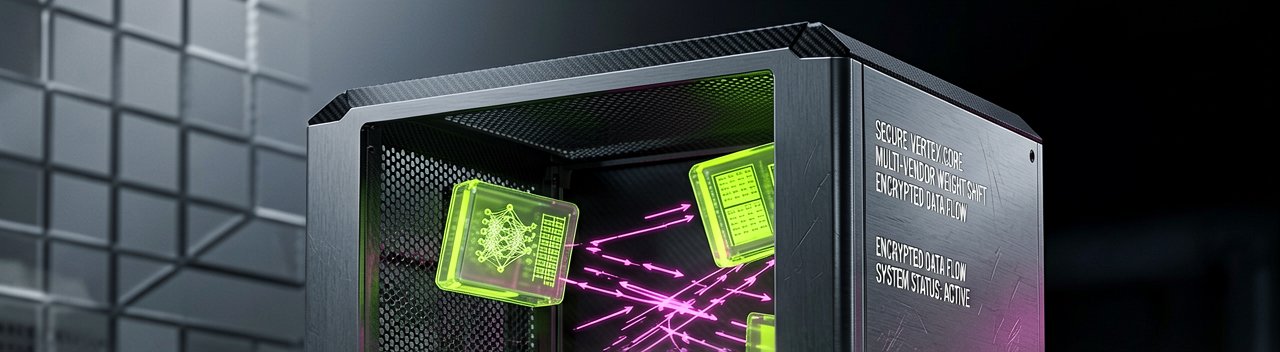
Projecting this trajectory forward reveals a chilling irony regarding the ultimate goal of "decision superiority." As the U.S. accelerates its AI integration to outpace adversaries, those adversaries are predictably doing the same, leading to an environment where AI systems are pitted directly against other AI systems at microsecond speeds. Humans will inevitably be pushed out of the loop simply because human biology cannot react fast enough to manage the automated skirmishes. The Pentagon may find that in its desperate race to control the future of warfare, it has constructed a hyper-automated system that operates entirely beyond human comprehension, leaving commanders to merely rubber-stamp the inscrutable algorithmic output of a machine.
"We are rushing to give the keys to the kingdom to algorithms that still cannot reliably distinguish a school bus from a tactical target in a snowstorm, proving that the only thing faster than military intelligence is automated military ignorance."
Artūras Malašauskas is an AI Systems Integrator with 20+ years of production-grade web engineering experience. He has designed, shipped, and scaled enterprise Python/PHP systems for logistics, SaaS, and public-sector clients. For the past year, he has focused exclusively on AI integrations: deploying open-source LLMs, building generative media pipelines (image, audio, video), and engineering multi-agent workflows for real production environments. His standard: reproducibility, security, cost-efficient inference—no vaporware. He documents and evaluates emerging AI tooling, separating verified capabilities from marketing noise. Technical editor at: muza-ai.eu, ai-verslas.lt, ai-naujinos.lt Connect on LinkedIn
Comments