Why Traditional Waiting Rooms Fail in the Age of AI Bots—And How DataDome Plans to Fix It
Anyone who has tried to score Taylor Swift tickets or cop a limited-edition sneaker drop knows the crushing despair of the virtual waiting room. You sit there, watching a little digital walking man progress at a snail's pace, only to find the event sold out the second you get through. It feels rigged because, more often than not, it actually is. Traditional waiting rooms were built to solve a human problem—specifically, protecting web servers from crashing when millions of people hit the "refresh" button at the exact same time. They were never designed to handle automated scripts operating at machine speed, which easily slip into the queue and hog all the inventory before a human can even type their credit card security code.
The rise of generative AI and automated shopping assistants has only weaponized this flaw, creating an environment where bad actors and sophisticated scraping bots mask themselves as eager consumers. Recognizing that the old queue model is fundamentally broken in today's internet ecosystem, cybersecurity firm DataDome has stepped in with a fresh blueprint. The company announced the launch of Priority Protect, an intent-aware virtual waiting room specifically engineered for what tech insiders are calling "agentic commerce." Instead of treating all queue traffic equally, the platform relies on foundational fraud detection to segregate legitimate human shoppers from malicious automated scripts in real time.
The Real-Time Traffic Sorting Hat
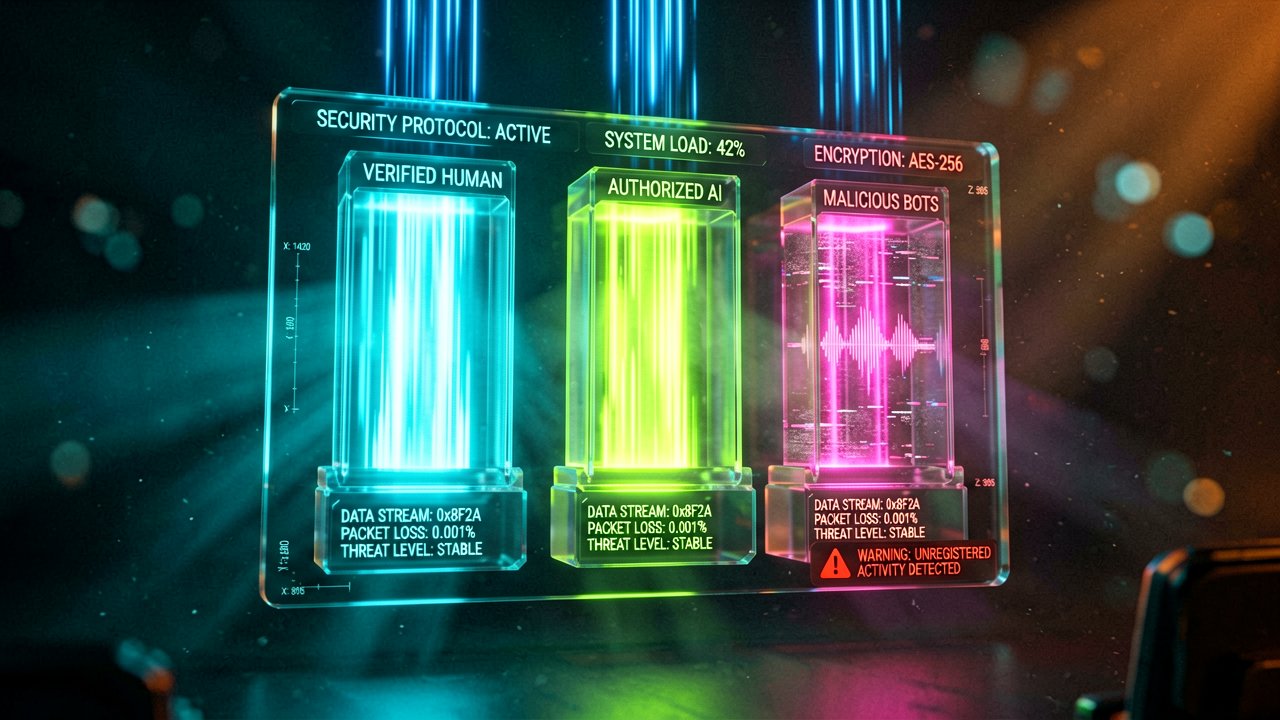
The engineering philosophy behind Priority Protect hinges on continuous validation rather than a one-time gate check. When a high-demand event kicks off, DataDome parses incoming requests using an engine that analyzes five trillion daily signals. This allows the system to instantly classify traffic into three distinct buckets: verified human shoppers, authorized AI agents—like trusted comparison shopping bots—and malicious scripts. According to an industry breakdown by SC Media, recent sporting events saw bots compromising up to 31% of total queue traffic, showcasing how easily legacy infrastructure gets overwhelmed.
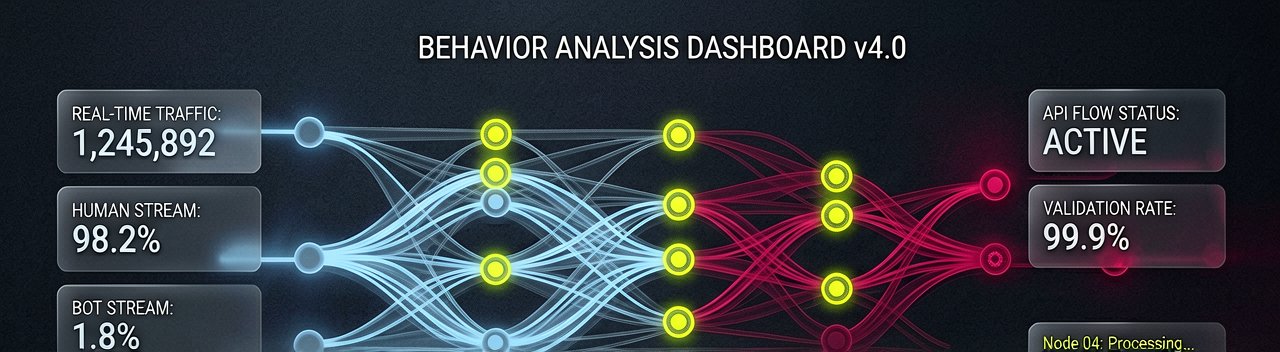
What makes this iteration interesting is its dynamic nature. Traditional queues check your credentials at the door; once you are in line, you are safe. Priority Protect, however, constantly monitors a user’s behavior while they wait. If an entity starts acting suspiciously midway through the queue—perhaps by triggering rapid-fire API requests or mimicking automated navigation—the platform automatically re-evaluates their session, serves a challenge, or boots them from the line entirely. This continuous friction for bad actors keeps the line clean and moving for actual people.
Granular Control Over the Floodgates
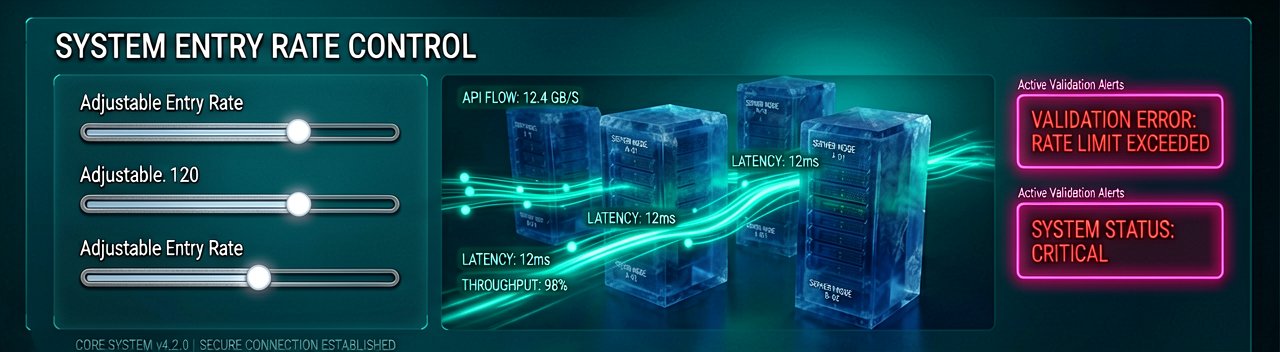
For enterprise retailers and ticketing giants, managing a massive traffic spike is a delicate balancing act between server stability and user experience. DataDome’s new tool tackles this by separating website capacity from the actual admission rate, presenting administrators with a dashboard dashboard that functions much like adjusting a room's size independently from its door size. Companies can dictate exactly how many concurrent users their infrastructure can safely support while fine-tuning the per-minute entry flow via an API.
Once a legitimate customer clears the waiting room, they are granted a 15-minute window to complete their purchase securely. If they happen to navigate away or accidentally close a tab within that timeframe, the system remembers their session token, allowing them back in without forcing them to repeat the entire queuing process. Early data shared by Business Wire indicates that enterprise clients piloting the software are seeing fewer bot-driven inventory hoarding incidents and significantly shorter wait times for real users. By turning the virtual waiting room from a simple holding pen into an active security checkpoint, the hope is that high-profile product launches might finally become a bit more democratic.
The Hidden Cost of the Bot-Infested Queue
Behind the Tech Stack: The real tragedy of the modern e-commerce hype drop isn't just that a teenager misses out on a pair of sneakers; it is the massive, invisible infrastructure bill that retailers quietly foot behind the scenes. When millions of automated scripts hit a ticketing site simultaneously, they do not just take up space in line—they consume an astronomical amount of cloud computing power. Legacy virtual waiting rooms were originally pitched as a cost-saving measure to prevent origin servers from melting under the strain of sudden traffic spikes. However, bad actors quickly realized they could simply flood the waiting room itself, forcing companies to pay their content delivery networks (CDNs) for spinning up millions of useless, bot-driven queue sessions that never convert into actual revenue.
This dynamic has forced a massive paradigm shift among chief information security officers (CISOs) who are tired of playing a game of whack-a-mole with IP addresses. In the past, security teams relied on static rate-limiting, which basically blocked any single IP address making too many requests. Today's commercial botnets are far more sophisticated, utilizing residential proxy networks to distribute their attacks across tens of thousands of legitimate home internet connections. To a standard waiting room, a bot routing its traffic through a family's smart refrigerator in Ohio looks identical to a real person browsing from their couch. This is why intent-aware systems like Priority Protect are shifting the battlefield away from network-level indicators and focusing entirely on behavioral telemetry, analyze how a user interacts with the page while they wait.
From a merchant perspective, the consequences of a botched product launch stretch far beyond immediate financial losses to long-term brand erosion. When genuine brand loyalists are consistently beaten by automated scalpers, they do not blame the bots; they blame the retailer for failing to protect the ecosystem. This frustration has catalyzed a growing drumbeat for federal and international regulation regarding bot usage in retail, similar to the legislation seen in the live entertainment space. By embedding heavy-duty fraud detection directly into the waiting area, cybersecurity firms are essentially trying to self-regulate the market before heavy-handed government mandates force their hands. The ultimate goal is to restore a sense of fairness to the digital marketplace, ensuring that the fastest fingers win the prize, rather than the deepest pockets with the best-engineered scripts.
The Perpetual Arms Race of Agentic Commerce
Reading Between the Lines: While DataDome’s proactive stance against the automated onslaught is a step forward, it introduces a glaring philosophical contradiction in how we define a "legitimate" internet user. The platform explicitly highlights its ability to allow "authorized AI agents" through the gate while blocking malicious ones. This creates an arbitrary line in the sand. A sneaker-buying bot built by a teenager in a basement is labeled malicious, but a shopping assistant built by a tech conglomerate is deemed an acceptable consumer tool. Both use automation to bypass human latency, and both ultimately deprive a flesh-and-blood consumer of a level playing field. By institutionalizing this hierarchy, cybersecurity firms are not necessarily saving the human shopper; they are simply choosing which machines get to win.
There is also a fair amount of marketing optimism to unpack regarding the stability of behavioral telemetry. History shows that whenever a defense company introduces a new metric to track bot behavior—such as monitoring mouse movements or typing cadence—bot developers react within weeks. Advanced scraping frameworks already utilize human-emulation libraries that can randomly vary pixel paths, introduce artificial pauses, and mimic the erratic navigation of an easily distracted human. Assuming that a continuous validation engine will remain foolproof ignores the reality of the cybersecurity arms race. As long as the financial upside of bypassing these queues remains high, developers will find a way to make their software look indistinguishably human, likely forcing platforms to demand increasingly intrusive biometric or device fingerprinting data from everyday users just to prove they are real.
Ultimately, this technological escalation points toward an ironic future where shopping becomes entirely delegated to AI. If humans must rely on enterprise-grade AI security guards just to sit in a virtual line, it is only a matter of time before those same humans completely outsource the actual buying process to their own AI agents. We are rapidly approaching an era of "agentic commerce" where websites will be built by machines, secured by machines, and browsed by machines, all executing transactions at a scale and speed that leaves the human consumer completely out of the loop. Retailers might see their infrastructure stabilized and their inventory cleared in seconds, but they will have to reckon with a marketplace devoid of real human engagement, brand loyalty, or organic hype.
In the end, the ultimate irony of modern cybersecurity is that we are spending millions of dollars building hyper-advanced artificial intelligence just to prove to another artificial intelligence that we are, in fact, still capable of being human. If the system works perfectly, you might finally get your concert tickets—assuming a machine doesn't buy them first to save you the trouble of going to the show.
Artūras Malašauskas is an AI Systems Integrator with 20+ years of production-grade web engineering experience. He has designed, shipped, and scaled enterprise Python/PHP systems for logistics, SaaS, and public-sector clients. For the past year, he has focused exclusively on AI integrations: deploying open-source LLMs, building generative media pipelines (image, audio, video), and engineering multi-agent workflows for real production environments. His standard: reproducibility, security, cost-efficient inference—no vaporware. He documents and evaluates emerging AI tooling, separating verified capabilities from marketing noise. Technical editor at: muza-ai.eu, ai-verslas.lt, ai-naujinos.lt Connect on LinkedIn
Comments