Bybit Launches AI Sub-Accounts to Put a Leash on Rogue Trading Agents

Automated crypto trading has officially outgrown the wild west phase where users hand over unbridled master account keys to experimental software. Cryptocurrency exchange Bybit has deployed a tailored account upgrade known as AI Sub-Accounts to directly solve the looming safety headache of agentic trading. By carving out a separate, heavily locked-down domain for automated scripts, the platform effectively builds a structural firewall around user wealth, ensuring that a bad line of code or a compromised external tool won't accidentally trigger a catastrophic liquidation of a trader's entire portfolio.
The core philosophy driving this shift is clear isolation. Unlike standard sub-accounts traditionally used to segregate manual strategies, this architecture treats artificial intelligence as an entity that requires continuous, programmatic guardrails. According to an official press release shared by Chainwire, any AI agent or external automated assistant hooked into the ecosystem now defaults to operating inside these isolated units, safeguarding funds right out of the gate for both novice experimenters and high-frequency institutions.
Building the Security Perimeter
Giving an automated agent unrestricted API access has historically been a massive security blind spot in the crypto sphere. Rogue behavior, code exploits, or API key thefts can instantly siphon away an investor's hard-earned assets if left unchecked. Bybit addresses this by enforcing mandatory fund containment, meaning an agent operates entirely within its designated sub-account with no unilateral capability to execute cross-account asset movements or transfers back to the primary wallet.
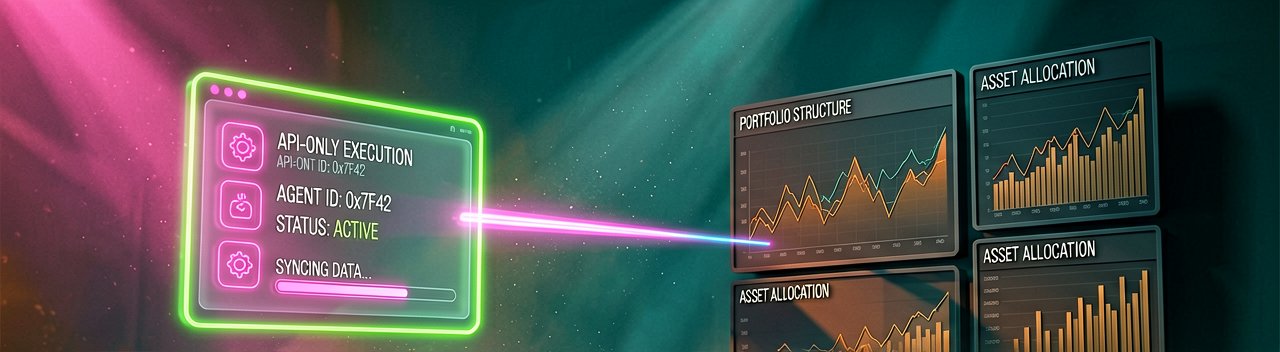
Traders retain granular parent oversight, setting strict caps on leverage, maximum asset holdings, and allowable trade commands on a per-account basis. To guarantee that external tech never oversteps its bounds, these accounts utilize API-only execution. This eliminates standard UI login paths or in-app account switching, ensuring malicious actors cannot hijack the automated sub-account to bypass standard security filters. It represents a practical step forward in remapping the risk profile of decentralized finance, acknowledging that while algorithms move faster than humans, they still require strict boundaries.
Beyond the Press Release: The Architecture of Algorithmic Trust
What Most Reports Miss: The launch of segregated AI trading environments is not merely a routine UI update; it represents a fundamental shift in how the crypto industry perceives counterparty risk in the age of automation. Historically, quantitative traders relied on a precarious mix of custom IP whitelisting and raw luck to ensure their third-party trading bots did not execute rogue orders or drain collateral during unprecedented market swings. By baking fund isolation directly into the exchange's ledger level, the infrastructure moves the burden of security from flawed external code to the platform's core matching engine.
Industry insiders have long warned that the rapid proliferation of large language models and autonomous AI agents would outpace exchange safety protocols. In traditional finance, specialized software undergoes months of institutional vetting before touching live order books. The retail-heavy, round-the-clock nature of crypto demands an automated safety valve that operates in real-time. Bybit’s decision to mandate API-only execution for these sub-accounts reveals an acute understanding of this dynamic, effectively turning the AI agent into a sandboxed entity that can read market data and place trades, but remains entirely blind and powerless regarding structural account configurations.
From a stakeholder perspective, this setup appeals directly to a growing class of fund managers who utilize crowdsourced or community-developed algorithmic strategies. Institutional allocators can now hand over specific capital tranches to experimental AI models without risking the firm's primary treasury or revealing master account identity. This structural partitioning drastically lowers the barrier to entry for testing volatile, high-frequency machine learning models that would otherwise be deemed too dangerous for live deployment on unified margin accounts.
This structural firewall also serves as a crucial defensive measure against a rising tide of sophisticated API hijacking tactics. Cybercriminals have increasingly pivoted away from targeting complex smart contracts, choosing instead to compromise the local machines of traders to steal active API keys. Under standard configurations, an leaked API key with trading permissions could be weaponized to artificially pump low-liquidity pairs, effectively draining the user's account balance through premeditated slippage. Restricting the blast radius to a dedicated, capped sub-account prevents localized security breaches from escalating into total portfolio liquidations.

The Friction Between Autonomy and Absolute Control
Reading Between the Lines: While sandboxing AI agents inside segregated sub-accounts is undoubtedly a victory for risk management, it exposes a fundamental paradox at the heart of decentralized automation. The tech sector frequently champions AI agents for their ability to operate with complete fluidity—monitoring cross-chain liquidity, adjusting delta-neutral positions, and shifting capital to safety instantly during flash crashes. By trapping these agents inside a rigid sandbox where they cannot move funds between accounts or independently manage their own collateral, platforms inherently limit the very adaptability that makes autonomous agents valuable in the first place.
This structural friction introduces a distinct operational bottleneck for sophisticated quantitative traders. If an AI agent detects a systemic market collapse and needs to urgently reallocate capital to a completely separate, low-risk strategy running on another sub-account, it cannot do so without human intervention. The trader must step in to manually approve the transfer, which completely defeats the purpose of millisecond-level autonomous decision-making. We are left with a system that is undeniably safer, but arguably less intelligent—a compromise where security is achieved by intentionally keeping the machine tethered to human latency.
Furthermore, this safety framework shifts the primary point of failure rather than eliminating it entirely. While fund isolation protects the master account from a complete wipeout, it does nothing to prevent an AI agent from repeatedly burning through its allotted sub-account capital due to bad data inputs or unexpected market anomalies. In high-frequency trading, an unhinged algorithm can execute thousands of losing trades within a matter of seconds. Limiting the total loss to a pre-funded cap certainly cushions the blow, but it highlights the reality that exchange-level permissions can only protect traders from theft and catastrophic liquidation, not from the inherent unpredictability of their own mathematical models.
Looking ahead, the long-term implication of this trend will likely be an arms race between sophisticated prompt-injection vulnerabilities and exchange-side defensive architecture. As traders increasingly hook large language models up to live trading APIs to execute strategies based on natural language market sentiment, malicious actors will find ways to poison the data streams these agents rely on. Forcing AI into isolated sub-accounts is an excellent, pragmatic defense for the current market landscape, but the industry will eventually have to reckon with the fact that no physical firewall can entirely fix a broken algorithm.
"Ultimately, giving a trading bot its own isolated sub-account is the digital equivalent of handing your teenager a prepaid debit card with a strict daily spending limit. It won't stop them from making deeply questionable choices in the heat of the moment, but it thankfully ensures they won't accidentally bet the family home on a volatile meme coin before breakfast."
Artūras Malašauskas is an AI Systems Integrator with 20+ years of production-grade web engineering experience. He has designed, shipped, and scaled enterprise Python/PHP systems for logistics, SaaS, and public-sector clients. For the past year, he has focused exclusively on AI integrations: deploying open-source LLMs, building generative media pipelines (image, audio, video), and engineering multi-agent workflows for real production environments. His standard: reproducibility, security, cost-efficient inference—no vaporware. He documents and evaluates emerging AI tooling, separating verified capabilities from marketing noise. Technical editor at: muza-ai.eu, ai-verslas.lt, ai-naujinos.lt Connect on LinkedIn
Comments