The End of Lazy Audits: Hadrian Demanded More from AI Code Reviews, So It Built OpenHack
Handing a massive codebase over to a standard Large Language Model (LLM) and asking it to find security flaws is a lot like asking an eager intern to proofread a legal brief. They will definitely give you an output, but it will be a chaotic cocktail of hallucinated bugs, confidently explained errors, and a few genuine insights. Sorting through that mess usually takes longer than just auditing the code yourself. Sick of this exact bottleneck, Amsterdam-based offensive security firm Hadrian decided to change the playbook. They built an internal system that actually worked, used it to quietly find hundreds of flaws in government-grade software, and have now released it to the public as an open-source tool called OpenHack under the MIT license, according to a report by Yahoo Finance.
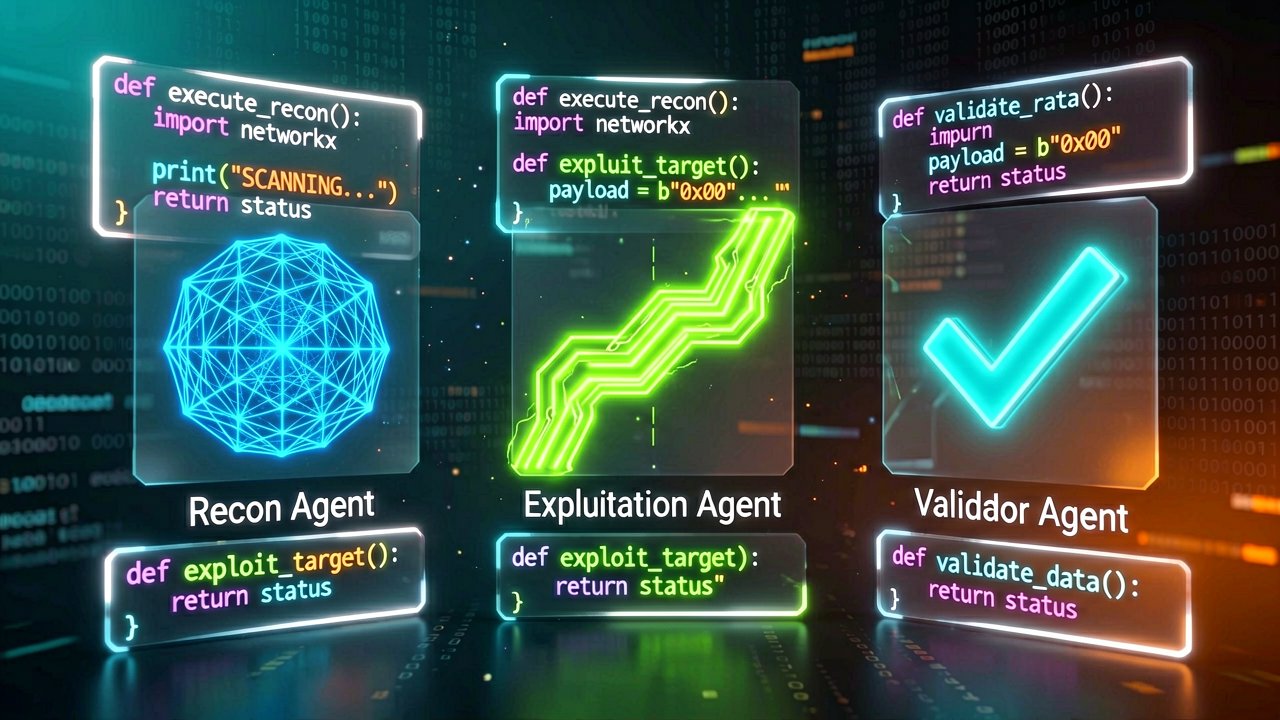
Instead of letting an AI aimlessly drift through repositories, OpenHack introduces a structured, scenario-first architecture. It functions natively inside developer-centric environments like Claude Code, Codex, and Cursor, standardizing how automated agents approach security testing. By moving away from unstructured prompts, the tool targets the two main flaws that ruin traditional AI code reviews: lack of specific scope and the dangerous habit of letting an AI grade its own homework. OpenHack separates the process into distinct roles, using a combination of specialized routing units, expert personas, and independent validation agents to stress-test findings before presenting them to a human team.
A Strategy Proven on Government Codebases
This is not just theoretical software engineered in a vacuum. Hadrian’s engineering team battle-tested this exact methodology while reviewing open-source applications deployed by Dutch government agencies, as detailed by TipRanks . During those reviews, the framework successfully identified serious, critical-severity vulnerabilities, including major flaws that exposed active server credentials and compromised Azure database access. By productizing this workflow and stripping away the premium cost barriers, the release gives independent security teams and resource-strapped startups a realistic way to audit their applications with the same rigor as an elite offensive security firm.
Flipping the Script on Offensive AI Tools
The release comes at a time when open-source offensive AI frameworks are spreading rapidly across GitHub, often giving malicious actors a head start in automated reconnaissance. By putting a highly coordinated, multi-agent defense tool into the hands of the global community for free, Hadrian hopes to commoditize vulnerability discovery for defensive teams. OpenHack is available for immediate deployment, requiring Python 3.9 or later, and includes full documentation alongside standard responsible disclosure guidelines. It gives developers a fighting chance to find and patch the critical holes in their infrastructure before an external adversary does it for them.
What Most Reports Miss: The Hidden Architectural War on AI Hallucinations
The standard media narrative around OpenHack centers on a classic David-and-Goliath triumph: a small cybersecurity firm giving away expensive enterprise-grade tools for free. But the real story is an architectural triumph over the fundamental flaws of modern Large Language Models. When Hadrian’s engineers began using off-the-shelf AI models for offensive security, they ran into a wall of systemic failures. A typical LLM asked to find a vulnerability acts like an overeager junior analyst, frequently inventing APIs that do not exist or misinterpreting standard configurations as massive security breaches. The industry was plagued by noise, and the human labor required to filter out these false positives negated the speed advantages of using automation in the first place.
OpenHack solves this not by throwing more compute at the problem, but by enforcing a strict algorithmic bureaucracy through a multi-agent framework. By separating the discovery process into distinct, sandboxed personas—such as a specialized Recon Agent, an Exploitation Agent, and a cynical, highly critical Validator Agent—the tool forces the AI to argue with itself. If the Exploitation Agent claims a codebase is vulnerable to a cross-site scripting attack, the Validator Agent demands functional proof before a human engineer ever sees the alert. This adversarial approach inside the software itself reduces false positives to a fraction of traditional automated scans, turning AI from a liability into a reliable co-pilot.
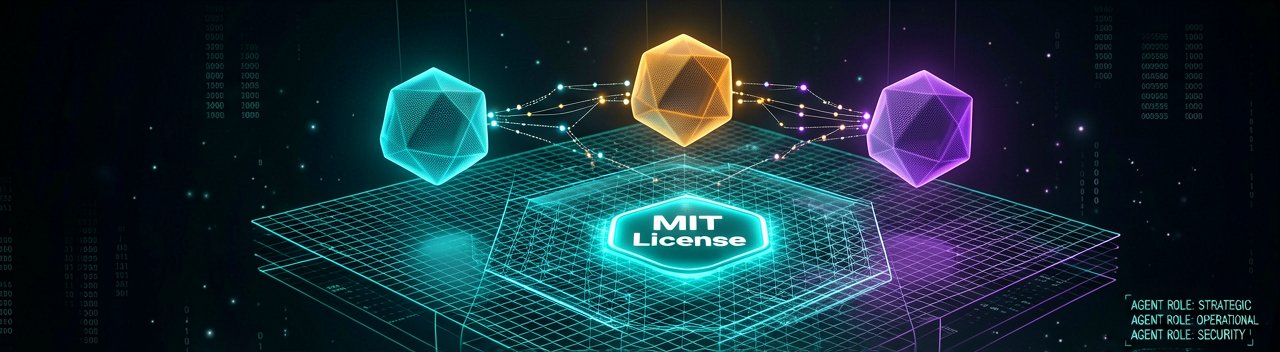
This release also highlights a massive shift in how the cybersecurity industry handles proprietary intellectual property. Historically, offensive security firms guarded their custom scanning scripts and automation frameworks like state secrets, using them as primary differentiators to justify massive consulting retainers. Hadrian’s decision to put OpenHack on GitHub under the permissive MIT license suggests a realization that the traditional black-box model is dying. In an era where AI models are democratizing basic script-writing, defensive tools must adapt and scale faster than commercial software cycles allow. By open-sourcing the core engine, Hadrian is crowdsourcing the refinement of its AI agents, relying on the global developer community to build out plugins and integrations that no single company could produce alone.
However, the deployment of OpenHack opens up a complex ethical debate among security researchers. An AI capable of autonomously discovering high-severity flaws in government-grade software to defend it can just as easily be used by malicious actors to map out zero-day vulnerabilities in public infrastructure. Hadrian has attempted to mitigate this by bundling strict responsible disclosure guidelines and pre-configured guardrails into the repository. Yet, once a powerful tool enters the open-source ecosystem, controlling its application becomes virtually impossible. The coming months will likely reveal whether OpenHack serves as a shield for cash-strapped defenders or a force multiplier for automated threat actors.
Reading Between the Lines: The Free Software Paradox in an Automated Arms Race
The tech industry loves a story about democratization, but altruism in cybersecurity rarely exists without a calculated commercial motive. By giving away OpenHack, Hadrian is not just philanthropy-minded; it is executing a classic commoditization strategy. In business, companies often open-source the layer of the tech stack they want to standardize, thereby destroying the pricing power of competitors who charge premium fees for that specific service. By making multi-agent AI vulnerability hunting free, Hadrian effectively resets the baseline for what a modern security audit looks like, forcing rivals to either justify their exorbitant engineering fees or match the open-source standard.
There is also a glaring contradiction in the claim that tools like OpenHack will magically solve the cybersecurity talent shortage. While the framework successfully automates the tedious, front-end heavy lifting of identifying potential attack vectors, it simultaneously creates a secondary bottleneck. Someone still has to review, verify, and actually fix the critical flaws the AI surfaces. Instead of replacing the need for human experts, this level of automated discovery shifts the burden down the pipeline, potentially overwhelming junior development teams with a firehose of complex security tickets they lack the deep architectural knowledge to safely resolve.
Furthermore, relying on open-source contributions to keep defensive AI tools ahead of malicious variants is a highly volatile gamble. Bad actors do not operate under the constraints of responsible disclosure guidelines or licensing compliance. While the defensive community collaborates openly on GitHub to patch the framework's edge cases, threat actors will inevitably fork the code to strip out Hadrian's built-in guardrails entirely. If the history of dual-use security tools has taught us anything, it is that offensive innovation almost always moves faster when it is unburdened by corporate ethics or public reputation management.
Ultimately, OpenHack exposes the fragile reality of our current software ecosystem, where government agencies and multinational enterprises routinely rely on open-source code that is held together by digital duct tape. Automation can shine a spotlight on the cracks, but it cannot rebuild the foundation. Until organizations prioritize secure-by-design engineering over rapid feature deployment, even the most sophisticated multi-agent AI framework will simply be cataloging a house of cards as it collapses in slow motion.
Giving everyone a free, high-powered automated magnifying glass to find the cracks in the digital foundation is undeniably a public service, right up until you realize nobody brought any concrete to fix them.
Artūras Malašauskas is an AI Systems Integrator with 20+ years of production-grade web engineering experience. He has designed, shipped, and scaled enterprise Python/PHP systems for logistics, SaaS, and public-sector clients. For the past year, he has focused exclusively on AI integrations: deploying open-source LLMs, building generative media pipelines (image, audio, video), and engineering multi-agent workflows for real production environments. His standard: reproducibility, security, cost-efficient inference—no vaporware. He documents and evaluates emerging AI tooling, separating verified capabilities from marketing noise. Technical editor at: muza-ai.eu, ai-verslas.lt, ai-naujinos.lt Connect on LinkedIn
Comments