IBM Doubles Down on AI Defense: Will a Hardened Portfolio Win Over the Enterprise?
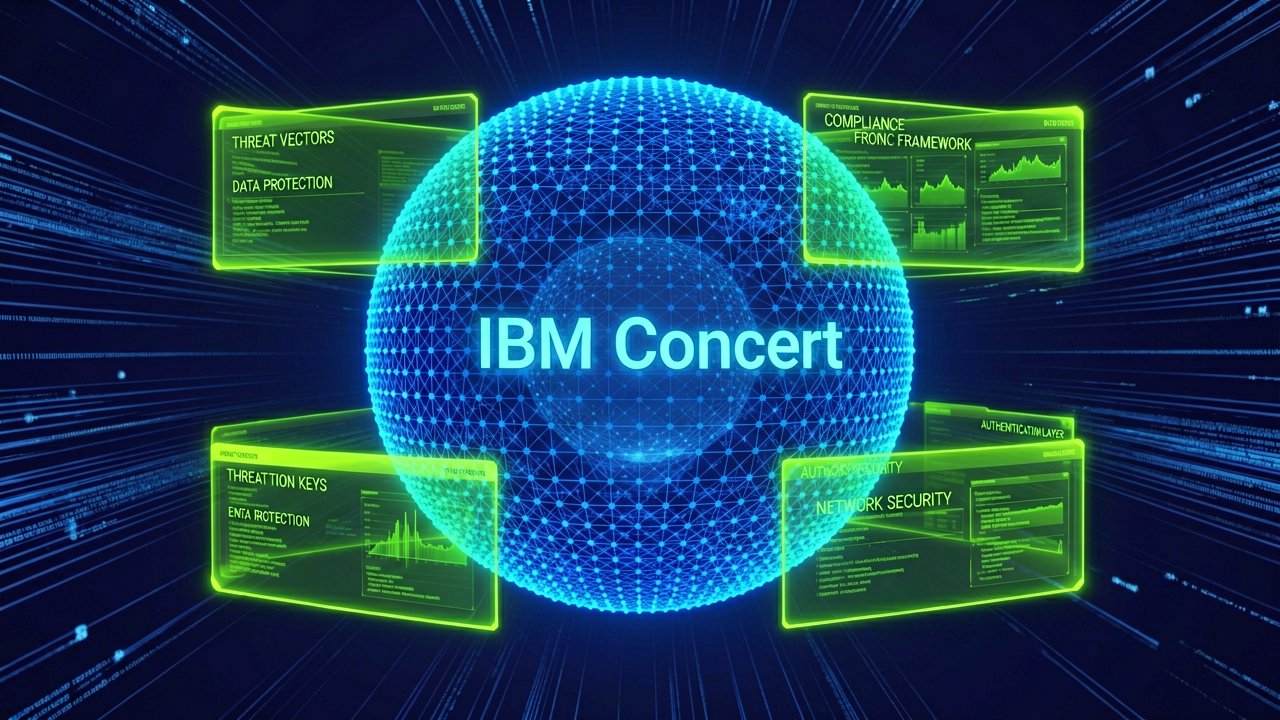
IBM is throwing its weight behind a massively expanded enterprise security portfolio designed specifically to neutralize AI-powered cyber threats. As hackers weaponize frontier models to speed up everything from initial network reconnaissance to automated vulnerability exploitation, Big Blue is betting that its deep structural experience can turn the tide. According to a recent announcement hosted on the IBM Newsroom, the tech giant is rolling out an aggressive mix of real-time machine learning tools and automated multi-agent security defenses. It is a calculated pivot toward a market that is deeply exhausted by experimental tech and desperate for production-grade operational reliability.
This is not just another minor software patch; it is a fundamental architectural play. By positioning platforms like IBM Concert as unified command centers for operational intelligence, IBM is trying to pull disparate application, network, and infrastructure signals into a single view. The goal is what they call "Autonomous Security"—deploying an army of internal AI agents that talk to each other and fix back-end system vulnerabilities at machine speed before a human analyst even shifts in their chair. For enterprises currently drowning in a sea of fragmented point solutions, the promise of automation that works across hybrid clouds and open-source libraries is undeniably attractive.
The real question for investors and industry watchdogs is whether this technical flex will actually move the needle for IBM’s broader business prospects. On paper, the strategy is brilliantly sticky. By tightly weaving these new protective layers into its existing infrastructure, IBM creates an incredibly compelling cross-selling loop. A client looking to secure an advanced language model is suddenly a prime candidate for a bundled suite containing hybrid cloud services, Red Hat consulting, and automated compliance tracking. It gives Big Blue a massive advantage over niche security startups that can't offer that kind of sweeping, full-stack enterprise ecosystem.
The Anthropic Alliance and Project Glasswing
A major cornerstone of this security push is IBM's active collaboration with Anthropic under the banner of Project Glasswing. This coalition of industry heavyweights focuses directly on hardening critical software infrastructure and sharing threat telemetry across sectors. Rather than keeping its findings locked behind a proprietary paywall, IBM is contributing fixes and open-source patches back to the community. It is a smart, reputation-building play that acknowledges a simple truth in modern tech: you cannot secure a global enterprise if the open-source foundations it stands on are crumbling.

The Regulatory Hook
Beyond the raw threat mitigation, IBM's big differentiator here is its tight integration between Guardium AI Security and watsonx.governance. It turns out that fighting off hackers is only half the battle for modern chief information officers; the other half is proving to regulators that your AI isn't breaking the law. By embedding automated compliance frameworks that map directly to the EU AI Act and NIST standards, IBM is solving a massive corporate headache. They are transforming security from a reactive cost center into an essential compliance shield, which might just be the exact catalyst needed to accelerate long-term software revenue growth.
Deep Dive: The High-Stakes Battle Over Autonomous Defenses
Behind the Scenes: The actual battlefield for IBM is not just the network perimeter, but the boardroom budget meetings where chief information security officers are forced to make a harrowing choice. For years, enterprise security has been plagued by tool sprawl, with the average large corporation running dozens of disconnected security products. IBM’s aggressive move to bundle multi-agent AI defense systems is a direct assault on this fragmentation, aiming to consolidate the security stack into a single, high-margin relationship. However, industry insiders note that convincing battle-scarred infrastructure teams to hand over autonomous remediation rights to AI agents remains an uphill psychological battle.
Historical context reveals that this is not Big Blue's first attempt at commanding the security orchestration market. Veteran analysts recall the early days of IBM Resilient and QRadar, platforms designed to centralize threat intelligence but often criticized for heavy deployment overhead. The evolution into the current framework, backed by Project Glasswing and Anthropic's reasoning models, represents a shift from static playbooks to dynamic, real-time reasoning. The stakes are vastly higher now, as attackers use the exact same underlying transformer architectures to generate polymorphic malware that evades traditional signature-based detection engines.
Stakeholder perspectives reveal a sharp divide between risk management executives and hands-on system administrators. CFOs are highly receptive to the cost-containment narrative of automated compliance, especially with the impending financial penalties tied to global regulations like DORA and the EU AI Act. Meanwhile, engineering teams express private skepticism about the potential for autonomous agents to disrupt production environments through false positives. IBM is acutely aware of this friction, which is why the platform balances fully automated remediation with a "human-in-the-loop" override capability designed to ease enterprises into the era of machine-speed defense.

The broader market implications point toward a looming consolidation wave across the cybersecurity vendor landscape. Independent point-solution providers are finding it increasingly difficult to compete with full-stack giants that can absorb the massive compute costs required to run continuous AI threat simulation. By leveraging the scaling efficiencies of its hybrid cloud infrastructure, IBM can offer telemetry processing at a price point that undercuts specialized startups. This economic leverage, combined with deep enterprise consulting roots, positions the company to capture a disproportionate share of the emerging AI protection market as organizations move past the initial pilot phase into full-scale deployment.
Reading Between the Lines: The Cost of Automation
Reading Between the Lines: The grand narrative of autonomous security agents fixing vulnerabilities at machine speed sounds flawless on a marketing brochure, but it ignores a fundamental operational contradiction. Cyber defense is notoriously zero-sum, and the compute power required to run continuous, multi-agent AI simulations across a global enterprise network is staggering. IBM is pitching this portfolio as a cost-saving mechanism for exhausted security teams, yet the underlying resource consumption of these advanced models could simply shift expenses from human payroll to cloud infrastructure bills. For mid-sized enterprises already struggling with unpredictable cloud costs, trading analyst fatigue for a volatile API line-item is a risky proposition.
There is also a profound irony in using advanced AI models to secure the very supply chains that these models have made inherently unstable. While IBM highlights its integration with watsonx.governance to ward off adversarial prompt injection and data poisoning, the tech industry has yet to prove that any large language model can be permanently hardened against a clever attacker. By building an entire defense ecosystem on top of probabilistic software, enterprise architectures risk creating a single, massive point of failure. If a sophisticated actor manages to deceive the orchestrating security agent, they gain the keys to a kingdom that has been fully automated to obey that agent's commands.
Furthermore, IBM's heavy reliance on open-source community contributions through Project Glasswing exposes a strategic vulnerability. Big Blue is banking on a collaborative, ecosystem-wide defense to spot threats early, but history shows that open-source repositories are prime targets for quiet, long-term supply chain infiltration. Relying on global telemetry means IBM’s defensive agents are inherently reactive, learning from exploits that have already succeeded somewhere else. For prospects looking to achieve true zero-trust isolation, a sprawling platform that thrives on interconnected, multi-vendor data sharing might feel like an unnecessary expansion of their digital attack surface.
"We are rapidly approaching a corporate future where an enterprise's entire security strategy consists of paying one tech giant millions of dollars to watch an automated AI defense system play high-speed chess against an automated hacker bot, while human executives sit in the corner quietly praying that nobody accidentally pulls the server plug."
Artūras Malašauskas is an AI Systems Integrator with 20+ years of production-grade web engineering experience. He has designed, shipped, and scaled enterprise Python/PHP systems for logistics, SaaS, and public-sector clients. For the past year, he has focused exclusively on AI integrations: deploying open-source LLMs, building generative media pipelines (image, audio, video), and engineering multi-agent workflows for real production environments. His standard: reproducibility, security, cost-efficient inference—no vaporware. He documents and evaluates emerging AI tooling, separating verified capabilities from marketing noise. Technical editor at: muza-ai.eu, ai-verslas.lt, ai-naujinos.lt Connect on LinkedIn
Comments