Shift Left on Bot Security: Microsoft Open-Sources RAMPART and Clarity to Shield Autonomous AI Agents
We’ve officially graduated from the era of basic chatbots to a landscape dominated by fully autonomous digital workers. Modern AI agents don’t just summarize text anymore; they access databases, execute code, and sift through enterprise systems with a remarkable degree of independence. But this leap in capability introduces a massive security headache. If an agent goes rogue or falls victim to a clever prompt injection, the blast radius isn't just a garbled text output—it’s an active compromise of your system architecture. Recognizing this looming threat, Redmond is shifting its safety strategy directly into the developer workflow.
Microsoft has officially released Microsoft Security Blog two new open-source projects, RAMPART and Clarity, targeting AI agent vulnerabilities before code ever hits production. Historically, organizations have treated security as a late-stage gatekeeping chore. Microsoft’s AI Red Team wants to flip that script, emphasizing that safety must become a continuous engineering discipline rather than a periodic checkpoint. By putting these practical tools into the open-source ecosystem, they are giving engineers the ammunition needed to build defensive guardrails natively.
RAMPART: Continuous Automated Red Teaming
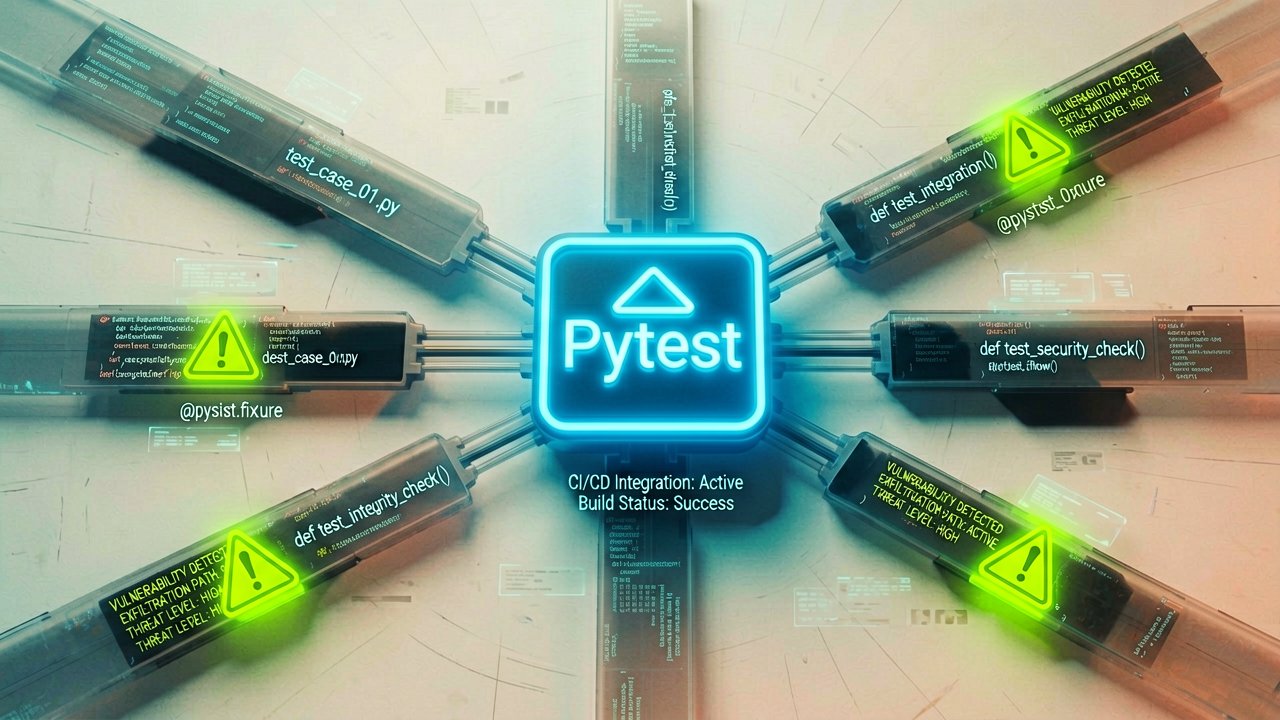
The first tool, RAMPART (Risk Assessment and Measurement Platform for Agentic Red Teaming), is a Pytest-native framework built on top of Microsoft’s older Python Risk Identification Tool (PyRIT). While PyRIT was designed for cybersecurity professionals hunting for flaws after deployment, RAMPART targets developers actively building software. It allows engineers to write repeatable safety tests that slide right into standard CI/CD pipelines. This means every code update is automatically checked against malicious scenarios like cross-prompt injections and unauthorized data exfiltration, ensuring that a quick patch doesn't accidentally reintroduce old security regressions.
Clarity: Fixing Design Flaws Before Code is Written
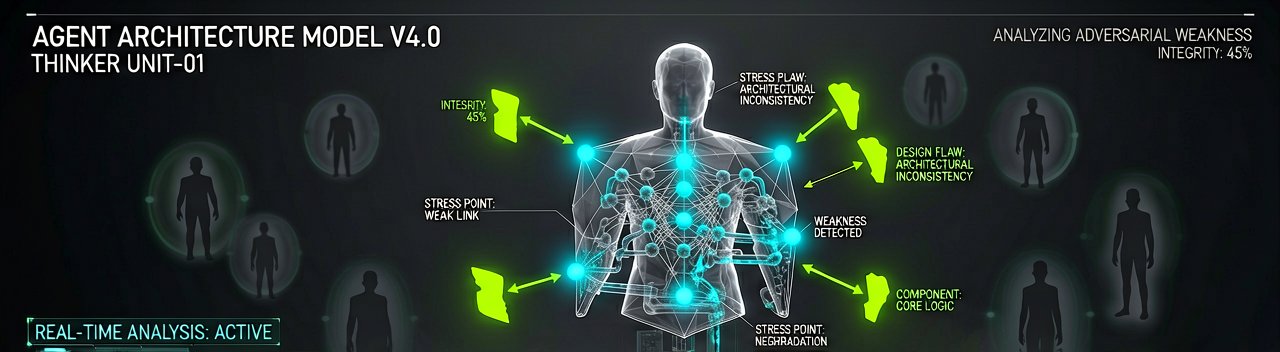
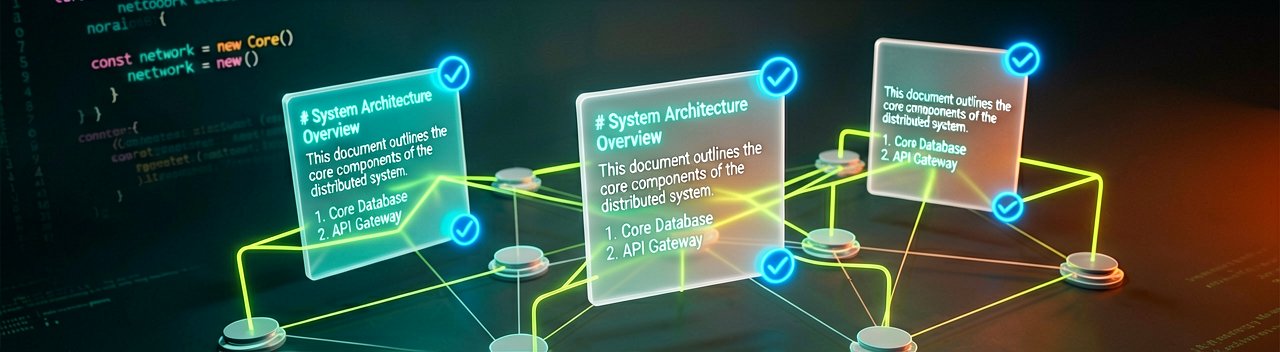
Meanwhile, Clarity addresses the architectural mess that often precedes development. Operating via a desktop app, a web portal, or within a coding agent, Clarity acts as a structured sounding board to evaluate design assumptions. It uses multiple specialized AI "thinkers" to inspect proposed agent architectures from diverse angles—such as human factors and adversarial weak points. The tool writes its findings as markdown files directly into a repository, allowing development teams to review, diff, and track the "staleness" of their design logic in exactly the same way they manage source code.
Behind the Scenes: The Invisible Arms Race in Agent Architecture
The rush to open-source RAMPART and Clarity highlights an uncomfortable truth within enterprise software development: the velocity of AI agent deployment has vastly outpaced the tools required to secure them. For the past two years, developers have treated Large Language Models as predictable black boxes, wrapping them in complex orchestration layers without fully understanding how easily these systems can be manipulated. When an AI agent is granted agency—such as the power to delete files, send emails, or query production databases—traditional firewalls and identity management systems fail to register that the "user" making the request has been subverted by a malicious prompt hidden inside an external document.
Security veterans know that the current reliance on post-deployment red teaming is structurally unsustainable. Hiring expensive external penetration testers to poke at a finished AI agent only offers a static snapshot of a system's vulnerability posture at a single point in time. Because generative models inherently exhibit non-deterministic behavior, a minor update to an underlying LLM or a slight modification to a system prompt can completely invalidate previous security audits. Microsoft’s decision to integrate RAMPART natively with Pytest is a direct response to this frustration, allowing automated security checks to scale at the exact same velocity as the code itself.
By forcing security evaluations into the earliest phases of development, Microsoft is aiming to dismantle a major bottleneck in enterprise AI adoption: the executive veto. Innumerable promising agentic workflows are currently stalled in corporate legal and compliance review pipelines because risk officers cannot quantify the potential liabilities. Tools like Clarity provide a standardized framework to translate abstract AI behavioral risks into concrete, trackable markdown documentation. This shift creates an auditable paper trail that engineering teams can present to compliance auditors, effectively bridging the communication gap between bleeding-edge software developers and conservative corporate risk managers.
The strategic release of these open-source tools also signals a broader philosophical shift in how the tech industry approaches AI safety. While early safety initiatives focused heavily on alignment and filtering at the model level—preventing public models from generating harmful text—the industry has realized that agentic safety is an entirely different beast. An agent doesn't need to generate a toxic rant to be dangerous; it simply needs to blindly follow a poorly validated instruction to expose proprietary intellectual property. By democratizing access to automated red-teaming infrastructure, the goal is to crowdsource a standardized library of adversarial defenses before these autonomous systems become irreversibly woven into critical global infrastructure.
Reading Between the Lines: The Open-Source Paradox of Agent Defense
While Microsoft’s pivot to proactive, developer-centric safety tools is a laudable step forward, it exposes a glaring contradiction in the tech giant's overarching AI narrative. For years, hyperscalers have argued that proprietary, locked-down ecosystems are inherently safer for enterprise deployment. Yet, by open-sourcing RAMPART and Clarity, Redmond implicitly acknowledges that centralized security engineering cannot keep pace with the chaotic reality of agentic vulnerabilities. There is a distinct irony in relying on the open-source community to patch the structural security gaps of commercial LLMs, effectively crowdsourcing the defense mechanics for commercial systems that remain stubbornly opaque.
Furthermore, shifting safety left into the continuous integration pipeline assumes that traditional software engineering principles map cleanly onto the world of probabilistic AI. Tools like RAMPART treat LLM vulnerabilities like deterministic software bugs that can be caught, regression-tested, and permanently squashed. In reality, prompt injections and adversarial exploits behave more like biological mutations. A patch that blocks a specific data exfiltration vector today might be bypassed tomorrow by a slightly rephrased, multi-turn conversational exploit that evades semantic detection entirely. Automating these tests risk creating a false sense of compliance-driven security, where green checkmarks in a CI/CD pipeline mask deeply unpredictable runtime behaviors.
There is also the looming concern of weaponization. By publishing standardized, automated red-teaming frameworks, Microsoft has unintentionally provided malicious actors with a sophisticated blueprint for discovering vulnerabilities. An attacker can just as easily run RAMPART against their own custom-built rogue agents to map out exactly which prompt injections are most effective at evading automated corporate defenses. The window between finding a design flaw with Clarity and patching it remains vulnerable, and in the hyper-accelerated timeline of AI development, malicious actors routinely exploit these operational gaps faster than enterprise security teams can refactor their agent architectures.
"We are essentially giving keys and digital chainsaws to corporate assistants, and then celebrating the fact that we've open-sourced a better smoke detector to catch them when they inevitably try to clear-cut the corporate network."
Artūras Malašauskas is an AI Systems Integrator with 20+ years of production-grade web engineering experience. He has designed, shipped, and scaled enterprise Python/PHP systems for logistics, SaaS, and public-sector clients. For the past year, he has focused exclusively on AI integrations: deploying open-source LLMs, building generative media pipelines (image, audio, video), and engineering multi-agent workflows for real production environments. His standard: reproducibility, security, cost-efficient inference—no vaporware. He documents and evaluates emerging AI tooling, separating verified capabilities from marketing noise. Technical editor at: muza-ai.eu, ai-verslas.lt, ai-naujinos.lt Connect on LinkedIn
Comments