Guarding the Autonomy: Inside Microsoft’s New Open-Source AI Safety Arsenal
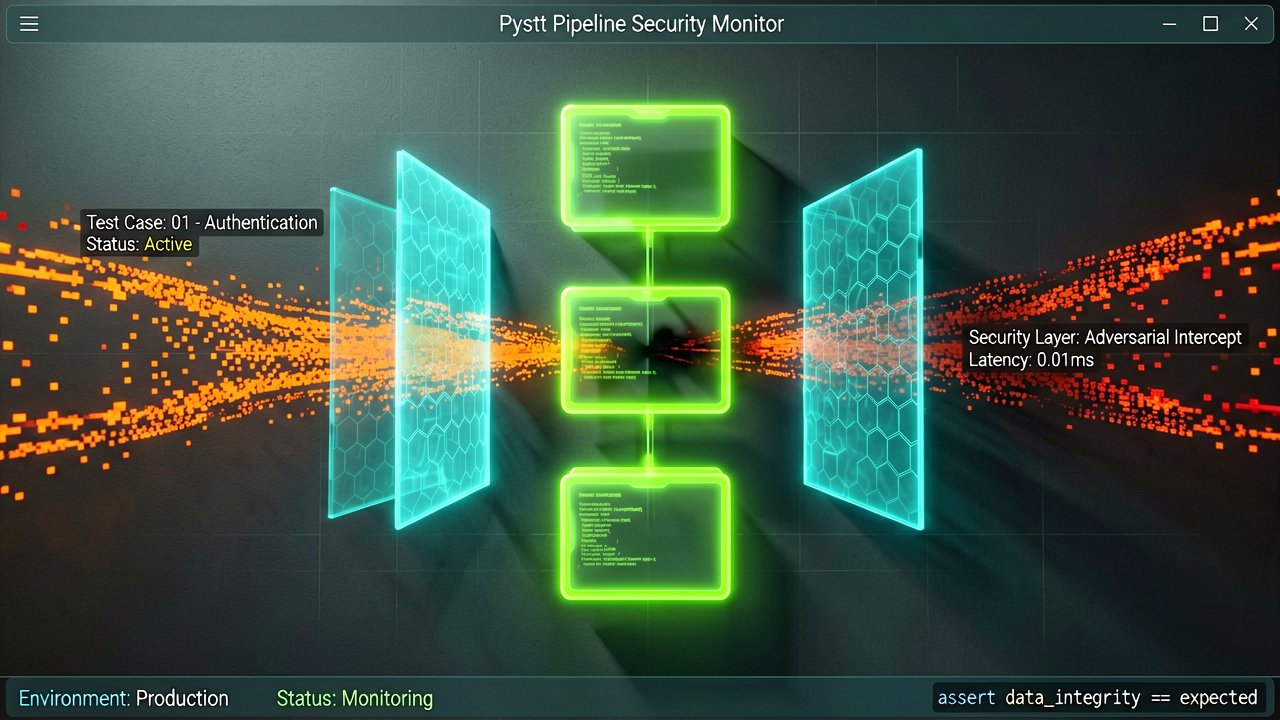
Artificial intelligence is officially outgrowing the simple chat box. As enterprises rush to deploy autonomous AI agents capable of digging through databases, firing off emails, and executing complex workflows without a human holding their hand, they are confronting a terrifying reality. Unsupervised software can break things fast. Recognizing that the old playbook for securing static Large Language Models is no longer enough, Microsoft has released two key tools into the open-source wild: RAMPART and Clarity. It is a calculated move designed to weave security directly into the developer workflow long before code hits production, acknowledging that a modern corporate security strategy must adapt to autonomous digital workforces.
Flipping the Red Team Playbook with RAMPART
Historically, AI red teaming has been a reactive discipline. Security researchers typically attack a finished application to hunt for holes, compiling findings into massive reports that engineers must painstakingly decipher and patch. RAMPART, short for Risk Assessment and Measurement Platform for Agentic Red Teaming, completely flips this bottlenecked process. According to coverage from The Hacker News , the tool acts as a Pytest-native safety and security framework. It enables engineers to transform complex adversarial attack scenarios into repeatable, automated tests directly inside their continuous integration pipelines.
The beauty of this framework lies in its pragmatic approach to AI’s inherent unpredictability. Traditional software testing relies on deterministic inputs and outputs, but an autonomous agent might react differently each time it encounters a prompt. RAMPART solves this problem by executing adversarial test cases multiple times, scoring how consistently an agent resists compromise. It actively probes for sophisticated, multi-step exploits like cross-prompt injection. This occurs when untrusted data—such as a malicious string embedded in an external webpage or a rogue incoming email—reaches an agent indirectly and hijacks its operational behavior. By catching data exfiltration risks and behavioral regressions early, developers can patch vulnerabilities long before their code gets anywhere near live infrastructure.
Clarity: Debugging Assumptions Before Code is Written
While RAMPART secures the implementation phase, Microsoft’s second open-source offering, Clarity, targets the earliest stages of architectural design. Far too often, engineering teams rush into building complex agentic systems based on fundamentally flawed premises about how the AI will handle data boundaries or human interactions. Clarity structures the conceptual phase by running as a desktop app, a web interface, or an integrated component inside a coding agent, forcing teams to explicitly document and validate their operational assumptions. As documented by Redmond Mag, the tool saves these structured architectural debates directly into the repository as markdown files, allowing teams to track, review, and diff changes just like source code during pull requests.

What makes Clarity genuinely compelling is its automated failure analysis architecture. The platform orchestrates multiple specialized AI "thinkers" to critically evaluate system designs from diverse vantage points, including human factors, operational constraints, and potential adversarial attack vectors. It even monitors documentation staleness, nudging engineering teams to re-evaluate their security posture whenever upstream problem statements or dependencies shift. Together, RAMPART and Clarity demonstrate that Microsoft wants to dominate the tooling landscape for the autonomous era, offering a practical blueprint for developers trying to keep their digital agents on a tight, secure leash.
What Most Reports Miss: The Looming Crisis of Autonomous Agency
The rush to open-source RAMPART and Clarity isn’t just a generous contribution to the developer community; it is a defensive maneuver against an industry-wide anxiety. For the past two years, the AI narrative has been dominated by the fear of offensive content generation and basic prompt injections. However, the shift toward autonomous agents introduces a far more dangerous vector: the decoupling of human intent from software execution. When a chatbot hallucinates, it gives a wrong answer. When an agent hallucinates while managing a corporate CRM, it deletes database tables, drains API budgets, or leaks proprietary data to external servers. Microsoft understands that if enterprise buyers lose trust in the reliability of these autonomous systems, the multi-billion-dollar market for agentic workflows could stall before it even gets off the ground.
Industry insiders have quietly voiced concerns over the blind spots inherent in traditional software security when applied to non-deterministic systems. Traditional firewalls and access controls operate on rigid rules, expecting predictable traffic patterns. An AI agent, by design, needs the flexibility to interpret ambiguous prompts and improvise solutions. Security engineers have found themselves trapped in an endless game of whack-a-mole, trying to anticipate every possible way an LLM might misinterpret a command. By embedding RAMPART directly into the Pytest environment, Microsoft is attempting to normalize AI security, dragooning mainstream software developers into the red-teaming process rather than leaving it exclusively to specialized cybersecurity teams.
There is also a significant historical irony in Microsoft leading this charge. For decades, the tech giant faced fierce criticism for its "ship first, patch later" approach to Windows security, which ultimately forced the company to initiate its famous Trustworthy Computing directive in the early 2000s. Today, the race for generative AI dominance feels eerily similar, with tech titans scrambling to deploy features at breakneck speed. By launching tools like Clarity to police architectural design early in the lifecycle, Microsoft is trying to preempt history from repeating itself. They are actively signaling to enterprise risk officers that they are taking a systemic, mature approach to the unpredictable nature of autonomous software.

Ultimately, the success of these tools will depend entirely on developer adoption. Open-sourcing code is easy, but convincing overworked engineering teams to add complex security validation steps to their already cramped release cycles is a monumental challenge. If developers treat RAMPART and Clarity as optional compliance checkboxes rather than fundamental design pillars, the vulnerabilities plaguing agentic deployments will persist. Microsoft has provided the defense industry with a highly sophisticated shield, but the coming months will reveal whether the broader ecosystem has the discipline to actually pick it up and use it effectively.
Reading Between the Lines: The Illusion of Controlled Autonomy
The tech industry's sudden infatuation with agentic safety tools reveals a deep-seated contradiction in the current generative AI roadmap. Silicon Valley is selling a vision of autonomous agents that operate with minimal human oversight, yet platforms like RAMPART and Clarity prove that keeping these agents safe requires an exhausting amount of human intervention. We are essentially building complex, non-deterministic systems just to spend an equal amount of engineering hours inventing guardrails to force them to behave deterministically. This paradox raises the uncomfortable possibility that the efficiency gains promised by autonomous workflows could be entirely swallowed by the permanent security tax required to keep them from going off the rails.
Furthermore, relying on specialized AI "thinkers" within tools like Clarity to police the architecture of other AI systems introduces a dangerous layer of circular logic. We are effectively trusting the referee to play the game. If the underlying large language models suffer from shared blind spots, systemic biases, or structural vulnerabilities, a defensive AI tool trained on those same paradigms may fail to recognize novel attack vectors. This creates a false sense of security among enterprise leaders who might mistake a green checkmark from an automated testing suite for genuine, bulletproof resilience against sophisticated bad actors.
There is also an undeniable strategic motive behind Microsoft’s open-source benevolence. By establishing RAMPART and Clarity as the foundational frameworks for agentic safety, Microsoft positions its own cloud ecosystem, Azure, as the default secure harbor for enterprise AI deployment. It is a classic platform play: commoditize the security tooling so that developers build their systems around your standards, inevitably making it easier to lock them into your broader commercial infrastructure. While the tools themselves are undeniably valuable, they are also clever telemetry magnets designed to keep Microsoft at the absolute center of the autonomous software lifecycle.
Ultimately, no amount of automated red teaming can completely eliminate the erratic nature of a system built on probabilistic language models. RAMPART can patch the vulnerabilities we know to look for, and Clarity can flag the design flaws we are smart enough to anticipate, but the real world is infinitely more chaotic than a continuous integration pipeline. As these agents gain the power to move money, access sensitive user data, and modify live infrastructure, the industry will eventually have to confront a hard truth. You cannot give software the freedom to think for itself and then act shocked when it occasionally decides to break the rules.
"We are rapidly entering an era where we will spend millions of dollars building autonomous software to replace human workers, only to spend millions more hiring human engineers to ensure the software doesn't accidentally bankrupt the company by taking its own instructions a little too literally."
Artūras Malašauskas is an AI Systems Integrator with 20+ years of production-grade web engineering experience. He has designed, shipped, and scaled enterprise Python/PHP systems for logistics, SaaS, and public-sector clients. For the past year, he has focused exclusively on AI integrations: deploying open-source LLMs, building generative media pipelines (image, audio, video), and engineering multi-agent workflows for real production environments. His standard: reproducibility, security, cost-efficient inference—no vaporware. He documents and evaluates emerging AI tooling, separating verified capabilities from marketing noise. Technical editor at: muza-ai.eu, ai-verslas.lt, ai-naujinos.lt Connect on LinkedIn
Comments