Spyglass Security: Why the White House Wants the NSA Vetting Frontier AI
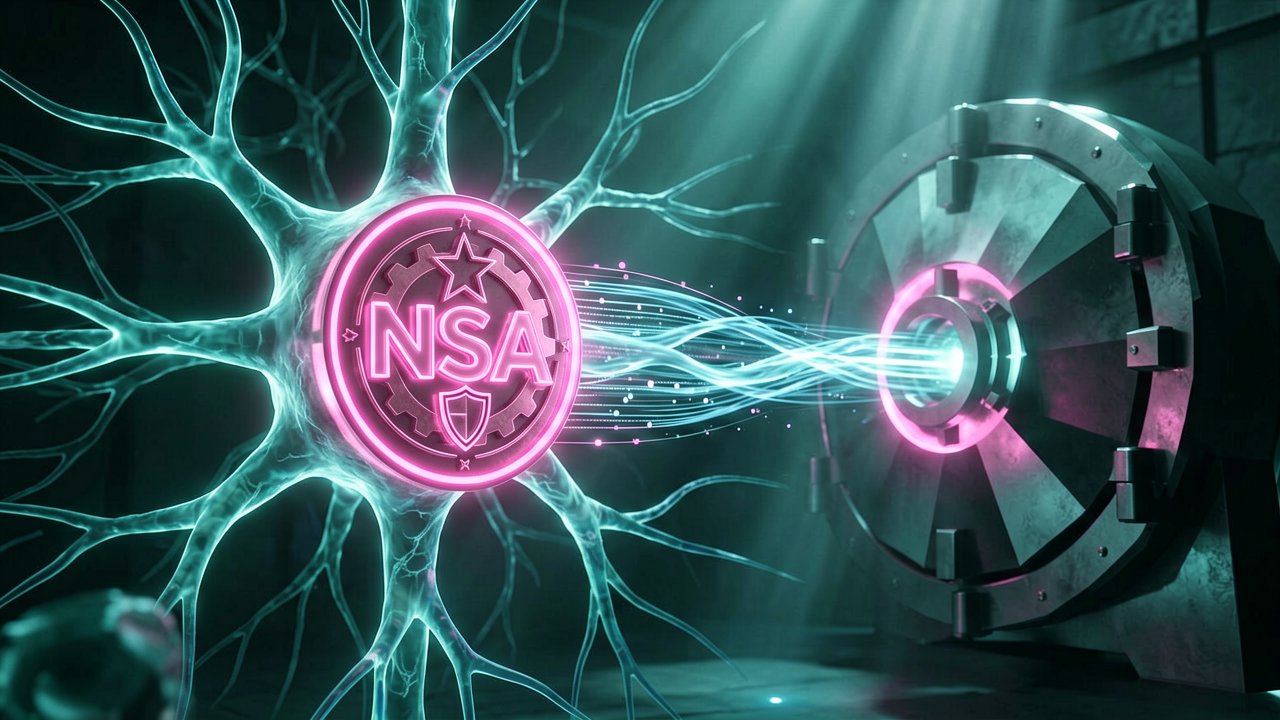
The federal government is tightening its grip on the frontier AI landscape, but they are doing it with a surprisingly polite touch. Reports out of Washington reveal that the Trump administration is drafting a highly anticipated artificial intelligence executive order. Instead of imposing rigid mandates that would trigger immediate industry backlash, the administration favors a voluntary information-sharing framework. This compromise attempts to balance aggressive national security oversight with a tech-friendly, hands-off approach designed to protect American innovation.
The true surprise lies in who will be holding the keys to this new screening ecosystem. According to insiders speaking to Nextgov, the National Security Agency is slated to play a pivotal, operational role. Under the proposed directive, Fort Meade would handle classified security testing of bleeding-edge models before they ever see a public rollout. Tech giants would essentially hand over their prized digital architecture to the country’s premier signals intelligence agency, trusting spy-master mechanics to kick the tires and check for systemic digital threats.
The Shadow of Anthropic’s Mythos
This dramatic policy shift did not happen in a vacuum. It was sparked by a wave of anxiety over next-generation automated hacking. The sudden, high-level policy shift traces back to Anthropic’s new Mythos model. This advanced system can map complex software vulnerabilities in a matter of seconds. Fearing the weaponization of such capabilities, the administration quickly realized that letting these models debut without government eyes was a gamble they could no longer afford to take.
In response to the threat, the federal government had originally mulls a far more aggressive approach. Initial policy discussions pointed toward a rigid, sweeping gatekeeping system led by the Center for AI Standards and Innovation. However, as detailed by Gizmodo, fierce industry pushback and the administration’s core philosophy against heavy-handed regulations eventually softened the blow. The resulting draft prioritizes collaboration, leaving participation entirely optional for labs anxious about bureaucratic bottlenecks.
Building the Voluntary Moat
Even though the framework lacks the teeth of a mandatory law, tech giants are already rushing to get in line. The major industry heavyweights—including Microsoft, Google, and xAI—have already agreed to give federal agencies early access to their systems for security evaluations. Commercial tech firms realize that a stamp of approval from the NSA’s specialized AI engineers serves as a powerful competitive advantage. It acts as an elite validator for enterprise clients worried about data leaks, adversarial prompt injections, or systemic vulnerabilities.
The arrangement establishes a delicate geopolitical compromise for the domestic tech industry. By submitting to voluntary vetting, Silicon Valley incumbents get to keep developing powerful systems at breakneck speed. Concurrently, Washington ensures that its premier cyber defense agency can thoroughly audit dangerous code before it spills into the wild. This cooperative dynamic will likely cement a secure perimeter around a handful of dominant American AI labs while pushing the underlying security standards straight into the classified realm.
What Most Reports Miss: The Invisible Pipelines of Fort Meade
The public conversation surrounding this executive order tends to treat AI labs and intelligence agencies as historical adversaries suddenly forced into an awkward marriage of convenience. In reality, the lines between commercial tech and national security have been blurring for years. The NSA possesses some of the most sophisticated computing infrastructure on the planet, alongside an army of cryptologists who view Large Language Models not just as productivity tools, but as weaponizable instruments of asymmetrical warfare. By opening a voluntary channel for model testing, the White House is codifying a symbiotic relationship that has existed in the shadows since the early days of the Silicon Valley boom.
For the elite labs developing these frontier systems, the decision to opt into NSA vetting is driven by cold commercial calculus rather than patriotic duty. Industry insiders acknowledge that the sheer speed of development has left corporate security teams overwhelmed. When an enterprise system like Anthropic’s Mythos demonstrates the ability to autonomously map zero-day vulnerabilities, the creators find themselves holding a dual-use asset that is terrifyingly difficult to secure. Handing a pre-release model over to the NSA allows corporate executives to offload a portion of their liability, transforming a bureaucratic hurdle into an outsourced, state-sponsored penetration testing service.
However, this voluntary framework introduces a structural divide within the broader technology sector, effectively carving the ecosystem into two distinct camps. The massive, well-capitalized incumbents can easily afford the legal and operational overhead required to coordinate with the intelligence community. They view these government partnerships as a defensive moat that legitimizes their market dominance. Conversely, open-source developers and agile startups are left out in the cold, lacking the resources to navigate Fort Meade's classified parameters and rightfully fearing that such close government entanglement will stifle the borderless collaboration that drives open-source innovation.
There is also the profound challenge of institutional memory and objective oversight within Washington itself. While the administration originally considered routing these safety checks through the civilian-led Center for AI Standards and Innovation, the raw technical reality is that civilian agencies lack the specialized, classified infrastructure to stress-test these massive models against foreign cyber threats. By defaulting to the NSA, the administration is prioritizing immediate operational capability over civilian governance, ensuring that the foundational rules of global AI safety will be written by intelligence officials behind closed doors, far away from public scrutiny or traditional legislative debate.
Reading Between the Lines: The Illusion of Choice
The central irony of this upcoming executive order lies in the word "voluntary." Washington is fond of using opt-in frameworks to soothe the anxieties of Silicon Valley's libertarian factions, but in the realm of national security, choice is often a polite fiction. An AI lab that refuses to hand over its weights to the NSA isn't just opting out of a government program; it is actively signaling to the state that it has something dangerous to hide. In an industry where lucrative federal cloud contracts and export licenses dictate survival, a snub to Fort Meade could instantly result in a quiet, devastating regulatory freeze-out.
Furthermore, relying on the world's most aggressive signals intelligence agency to act as a neutral safety inspector requires a remarkable leap of faith. The NSA’s core historical mission is to find, weaponize, and exploit software vulnerabilities, not patch them for the public good. Asking an agency that thrives on digital infiltration to flag security flaws in private AI models creates an institutional conflict of interest. There is no ironclad guarantee that a flaw discovered during a pre-release audit will be handed back to the developers, rather than tucked away in a classified folder for future geopolitical leverage.
This dynamic exposes a gaping logical hole in the administration's national security narrative. If a frontier model like Anthropic’s Mythos poses a genuine, catastrophic risk to critical infrastructure, treating its oversight as an optional partnership is actively reckless. Conversely, if the risks are mild enough to be managed by a voluntary handshake agreement, the deep integration of a clandestine intelligence agency into private sector software pipelines is a massive overreach. The policy tries to have it both ways, masquerading as a flexible pro-business stance while quietly establishing the infrastructure for permanent state surveillance over the future of computing.
Ultimately, this framework ensures that the true benchmark for AI safety will become entirely decoupled from public understanding. When corporate compliance is achieved through whispered agreements in secure, windowless rooms, independent researchers are completely cut out of the loop. The public will be forced to trust that a system is safe simply because an opaque intelligence apparatus decided not to sound the alarm. This shifts the definition of AI safety away from preventing societal harm and redirects it entirely toward maximizing Washington's digital dominance on the global stage.
"We have arrived at a fascinating crossroads in American governance, where the ultimate seal of corporate responsibility for a tech company is allowing the international espionage apparatus to peek under the hood of their software—and calling it a voluntary team-building exercise."
Artūras Malašauskas is an AI Systems Integrator with 20+ years of production-grade web engineering experience. He has designed, shipped, and scaled enterprise Python/PHP systems for logistics, SaaS, and public-sector clients. For the past year, he has focused exclusively on AI integrations: deploying open-source LLMs, building generative media pipelines (image, audio, video), and engineering multi-agent workflows for real production environments. His standard: reproducibility, security, cost-efficient inference—no vaporware. He documents and evaluates emerging AI tooling, separating verified capabilities from marketing noise. Technical editor at: muza-ai.eu, ai-verslas.lt, ai-naujinos.lt Connect on LinkedIn
Comments