Beyond the Hype: How Theo Guenais is Rewriting the Rules of AI Reliability
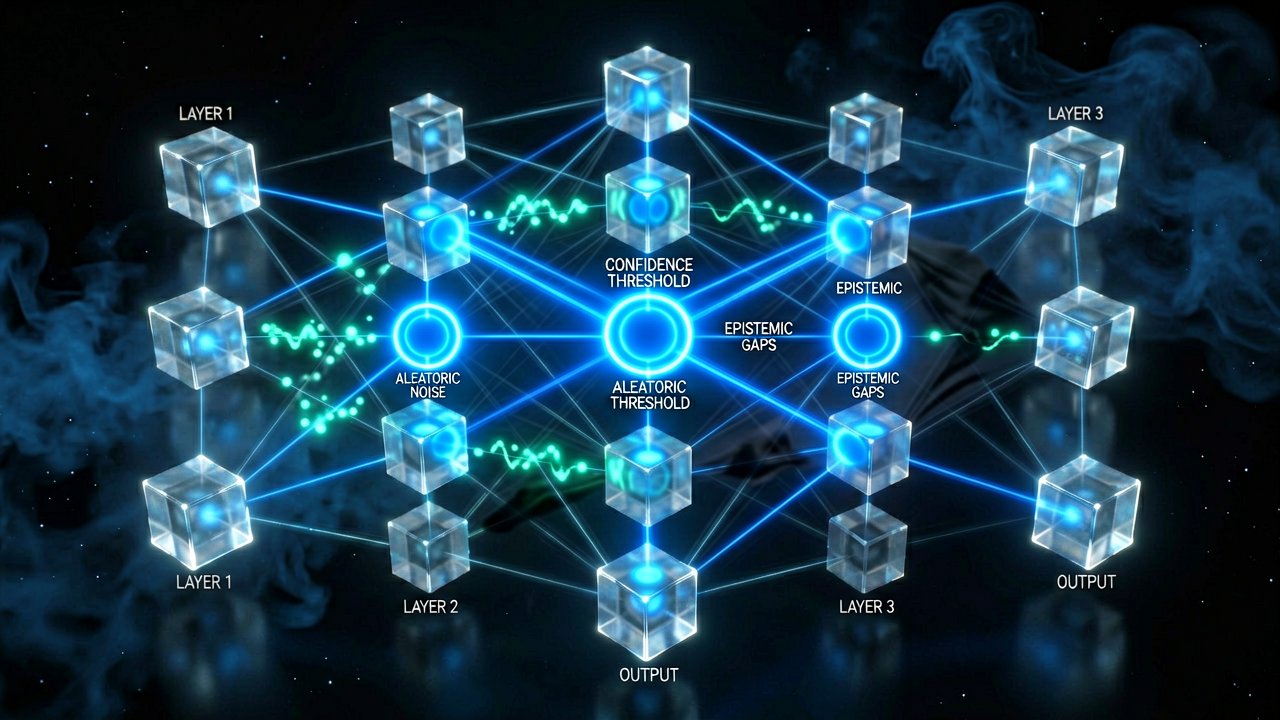
The tech world loves a good narrative about hyper-intelligent machines, but the reality on the ground is often far messier. Today's commercial artificial intelligence models are notorious for their brittle nature, frequently masking deep uncertainty with unearned confidence. It's exactly this paradox that drove Theo Guenais, S.M. ’20, to dedicate his career to architecting systems that actually know what they do not know. By tackling the dangerous overconfidence built into modern neural networks, his research bridges the gap between impressive laboratory demos and dependable, real-world deployment.
Guenais, an alumnus of the Harvard John A. Paulson School of Engineering and Applied Sciences, has systematically built a career across the frontiers of high-stakes automation. His journey features deep-learning exploration from Singapore to the Quebec Artificial Intelligence Institute, alongside practical engineering stints at powerhouse companies like Tesla. As detailed by the Harvard John A. Paulson School of Engineering and Applied Sciences, his foundational work focuses on developing rigorous mathematical techniques to quantify algorithmic uncertainty, ensuring that future systems process the world with logic rather than hallucination.
The Problem with Overconfident Algorithms
We've all seen large language models and predictive algorithms confidently spit out absolute nonsense. In standard software engineering, a piece of code either works or it triggers an explicit error. Neural networks don't play by those rules; they'll happily deliver an incorrect answer with the same digital smile as a correct one. Guenais points out that this tendency to hallucinate severely limits how safely we can deploy AI in critical environments. His research targets two distinct types of uncertainty: messy, noisy data on one hand, and completely unfamiliar scenarios on the other.
Designing the Next Generation of AI
At the start of 2026, Guenais brought his expertise to Symbolica, stepping into a senior research engineer role where he leads experimental designs to push past the limits of today's transformers. Building the next wave of AI requires a structured, scientific approach to testing hypotheses rather than blindly scaling up compute. It's a massive challenge, but the rigorous experimental protocols he mastered during his graduate studies provided the perfect framework for handling it. By forcing models to measure their own structural doubts, engineers can finally build autonomous systems that are safe enough to trust with our infrastructure, our safety, and our future.
The Hidden Math Behind Machine Self-Doubt
What Most Reports Miss: The battle for AI safety isn't being won through sweeping regulatory frameworks, but in the grueling, mathematical trenches of epistemic uncertainty estimation. While the public remains captivated by chatbots that mimic human conversation, tech veterans know that current deep learning models are essentially hyper-advanced pattern matchers lacking any internal compass for truth. When a model encounters a scenario outside its training data, it doesn't pause to deliberate. Instead, it extrapolates blindly, treating a novel, high-risk situation with the exact same mathematical weight as a routine query. Forcing these systems to quantify their own ignorance is the core engineering hurdle of the decade.
During his time at Harvard, Theo Guenais leaned heavily into this foundational flaw, focusing on the distinct split between aleatoric and epistemic uncertainty. The former represents the inherent noise in the world—like a blurry camera feed or a scratchy audio recording—which any decent algorithm can learn to tolerate. The latter, however, represents a total lack of knowledge, a blank spot on the map where the model simply does not know the answer. Industry insiders emphasize that failing to distinguish between these two types of uncertainty is precisely why autonomous vehicles misinterpret rare highway obstacles, and why predictive healthcare algorithms can fail catastrophically when introduced to new patient demographics.
This perspective shifts the entire philosophy of AI development away from the raw brute-force scaling popularized by Silicon Valley giants. For years, the prevailing wisdom has been that throwing more parameters and larger datasets at a neural network would naturally smooth out its erratic behavior. Guenais’s trajectory suggests otherwise, pointing toward a future where structured architectural constraints are favored over massive, unpredictable computational webs. By embedding rigorous statistical guardrails directly into the training pipeline, developers can force a model to signal when it is operating outside its comfort zone, effectively introducing a digital equivalent of human caution.
The stakes for this research rise exponentially as these systems transition from digital playgrounds to physical infrastructure. In high-velocity environments like automated manufacturing or aerospace engineering, a split-second hallucination isn't just an inconvenience—it's a systemic failure. By treating algorithm reliability as a strict physics problem rather than a software optimization task, the next generation of engineers aims to deliver systems that prioritize predictable behavior under pressure. This shift from blind optimism to calculated skepticism is ultimately what will transform artificial intelligence from an unpredictable novelty into a reliable bedrock for global industry.

The Scaling Myth and the Cost of Certainty
Reading Between the Lines: The tech sector’s obsession with "emergent properties"—the idea that AI models will miraculously develop reasoning and reliability if we just make them big enough—ignores a fundamental structural reality. Scaling up a neural network increases its capacity to memorize and interpolate, but it does absolutely nothing to fix its underlying inability to handle genuine novelty. We are essentially building larger, faster sports cars without installing brakes or fuel gauges, under the assumption that speed will eventually solve the problem of navigation. Theo Guenais’s pivot toward structural reliability highlights a growing counter-movement that views absolute scaling not as a solution, but as an expensive detour.
This tension exposes a glaring contradiction in how the industry measures progress. Venture capital continues to flood into companies boasting massive parameter counts, yet the enterprise market remains deeply hesitant to deploy these models in mission-critical roles. A customer service chatbot hallucinating a refund policy is a PR headache; an automated power grid optimizer hallucinating voltage limits is a regional blackout. The irony is that the more fluid and human-like AI systems become on the surface, the harder it becomes for engineers to audit their internal logic, creating a dangerous veneer of competence that masks systemic fragility.
Projecting into the next few years, the push for reliable uncertainty estimation will likely trigger a sharp economic divide in tech development. Implementing the mathematical guardrails necessary to make AI "know what it doesn't know" requires intense algorithmic discipline and often slows down deployment pipelines. Companies rushing to capture market share will inevitably cut corners, choosing the illusion of immediate capability over the tedious work of validation. True industry resilience will belong to the teams willing to sacrifice superficial feature velocity for rigorous, predictable architecture, establishing a new baseline where a model's silence in the face of the unknown is valued far more than its confident guess.
"We've successfully trained machines to mimic the confidence of a corporate executive trapped in a bad PowerPoint presentation. Now comes the hard part: teaching them the quiet humility of an actual engineer who prefers not to break the infrastructure."
Artūras Malašauskas is an AI Systems Integrator with 20+ years of production-grade web engineering experience. He has designed, shipped, and scaled enterprise Python/PHP systems for logistics, SaaS, and public-sector clients. For the past year, he has focused exclusively on AI integrations: deploying open-source LLMs, building generative media pipelines (image, audio, video), and engineering multi-agent workflows for real production environments. His standard: reproducibility, security, cost-efficient inference—no vaporware. He documents and evaluates emerging AI tooling, separating verified capabilities from marketing noise. Technical editor at: muza-ai.eu, ai-verslas.lt, ai-naujinos.lt Connect on LinkedIn
Comments