Robotic Security Finds a Healthy Pulse: RAD Secures Deployment with Global Healthcare Titan
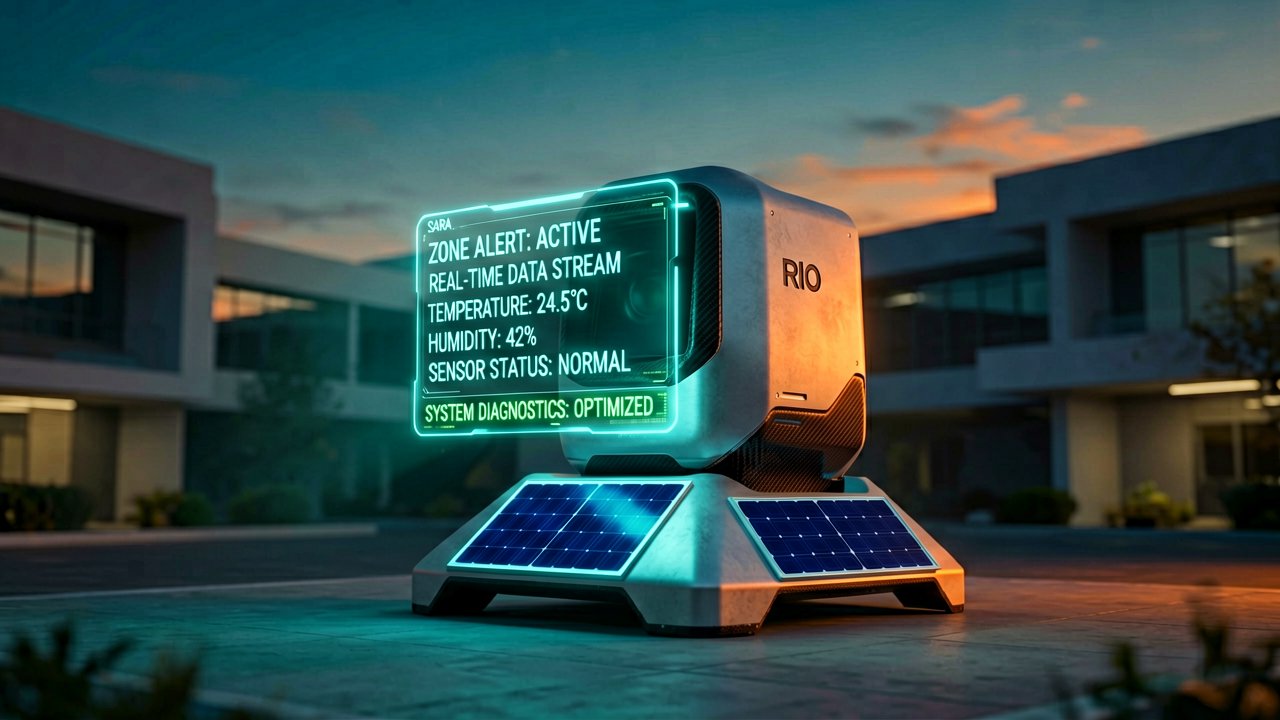
Autonomous security is no longer just a futuristic concept confined to tech expos and tech-heavy industrial zones. In a significant market move, Robotic Assistance Devices (RAD), a subsidiary of Artificial Intelligence Technology Solutions, Inc. (AITX), just finalized an agreement with a massive, confidential global healthcare organization. The deal focuses on deploying multiple RIO 360 units across the client's sprawling real estate network to upgrade and scale its defensive operations. According to details made public on Yahoo Finance, the first wave of solar-powered security units is slated to be fully operational by mid-June, signalling a rapid hardware turnaround.
Managing security across distributed hospital campuses or regional medical clinics is notoriously difficult. Remote, lightly trafficked, or low-activity sections often lack a continuous human guard presence due to restrictive operational budgets. RAD is positioning its hardware as a direct fix for this coverage dilemma. By using autonomous tech, large enterprise clients can achieve continuous physical deterrence without the overwhelming cost of staffing human personnel 24/7. It is a calculated wager on efficiency that appears to be catching on within highly regulated sectors.
SARA and the Shift to Intelligent Deterrence
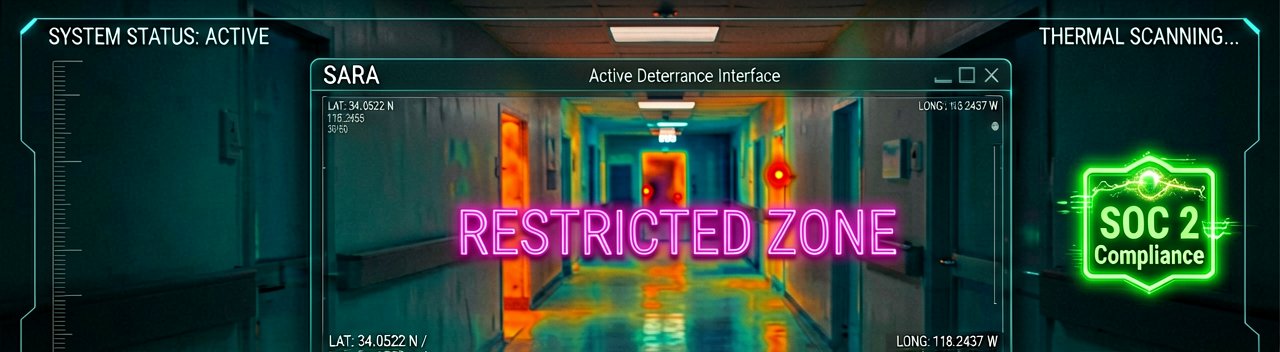
The core of this deployment relies on RAD's proprietary tech stack. Every RIO 360 unit shipped in this rollout includes SARA (Speaking Autonomous Responsive Agent) as a standard integrated feature. Far from a passive camera system, SARA functions as an active digital guardian capable of automated detection, real-time verbal communication, and structured incident escalation. If someone enters a restricted facility zone after hours, the platform does not just log the event for later review; it actively addresses the intruder, alerts remote monitoring teams, and triggers localized response protocols.
Vetting, Compliance, and the Long Enterprise Horizon
Securing a contract within the healthcare industry requires clearing immense regulatory hurdles. Large enterprise healthcare networks are infamously slow to adopt new physical security technologies, typically subjecting vendors to months of stringent compliance testing. For RAD, passing this extensive vetting process represents a major validation of its internal data controls, which were recently backed by a successful SOC 2 Type 2 audit. Though strict confidentiality agreements shroud the client's name and the exact total value of the deal, the security company confirmed that expansion discussions are already accelerating as the initial June rollout deadline approaches.
What Most Reports Miss: The High-Stakes Calculus of Healthcare Compliance
The standard press coverage of RAD’s latest contract paints a simple picture of hardware meets hospital, but the reality of entering a global healthcare network is an incredibly grueling trial by fire. For physical security vendors, the healthcare sector is notoriously one of the hardest industries to penetrate due to the strict overlap of digital and physical liabilities. It is not just about catching trespassers in a parking lot; it is about ensuring that a camera mounted on an autonomous unit never inadvertently logs visible patient records through a clinic window, violating rigid privacy laws. Passing the vendor onboarding process for a global medical titan means proving that every byte of captured data is heavily encrypted, siloed, and strictly compliant with regional healthcare mandates.
Industry insiders know that a successful SOC 2 Type 2 audit is often the silent gatekeeper for these enterprise deals. While investors frequently focus on unit counts and immediate revenue projections, corporate risk officers look exclusively at liability mitigation. By securing this credential prior to the rollout, RAD managed to clear a massive hurdle that typically bogs down smaller tech startups for years. Healthcare executives are inherently risk-averse, and the decision to trust a robotic agent over a traditional guard firm requires overwhelming evidence that the tech will not create a costly legal vulnerability.
The Realities of the Chronic Guard Shortage
This deployment also highlights a systemic crisis quietly plaguing the healthcare industry: a severe, chronic shortage of physical security personnel. Hospital security directors have spent the last few years dealing with high turnover rates, soaring labor costs, and the logistical nightmare of staffing remote clinics overnight. Human guards are susceptible to fatigue, scheduling conflicts, and escalating wages, which makes a fixed-cost, solar-powered alternative like the RIO 360 incredibly attractive to chief financial officers. Shifting routine perimeter monitoring to automated systems allows hospitals to reallocate their limited human staff to high-risk internal areas, such as emergency rooms or psychiatric wards, where human empathy and physical intervention are irreplaceable.
From an operational standpoint, the upcoming June deployment deadline is an aggressive timeline that will test RAD's supply chain agility. Shipping, calibrating, and integrating multiple autonomous units into an existing corporate security network requires seamless coordination with local IT infrastructure and facility management teams. If this initial phase succeeds without technical friction, it establishes a repeatable blueprint for the client's remaining global properties. For a tech company trying to prove its scalability, the true value of this contract lies not in the first handful of units, but in the massive expansion potential buried within the client's broader corporate portfolio.
Reading Between the Lines: The Reality Check Behind the Robotics Hype
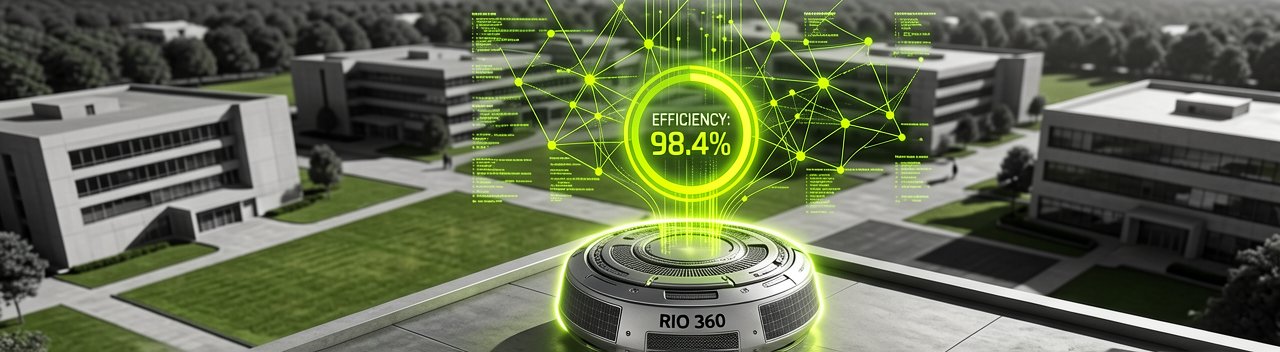
While the press release generated plenty of optimism among retail investors, a seasoned look at the physical security landscape requires filtering out the corporate marketing spin. The narrative that autonomous robots will effortlessly replace human guards overlooks a glaring logistical contradiction. Devices like the RIO 360 are highly sophisticated deterrents, but they are ultimately passive observers with loud speakers. When an actual, physical breach occurs or a volatile situation unfolds on a hospital campus, a solar-powered tower cannot physically intervene or restrain a bad actor. It relies entirely on the local police or the very human guard networks it is supposedly meant to replace, meaning the technology shifts the burden of physical response rather than eliminating it entirely.
There is also the recurring industry challenge of "pilot purgatory" that plagues many early-stage tech rollouts. It is relatively easy for a multi-billion-dollar healthcare organization to sign a confidential agreement to test a handful of units; it represents a microscopic rounding error in their annual operational budget. The real test of viability is whether these initial deployments actually convert into a sweeping, mandatory mandate across thousands of global facilities. History shows that enterprise clients frequently deploy a few units for a year to satisfy a corporate innovation metric, only to quietly let the contract lapse when face-to-face software maintenance costs start piling up.
Furthermore, maintaining an aggressive deployment schedule into mid-June places immense pressure on a hardware manufacturer's working capital. Building, shipping, and servicing advanced AI-driven security kiosks requires significant upfront cash flow, a metric that smaller micro-cap tech companies often struggle to balance. If the hardware faces any unexpected real-world friction—such as localized wireless connectivity dead zones, unexpected battery degradation during prolonged overcast weather, or lenses blocked by debris—the cost of sending field technicians out can quickly erode the thin profit margins of the initial contract.
Ultimately, this contract is less about a sudden robotic revolution and more about a cautious, corporate calculation. The global healthcare organization is hedging its bets against inflation and rising labor costs by experimenting with automated perimeters. If RAD can prove that its SARA platform reduces false alarms and successfully deters low-level vandalism without requiring constant IT hand-holding, they might just secure a permanent foothold in the sector. Until the client emerges from behind the veil of a non-disclosure agreement to actively champion the technology, however, the broader market will likely view this rollout as an intriguing experiment rather than a definitive industry shift.
"We are rapidly moving toward a future where a security guard's most important qualification won't be a background in law enforcement, but a degree in software troubleshooting and the patience to explain to a solar-powered kiosk why it shouldn't yell at a stray cat at three in the morning."
Artūras Malašauskas is an AI Systems Integrator with 20+ years of production-grade web engineering experience. He has designed, shipped, and scaled enterprise Python/PHP systems for logistics, SaaS, and public-sector clients. For the past year, he has focused exclusively on AI integrations: deploying open-source LLMs, building generative media pipelines (image, audio, video), and engineering multi-agent workflows for real production environments. His standard: reproducibility, security, cost-efficient inference—no vaporware. He documents and evaluates emerging AI tooling, separating verified capabilities from marketing noise. Technical editor at: muza-ai.eu, ai-verslas.lt, ai-naujinos.lt Connect on LinkedIn
Comments