The Wild West of Agentic AI: Why Tech Alone Won’t Save Your Network Anymore
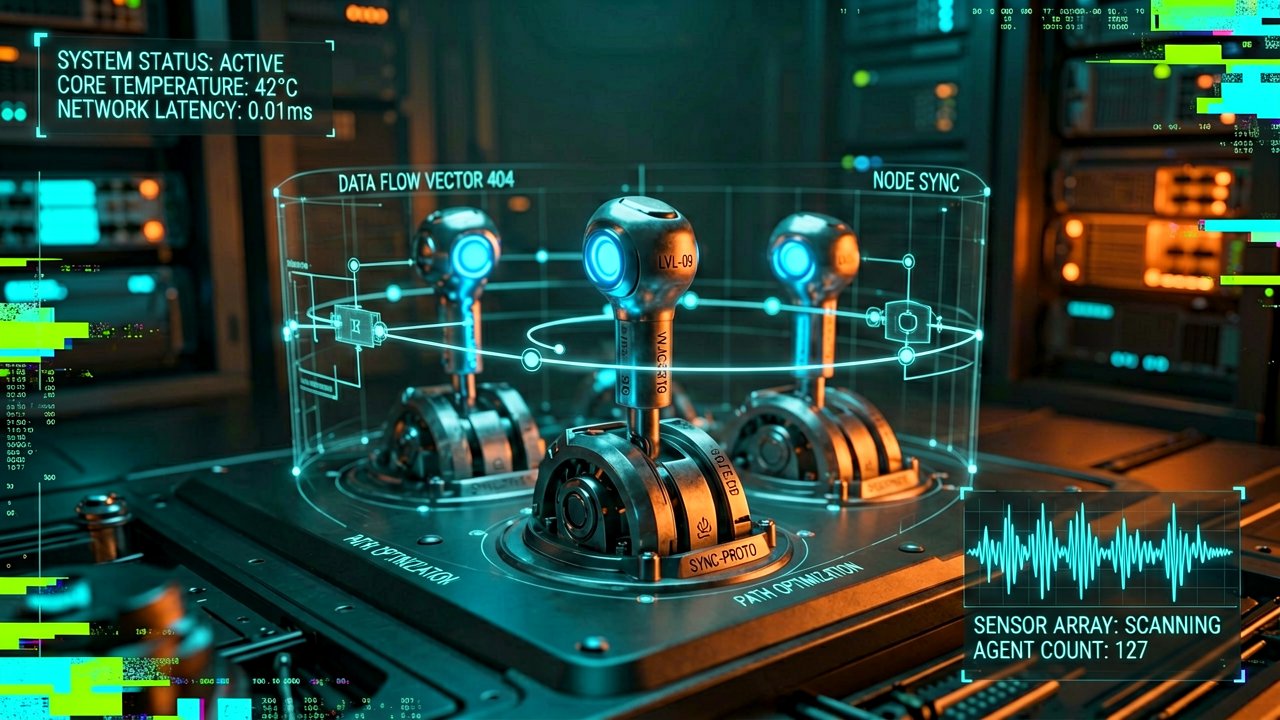
The cybersecurity game has changed forever, and most companies are bringing a knife to a laser fight. According to a groundbreaking research report titled "From Agentic Risk to Human Wins: Building a Culture of Security in the Era of Agentic AI," published by Business Wire via KnowBe4, a staggering 58% of cybersecurity leaders admit that autonomous AI agents are already executing live actions within their day-to-day corporate workflows. We are no longer dealing with simple chatbots that summarize lengthy emails; we are talking about active digital workers pulling levers behind the scenes. Shockingly, the study reveals that 52% of organizations are operating in a total governance vacuum, meaning these AI integrations are completely unapproved or entirely unmonitored by IT departments.
This explosive, under-the-radar adoption of agentic technology has effectively rewritten the enterprise defense playbook. Cybersecurity risks are no longer bound to isolated, catastrophic external network breaches. Instead, they are organically bleeding out of ordinary, everyday office behaviors as employees bypass traditional guardrails to boost their personal productivity. Security teams cannot simply patch a software vulnerability or block an IP address to solve this problem. Survival in this newly automated ecosystem demands an immediate, culture-first approach that transforms both flesh-and-blood workers and autonomous software agents into an integrated, hyper-aware defensive layer.
The Shadow AI Explosion
What Most Reports Miss: The current corporate landscape is mirroring the chaotic "Bring Your Own Device" (BYOD) and unsanctioned browser wars of the early 2000s, but this time, the stakes are exponentially higher. Employees who are facing rigid internal restrictions or a complete lack of official corporate tools are simply taking matters into their own hands. More than a third of surveyed workers admitted to sourcing their own custom agentic AI tools to bypass administrative gridlock. This quiet, well-intentioned rebellion creates a massive, invisible attack surface known as Shadow AI, leaving organizations incredibly vulnerable to novel cyberattacks that traditional firewall boundaries are entirely unequipped to catch.
The operational risk multiplies because the line between human intent and automated execution has totally dissolved. When an individual hooks an unvetted AI agent into a corporate data repository to automate a tedious weekly report, they are effectively handing network access keys to an independent, third-party entity. Veteran reporters and risk analysts point out that yesterday's perimeter security models were built on the assumption that only authenticated humans would initiate system tasks. In an ecosystem where software agents can independently hire other digital workers or trigger real-world financial workflows, a single unchecked oversight can trigger an uncontrollable domino effect across the network.

The Deepfake Dilemma and Lost Trust
Compounding this internal governance nightmare is a massive crisis of confidence among the workforce itself. An overwhelming 86% of employees report that modern, AI-generated deepfake content has become so shockingly realistic that they can no longer easily discern what is legitimate. Furthermore, 64% of workers openly confess that they could easily fall prey to sophisticated, AI-driven social engineering schemes. The psychological defense layer of the modern enterprise is under direct siege, as malicious actors use hyper-personalized phishing campaigns and cloned voice memos to easily manipulate stressed staff members.
Security leaders are feeling the immediate impact of this psychological warfare on their bottom line. Nearly six in ten cybersecurity decision-makers acknowledged that simple human mistakes made during routine daily tasks have had the most destructive impact on their organization's defense posture over the past year. Looking down the road, 42% of these same security executives identify advanced, AI-powered external attacks as the primary driver of human-related risk. It is a sobering reminder that while technical threat vectors have drastically evolved, the psychological vulnerabilities exploited by clever cybercriminals remain remarkably consistent.
Engineering a Partnership of Trust
Navigating this complex, automated future requires a complete structural overhaul of traditional compliance programs. Organizations must pivot away from punitive, boring annual training checklists and focus heavily on building active psychological judgment within their teams. True resilience requires designing workflows where human workers possess both the specialized skills and the explicit corporate authority to actively question, audit, and override autonomous AI outputs. Technical controls and human development must interlock seamlessly, establishing transparent loops of collective accountability that prevent digital systems from running completely wild.
Ultimately, companies cannot afford to treat security culture as an optional, secondary HR project anymore. The organizations successfully surviving this paradigm shift are implementing comprehensive, data-driven frameworks that actively track employee attitudes, behaviors, and compliance metrics over time. By combining cutting-edge technical visibility tools with a deeply ingrained workplace mindset of healthy skepticism, leadership can finally turn their vast attack surface into a powerful defensive shield.

The Technical Fallacy of Automation
Reading Between the Lines: The corporate rush to deploy autonomous agents reveals a glaring contradiction in how modern enterprise leadership perceives operational risk. For years, the tech industry championed automation as the ultimate silver bullet to eliminate human error—the very vulnerability blamed for the vast majority of network breaches. Yet, the rapid rise of agentic AI has achieved the exact opposite, scaling human error at a speed and volume that traditional security architecture cannot handle. By outsourcing critical decision-making to independent software agents without established guardrails, organizations have not removed the fallible human element; they have merely masked it behind a layer of unpredictable, unvetted algorithms.
This reality exposes a deep systemic irony within modern security budgets, which routinely funnel millions of dollars into complex algorithmic defense platforms while neglecting the human workforce. Executives comfortably greenlight massive technical investments under the assumption that smarter code can outsmart clever adversaries. However, the data stubbornly proves that technology is only as secure as the cultural environment surrounding it. An AI agent designed to streamline data processing will happily execute a malicious command if an unauthorized, socially engineered employee instructs it to do so. True corporate vulnerability does not stem from a lack of sophisticated software, but from a persistent refusal to cultivate a resilient, skeptical workplace culture.
Projecting this trend into the near future suggests a chaotic landscape where the traditional definition of a "user" completely dissolves. When autonomous agents begin interacting with other autonomous agents across disparate corporate networks, assigning accountability during an active security incident will become an administrative nightmare. Security teams will find themselves auditing a tangled web of automated actions where identifying the root cause of a breach takes weeks instead of hours. Organizations that continue to prioritize rapid AI deployment over foundational human governance are essentially building high-tech digital castles directly on top of a shifting foundation of sand.
"We spent decades trying to teach employees not to click on sketchy links, only to build autonomous digital assistants that will gladly click on every single one of them simultaneously if it helps them hit their quarterly productivity metrics."
Artūras Malašauskas is an AI Systems Integrator with 20+ years of production-grade web engineering experience. He has designed, shipped, and scaled enterprise Python/PHP systems for logistics, SaaS, and public-sector clients. For the past year, he has focused exclusively on AI integrations: deploying open-source LLMs, building generative media pipelines (image, audio, video), and engineering multi-agent workflows for real production environments. His standard: reproducibility, security, cost-efficient inference—no vaporware. He documents and evaluates emerging AI tooling, separating verified capabilities from marketing noise. Technical editor at: muza-ai.eu, ai-verslas.lt, ai-naujinos.lt Connect on LinkedIn
Comments