AITX Lands Global Healthcare Deal for RIO 360 AI Security Towers
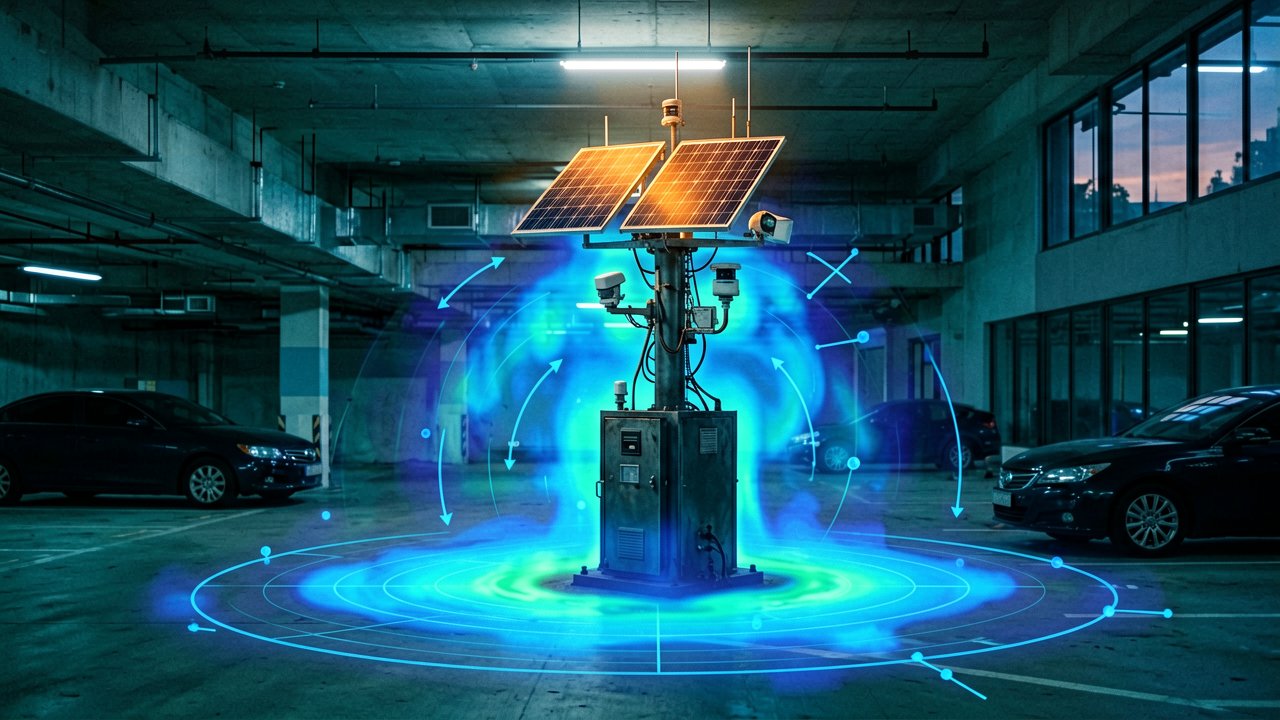
Artificial Intelligence Technology Solutions, Inc. (AITX) has landed a multi-unit deployment contract for its flagship RAD RIO 360 autonomous security towers with a global healthcare organization. Managed by its subsidiary, Robotic Assistance Devices (RAD), the self-contained trailers are slated to roll out to their initial designated locations by mid-June. Due to standard corporate confidentiality clauses, the specific financial figures and the identity of the healthcare provider remain under wraps, though company executives indicate that discussions for an accelerated nationwide footprint expansion are already underway.
The solar-powered RIO 360 units serve as standalone security perimeters, packing advanced hardware alongside RAD’s newly standardized Speaking Autonomous Responsive Agent (SARA). This agentic AI framework allows the towers to go beyond passive recording. Instead, the platforms proactively identify suspicious behavior, loitering, and perimeter breaches, triggering targeted human-like verbal warnings and multi-tiered visual alerts to de-escalate incidents before they require physical intervention. For healthcare campuses trying to secure vast, dimly lit parking structures and spread-out medical facilities, this tech bridges a gaping operational vulnerability.
The Realities of the Healthcare Security Crunch
Behind the Scenes: This high-profile deployment highlights a massive pivot occurring across institutional property management, where skyrocketing guard wages and systemic staffing shortages are forcing an industry-wide rethink. Healthcare facilities operate under an intense pressure cooker of liability risks, soaring workplace violence statistics, and strict compliance frameworks. Traditionally, the default fix was simply throwing more human eyes at the problem, but maintaining a physical human guard footprint across sprawling, low-activity parking zones has become both fiscally punishing and operationally unsustainable for modern hospital networks.
According to RAD’s leadership team, getting an enterprise deal of this scale over the finish line is rarely an overnight win. As Troy McCanna, Chief Revenue Officer and Chief Security Officer at RAD, noted via TradingView , large enterprise entities move deliberately when evaluating safety-critical technologies, making this deal the culmination of an intensive multi-month vetting and vetting-out process. The hardware is custom-tailored to displace these legacy, passive camera systems, yielding projected operational cost savings of 35% to 80% when compared to traditional manned security contracts reported on The Globe and Mail .
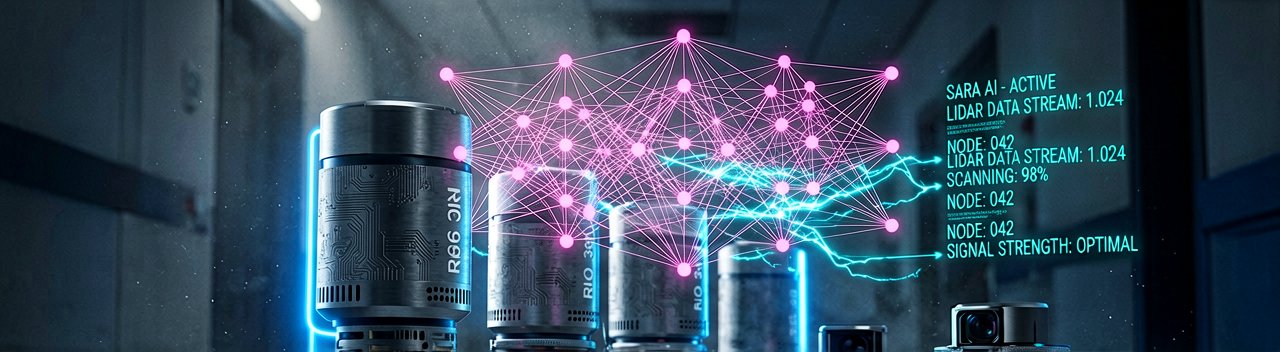
Strategically, AITX founder and CEO Steve Reinharz views complex medical environments as a premier, long-term growth catalyst for autonomous surveillance. The provider’s shift toward AI-centric perimeter guarding follows a string of municipal and logistics sector wins for the RIO 360 platform over the last year. By locking down SOC 2 Type 2 compliance audits to reassure risk-averse enterprise legal teams, AITX is angling to turn these initial mid-June rollouts into a standardized, friction-free blueprint for healthcare security modernization across the globe.
Skepticism and Scalability in the Automated Surveillance Boom
Reading Between the Lines: While the promise of slicing up to 80% off physical security overhead is undeniably magnetic to cash-strapped hospital administrators, replacing humans with autonomous silicon towers introduces an entirely new matrix of operational liabilities. The security industry has long suffered from tech-washing, where flashy marketing buzzwords like "agentic AI" often disguise what are essentially glorified motion detectors attached to a speaker. AITX is betting its reputation on the SARA framework's ability to discern genuine threats from everyday hospital chaos, but the real-world friction of a chaotic medical campus will ruthlessly test that capability.
The core contradiction in this automated shift lies in the handoff problem. An autonomous tower can strobe its lights, flash warnings, and bark at trespassers, but it cannot physically detain a bad actor or safely de-escalate a patient experiencing a severe mental health crisis in a parking lot. If the SARA system triggers too many false positives—mistaking a tired nurse fumbling for car keys as a perimeter breach—the resulting alarm fatigue will quickly cause human security operations centers to tune out the alerts entirely, rendering the high-tech investment toothless.
Furthermore, AITX's reliance on "land-and-expand" enterprise strategies assumes that an initial handful of units will seamlessly pave the way for nationwide adoption. However, large healthcare conglomerates are notorious for siloed regional management and glacial bureaucratic momentum. Vetting a security platform for a handful of test locations is a world away from integrating it into a standardized, multi-state corporate infrastructure, meaning the actual timeline to realize meaningful revenue scaling from this deal could stretch far longer than optimistic press releases suggest.

Replacing a disgruntled night-shift guard with a solar-powered, AI-driven tower ensures the perimeter never falls asleep on the job, though it remains to be seen how the robot handles explaining to an irate surgeon that its computer vision just flagged their sports car as a security hazard.
Artūras Malašauskas is an AI Systems Integrator with 20+ years of production-grade web engineering experience. He has designed, shipped, and scaled enterprise Python/PHP systems for logistics, SaaS, and public-sector clients. For the past year, he has focused exclusively on AI integrations: deploying open-source LLMs, building generative media pipelines (image, audio, video), and engineering multi-agent workflows for real production environments. His standard: reproducibility, security, cost-efficient inference—no vaporware. He documents and evaluates emerging AI tooling, separating verified capabilities from marketing noise. Technical editor at: muza-ai.eu, ai-verslas.lt, ai-naujinos.lt Connect on LinkedIn
Comments