Alibaba’s Agentic Ambition: Rewiring the AI Stack from Silicon to Software
Alibaba isn't just jumping on the agentic AI bandwagon; it’s attempting to build the entire highway. At today’s Alibaba Cloud Summit, the tech giant unveiled a massive, top-to-bottom overhaul of its AI infrastructure designed specifically for an era where "agents"—autonomous software that thinks and acts—replace simple chatbots. This isn't just a shiny new model launch. It's a fundamental pivot toward an ecosystem where the primary users of cloud services are no longer humans tapping on keyboards, but autonomous agents executing complex, multi-day workflows across global enterprises.
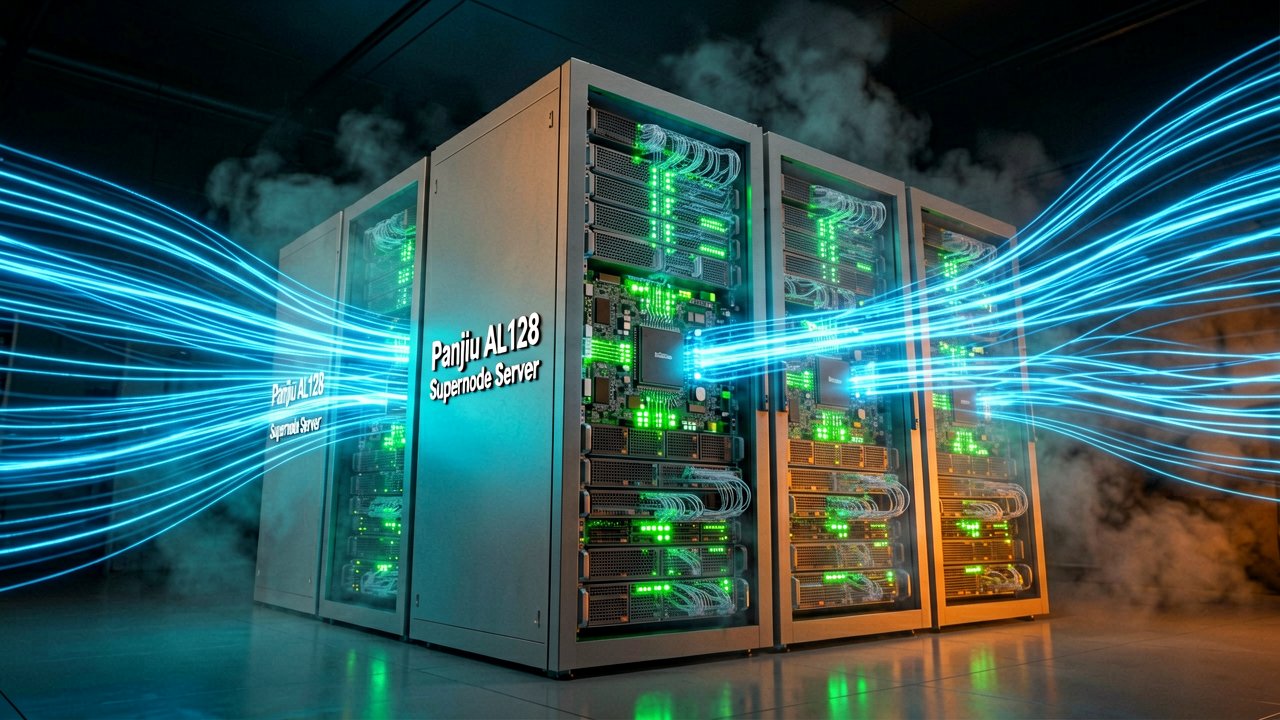
The star of the show is Qwen3.7-Max, a powerhouse foundation model engineered for what the industry calls "long-horizon" tasks. We’re talking about a system capable of managing over 1,000 tool calls and running autonomous missions for up to 35 hours without hitting a wall. According to reports from Investing.com, this model is specifically optimized for advanced coding and office automation, aiming to handle everything from repository-level debugging to intricate business logic that would typically stall a standard LLM. By integrating this with the new Panjiu AL128 Supernode Server, Alibaba is providing the sheer horsepower—measured in petabytes of bandwidth—needed to let these agents run at scale without the latency lag that kills productivity.
Custom Silicon Meets Sovereign Tech
There’s a heavy dose of strategic self-reliance here too. Alibaba’s semiconductor arm, T-Head, dropped the Zhenwu M890 AI chip, which supposedly triples the performance of its predecessor. As noted by The Economic Times, this move is a clear shot at establishing a domestic alternative to high-end Nvidia hardware amidst tightening export curbs. With 144GB of memory and massive inter-chip bandwidth, the Zhenwu M890 is built to handle the heavy lifting of agentic reasoning, where keeping vast amounts of context "live" is the difference between a smart assistant and a digital paperweight.
From Chatbots to Virtual Knowledge Workers
Beyond the hardware, the software layer is getting a radical makeover. The newly announced "Qianwen AI" portal and the "Wukong" platform are designed to be the management hubs for these digital employees. It's an aggressive play for a market that Alibaba Chairman Joe Tsai estimates could be worth trillions as white-collar tasks become increasingly automated. By shifting the focus from simple Q&A to executing multi-step business processes, Alibaba is betting that the future of the cloud isn't just about storing data, but about powering the "virtual knowledge workers" that will eventually run most of it.

The Architectural Shift: Why Agentic Infrastructure Matters
The Real Story Below the Surface: While the mainstream headlines are obsessed with the raw specs of the Qwen3.7-Max model, the true tectonic shift lies in how Alibaba is reimagining the data center as a living organism rather than a static library. In the old cloud paradigm, a server responded to a query and then went back to sleep. In this new agentic era, Alibaba is betting on "persistent compute"—a world where AI agents are constantly awake, monitoring market shifts, or managing supply chains in the background. This requires a fundamental rethink of memory management and energy distribution that goes far beyond just building a bigger chatbot.
Historically, Alibaba has always used its massive e-commerce festivals, like Singles' Day, as a brutal testing ground for its infrastructure. We are seeing that same "trial by fire" philosophy applied to AI. By deploying these agents across its own logistics and fintech arms first, the company is gathering high-fidelity data on how autonomous systems fail when they hit real-world messy variables. This internal feedback loop gives them a massive head start over pure-play software firms that lack a physical retail empire to stress-test their "long-horizon" logic.
Industry insiders are particularly focused on the "Supernode" architecture, which bridges the gap between individual chips and massive clusters. According to analysis from Investing.com, the Panjiu AL128 isn't just about speed; it's about eliminating the "IO tax"—the slow data transfer that usually happens when an AI agent has to move information between its memory and its processing core. By streamlining this, Alibaba is making it economically viable for companies to run hundreds of agents simultaneously without their cloud bills spiraling out of control.
There is also a significant geopolitical subtext to the Zhenwu M890 chip rollout that seasoned observers can't ignore. As reported by The Economic Times, this is about more than just matching Nvidia's performance; it’s about "sovereign AI." By controlling the entire stack from the silicon up, Alibaba is insulating its enterprise clients from the volatility of global supply chains and trade restrictions. This full-stack vertical integration is a classic move from the Alibaba playbook, aimed at providing a stable, predictable environment for Chinese firms to digitize their operations.
Ultimately, the move toward agentic AI represents a pivot from "software as a tool" to "software as a teammate." Alibaba’s leadership, including Joe Tsai and Eddie Wu, seem to understand that the next wave of productivity won't come from humans getting better at using AI, but from AI getting better at acting on behalf of humans. By providing the chips, the models, and the orchestration platform all at once, they are positioning themselves as the indispensable landlord of the digital workforce.
The Friction Between Vision and Velocity
Reading Between the Lines: For all the polished keynote demos and talk of "sovereign silicon," the industry must reckon with the gap between technical capability and corporate readiness. Alibaba is pitching a world where agents run autonomous missions for 35 hours straight, but most enterprises are still struggling to trust a chatbot with basic customer service. There is a palpable tension here: the infrastructure is racing ahead of the average organization's ability to govern it. Deploying a "digital workforce" requires more than just petabyte-scale bandwidth; it requires a radical overhaul of liability and oversight that most C-suites aren't prepared to sign off on yet.
There is also the matter of the Zhenwu M890 chip’s real-world longevity. While The Economic Times highlights the breakthrough in domestic hardware, the history of bespoke silicon is littered with chips that looked great on a spec sheet but faltered under the diverse, messy workloads of the open market. Alibaba’s vertical integration is a double-edged sword. By locking the "agentic era" into their proprietary hardware-software stack, they offer efficiency at the cost of flexibility. If a competitor develops a superior reasoning model that doesn't play nice with the Panjiu architecture, Alibaba’s customers might find their "sovereign" fortress feeling a lot like a walled garden.
Furthermore, the economic narrative of "agents replacing tasks" assumes a linear path to productivity that rarely exists in reality. When technologies automate complex workflows, they often create new, even more complex bottlenecks elsewhere. We saw this with the early days of cloud migration, where "cost savings" frequently turned into "complexity management." As Alibaba pushes its Qwen3.7-Max model to handle 1,000 tool calls per task, it is effectively inviting a new tier of debugging nightmares. The irony of the agentic era is that while the AI does more work, the humans in charge might end up spending more time than ever just trying to figure out why the "autonomous" employee decided to buy 10,000 units of the wrong industrial lubricant at 3:00 AM.
Despite these hurdles, the sheer scale of the investment signals that Alibaba is no longer content being a utility provider. They are attempting to become the operating system for the next generation of labor. Whether the market is ready for a full-stack AI takeover or not, the sheer gravity of their data center expansion will force competitors to respond. The challenge for Alibaba won't be whether the chips work, but whether they can convince a skeptical global market that an autonomous agent is a reliable partner rather than an unpredictable liability.
The tech industry has finally achieved the dream of creating an employee that works 35 hours straight without a coffee break—now we just have to hope it doesn't spend that entire time hallucinating its way through the company's procurement budget with the unwavering confidence of a senior partner.
Artūras Malašauskas is an AI Systems Integrator with 20+ years of production-grade web engineering experience. He has designed, shipped, and scaled enterprise Python/PHP systems for logistics, SaaS, and public-sector clients. For the past year, he has focused exclusively on AI integrations: deploying open-source LLMs, building generative media pipelines (image, audio, video), and engineering multi-agent workflows for real production environments. His standard: reproducibility, security, cost-efficient inference—no vaporware. He documents and evaluates emerging AI tooling, separating verified capabilities from marketing noise. Technical editor at: muza-ai.eu, ai-verslas.lt, ai-naujinos.lt Connect on LinkedIn
Comments