The Chatbot Will See You Now: AI’s High-Stakes Debut in Adolescent Medical Emergencies
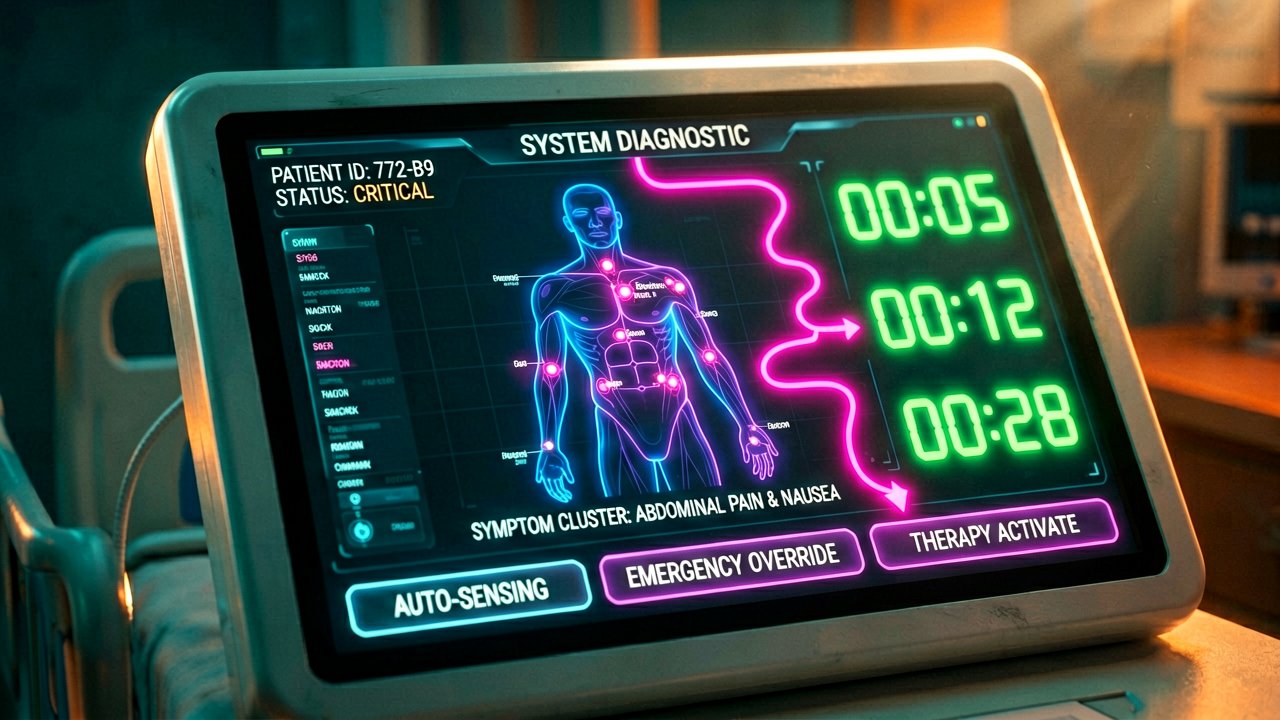
There’s a specific kind of panic that sets in when a medical emergency strikes after hours, especially one as sensitive and time-critical as adolescent testicular torsion. We’ve all been there—staring at a search bar, desperate for answers that don’t involve a three-hour wait in a fluorescent-lit ER. But a recent case report published in the Cureus Journal of Medical Science suggests that the "Dr. Google" era is being replaced by something far more sophisticated: generative AI acting as an unofficial first responder. While it sounds like science fiction, the reality is that large language models are increasingly becoming the first line of defense for parents and teens facing a "golden hour" crisis where every minute of blood flow counts.
In this particular case, the stakes couldn't have been higher. Testicular torsion is a brutal race against the clock, with salvage rates dropping precipitously after the six-hour mark. Traditionally, the burden of early detection falls on parents who may not recognize the vague abdominal pain or nausea as a urological catastrophe. The study highlights how AI can bridge that terrifying knowledge gap, providing immediate, actionable guidance that bypasses the generalities of a standard web search. It’s a shift from static information to dynamic triage, where a chatbot can look at a list of symptoms and scream "get to the hospital" before a human doctor has even checked their messages.
The Algorithm vs. The Clock
The core of the issue is that testicular torsion often mimics less severe conditions like orchitis or simple stomach bugs. However, AI models trained on vast medical datasets are proving remarkably adept at identifying the "red flag" clusters—sudden onset pain, nausea, and an absent cremasteric reflex—that signal a surgical emergency. Researchers are finding that these models can outperform conventional triage tools in speed, if not yet in total clinical nuance. It’s not about replacing the urologist; it’s about making sure the patient actually makes it to the urologist's table before the tissue becomes necrotic.
Navigating the Hallucination Hazard
Of course, trusting a black-box algorithm with a teenager's reproductive health isn't without its "edge cases." The medical community remains rightfully wary of AI hallucinations—those moments where a model confidently asserts a falsehood. If an AI downplays a torsion case as a minor infection, the result is more than just a bad user experience; it's a permanent physical loss. Yet, as the National Institutes of Health has documented, human-led delays due to embarrassment or misdiagnosis are already a massive hurdle. In that context, a highly accessible AI that errs on the side of caution might just be the safety net the digital age needs.

Beyond the Prompt: The High-Stakes Triage of the Digital Native
What Most Reports Miss: The success of generative AI in a torsion crisis isn't just about the accuracy of the underlying medical training data; it’s about the psychology of the user. For an adolescent male, the barriers to seeking help for scrotal pain are often rooted in a paralyzing blend of embarrassment and a lack of health literacy. A chatbot offers a veil of anonymity that a physical triage desk or even a parental conversation lacks. This "digital buffer" allows a teenager to describe symptoms they might otherwise minimize, ironically leading to a more honest data set for the AI to analyze than a doctor might get in a face-to-face encounter under duress.
Historically, the medical establishment has viewed self-diagnosis tools with a mix of dread and condescension. However, the "Dr. Google" era was defined by static pages of worst-case scenarios that led to "cyberchondria" without clear direction. Generative AI represents a fundamental pivot from information retrieval to decision support. According to insights shared by contributors at Medscape, the value of these models lies in their ability to synthesize a "probabilistic hunch" into a firm directive. In the case of torsion, where the "golden hour" is the only metric that matters, the AI acts less like an encyclopedia and more like an assertive air traffic controller.
From a stakeholder perspective, the legal and ethical ramifications are a minefield that most developers are still trying to navigate. If an AI correctly identifies a torsion case, it is hailed as a lifesaver; if it misses, the liability remains a gray area of "user-provided input accuracy." Tech journalists have noted that while the New England Journal of Medicine AI research emphasizes the need for human oversight, the reality on the ground is that parents are already using these tools as a definitive secondary opinion. This creates a friction point between the slow pace of clinical validation and the lightning-fast adoption by the public.
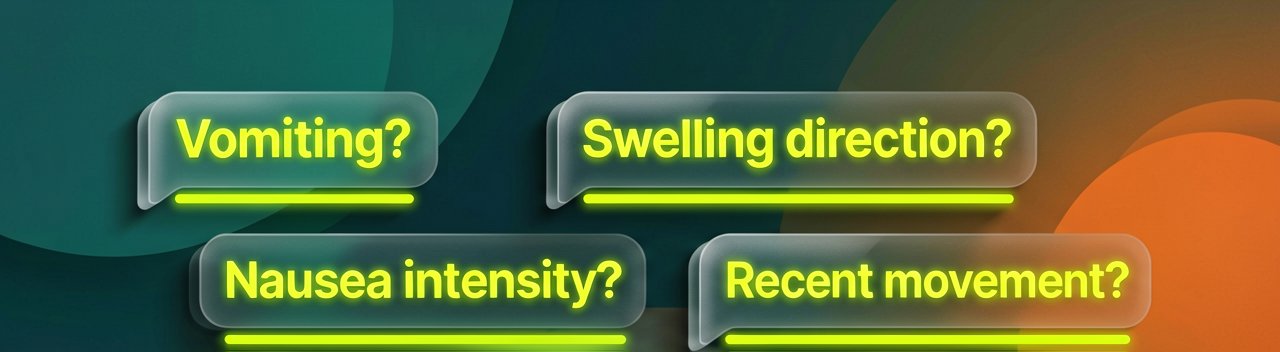
There is also the nuanced issue of "instructional quality" in emergency prompts. A frantic parent might not use the medical terminology the AI needs to trigger a high-priority alert. Expert reporters in the med-tech space are beginning to highlight the need for "emergency-optimized" UI, where the AI can proactively ask clarifying questions—such as the presence of vomiting or the specific direction of swelling—to differentiate torsion from a more benign epididymitis. The goal is to move beyond a passive chat interface into a proactive diagnostic agent that understands the physiological urgency of the situation.
Ultimately, the role of AI as a first responder in pediatric urology highlights a massive shift in the patient journey. We are witnessing the death of the "wait and see" approach that has cost many young men their fertility. By providing a low-friction, high-speed diagnostic nudge, these models are essentially pre-warming the ER. The surgeon knows the patient is coming, the parents know why they are racing there, and the AI has bridged the gap between a confusing symptom and a life-altering intervention. The technology is no longer just an assistant; it is a critical gear in the machinery of emergency medicine.
Reading Between the Lines: The Danger of the Digital Safety Net
Reading Between the Lines: We are currently honeymooning with the idea of the "AI Savior," but there is a profound contradiction in leaning on a linguistic model for a physical vascular emergency. The fundamental flaw in celebrating a chatbot as a first responder is the assumption of universal access and digital literacy. While a well-phrased prompt might save a testicle in a tech-savvy household, the digital divide ensures that the most vulnerable populations remain tethered to the same systemic delays that have always plagued emergency medicine. We risk creating a two-tiered triage system: one for those who can navigate an AI interface, and another for those left in the waiting room of a crumbling infrastructure.
Furthermore, the medical community's cautious optimism ignores the "black box" nature of these models. There is a specific irony in relying on an algorithm that can't explain how it reached a diagnosis to solve a problem as mechanically straightforward as a twisted spermatic cord. As noted in discussions surrounding medical liability on The BMJ, the moment an AI suggests "observation" instead of "evacuation," the legal shield for the developer vanishes. We are essentially beta-testing emergency protocols on the public, using adolescent anatomy as the proving ground for software that was originally designed to write marketing copy and high school essays.
Projecting this forward, the implication is a shift in the very definition of "standard of care." If AI triage becomes the norm, the failure to consult a chatbot could one day be viewed as parental negligence, yet the inherent "hallucination" rate of these models remains a moving target. It is a classic Silicon Valley move: move fast and break things, even if the "things" are biological. While the case report in the NPJ Digital Medicine sphere shows promise, the transition from a single successful case study to a reliable public health tool is a chasm filled with edge cases and unhandled exceptions.
Ultimately, we must grapple with the fact that these AI tools are only as good as the panic-stricken humans inputting the data. A parent who misinterprets their child's pain level will inadvertently feed the AI garbage, and the AI will dutifully return a "garbage-in, garbage-out" diagnosis with the unwavering confidence of a seasoned surgeon. The tech journalism circuit loves a "miracle" story, but the pragmatic reality is that we are trading one set of human errors for a more complex, less predictable set of algorithmic ones.
It’s a brave new world when we trust a series of ones and zeros to diagnose a literal knot in a teenager's plumbing; one can only hope the algorithm has more common sense than the average internet user, or at least a faster connection than the local hospital's Wi-Fi.
Artūras Malašauskas is an AI Systems Integrator with 20+ years of production-grade web engineering experience. He has designed, shipped, and scaled enterprise Python/PHP systems for logistics, SaaS, and public-sector clients. For the past year, he has focused exclusively on AI integrations: deploying open-source LLMs, building generative media pipelines (image, audio, video), and engineering multi-agent workflows for real production environments. His standard: reproducibility, security, cost-efficient inference—no vaporware. He documents and evaluates emerging AI tooling, separating verified capabilities from marketing noise. Technical editor at: muza-ai.eu, ai-verslas.lt, ai-naujinos.lt Connect on LinkedIn
Comments