Why AI Still Needs the Hacker's Mind: DEVCORE Pwns Four Microsoft Products to Win Pwn2Own Berlin 2026

In an era where automated scanners and generative models are promised to be the silver bullet for cybersecurity, the humans are still the ones pulling off the impossible. At Pwn2Own Berlin 2026, the elite research team from DEVCORE didn't just compete; they delivered a masterclass in offensive security. Led by the legendary Orange Tsai, the Taiwan-based firm successfully exploited four major Microsoft product lines—Edge, Exchange, Windows 11, and SharePoint—securing 50.5 points and the "Master of Pwn" title. It wasn't just a win; it was a statement. While other teams struggled with collisions or failed to bypass increasingly hardened defenses, DEVCORE doubled the score of their closest runner-up, walking away with over half a million dollars in prize money.
What makes this feat particularly striking is the surgical precision involved. Their exploit of the Microsoft Edge browser utilized four distinct logic bugs to achieve a sandbox escape, an attack pattern that the Zero Day Initiative (ZDI) described as unprecedented. This isn't just about finding a hole; it's about chaining together minor oversights into a catastrophic failure of the host's security model. In a landscape where Microsoft has poured billions into AI-driven defense, seeing their flagship browser fall to manual, human-curated logic chains reminds us that software is still ultimately a human creation, vulnerable to human ingenuity.
What Most Reports Miss: The Logic Over the Model
Behind the Scenes: While the headlines focus on the eye-popping $505,000 payout, the real story lies in the methodology that AI currently cannot replicate. According to reports from Morningstar, Orange Tsai's team achieved their Edge exploit entirely through manual research, sans AI assistance. This choice was deliberate. In a world where every researcher is using the same LLMs to hunt for vulnerabilities, everyone ends up looking at the same low-hanging fruit. DEVCORE's "hacker mindset" involves zigging where the models zag—targeting unconventional logic classes and high-difficulty architecture that automated systems are trained to overlook as "unreachable" or "working as intended."
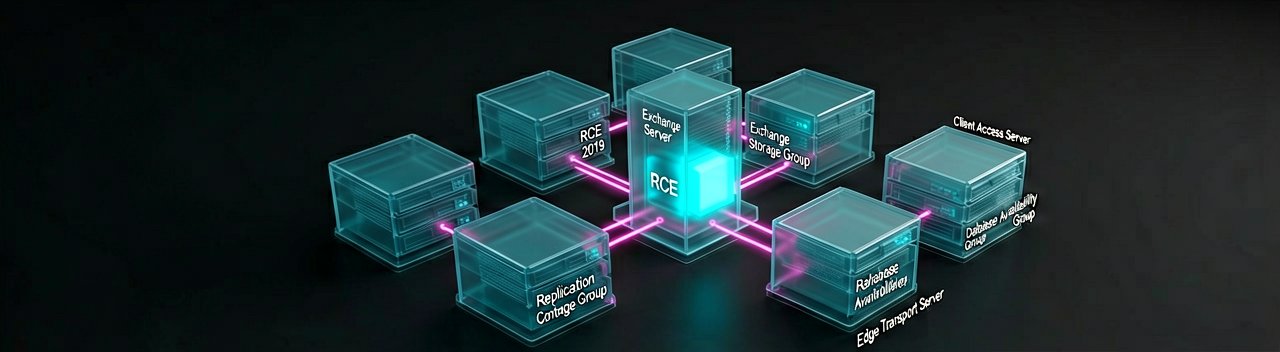
The Exchange Server exploit, a perennial favorite for DEVCORE, was particularly illustrative of this human-machine synergy. While AI helped accelerate the discovery of certain components, the final Remote Code Execution (RCE) chain relied on Tsai’s years of deep-seated architectural knowledge of the mail server. It took only one week to build a world-class zero-day that bypassed layers of modern protection. This highlights a critical gap: AI excels at pattern matching across known datasets, but it lacks the creative "malicious intuition" required to exploit the way different features interact across complex, legacy ecosystems.
Stakeholders at Microsoft were forced into high gear, releasing a patch for the Edge vulnerability within a mere 24 hours of the live demonstration. This rapid response is a testament to the severity of the findings, but also to the constant cat-and-mouse game between Redmond’s engineers and the white-hat community. Historically, DEVCORE has a track record of forcing these emergency updates; they remain the only team to have successfully compromised Microsoft Exchange twice at Pwn2Own, with their first breakthrough back in 2021 as noted by Yahoo Finance. Each win reinforces the reality that deep, low-level expertise is the only true counter to the "black box" complexity of modern enterprise software.
The 2026 Berlin event also served as a proving ground for new categories, including AI Databases and Coding Agents. Yet, even in these arenas, the "vibe-coded" exploits often fell short where traditional, rigorous offensive research succeeded. The failure of several teams to get exploits working against targets like OpenAI Codex suggests that while the attack surface is growing, the difficulty of landing a reliable, repeatable exploit is keeping pace. DEVCORE’s dominance suggests that the future of cybersecurity isn't about replacing humans with AI, but about the "Master of Pwn" using AI to clear the brush so they can focus on the killing blow.
Ultimately, the performance in Berlin underscores a fundamental truth in security: code is logic, and logic is fragile. Automation can find the cracks, but it takes a human to know exactly how to wedge them open. As software vendors lean more heavily on automated defenses, they may inadvertently create blind spots that only a researcher with decades of experience and a healthy dose of skepticism can see. The hacker's mind remains the ultimate zero-day, and as long as humans are writing the code, humans will be the ones to break it.
In an era where automated scanners and generative models are promised to be the silver bullet for cybersecurity, the humans are still the ones pulling off the impossible. At Pwn2Own Berlin 2026, the elite research team from DEVCORE didn't just compete; they delivered a masterclass in offensive security. Led by the legendary Orange Tsai, the Taiwan-based firm successfully exploited four major Microsoft product lines—Edge, Exchange, Windows 11, and SharePoint—securing 50.5 points and the "Master of Pwn" title. It wasn't just a win; it was a statement. While other teams struggled with collisions or failed to bypass increasingly hardened defenses, DEVCORE doubled the score of their closest runner-up, walking away with over half a million dollars in prize money.
What makes this feat particularly striking is the surgical precision involved. Their exploit of the Microsoft Edge browser utilized four distinct logic bugs to achieve a sandbox escape, an attack pattern that the Zero Day Initiative (ZDI) described as unprecedented. This isn't just about finding a hole; it's about chaining together minor oversights into a catastrophic failure of the host's security model. In a landscape where Microsoft has poured billions into AI-driven defense, seeing their flagship browser fall to manual, human-curated logic chains reminds us that software is still ultimately a human creation, vulnerable to human ingenuity.
What Most Reports Miss: The Logic Over the Model
Behind the Scenes: While the headlines focus on the eye-popping $505,000 payout, the real story lies in the methodology that AI currently cannot replicate. According to reports from Morningstar, Orange Tsai's team achieved their Edge exploit entirely through manual research, sans AI assistance. This choice was deliberate. In a world where every researcher is using the same LLMs to hunt for vulnerabilities, everyone ends up looking at the same low-hanging fruit. DEVCORE's "hacker mindset" involves zigging where the models zag—targeting unconventional logic classes and high-difficulty architecture that automated systems are trained to overlook as "unreachable" or "working as intended."
The Exchange Server exploit, a perennial favorite for DEVCORE, was particularly illustrative of this human-machine synergy. While AI helped accelerate the discovery of certain components, the final Remote Code Execution (RCE) chain relied on Tsai’s years of deep-seated architectural knowledge of the mail server. It took only one week to build a world-class zero-day that bypassed layers of modern protection. This highlights a critical gap: AI excels at pattern matching across known datasets, but it lacks the creative "malicious intuition" required to exploit the way different features interact across complex, legacy ecosystems.
Stakeholders at Microsoft were forced into high gear, releasing a patch for the Edge vulnerability within a mere 24 hours of the live demonstration. This rapid response is a testament to the severity of the findings, but also to the constant cat-and-mouse game between Redmond’s engineers and the white-hat community. Historically, DEVCORE has a track record of forcing these emergency updates; they remain the only team to have successfully compromised Microsoft Exchange twice at Pwn2Own, with their first breakthrough back in 2021 as noted by Yahoo Finance. Each win reinforces the reality that deep, low-level expertise is the only true counter to the "black box" complexity of modern enterprise software.
The Fallacy of the Automated Fortress
Reading Between the Lines: The industry’s obsession with "AI-driven remediation" suggests a future where human vulnerability researchers are relegated to the sidelines, yet Pwn2Own 2026 exposed the hollowness of that assumption. Microsoft’s Copilot-integrated security stacks are designed to catch patterns, but the DEVCORE team didn't use a pattern; they used a narrative. By chaining four distinct logic flaws in Edge, they exploited the "white space" between secure components—the areas where the AI's training data ends and the messy reality of software integration begins. This highlights a glaring contradiction in modern defense: as we make it harder for machines to find bugs, we accidentally make the successful human exploits more devastating because they must be more sophisticated to survive.
There is a certain irony in seeing Microsoft SharePoint and Exchange fall so consistently to the same team over half a decade. Despite the transition to "Cloud-First" and the infusion of billions into the Secure Future Initiative, the core architectural baggage remains. It suggests that while AI can help write more secure code today, it cannot magically fix the structural debt of yesterday. The persistence of these vulnerabilities implies that our defensive models are looking for the smoke of a fire that has already been meticulously planned by a human arsonist who knows exactly where the fire suppression systems don't reach.
Projecting forward, the "Master of Pwn" title for DEVCORE is more than a trophy; it is a warning. If a small, dedicated team can dismantle the defenses of a trillion-dollar tech giant across four separate product categories in a matter of days, the current enterprise reliance on automated security posture management is misplaced. We are entering an era of "boutique exploits," where the most dangerous threats are the ones that don't trigger a single heuristic alarm because they are built with a level of elegance that machines haven't yet learned to appreciate. The human element isn't a bottleneck in cybersecurity—it’s the only part that actually understands the stakes.
"Security automation is great for keeping the honest people honest and the mediocre scripts at bay, but until an AI develops a genuine sense of spite and a three-day caffeine addiction, the best seat in the house still belongs to the guy who knows how to break things just to see how they work."
Artūras Malašauskas is an AI Systems Integrator with 20+ years of production-grade web engineering experience. He has designed, shipped, and scaled enterprise Python/PHP systems for logistics, SaaS, and public-sector clients. For the past year, he has focused exclusively on AI integrations: deploying open-source LLMs, building generative media pipelines (image, audio, video), and engineering multi-agent workflows for real production environments. His standard: reproducibility, security, cost-efficient inference—no vaporware. He documents and evaluates emerging AI tooling, separating verified capabilities from marketing noise. Technical editor at: muza-ai.eu, ai-verslas.lt, ai-naujinos.lt Connect on LinkedIn
Comments