The Fractional General Counsel in the Age of AI: Governance, Accountability, and the New Legal Frontier

The "move fast and break things" era has officially collided with the age of algorithmic accountability. For mid-market companies and hyper-growth startups, the sudden ubiquity of Generative AI isn't just a productivity boost—it’s a massive, shifting liability. They're finding that while an LLM can draft a decent marketing email, it can’t navigate the hair-raising complexities of the EU AI Act or the nuances of the Indian Digital Personal Data Protection Act. This is where the Fractional General Counsel (GC) has evolved from a cost-saving convenience into a critical architect of modern governance.
Unlike traditional outside counsel who might only see a project through a narrow lens, a Fractional GC embeds themselves into the executive team's decision-making flow. They’re not just answering legal questions; they’re building the institutional "plumbing" that prevents a business from drowning in regulatory fines or reputational scandals. According to analysis from Bridge Counsels, these legal leaders act as strategic architects, translating opaque legal obligations into practical systems of accountability that balance innovation with risk management.
Designing the Framework: Beyond Reactive Lawyering
In 2026, the job isn't about being a "no" man. It's about building a framework that allows the C-suite to say "yes" with confidence. A Fractional GC establishes the guardrails early—mapping data flows, vetting vendor contracts for algorithmic transparency, and setting up human-in-the-loop oversight for automated decisions. They bridge the gap between the IT department's technical ambitions and the board’s need for defensibility. As noted by Diligent, governance is often like an iceberg; while the surface looks like simple board meetings, the real complexity lies below in the audit trails and compliance logs that a GC must own to protect the organization.
Accountability and the Human-in-the-Loop
The legal frontier is moving toward a standard where "the AI did it" is no longer a valid defense. Regulators are increasingly focused on substantive oversight rather than mere procedural box-ticking. This means a Fractional GC has to ensure that accountability is documented and traceable back to a human decision-maker. Experts at Lexology point out that AI accountability is fundamentally about who approved the system and how its outcomes are monitored. By providing senior-level expertise on a part-time basis, the Fractional GC ensures that even smaller firms have the "judgment" needed to handle these high-stakes ethical and legal dilemmas.

Ultimately, the Fractional GC model offers a unique trade-off for the modern era: it provides the specialized leadership of a seasoned Chief Legal Officer without the seven-figure overhead of a full-time hire. For businesses scaling in an AI-driven economy, having a pilot who knows where the regulatory mines are buried isn't just a luxury—it’s the only way to stay in the game without getting burned by the very technology meant to propel them forward.
The Hidden Risk Matrix: What Most Reports Miss
Behind the Scenes: The shift toward fractional legal leadership isn't just about cost-cutting; it’s a desperate response to the "competency gap" that has opened up between legacy law firms and the rapid-fire deployment of neural networks. While Big Law is busy billing hourly for research memos that are obsolete by the time they hit the partner's desk, Fractional GCs are operating in the trenches. They are seeing firsthand how "shadow AI"—employees plugging proprietary company code or sensitive customer data into consumer-grade LLMs—is creating silent data breaches that traditional insurance policies aren't yet equipped to cover.
Stakeholders, particularly venture capital firms and private equity groups, have fundamentally changed their due diligence checklists. A few years ago, a clean cap table and a solid IP filing were enough to clear a Series B. Now, investors are grilling founders on their "algorithmic hygiene." They want to see a clear provenance of training data and a documented risk-mitigation strategy. The Fractional GC has become the translator in these high-stakes meetings, converting technical jargon into the language of fiduciary responsibility that reassures nervous board members.
Historically, the legal department was viewed as the "Department of Slow," a necessary bottleneck that vetted every press release and contract with glacial precision. However, the sheer velocity of AI development has made that gatekeeper model unsustainable. Today’s seasoned legal reporters are noticing a move toward "embedded governance." Instead of a final review at the end of a product cycle, the Fractional GC works with engineering leads during the sprint planning phase. This historical pivot from reactive litigation to proactive systems design is the defining characteristic of the new legal frontier.
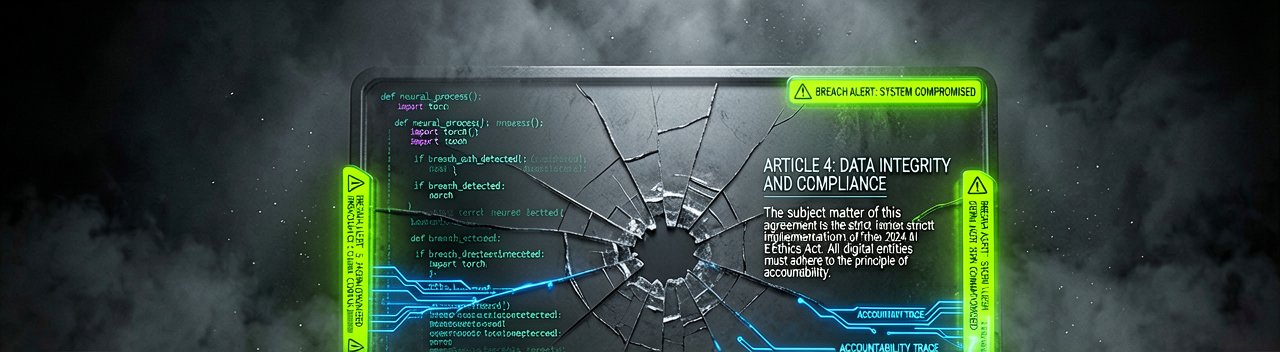
This deep integration allows for a more nuanced handling of the "Black Box" problem. When an AI system makes a biased lending decision or an erroneous medical recommendation, the legal fallout depends entirely on the level of due diligence performed during the procurement phase. A Fractional GC brings a sophisticated understanding of "Duty of Care" to the table, ensuring that the company isn't just blindly trusting a vendor’s API, but is instead conducting independent audits and stress tests that would hold up under the scrutiny of a regulatory probe.
The human element remains the most volatile variable in this equation. Fractional GCs are increasingly finding themselves in the role of corporate therapists, mediating between ambitious product managers who want to automate everything and cynical staff who fear for their roles. By establishing clear ethical guidelines and "red lines" for AI use, these legal professionals provide a sense of stability. They create a culture where accountability isn't seen as a hurdle to be cleared, but as a foundational asset that increases the long-term valuation of the company.
As we look toward the next wave of regulation, the focus is shifting from what the AI does to how the human-machine collaboration is structured. The Fractional GC is uniquely positioned to lead this transition because they aren't siloed in a legal department; they are active participants in the business's daily operations. This vantage point allows them to spot emerging risks—like the subtle drift in model performance or the creeping expansion of data permissions—long before they escalate into a PR nightmare or a class-action lawsuit.
The Paradox of Algorithmic Absolution
Reading Between the Lines: There is a seductive, albeit dangerous, assumption percolating through boardrooms that hiring a Fractional GC provides a sort of "get out of jail free" card for AI mishaps. The contradiction lies in the nature of the technology itself: we are asking legal professionals to govern "black box" systems that even their creators cannot fully explain. This creates a friction point where the GC is expected to provide certainty in an inherently stochastic environment. Skepticism is warranted when firms claim their AI is "fully compliant," as compliance in a landscape of shifting hallucinations is often more of a temporary truce than a permanent state of being.
Furthermore, the fractional model introduces a unique tension regarding institutional memory. While the agility of a part-time expert is lauded, the deep-seated cultural nuances of a company—the "unwritten rules" that often dictate how risk is actually handled on the ground—can be missed by someone who isn't there for the Tuesday morning coffee runs. There is a risk that governance becomes a series of high-level architectural drawings that look brilliant on a slide deck but fail to account for the reality of a junior developer cutting corners to meet a Friday deployment deadline. The projection that AI will simplify legal oversight ignores the reality that it actually multiplies the number of variables a GC must track.
We must also look at the burgeoning "AI-for-Law" industry, which many Fractional GCs are now using to manage their own workloads. It is a hall of mirrors: a human lawyer using an AI to audit another AI that was built using AI-generated code. The implications for professional negligence are dizzying. If a Fractional GC relies on an automated tool to vet a vendor’s security posture and that tool misses a critical vulnerability, the chain of accountability becomes a tangled mess of EULAs and disclaimers. The skeptical observer notes that we aren't necessarily reducing risk; we are simply shifting it into more complex, harder-to-insure strata of the corporate stack.
The ultimate irony of the "New Legal Frontier" is that the more we automate, the more we find ourselves craving the very human qualities—intuition, skepticism, and moral weight—that AI lacks. A Fractional GC isn't just managing code; they are managing the human anxiety surrounding that code. As regulatory bodies like the FTC begin to look past the marketing gloss of "AI-powered" solutions, the companies that will survive the inevitable crackdown are not those with the most sophisticated software, but those with a human advisor cynical enough to assume the software is lying until proven otherwise.
The legal profession’s pivot to AI governance is a bit like a captain promising to steer a ship through a storm while the ship is busy reinventing the concept of North; it’s an expensive exercise in confidence, primarily designed to ensure that when the iceberg finally hits, the paperwork at least looks impeccable.
Artūras Malašauskas is an AI Systems Integrator with 20+ years of production-grade web engineering experience. He has designed, shipped, and scaled enterprise Python/PHP systems for logistics, SaaS, and public-sector clients. For the past year, he has focused exclusively on AI integrations: deploying open-source LLMs, building generative media pipelines (image, audio, video), and engineering multi-agent workflows for real production environments. His standard: reproducibility, security, cost-efficient inference—no vaporware. He documents and evaluates emerging AI tooling, separating verified capabilities from marketing noise. Technical editor at: muza-ai.eu, ai-verslas.lt, ai-naujinos.lt Connect on LinkedIn
Comments