Google’s Creative Suite Just Got a Brain Upgrade: Meet Gemini Omni and the New Flow
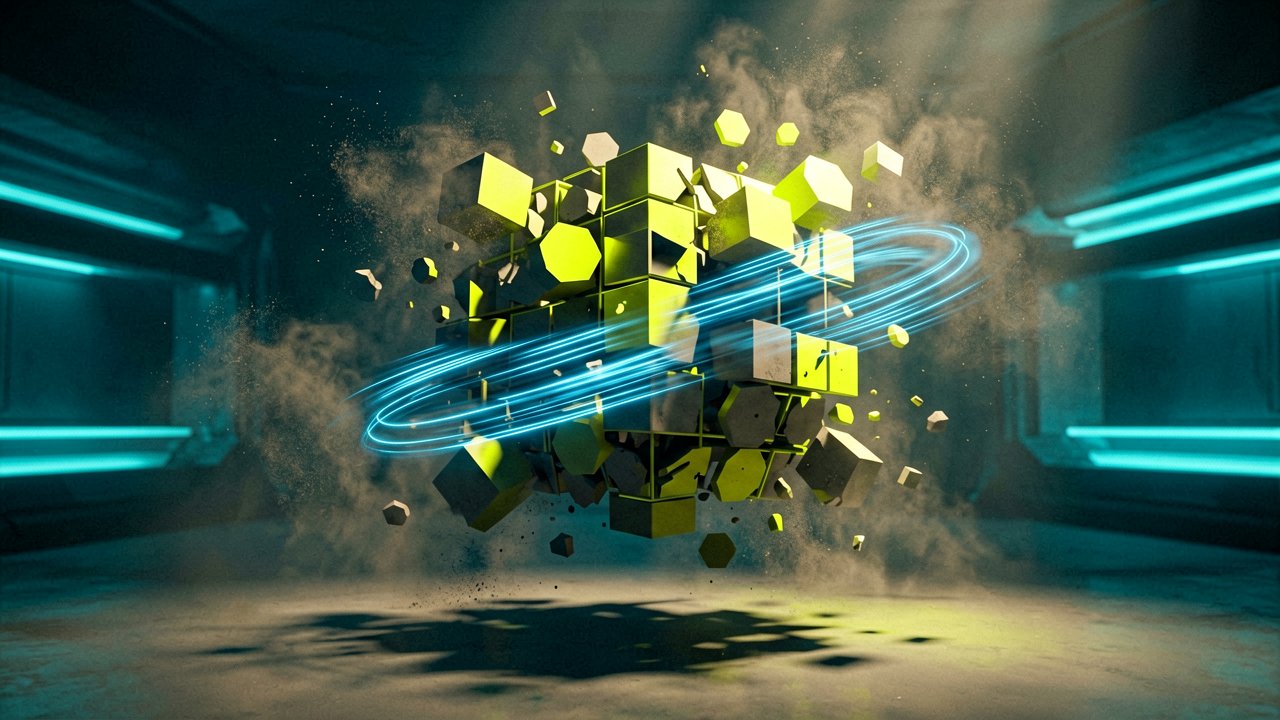
If you’ve been keeping an eye on the intersection of AI and art, you know the drill: the tools are impressive, but they often feel like they’re steering the ship while you’re just a passenger. Google’s latest overhaul of its filmmaking and music production platforms, Flow and Flow Music, aims to flip that script. By weaving in the new Gemini Omni model, Google is betting on a future where "vibe coding" your own custom tools is just as easy as typing a prompt. It’s a shift from being a user to being an architect, and frankly, it’s about time.
The headline act here is Gemini Omni, a multimodal powerhouse that doesn't just "see" video but understands the physical world it's rendering. According to Google Labs, Omni allows for conversational video editing where every change you make builds on the previous one, maintaining consistent characters and lighting without the usual AI "hallucination" flickers. It’s bridging that pesky gap between a cool demo and a professional-grade shot, using an intuitive grasp of physics to make gravity and motion feel, well, real.
The Rise of the AI Creative Agent
We aren’t just talking about better filters. Google is introducing Gemini Spark, a dedicated AI agent designed to act as a 24/7 creative partner. In the filmmaking space, this means you can describe a tool you wish existed—say, a specific color grader or a custom motion tracker—and Flow will build it for you. This "Tools" gallery approach, as highlighted by Pasquale Pillitteri, turns the platform into an open ecosystem where creators can share and remix their bespoke AI workflows.
Music Production Finds Its Mobile Rhythm
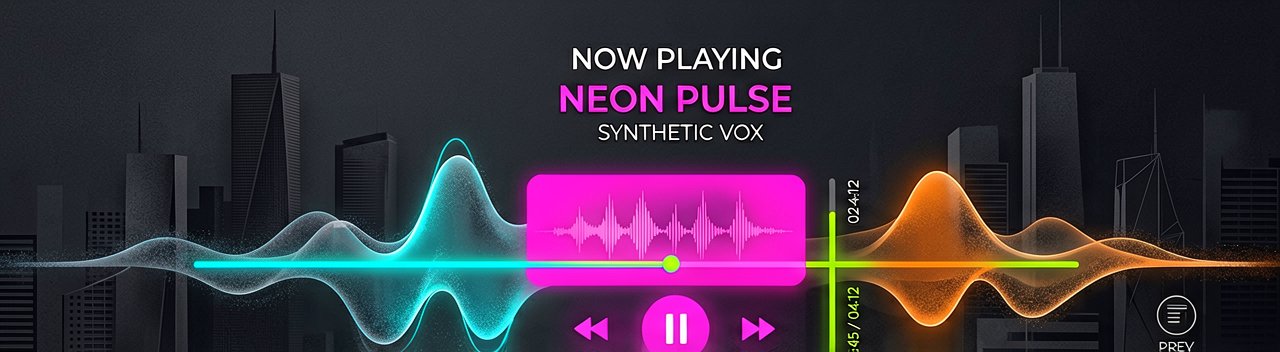
The update isn't limited to the big screen. Flow Music is getting its own dedicated mobile app, making it easier to capture that 3:00 AM melody before it vanishes. Beyond just generating tracks, the new features allow for granular control—you can now isolate and edit specific sections of a song, rewrite lyrics on the fly, or even "cover" your own tracks in entirely different genres. Reporting from 9to5Google notes that these mobile expansions are part of a broader push to keep the creative process untethered from the desktop.
Safety and Verification in the Omni Era
Of course, with great power comes the inevitable concern over deepfakes and authenticity. Google is trying to stay ahead of the curve by embedding SynthID watermarks into all Omni-generated content. These invisible digital tags, combined with new content credentials in the Gemini app, are designed to help viewers distinguish between what was captured on a phone and what was conjured by an algorithm. It’s a necessary guardrail as the line between reality and generation continues to blur into a single, seamless flow.
The Architectural Shift: From Generation to Orchestration
The Real Disruption: While the tech world is buzzing over the fidelity of the pixels, the true breakthrough lies in the move toward "stateful" AI creative environments. In the previous generation of these tools, every prompt was essentially a roll of the dice; you’d get a great result, but if you wanted to change one small detail, the AI would re-roll the entire image or track, losing the original magic. Gemini Omni changes the game by maintaining a persistent memory of the scene’s 3D space. This means filmmakers can finally treat an AI-generated set like a physical soundstage, adjusting the "camera angle" or the "lighting rig" without the entire world morphing into something else.
This shift reflects a growing demand from the professional community for "steerability." Industry veterans have long complained that AI tools are too chaotic for serious production pipelines where continuity is king. By allowing for custom tool creation within the Flow interface, Google is effectively handing the keys to the technical directors. Instead of waiting for a Silicon Valley engineer to release a new feature, a cinematographer can now prompt the AI to build a specialized tool that mimics a specific vintage 35mm lens flare or a particular film stock's grain structure. It’s an democratization of software engineering specifically tailored for the aesthetic eye.
On the audio side, the move to mobile with Flow Music isn't just about convenience; it’s about context. Music production has historically been a sedentary task, tethered to high-powered workstations and heavy plugins. By shifting the heavy lifting of the Gemini Omni model to the cloud while providing a tactile, mobile interface, Google is tapping into the "found sound" movement. Producers can now record a snippet of street noise on their phone and immediately use the AI agent to transform those frequencies into a melodic synth pad or a rhythm section, all while still standing on the street corner where the inspiration first hit.
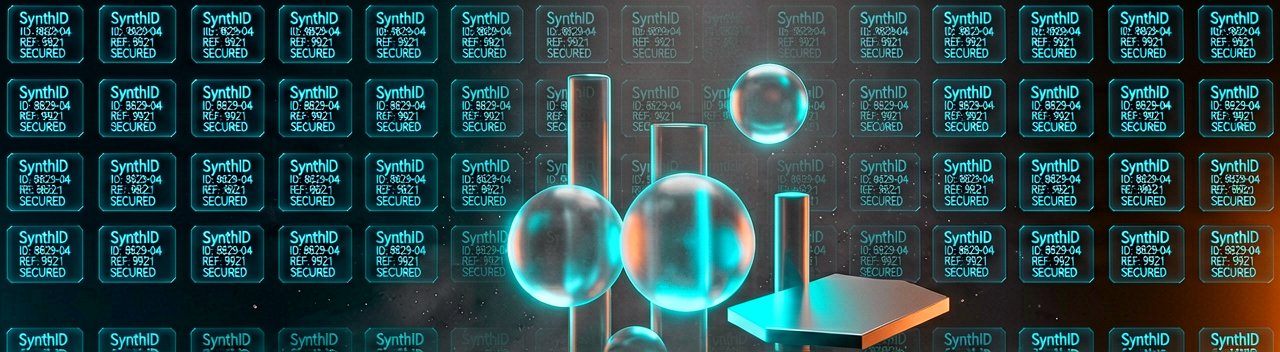
However, the "agentic" nature of Gemini Spark introduces a new layer of complexity regarding creative ownership. If an AI agent "proposes" a chord progression or "builds" a editing tool based on a director's vague description, who owns the resulting IP? Google’s inclusion of SynthID and C2PA metadata is a technical solution to a philosophical problem, providing a clear paper trail of what was human-led and what was machine-assisted. Stakeholders in the legal space are watching this closely, as these tools represent the most significant challenge to copyright law since the advent of digital sampling in the 1980s.
Ultimately, these updates signal that Google is no longer content with just showing off research models. They are building a cohesive operating system for the next generation of "solo-studios"—creators who have the vision of a hundred-person crew but only the budget of a single person. The integration of Omni across mobile and desktop suggests a future where the creative process is a continuous, ambient conversation with a digital assistant that understands the laws of physics and the nuances of music theory as well as any human technician.
The Friction of Infinite Fidelity
The Skeptic's Ledger: While Google’s marketing paints a picture of a friction-less creative utopia, the reality of "agentic" filmmaking often hits a wall of diminishing returns. The promise that Gemini Omni understands physics better than its predecessors is impressive, but it glosses over the "uncanny valley" of creative intent. When an AI agent builds a tool for you, it is essentially interpreting your taste through a statistical filter of what it thinks "good" looks like based on its training data. This risks a feedback loop of aesthetic homogeneity, where the "bespoke" tools created by thousands of different directors end up producing a strangely similar, polished "AI sheen" that lacks the grit of human error.
There is also a glaring contradiction in the push for mobile music production. Google touts the ability to "edit on the fly," yet the computational heavy lifting required for high-fidelity audio separation and genre-remapping still relies heavily on a stable, high-speed data connection. For the creator in a remote cabin or a subway tunnel, the "flow" is only as good as the nearest 5G tower. This tethering of the creative spark to cloud-based subscription models suggests that while the tools are becoming more powerful, the artist’s independence is paradoxically shrinking. You aren't just buying a tool; you are renting a brain that Google can update, nerf, or paywall at any moment.
Furthermore, the emphasis on SynthID and digital watermarking feels like bringing a knife to a nuclear standoff. While it’s a noble attempt at transparency, the history of digital rights management suggests that bad actors will always find ways to strip metadata or bypass invisible watermarks. By framing these safety features as a centerpiece of the update, Google is attempting to solve a sociological crisis with a software patch. If every piece of content becomes a "verified" or "unverified" asset, we may find ourselves in a creative landscape where the burden of proof stifles the actual art, forcing creators to spend more time managing their credentials than their compositions.
The projection that these tools will empower the "solo-studio" also ignores the labor reality of the industry. History shows that when technology makes a task ten times faster, the market doesn't give the creator ten times more free time; it simply demands ten times more content for the same price. By lowering the barrier to entry so drastically, Google might be inadvertently accelerating a "race to the bottom" for creative professionals. If anyone can prompt a custom motion tracker into existence in seconds, the specialized skill set of the technical director becomes a commodity rather than a career.
In the end, we are moving toward a world where you can direct a feature film from the back of an Uber and compose a symphony while waiting for your latte, proving once and for all that our lack of a masterpiece wasn't due to a lack of technology, but a persistent, human commitment to scrolling through memes instead.
Artūras Malašauskas is an AI Systems Integrator with 20+ years of production-grade web engineering experience. He has designed, shipped, and scaled enterprise Python/PHP systems for logistics, SaaS, and public-sector clients. For the past year, he has focused exclusively on AI integrations: deploying open-source LLMs, building generative media pipelines (image, audio, video), and engineering multi-agent workflows for real production environments. His standard: reproducibility, security, cost-efficient inference—no vaporware. He documents and evaluates emerging AI tooling, separating verified capabilities from marketing noise. Technical editor at: muza-ai.eu, ai-verslas.lt, ai-naujinos.lt Connect on LinkedIn
Comments