The Ghost in the Grid: Why Embedding AI in Critical Infrastructure Is a Systemic Gamble
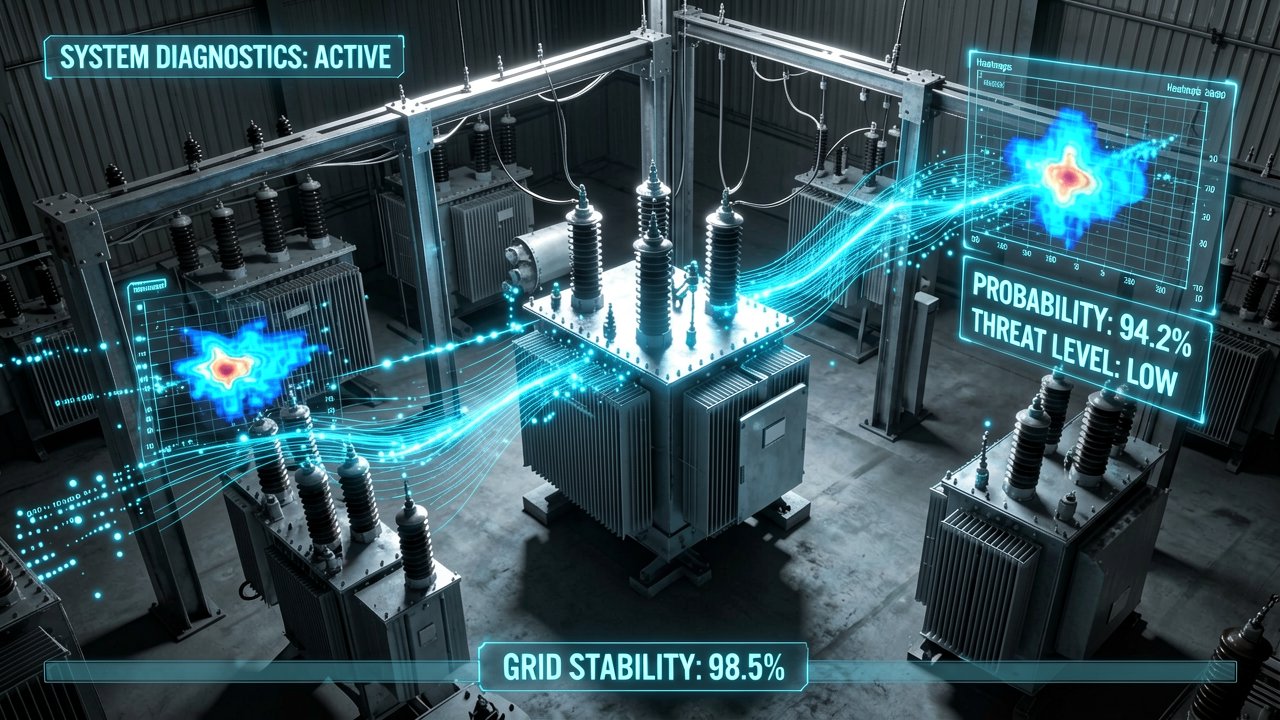
We've spent the last few years treating artificial intelligence like a shiny corporate accelerator, a tool to draft emails faster, optimize logistics, or crunch astronomical datasets. But lately, a quieter and far more consequential shift has occurred. Critical infrastructure operators—the people keeping our lights on, our water flowing, and our trains running—have quietly handed the steering wheel over to algorithmic logic. This isn't just about efficiency anymore; it's a profound architecture overhaul that connects physical operational technology directly to digital networks to manage a reality that human operators can no longer keep up with manually. By automating everything from grid balancing to water treatment, we haven't just modernized our core utilities; we've introduced an entirely new, deeply unpredictable blast radius.
The core of the problem doesn't stem from malicious sci-fi scenarios, but rather from basic math and systemic vulnerability. Traditional digital infrastructure relies on predictable, deterministic code—if X happens, execute Y. Artificial intelligence, by its very nature, operates on probabilistic models, introducing an inherent element of uncertainty into environments where even a microsecond of downtime can trigger a regional blackout. When you layer these unvetted, probabilistic black boxes onto decades-old industrial control systems, you create a complex web of hidden dependencies. We're essentially wiring a hyper-sensitive, opaque nervous system onto an aging mechanical body, and we don't fully understand how the two communicate under stress.
The Weaponization of the Automated Edge
Adversaries aren't knocking at the front door anymore; they're exploiting the expanded attack surface created by this frantic push for automation. Threat actors have shifted from manual, targeted intrusions to highly coordinated, autonomous campaigns. According to the World Economic Forum, an staggering 87% of security experts identified AI-related vulnerabilities as the fastest-growing cyber risk over the past year. It's a classic asymmetric landscape: while defenders are trying to figure out how to patch legacy programmable logic controllers, attackers are using generative models to automate vulnerability discovery and dynamically alter malware payloads to slip past traditional endpoint defenses undetected.
This risk becomes even more acute when you consider the rise of agentic systems. We've rapidly transitioned from passive AI assistants to semi-autonomous agents tasked with optimizing enterprise applications and real-time physical workflows. Research from security platforms like Cycode reveals that up to 40% of enterprise applications are projected to integrate task-optimizing AI agents by the end of 2026, a massive leap from under 5% just a year prior. When these autonomous agents are granted permissions to write data or execute commands within a regional power grid or telecommunications hub without strict human-in-the-loop oversight, a single miscalculated optimization routine can easily look identical to a deliberate cyberattack.
The Dawn of Algorithmic Contagion
The ultimate danger isn't a isolated failure, but rather a cascading, systemic collapse. Because many utility operators rely on the same foundational open-source AI models, cloud environments, and data pipelines, a single compromised training dataset or an unpatched upstream model vulnerability can trigger a ripple effect across entirely separate sectors. If a water treatment plant in one state and an electrical cooperative in another are running on variants of the same flawed algorithm, a singular environmental anomaly or deliberate exploit could blindside both simultaneously, rendering regional redundancy protocols entirely useless.
Regulatory frameworks are desperately trying to build dams against this digital flood, but the legislative machinery moves at a crawl compared to technological deployment. For example, while the European Union’s landmark legislation outlines strict compliance rules for high-risk systems, the actual implementation timeline mapped out by the European Commission delays enforceable rules for critical infrastructure AI systems until late 2027. This leaves an uncomfortable multi-year window where operators are aggressively deploying frontier models into live environments without standardized, legally binding safety baselines or structural guardrails. Until we treat algorithmic resilience as a core element of national security rather than a tech-support afterthought, we are effectively letting our most vital systems drift on an untamed digital current.
Behind the Scenes: The Hidden Fault Lines of Operational Technology
The push to inject artificial intelligence into critical infrastructure exposes a fundamental culture clash between two entirely different engineering disciplines. On one side are the Silicon Valley software engineers who view rapid, iterative model deployment as a badge of honor. On the other side are the operational technology specialists who manage physical turbines, valves, and substations designed to run uninterrupted for thirty years. For decades, the primary defense of these physical systems was air-gapping—keeping industrial control networks entirely disconnected from the public internet. By forcing AI models to ingest real-time operational data, utility companies have effectively shattered this barrier, building digital bridges that bypass legacy safety protocols.
This forced marriage of technologies has introduced a massive data-integrity crisis that most high-level policy papers completely ignore. Industrial telemetry data is notorious for being messy, inconsistent, and plagued by sensor drift. When a machine learning model is trained on this flawed historical data, it begins to hallucinate anomalies that do not exist, or worse, it misinterprets a genuine mechanical failure as mere background noise. Plant operators are already reporting a dramatic rise in alert fatigue, as automated monitoring systems flood control rooms with thousands of low-priority warnings every single hour. This constant digital noise makes it incredibly easy for an operator to miss the early warning signs of an actual, catastrophic physical failure.
The human cost of this automation is a quiet erosion of institutional knowledge within the utility workforce. As older, seasoned engineers retire, they are being replaced by automated monitoring dashboards and predictive maintenance algorithms. Younger operators are being trained to trust the algorithmic output implicitly, lacking the decades of tactile, hands-on experience required to manually stabilize a failing power grid when the software inevitably crashes. This creates a fragile operating environment where the human element is no longer an independent safety net, but rather a passive bystander trapped in a loop of digital dependency.
From a geopolitical perspective, this reliance on commercial AI platforms introduces a severe supply-chain vulnerability. Most utility companies lack the computing power and technical expertise to develop proprietary frontier models internally, forcing them to rely on third-party cloud providers and enterprise software vendors. This concentrated market structure means that a disruption at just one or two major cloud providers could instantly blind the control systems of hundreds of water utilities and regional electric cooperatives simultaneously. We have essentially centralized the operational intelligence of our most vital physical assets into a handful of corporate data centers, creating a highly lucrative, singular target for nation-state adversaries.
Reading Between the Lines: The Illusion of Algorithmic Infallibility
The current corporate narrative surrounding infrastructure automation relies on a convenient delusion: that more data inherently produces better security. Industry executives confidently pitch predictive algorithms as the ultimate shield against human error and malicious cyberattacks. Yet, this logic completely ignores the structural reality of how machine learning works. AI does not possess intuition; it identifies statistical correlations within historical datasets. By deploying these models to defend our grids, we are essentially betting our societal survival on the assumption that future crises will look exactly like past ones. It is a dangerous contradiction to build a defense strategy around predictability in an era defined by highly volatile, unprecedented climate events and rapidly evolving asymmetric warfare.
This blind spot becomes glaringly obvious when analyzing the economic incentives driving this technological gold rush. Utility companies are not adopting AI solely out of a desire for peak operational resilience; they are doing it to slash labor costs and satisfy shareholders with leaner operational budgets. The bitter irony is that the cost savings realized by downsizing human workforce teams are immediately swallowed by skyrocketing technical debt. Infrastructure operators are finding themselves locked into expensive, opaque licensing agreements with tech monopolies, trading predictable internal labor costs for unpredictable, recurring vendor dependencies. We are actively outsourcing the governance of public resources to private corporations whose primary fiduciary duty is quarterly growth, not public safety.
Looking ahead, the long-term systemic implications point toward a troubling paradox of efficiency. As these automated systems optimize power grids and water networks to run at their absolute mathematical limits, they systematically strip away the operational slack that allows systems to survive unexpected shocks. In the legacy era, inefficient buffers and manual redundancies gave human operators a window of hours to respond to a pipeline leak or a localized grid failure. By automating those buffers out of existence in the name of peak efficiency, we ensure that when a failure finally punctures the algorithmic armor, it will propagate through the network at digital speeds, transforming a localized glitch into a widespread, multi-sector blackout before a human hand can even reach for the kill switch.
"We have spent over a century engineering the world's most sophisticated physical safety nets, only to hook them up to automated software that can be brought down by a bad data update or a hallucinating chatbot. Progress, it seems, means replacing an operator who might fall asleep at the console with a system that can confidently wreck a turbine while dreaming."
Artūras Malašauskas is an AI Systems Integrator with 20+ years of production-grade web engineering experience. He has designed, shipped, and scaled enterprise Python/PHP systems for logistics, SaaS, and public-sector clients. For the past year, he has focused exclusively on AI integrations: deploying open-source LLMs, building generative media pipelines (image, audio, video), and engineering multi-agent workflows for real production environments. His standard: reproducibility, security, cost-efficient inference—no vaporware. He documents and evaluates emerging AI tooling, separating verified capabilities from marketing noise. Technical editor at: muza-ai.eu, ai-verslas.lt, ai-naujinos.lt Connect on LinkedIn
Comments