Bulgaria Enlists Google’s AI Arsenal to Fortify National Cyberspace

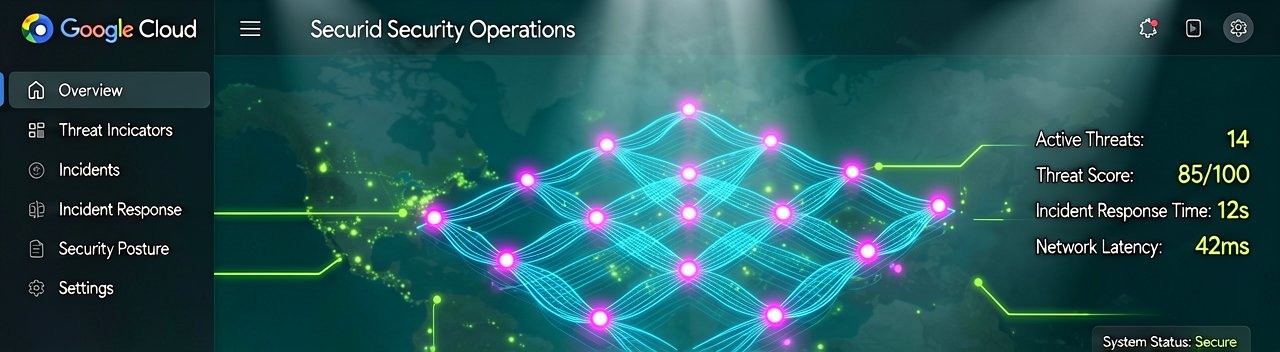
Bulgaria’s national system integrator, Information Services, has officially pulled the trigger on a massive security overhaul, partnering with Google Cloud to launch an AI-driven "National Cybershield." This isn't just another routine software update; it’s a high-stakes pivot to a federated Security Operations Center (SOC) designed to pull 54 government entities under a single, unified umbrella. By tapping into Google’s planet-scale analytics and Mandiant’s frontline threat intelligence, the initiative aims to swap aging, manual defense tactics for a system that moves at the same breakneck speed as modern, AI-powered attacks.
Behind the Scenes: This project represents a flagship moment for European digital sovereignty, marking one of the first regional deployments of Google Cloud’s Cybershield technology. The timing is hardly accidental. Bulgaria has been racing to align its legal framework with the EU’s NIS2 Directive, which recently transformed cybersecurity from a "nice-to-have" IT line item into a strategic national priority. For a country sitting on the EU’s eastern border, the stakes for regional stability are incredibly high, and the move to a centralized, automated defense model reflects a broader shift toward proactive, rather than reactive, incident management.
The technical architecture of the Cybershield relies heavily on Google Cloud Security Operations to ingest and analyze massive streams of telemetry from across the government’s digital footprint. While traditional SOCs often drown in a sea of "noise" and false positives, the integration of Mandiant’s specialized expertise allows Information Services to prioritize the most complex intrusion scenarios. This partnership actually builds on an eight-year working relationship between the two organizations, suggesting that this "overnight" transformation was actually nearly a decade in the making.
Beyond the software, there’s a critical human element at play. The collaboration includes specialized training and analyst capabilities to ensure that Bulgarian experts can navigate the "Agentic Era" of cybersecurity alongside their automated counterparts. By consolidating these disparate government agencies into a federated SOC, the state is effectively closing the gaps that sophisticated actors typically exploit. It’s an ambitious attempt to turn cybersecurity from a manual craft into an automated science, providing a potential blueprint for other EU nations looking to scale their defenses against an increasingly hostile digital landscape.
Building the Federated SOC
The rollout, which quietly began earlier this year, focuses on onboarding a diverse range of 54 government ministries and agencies. This federated approach is crucial because it allows for centralized awareness while maintaining the operational nuances of individual departments. Supported by significant EU funding, the project underscores a regional mandate to secure critical infrastructure against state-sponsored actors and cross-border criminal networks that have grown increasingly bold in recent years.
Strategically, this move positions Bulgaria as a regional leader in AI adoption. While other nations are still debating the ethical and regulatory hurdles of AI, Sofia is actively integrating it into the core of its national security infrastructure. This isn't just about catching malware; it's about building "cyber resilience"—the ability to withstand and recover from "unknown unknowns" that traditional signature-based systems simply aren't equipped to handle. By leveraging Google’s secure-by-design infrastructure, Bulgaria is making a clear bet that the future of national defense is autonomous, intelligent, and deeply integrated.
Bulgaria’s national system integrator, Information Services, has officially pulled the trigger on a massive security overhaul, partnering with Google Cloud to launch an AI-driven "National Cybershield." This isn't just another routine software update; it’s a high-stakes pivot to a federated Security Operations Center (SOC) designed to pull 54 government entities under a single, unified umbrella. By tapping into Google’s planet-scale analytics and Mandiant’s frontline threat intelligence, the initiative aims to swap aging, manual defense tactics for a system that moves at the same breakneck speed as modern, AI-powered attacks.
Behind the Scenes: This project represents a flagship moment for European digital sovereignty, marking one of the first regional deployments of Google Cloud’s Cybershield technology. The timing is hardly accidental. Bulgaria has been racing to align its legal framework with the EU’s NIS2 Directive, which recently transformed cybersecurity from a "nice-to-have" IT line item into a strategic national priority. For a country sitting on the EU’s eastern border, the stakes for regional stability are incredibly high, and the move to a centralized, automated defense model reflects a broader shift toward proactive, rather than reactive, incident management.

The technical architecture of the Cybershield relies heavily on Google Cloud Security Operations to ingest and analyze massive streams of telemetry from across the government’s digital footprint. While traditional SOCs often drown in a sea of "noise" and false positives, the integration of Mandiant’s specialized expertise allows Information Services to prioritize the most complex intrusion scenarios. This partnership actually builds on an eight-year working relationship between the two organizations, suggesting that this "overnight" transformation was actually nearly a decade in the making.
Beyond the software, there’s a critical human element at play. The collaboration includes specialized training and analyst capabilities to ensure that Bulgarian experts can navigate the "Agentic Era" of cybersecurity alongside their automated counterparts. By consolidating these disparate government agencies into a federated SOC, the state is effectively closing the gaps that sophisticated actors typically exploit. It’s an ambitious attempt to turn cybersecurity from a manual craft into an automated science, providing a potential blueprint for other EU nations looking to scale their defenses against an increasingly hostile digital landscape.
Building the Federated SOC
The rollout, which quietly began earlier this year, focuses on onboarding a diverse range of 54 government ministries and agencies. This federated approach is crucial because it allows for centralized awareness while maintaining the operational nuances of individual departments. Supported by significant EU funding, the project underscores a regional mandate to secure critical infrastructure against state-sponsored actors and cross-border criminal networks that have grown increasingly bold in recent years.
Strategically, this move positions Bulgaria as a regional leader in AI adoption. While other nations are still debating the ethical and regulatory hurdles of AI, Sofia is actively integrating it into the core of its national security infrastructure. This isn't just about catching malware; it's about building "cyber resilience"—the ability to withstand and recover from "unknown unknowns" that traditional signature-based systems simply aren't equipped to handle. By leveraging Google’s secure-by-design infrastructure, Bulgaria is making a clear bet that the future of national defense is autonomous, intelligent, and deeply integrated.
Reading Between the Lines: While the glossy press releases paint a picture of an impenetrable digital fortress, the reality of migrating 54 disparate government entities into a single cloud-based SOC is a logistical nightmare waiting to happen. The sheer variety of legacy systems—some likely predating the smartphone era—means that "unified telemetry" is often more of a hopeful ambition than an immediate reality. There is a palpable tension between the desire for centralized efficiency and the inherent messiness of bureaucratic silos that have historically guarded their data like crown jewels.
Furthermore, tethering national security so tightly to a single American hyperscaler raises the inevitable, if uncomfortable, question of digital dependency. Bulgaria is effectively outsourcing the "brain" of its national defense to Google Cloud, a move that offers world-class protection but also creates a significant vendor lock-in. If the geopolitical winds shift or if a commercial dispute arises, the cost of decoupling from such an integrated AI ecosystem would be catastrophic, potentially leaving the state’s digital infrastructure blind and deaf.
Then there is the "AI hype" factor. We are told that machine-speed threats require machine-speed responses, but AI is only as good as the data it feeds on. In a landscape where attackers are already using generative tools to create hyper-realistic decoys, there is a risk that an automated Cybershield could be led into a hallucination-fueled wild goose chase. Relying on automation to replace human intuition is a gamble that assumes the algorithm will always recognize a "Black Swan" event before the analyst in the room does.
The Skeptic’s Edge
There is also the matter of transparency. In the world of national security, "federated access" often becomes a euphemism for increased state surveillance capabilities. While the goal is to stop hackers, the infrastructure required to monitor all 54 agencies also provides the state with an unprecedented level of internal oversight. Balancing the genuine need for collective defense with the privacy rights of public sector employees and the citizens they serve will be the true test of this partnership’s long-term viability.
Ultimately, the success of the National Cybershield won't be measured by the number of blocked pings or the speed of its automated alerts. It will be measured by whether it can survive the first major breach where the AI fails to intervene. The history of tech is littered with "unbreakable" systems that met their match in a simple social engineering trick or a disgruntled insider. No amount of silicon-based intelligence can fully compensate for the messy, unpredictable variable of human error.
"In the digital arms race, we’ve traded our old padlocks for a high-tech biometric scanner, only to realize that the most sophisticated AI on the planet still can't stop a tired intern from clicking on a 'Free Pizza' link from a suspicious sender."
Artūras Malašauskas is an AI Systems Integrator with 20+ years of production-grade web engineering experience. He has designed, shipped, and scaled enterprise Python/PHP systems for logistics, SaaS, and public-sector clients. For the past year, he has focused exclusively on AI integrations: deploying open-source LLMs, building generative media pipelines (image, audio, video), and engineering multi-agent workflows for real production environments. His standard: reproducibility, security, cost-efficient inference—no vaporware. He documents and evaluates emerging AI tooling, separating verified capabilities from marketing noise. Technical editor at: muza-ai.eu, ai-verslas.lt, ai-naujinos.lt Connect on LinkedIn
Comments