Google I/O 2026: The Year Google Finally Let the Agents Off the Leash

Google just wrapped up its I/O 2026 keynote, and if there’s one takeaway, it’s that the era of simple chatbots is officially in the rearview mirror. Sundar Pichai and his team spent the afternoon pivoting from "generative AI" to what they’re calling "agentic AI"—systems that don't just talk back, but actually go out and get things done. The stars of the show were Gemini Omni, a multimodal powerhouse that turns any input into editable video, and Antigravity 2.0, which has evolved from a niche coding tool into a full-blown orchestration deck for autonomous software agents. It’s a massive bet that we’re ready to stop prompting and start delegating.
The technical muscle behind this shift is Gemini 3.5 Flash, a model Google claims is four times faster than its predecessors and specifically tuned for high-velocity "agentic workflows." According to the Google Blog, this new engine is what enables Antigravity 2.0 to spin up sub-agents that can handle everything from refactoring code to managing a full-scale product launch in the background. It’s impressive, albeit a little dizzying, to see Google move this quickly to build a cohesive ecosystem where AI isn't just an assistant, but a project manager.
Gemini Omni: Reality Simulation as a Service
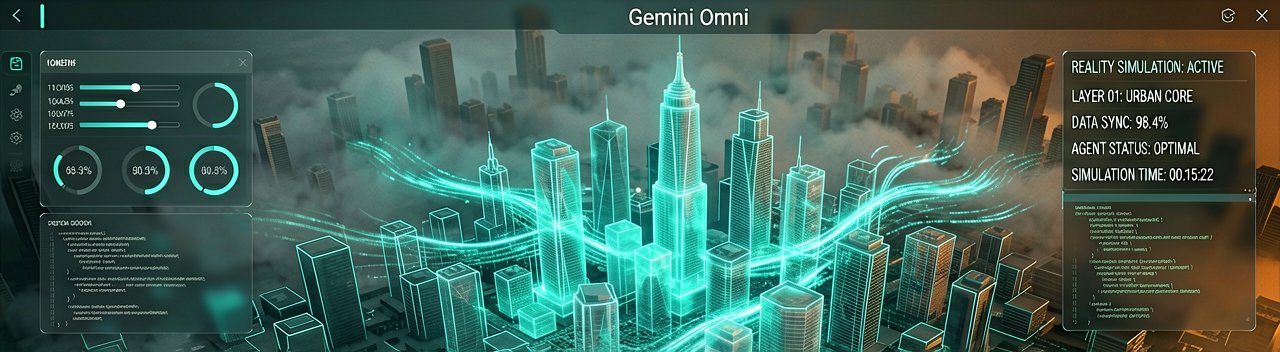
Gemini Omni feels like the natural conclusion of Google’s push into multimodal world understanding. Unlike previous models that felt like they were duct-taping text and image together, Omni is built to handle text, audio, and video as a single unified stream. During the demo, Google showed it generating high-fidelity video content grounded in real-world logic—essentially simulating reality rather than just predicting pixels. As noted by Cybernews, the "Omni Flash" variant is already rolling out to the Gemini app and YouTube Shorts, signaling that Google is ready for this tech to go mainstream immediately.
Antigravity 2.0: From Code Assistant to Agent Boss
For the developer crowd, the big news was Antigravity 2.0. What started as a response to AI coding environments like Cursor has morphed into a standalone desktop application for "agent orchestration." It’s no longer just about completing a line of Python; it’s about deploying a "cohort" of agents to build an entire operating system, a feat Google claims can now be done for under $1,000 in tokens. The Antigravity Blog highlights new features like scheduled cron-style tasks and native voice support, making it clear that Google wants us to spend less time typing at our screens and more time steering a fleet of autonomous digital workers.
The Hidden Architecture of Autonomous Labor
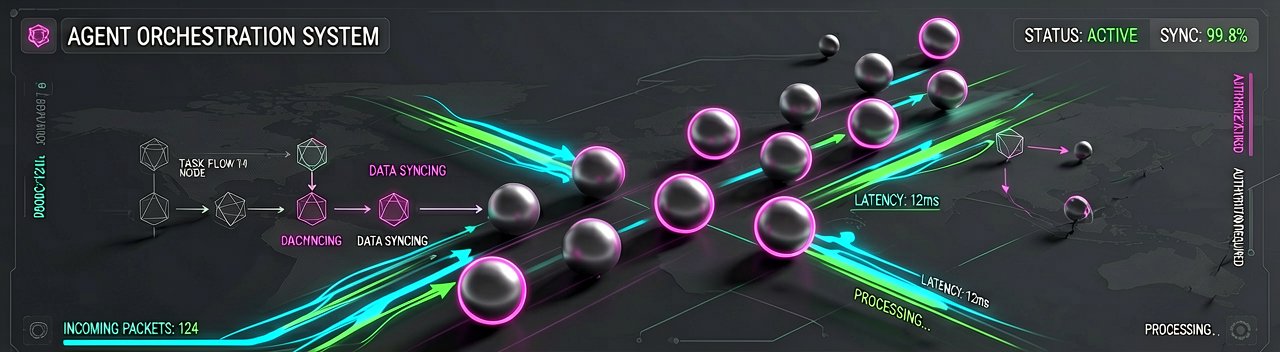
Beyond the Glitz of the Keynote: The pivot toward Gemini Omni and Antigravity 2.0 represents more than just a software update; it is a fundamental restructuring of the "AI-as-a-Service" business model. Historically, Google relied on massive, monolithic models that required heavy prompting and constant human oversight. With Antigravity 2.0, the strategy has shifted toward "small and many." By utilizing a swarm of specialized Gemini 3.5 Flash instances, Google is effectively commoditizing complex task completion, allowing developers to treat AI agents like microservices rather than conversational novelties. This architectural shift is designed to solve the "latency wall" that has plagued previous agentic frameworks, making autonomous action feel instantaneous rather than laboriously staged.
Behind closed doors, the conversation among Google’s senior engineers has centered on the concept of "long-horizon reasoning." While a standard chatbot can plan a vacation, the Gemini Omni engine is built to manage the logistical fallout of that vacation in real-time, such as rebooking flights during a storm without being asked. This leap requires a level of persistence—the ability for an AI to "sleep" and "wake up" based on external triggers—that was absent in earlier iterations of the Gemini ecosystem. It’s a significant move toward persistent digital identity, where your agent exists as a continuous process rather than a series of isolated sessions.
Industry skeptics, however, are closely watching how Google navigates the "hallucination of action" problem. In a purely generative environment, a mistake results in a weird sentence; in an agentic environment, a mistake could mean an accidental $5,000 server bill or a deleted database. Google’s countermeasure appears to be the "Check-and-Balance" protocol within Antigravity 2.0, which forces sub-agents to verify each other's work before a final execution. This internal peer-review system mimics human organizational structures, suggesting that Google is no longer just building tools, but is instead designing digital bureaucracies.
From a stakeholder perspective, the launch of Gemini Omni is a clear defensive play against OpenAI’s multimodal advancements. By integrating Omni directly into the YouTube and Android kernels, Google is leveraging its massive distribution advantage to ensure that agentic AI becomes a background utility rather than a destination app. The goal is for the user to forget they are interacting with an AI at all, moving toward an "ambient intelligence" where the operating system anticipates needs before they are articulated.
The historical irony of this moment isn't lost on long-time I/O attendees. A decade ago, Google was criticized for being a "search company that lost its way" in the mobile transition. Today, by positioning Antigravity 2.0 as the glue for the next generation of software, the company is attempting to reclaim its status as the world’s primary interface. If these agents perform as advertised, the very concept of a "search bar" may soon feel as antiquated as a physical filing cabinet, replaced entirely by a fleet of invisible assistants managing the flow of information on our behalf.
The Agentic Paradox and the Cost of Autonomy
Reading Between the Lines: For all the polished demos of Antigravity 2.0 and the seamless reality-bending of Gemini Omni, Google is navigating a profound contradiction in its core identity. The company that built its empire on the "click"—on the intentionality of a human user navigating a sea of links—is now actively engineering a world where those clicks no longer exist. If an agentic workflow successfully books your flight, researches your competitors, and refactors your code in the background, the ad-based revenue model that sustained Google for two decades faces a structural crisis. We are witnessing a tech giant attempting to cannibalize its most profitable product before a competitor does it first, but the replacement economy of "token-based labor" is far from a guaranteed win.
There is also the matter of the "agency gap" that Google conveniently glossed over during the keynote. While Gemini Omni can simulate reality with startling fidelity, the transition from simulation to execution remains fraught with liability. Google’s pitch relies on the assumption that users will trust a "swarm" of sub-agents to manage their digital lives, yet the company has yet to provide a clear framework for when these agents inevitably collide with real-world complexity. The technical friction of 2026 isn't the model's intelligence; it’s the model's lack of a legal soul when a delegated task goes sideways in a way that code-checkers can't catch.
Furthermore, the democratization of "autonomous software agents" via Antigravity 2.0 introduces a massive noise problem. If every developer can now deploy a fleet of agents to "manage a product launch" for less than a thousand dollars, we are looking at an internet saturated with synthetic activity. The risk is that Google isn't just creating a more efficient world, but an infinitely more crowded one, where agents spend their time talking to other agents while the human user sits at the top of a crumbling ivory tower of automated output. This feedback loop could easily degrade the very data Gemini 3.5 Flash needs to remain accurate, leading to a state of model collapse fueled by the company’s own efficiency.
Projecting forward, the "Antigravity" branding itself feels like an admission of the weight of legacy tech. Google is desperate to prove it can still move with the nimbleness of a startup, yet the sheer scale of the Gemini integration across Android and Workspace suggests a move toward a walled garden that is heavier than ever. By making agentic AI "ambient," Google is betting that convenience will override the user’s desire for transparency. Whether the public actually wants a digital shadow that acts on their behalf—or if they just wanted a search engine that actually worked—is the trillion-dollar gamble that dominated this year’s stage.
"We’ve spent thirty years teaching humans how to talk to computers, only to spend the next thirty years building computers that are far too busy talking to each other to listen to us anyway."
Artūras Malašauskas is an AI Systems Integrator with 20+ years of production-grade web engineering experience. He has designed, shipped, and scaled enterprise Python/PHP systems for logistics, SaaS, and public-sector clients. For the past year, he has focused exclusively on AI integrations: deploying open-source LLMs, building generative media pipelines (image, audio, video), and engineering multi-agent workflows for real production environments. His standard: reproducibility, security, cost-efficient inference—no vaporware. He documents and evaluates emerging AI tooling, separating verified capabilities from marketing noise. Technical editor at: muza-ai.eu, ai-verslas.lt, ai-naujinos.lt Connect on LinkedIn
Comments