Beyond the Bot: Navigating the Reality Check on Day Two at TechEx
Day two at TechEx didn't just double down on the hype; it hit us with a much-needed reality check. While day one was all about the "art of the possible," the second leg of the conference pivoted sharply toward the "mechanics of the actual." We're seeing a shift from isolated pilots to the messy, high-stakes world of enterprise-wide orchestration. Leaders from TechEx Events spent the morning dismantling the myth that a simple API call to a Large Language Model (LLM) is enough to transform a legacy business. The recurring theme? It’s not the model that fails; it’s the infrastructure beneath it that buckles under the weight of real-world demand.
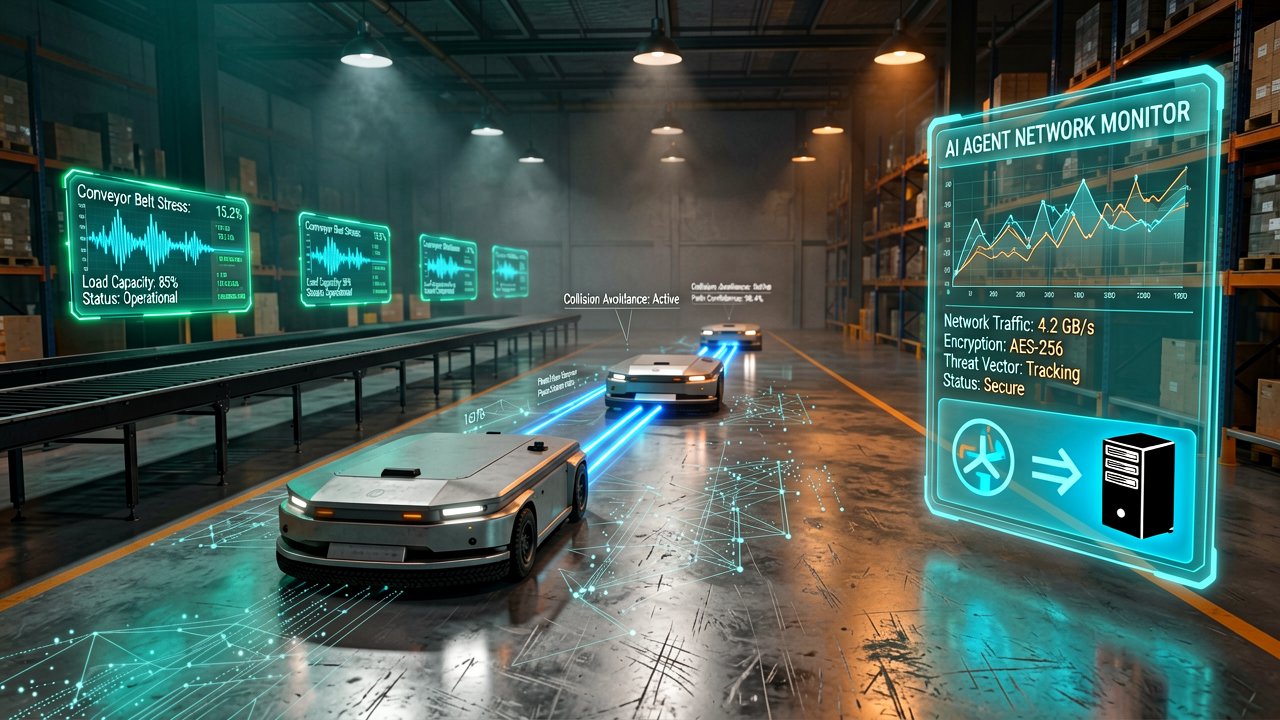
The conversation around roadblocks was particularly refreshing for its lack of sugar-coating. We aren't just talking about "data silos" anymore—that’s a tired trope. Instead, the floor was buzzing with the complexities of agentic AI and the sheer difficulty of maintaining data sovereignty in a multi-cloud world. According to insights shared at the Physical AI Expo, the leap from a digital dashboard to an autonomous warehouse floor is where many current roadmaps hit a dead end. It’s one thing to have an AI suggest a more efficient route; it’s quite another to have it direct a fleet of heterogeneous robots without a single collision or security breach.
The Physical AI Frontier: Where Code Meets Concrete
One of the most packed sessions focused on "Physical AI," a track that effectively bridge the gap between digital intelligence and industrial muscle. It’s clear that the industry is moving past simple automation into a phase where machines actually "think" and "act" in dynamic environments. Experts from the AI & Big Data Expo highlighted that the real innovation isn't just in the robotics, but in the orchestration layers—the software glue that allows cities, vehicles, and sensors to interact as a single, interdependent system. This isn't science fiction; it's the operational reality for 2026, where the challenge isn't the "if," but the "how" of scaling these fleets safely.
Securing the Sentient Enterprise
Security wasn't just a side note on day two; it was the foundation of every roadmap discussed. We’ve moved into an era where "AI-powered adversaries" are no longer a theoretical threat but a daily operational hazard. The consensus among the cybersecurity panels was that defenders must now harness AI agents to keep pace with the speed and scope of automated attacks. As reported by Google Cloud, the shift toward agentic security is becoming mandatory for any enterprise serious about resilience. The goal is to move from a reactive posture to a predictive one, where the security framework evolves as quickly as the threats it faces.

The Hidden Gravity of the AI Stack
What Most Reports Miss: The sheer technical debt being accumulated in the rush to "go live" with generative features is creating a massive secondary market for specialized orchestration tools. While the headlines focus on the brilliance of specific LLMs, the veterans in the TechEx hallways were fixated on the "unsexy" middle-tier: the vector databases, the data pipelines, and the governance layers. There is a palpable sense among CTOs that we are building high-performance engines on top of rusted chassis, and the cost of retrofitting these legacy systems is often three times the initial AI investment.
From a stakeholder perspective, the tension between the "innovate fast" mandate from the C-suite and the "don't break the system" reality of the IT department has reached a fever pitch. In the private briefing rooms, the talk wasn't about model accuracy, but about "inference costs" and "token efficiency." Organizations are realizing that running a massive model for every trivial customer query is the fastest way to incinerate a quarterly budget. This has led to a resurgent interest in "Small Language Models" (SLMs) that can run on-premise or at the edge, providing a leaner, more sustainable roadmap for the long haul.
Historical context tells us this is a classic "Goldilocks" phase of technology adoption. Much like the early days of the cloud transition in 2010, we are seeing a swing from total centralization back to the edge. Experts from TechEx Events pointed out that "Physical AI"—the integration of intelligence into hardware—is essentially a return to decentralized computing, but with a brain. The hurdle remains the lack of standardized protocols; right now, every enterprise is essentially building its own proprietary stack, which is a nightmare for future interoperability.
In the realm of security, the shift is even more dramatic. We are moving away from the era of "firewalls and passwords" toward "behavioral trust models." A seasoned reporter knows that the real threat isn't just a data leak; it's "model poisoning," where a malicious actor subtly alters an AI's training data to create a permanent, invisible backdoor. Security leaders at the AI & Big Data Expo emphasized that traditional security audits are useless against a system that learns and changes every hour. The roadmap now requires AI to watch AI, creating a hall of mirrors that is as complex as it is necessary.

Finally, the human element—the "wetware"—is proving to be the hardest roadblock to clear. It isn't just about training workers to use new tools; it's about a fundamental shift in how decisions are made. When a Physical AI system suggests a change in a manufacturing floor's workflow that contradicts twenty years of human "gut feeling," the resulting friction can stall a project for months. The most successful roadmaps discussed on day two weren't those with the best code, but those that prioritized cultural alignment and clear accountability frameworks for when the machine inevitably gets it wrong.
The Paradox of Predictability
Reading Between the Lines: The industry is currently obsessed with "autonomous" systems, yet the corporate appetite for the unpredictability that defines true autonomy remains non-existent. We are witnessing a fundamental contradiction in the enterprise roadmap: leaders want the efficiency gains of a self-correcting Physical AI, but they demand the rigid control of a spreadsheet. This "autonomy on a leash" creates a dangerous middle ground where systems are smart enough to initiate complex actions but are frequently overridden by legacy safety protocols that weren't designed for machine-speed decision-making. The result isn't a streamlined operation; it’s a high-tech bottleneck.
Furthermore, the narrative that AI will solve the labor shortage in industrial sectors is being met with measured skepticism by those actually walking the factory floors. While the panels at the Physical AI Expo painted a picture of seamless human-robot collaboration, the reality is that we are trading a shortage of low-skilled labor for an even more acute shortage of high-skilled "AI mechanics." The projected implication is a widening gap between elite firms that can afford to maintain these brittle systems and the rest of the market that may find themselves stranded with expensive, unserviceable hardware.
There is also a growing cynicism regarding the "security-by-design" claims being touted by vendors. In the rush to achieve first-mover advantage, many Physical AI startups are treating security as a patch to be applied later rather than a core component of the architecture. History suggests that when code meets concrete, the vulnerabilities aren't just digital—they are kinetic. A compromised autonomous forklift is a much more immediate problem than a leaked database, yet the current investment in physical-layer security lags significantly behind generative AI software spend. This imbalance suggests that the first major industry setback won't be a data breach, but a physical malfunction that forces a regulatory hard stop.
Ultimately, the "roadmap" being discussed at TechEx is less of a straight highway and more of a maze of proprietary gardens. Every major cloud provider is building a walled ecosystem designed to trap enterprise data under the guise of "seamless integration." For the end-user, this means that the flexibility promised by AI is being undermined by the same vendor lock-in that has plagued IT for decades. True innovation will likely stay stalled until the industry prioritizes open standards over short-term market share, a pivot that few shareholders are currently willing to authorize.
The prevailing corporate strategy for AI seems to be: 'Move fast and break things,' closely followed by 'hire a consultant to explain why the things we broke are now more expensive to fix than they were to build.'
Artūras Malašauskas is an AI Systems Integrator with 20+ years of production-grade web engineering experience. He has designed, shipped, and scaled enterprise Python/PHP systems for logistics, SaaS, and public-sector clients. For the past year, he has focused exclusively on AI integrations: deploying open-source LLMs, building generative media pipelines (image, audio, video), and engineering multi-agent workflows for real production environments. His standard: reproducibility, security, cost-efficient inference—no vaporware. He documents and evaluates emerging AI tooling, separating verified capabilities from marketing noise. Technical editor at: muza-ai.eu, ai-verslas.lt, ai-naujinos.lt Connect on LinkedIn
Comments