Tamber’s New Sonic Intelligence Suite is a High-Voltage Jolt for the Creative Process
The intersection of artificial intelligence and music has often felt like a standoff between cold automation and human soul. But Tamber’s latest rollout, the Sonic Intelligence-Powered Creative Suite, suggests a future where the tech actually gets out of the way. Rather than just churning out royalty-free elevator music, this suite focuses on "Sonic Intelligence"—a nuanced approach to sound design and composition that feels less like a replacement for the artist and more like a hyper-competent studio assistant who never sleeps. It’s a bold swing in a market saturated with generic generative tools, aiming to provide creators with a level of granular control that’s been sorely missing from the AI conversation.
What sets this apart from the pack is how it handles the "intent" behind the noise. By leveraging deep learning models trained specifically on the physics of sound and emotional resonance, Tamber allows artists to manipulate audio textures with descriptive language that actually makes sense to a musician. Instead of fiddling with esoteric parameters, you’re asking for "brittle, vintage warmth" or "aggressive industrial decay," and the engine understands the structural requirements to get there. It’s a massive win for workflow efficiency, particularly for film scorers and electronic producers who spend half their lives digging through sample libraries only to find nothing that fits the vibe. According to the latest industry breakdowns on Music Business Worldwide, this shift toward artist-centric utility is precisely what the professional sector has been demanding.
The End of the Blank Page Syndrome
We’ve all been there—staring at a MIDI grid until the notes start to lose meaning. Tamber’s suite tackles this creative paralysis by offering "intelligent sketching" features. This isn't just about clicking a 'generate' button and hoping for the best; it’s about the software suggesting harmonic progressions or rhythmic counterpoints based on the specific DNA of your existing work. It mirrors the collaborative ping-pong of a jam session, providing a friction-less bridge between an initial idea and a polished arrangement. By keeping the human in the driver's seat and the AI in the engine room, Tamber might have just cracked the code on making high-tech music tools feel genuinely intuitive.
What Most Reports Miss: The Ethics of the "Creative Nervous System"
Behind the Scenes: While the flashy headlines focus on the $5 million Adobe-backed seed round, the real story lies in Tamber's rejection of the "black box" generative model that has the industry on edge. Founder Zoe Wrenn, a musician and software engineer herself, has been vocal about building an "Adobe Creative Suite for musicians" that prioritizes ethical training data. Unlike platforms that scrape the open web, Tamber’s models are built on human-recorded libraries where every sound carries a traceable origin. This isn't just a legal shield; it’s a philosophical stance. Wrenn’s team worked closely with artists who experience synesthesia to ensure the "sonic intelligence" could translate abstract concepts like the "taste of chocolate" or the "feeling of a sunrise" into usable musical elements, effectively acting as a digital extension of the artist's own nervous system.

This "bionic arm" approach is most evident in the suite's gesture-based interface, which allows producers to shape and trigger sounds in mid-air. It’s a far cry from the prompt-and-pray workflow seen in early consumer AI tools. By integrating directly into Digital Audio Workstations (DAWs) like Ableton Live, Tamber operates as an ambient partner that understands how a specific user creates. It’s less about replacing the skill of a drummer and more about giving that drummer a thousand more hands and a brain that remembers every sample they’ve ever liked. This focus on augmenting existing workflows rather than generating finished tracks is a calculated move to win over the "AI-resistant" professional tier.
The stakes are high because the music tech landscape is currently fractured between "mainstream" generators that produce radio-ready (if slightly plastic) tracks and professional tools that still require manual drudgery. Reports from MusicTech suggest that Tamber is threading a needle by offering "intelligent searching" that finds sounds based on feel rather than filenames. It’s a move that respects the craftsmanship of the producer while utilizing AI to handle the logistical heavy lifting. In a world where artists are increasingly asked to choose between their values and their careers, Tamber is betting that a more human-centric, collaborative AI will be the one that actually sticks in the studio.
The intersection of artificial intelligence and music has often felt like a standoff between cold automation and human soul. But Tamber’s latest rollout, the Sonic Intelligence-Powered Creative Suite, suggests a future where the tech actually gets out of the way. Rather than just churning out royalty-free elevator music, this suite focuses on "Sonic Intelligence"—a nuanced approach to sound design and composition that feels less like a replacement for the artist and more like a hyper-competent studio assistant who never sleeps. It’s a bold swing in a market saturated with generic generative tools, aiming to provide creators with a level of granular control that’s been sorely missing from the AI conversation.
What sets this apart from the pack is how it handles the "intent" behind the noise. By leveraging deep learning models trained specifically on the physics of sound and emotional resonance, Tamber allows artists to manipulate audio textures with descriptive language that actually makes sense to a musician. Instead of fiddling with esoteric parameters, you’re asking for "brittle, vintage warmth" or "aggressive industrial decay," and the engine understands the structural requirements to get there. It’s a massive win for workflow efficiency, particularly for film scorers and electronic producers who spend half their lives digging through sample libraries only to find nothing that fits the vibe. According to the latest industry breakdowns on Music Business Worldwide, this shift toward artist-centric utility is precisely what the professional sector has been demanding.
The End of the Blank Page Syndrome
We’ve all been there—staring at a MIDI grid until the notes start to lose meaning. Tamber’s suite tackles this creative paralysis by offering "intelligent sketching" features. This isn't just about clicking a 'generate' button and hoping for the best; it’s about the software suggesting harmonic progressions or rhythmic counterpoints based on the specific DNA of your existing work. It mirrors the collaborative ping-pong of a jam session, providing a friction-less bridge between an initial idea and a polished arrangement. By keeping the human in the driver's seat and the AI in the engine room, Tamber might have just cracked the code on making high-tech music tools feel genuinely intuitive.
What Most Reports Miss: The Ethics of the "Creative Nervous System"
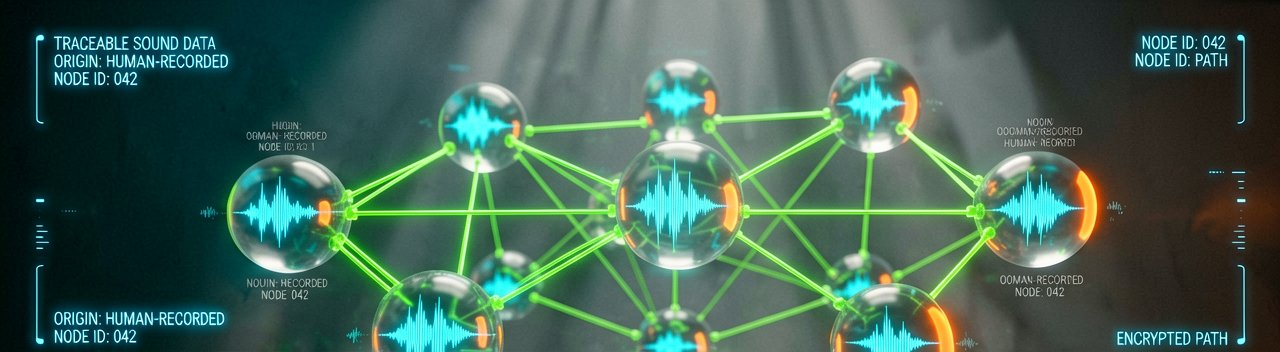
Behind the Scenes: While the flashy headlines focus on the $5 million Adobe-backed seed round, the real story lies in Tamber's rejection of the "black box" generative model that has the industry on edge. Founder Zoe Wrenn, a musician and software engineer herself, has been vocal about building an "Adobe Creative Suite for musicians" that prioritizes ethical training data. Unlike platforms that scrape the open web, Tamber’s models are built on human-recorded libraries where every sound carries a traceable origin. This isn't just a legal shield; it’s a philosophical stance. Wrenn’s team worked closely with artists who experience synesthesia to ensure the "sonic intelligence" could translate abstract concepts like the "taste of chocolate" or the "feeling of a sunrise" into usable musical elements, effectively acting as a digital extension of the artist's own nervous system.
This "bionic arm" approach is most evident in the suite's gesture-based interface, which allows producers to shape and trigger sounds in mid-air. It’s a far cry from the prompt-and-pray workflow seen in early consumer AI tools. By integrating directly into Digital Audio Workstations (DAWs) like Ableton Live, Tamber operates as an ambient partner that understands how a specific user creates. It’s less about replacing the skill of a drummer and more about giving that drummer a thousand more hands and a brain that remembers every sample they’ve ever liked. This focus on augmenting existing workflows rather than generating finished tracks is a calculated move to win over the "AI-resistant" professional tier.
The stakes are high because the music tech landscape is currently fractured between "mainstream" generators that produce radio-ready (if slightly plastic) tracks and professional tools that still require manual drudgery. Reports from Music Business Worldwide suggest that Tamber is threading a needle by offering "intelligent searching" that finds sounds based on feel rather than filenames. It’s a move that respects the craftsmanship of the producer while utilizing AI to handle the logistical heavy lifting. In a world where artists are increasingly asked to choose between their values and their careers, Tamber is betting that a more human-centric, collaborative AI will be the one that actually sticks in the studio.
The Fine Print of Sonic Autonomy
Reading Between the Lines: There is an inherent contradiction in calling a tool "intelligent" when its primary selling point is that it follows orders. Tamber markets itself as an ethical alternative to the "prompt-to-song" black boxes, but we have to wonder if the distinction matters to the listener or the bottom line. By streamlining the "labor" of sound design, Tamber risks turning the creative process into a series of high-level curation choices. If an AI understands the physics of a snare hit better than the producer does, the role of the musician shifts from "maker" to "editor-in-chief," a move that could accidentally sanitize the happy accidents that define legendary recordings.
Furthermore, the reliance on descriptive language—asking for a "shimmering, melancholy synth"—assumes that the AI’s definition of melancholy matches the artist’s. There is a danger of aesthetic homogenization here. When thousands of producers use the same Sonic Intelligence engine to achieve "vintage warmth," that warmth may eventually become a preset commodity rather than a unique signature. We’ve seen this movie before with Auto-Tune and the "Millennial Whoop"; once a revolutionary tool becomes a workflow standard, the avant-garde is forced to break the tool just to stand out again.
Ultimately, Tamber’s success depends on whether it can remain a transparent assistant or if it will inevitably start nudging creators toward "optimal" sounds. In an industry obsessed with efficiency, the friction of manual synthesis is often where the actual soul of a track is found. While Tamber’s ethical data sourcing is a noble differentiator, it doesn't solve the looming existential crisis: if the AI does all the heavy lifting, the human artist might eventually find their muscles have atrophied. The suite is undoubtedly a technical marvel, but it places a massive bet on the idea that more control, faster, is always the answer to a creative drought.
It’s truly a testament to modern progress that we’ve finally developed an AI sophisticated enough to help us spend eight hours "efficiently" choosing the perfect kick drum, ensuring that our creative procrastination is now powered by the latest in neural architecture.
Artūras Malašauskas is an AI Systems Integrator with 20+ years of production-grade web engineering experience. He has designed, shipped, and scaled enterprise Python/PHP systems for logistics, SaaS, and public-sector clients. For the past year, he has focused exclusively on AI integrations: deploying open-source LLMs, building generative media pipelines (image, audio, video), and engineering multi-agent workflows for real production environments. His standard: reproducibility, security, cost-efficient inference—no vaporware. He documents and evaluates emerging AI tooling, separating verified capabilities from marketing noise. Technical editor at: muza-ai.eu, ai-verslas.lt, ai-naujinos.lt Connect on LinkedIn
Comments