Beyond the Buzz: How WISeRobot and Post-Quantum Security Stole the Show at Davos
The snowy peaks of Davos have long been the backdrop for high-altitude tech promises, but this year, a sleek newcomer named WISeRobot managed to cut through the usual AI noise. Developed by WISeKey and its subsidiary SEALSQ, this isn't just another conversational machine; it's a "post-quantum" pioneer designed to survive a future where standard encryption is effectively obsolete. During its debut at the World Economic Forum, the robot transitioned from a mere curiosity at the WISeKey-hosted sessions to a conversational partner that had attendees cracking jokes and snapping selfies.
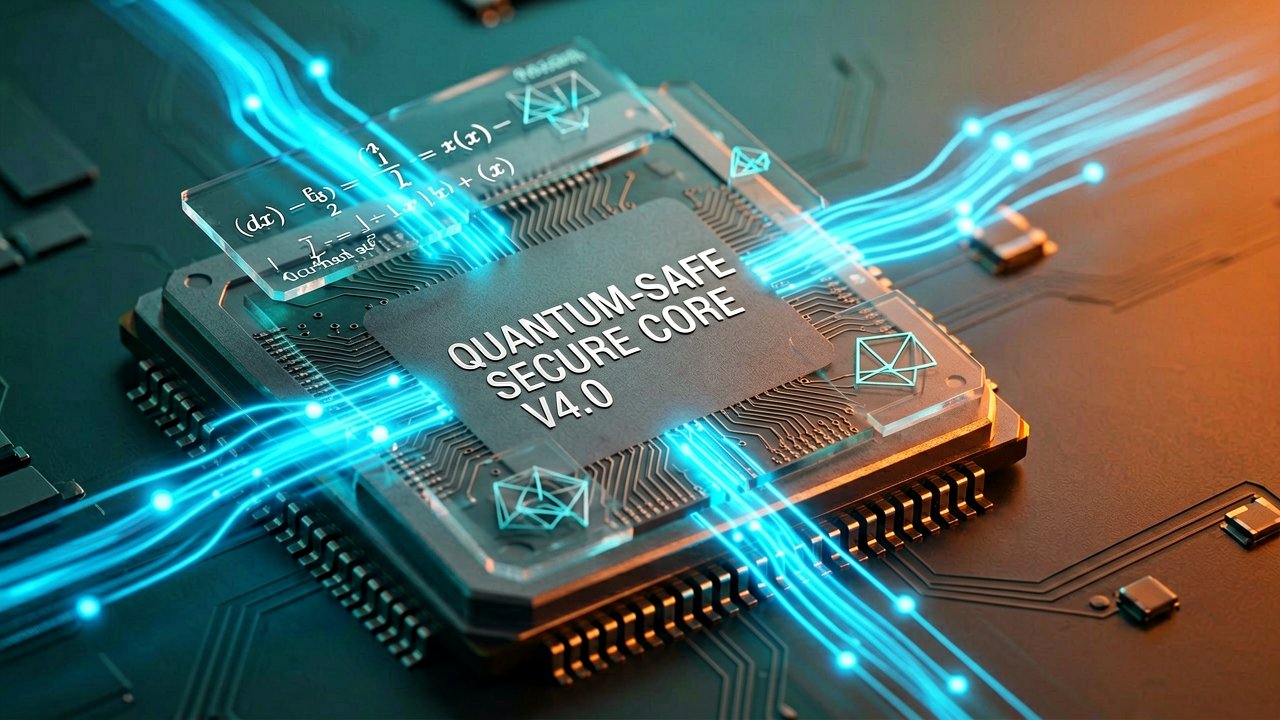
What makes WISeRobot stand out isn't just its ability to engage in natural human interaction, but the "silicon-to-firmware" security stack sitting under its hood. As quantum computing advances, the cryptographic locks on our current digital infrastructure are starting to look a bit flimsy. By integrating SEALSQ’s post-quantum chips and hardware-based roots of trust, this platform is essentially a proof of concept for "Physical AI" that’s secure by default. It even demonstrated the ability to handle autonomous payments using SEALCOIN, proving it can navigate a digital economy as confidently as a crowded conference hall.
The Human Element in a Quantum World
It’s easy to get lost in the technical weeds of quantum-resistant algorithms, but the editorial consensus from the Davos roundtable was clear: the technology must remain at the service of human values. WISeRobot was pitched not as a replacement for human presence, but as a catalyst for a more "human-centric" AI ecosystem. This approach follows the HUMAN-AI-T Manifesto, which calls for ethical governance and accountability as autonomous machines become part of our critical infrastructure.
Building a Sovereign Digital Identity
Beyond the flashy demonstrations, the underlying mission is about building trust in an era of "Deepfakes" and sophisticated cyber threats. WISeRobot utilizes a secure digital identity framework, ensuring that machine-to-machine communications are end-to-end protected. By anchoring this identity in post-quantum semiconductors, the developers are aiming to set a new benchmark for autonomous systems in sensitive sectors like healthcare and government where security isn't just a feature, but a necessity.

The Architectural Shift: Why Quantum-Hardened Chips Matter Now
The Real Conflict Under the Hood: While the general public sees a charming, interactive robot, the true story at Davos was about the looming "Q-Day"—the hypothetical point when quantum computers will effortlessly crack the RSA and ECC encryption that currently guards everything from bank transfers to power grids. WISeRobot isn't just a mascot; it's a mobile fortress built on the premise that waiting for the threat to arrive is a recipe for digital collapse. By utilizing SEALSQ’s specialized semiconductors, the hardware creates a "Root of Trust" that doesn't rely on software alone, which is notoriously prone to tampering.
Industry insiders noted that the integration of the HUMAN-AI-T manifesto during the demonstrations was a calculated move to address the growing "black box" anxiety surrounding artificial intelligence. The robot acts as a physical manifestation of a "sovereign identity," where every action and data exchange is cryptographically signed and verifiable. This addresses a massive pain point for global regulators who are currently scrambling to figure out how to hold autonomous systems accountable when things go sideways in the real world.
Historically, robotics and cybersecurity have lived in separate silos, often to the detriment of the end user. Early IoT devices were famously insecure, leading to massive botnet attacks that crippled portions of the internet. The WISeKey team is clearly looking to avoid a repeat of those mistakes by embedding post-quantum resistance directly into the silicon layer. This "security-by-design" philosophy suggests a shift in the market where the value of a robot will be measured as much by its unhackability as by its dexterity or conversational prowess.
The inclusion of the SEALCOIN protocol adds another layer of complexity that seasoned tech analysts found particularly intriguing. By allowing the robot to manage its own wallet and execute transactions for services—like paying for its own charging station or data bandwidth—the developers are showcasing a functional decentralized physical infrastructure network (DePIN). It moves the needle from robots being passive tools to becoming active, economically independent agents that operate within a secure, audited framework.

From a geopolitical perspective, the buzz at Davos also touched on the concept of technological sovereignty. As nations race to secure their digital borders, platforms that offer localized, quantum-secure hardware provide an alternative to the "move fast and break things" culture of Silicon Valley. WISeRobot represents a European-influenced approach that prioritizes long-term stability and ethical alignment over raw, unchecked growth. It’s a vision of the future where the machines we build are as dependable as they are intelligent.
Ultimately, the takeaway from the halls of the Congress Centre was that the marriage of Physical AI and post-quantum security is no longer a niche academic interest. As the "silicon-to-firmware" stack becomes the new standard, the industry is moving toward a reality where trust is mathematically guaranteed. The success of WISeRobot at such a high-profile venue signals that the global elite are finally waking up to the fact that the next decade of innovation must be built on a foundation that can actually withstand the coming quantum storm.
The Friction Between Innovation and Implementation
Reading Between the Lines: For all the polished chrome and high-concept white papers at Davos, the actual road to a post-quantum reality is paved with messy contradictions. We are currently witnessing a classic "chicken and egg" dilemma in the tech stack. While WISeRobot flaunts its post-quantum chips, the vast majority of the global infrastructure it might interact with is still operating on legacy protocols that a sufficiently powerful quantum computer could shred in seconds. This creates a strange paradox where we have "fortress" machines wandering through a digital landscape made of cardboard.
There is also the matter of the "quantum hype cycle" itself. While the threat to encryption is mathematically sound, the timeline for a cryptographically relevant quantum computer remains a moving target, often pushed further into the future by physics and closer to the present by marketing departments. By anchoring a robotics platform to this specific threat today, companies like WISeKey are making a bold bet on early adoption. However, there is a fine line between being a visionary and being "too early," which in the tech world is often indistinguishable from being wrong.
The "human-centric" narrative also faces a reality check when it hits the bottom line. Corporate interests are historically much more interested in the efficiency gains of AI than the ethical guardrails of a manifesto. While the Davos crowd loves to sign pledges about "sovereign identity" and "governance," the transition from a flashy conference demo to a scalable industrial product is where these lofty ideals often get trimmed for the sake of profit margins. The challenge for WISeRobot will be proving that its high-security overhead isn't just an expensive insurance policy that businesses aren't ready to pay for.
Furthermore, the reliance on SEALCOIN for autonomous payments introduces another layer of skepticism: the volatility of the crypto-economy. Integrating a proprietary token into the core functionality of a security-first robot might seem innovative, but it ties the machine’s utility to the unpredictable fluctuations of a digital asset market. It raises the question of whether a robot's operational autonomy should be tethered to a financial ecosystem that is still struggling to find its own regulatory footing.
Despite these hurdles, the sheer audacity of the WISeRobot project highlights a necessary shift in how we view the "Physical AI" frontier. It forces us to confront the fact that our current cybersecurity models are reactive, whereas the post-quantum era demands a proactive stance. Even if the specific hardware showcased at Davos undergoes dozens of iterations before reaching the masses, it has successfully shifted the conversation from "what can AI do" to "how can we trust what AI does."
In the end, the success of such technology won't be measured by the applause of the billionaire class, but by whether these systems can actually hold up under the weight of real-world chaos. Transitioning from a controlled demo in the Swiss Alps to a chaotic factory floor or a public hospital is the ultimate stress test. Until then, we are watching a very expensive, very smart, and very secure first step into a future that isn't quite ready for it yet.
It is a classic Davos irony that we’ve built a robot capable of surviving a quantum apocalypse before we’ve managed to build one that can consistently navigate a flight of stairs without a software update.
Artūras Malašauskas is an AI Systems Integrator with 20+ years of production-grade web engineering experience. He has designed, shipped, and scaled enterprise Python/PHP systems for logistics, SaaS, and public-sector clients. For the past year, he has focused exclusively on AI integrations: deploying open-source LLMs, building generative media pipelines (image, audio, video), and engineering multi-agent workflows for real production environments. His standard: reproducibility, security, cost-efficient inference—no vaporware. He documents and evaluates emerging AI tooling, separating verified capabilities from marketing noise. Technical editor at: muza-ai.eu, ai-verslas.lt, ai-naujinos.lt Connect on LinkedIn
Comments