Google’s "Ask Advisor" Lands: One AI to Rule the Marketing Stack
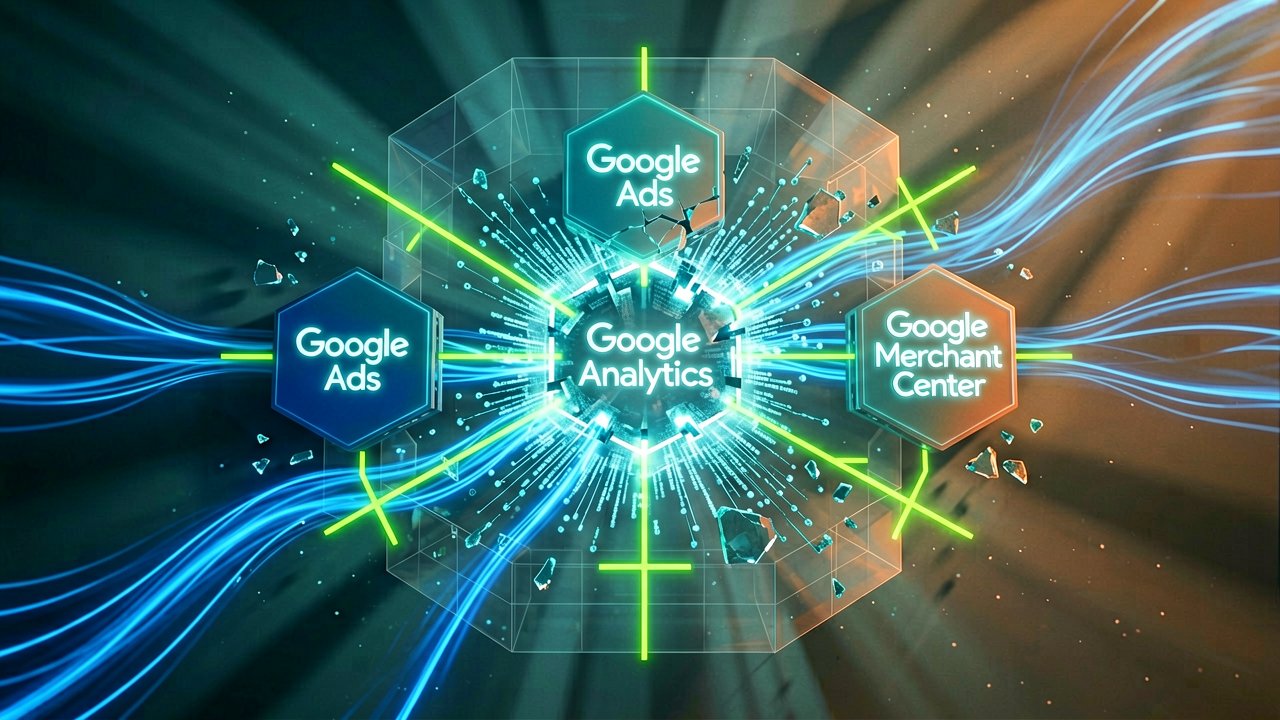
Google has officially tied the knot between its fragmented marketing platforms, launching Ask Advisor as a unified, Gemini-powered connective tissue spanning Google Ads, Analytics, and Merchant Center. While we’ve seen individual "Advisors" trickling into these products over the last six months, this move signals a major shift from isolated chatbots to a cohesive AI agent capable of cross-platform reasoning. It’s no longer just about asking why a specific ad was disapproved; it’s about having a singular collaborator that understands how a product feed error in Merchant Center is tanking your ROI in a Performance Max campaign Search Engine Land.
The tech giant is essentially betting that marketers are tired of the "dashboard hop." By embedding this agentic layer directly into the workflow, Google is nudging users toward a future where "managing" a campaign looks more like a conversation and less like a data-entry job. Ask Advisor doesn't just surface a chart when you ask "How’s my website doing?"; it can proactively identify growth opportunities, troubleshoot complex policy violations, and even draft corrective actions for you to approve with a single click Google Ads Help.
From Insights to Action: What’s Under the Hood
At its core, Ask Advisor is built on Google’s latest Gemini models, which allows it to process multimodal data—text, code, and even creative assets—simultaneously. For the average small business owner or the seasoned agency pro, this translates to a massive reduction in manual deep dives. In Merchant Center, the advisor acts as a diagnostic specialist, flagging feed issues or missing attributes that might keep products off the digital shelf ALM Corp. Meanwhile, in Analytics 360, it’s been integrated to handle more complex queries, like attributing a sudden 15% drop in new user acquisition to specific seasonal shifts or site performance hiccups Google Analytics Help.
The Agentic Shift and the Transparency Trade-off
The real story here isn't just "smarter search" for your data; it's the "agentic" nature of the tool. Google is increasingly allowing these advisors to take action—with permission. Whether it's adding sitelink extensions to a holiday campaign or fixing a broken landing page URL, the barrier between "insight" and "implementation" is evaporating Search Engine Journal. This level of operational control is likely to make some old-school marketers sweat, as it demands a high degree of trust in Google’s black-box recommendations. However, for those managing accounts at scale, the ability to automate certifications and instantly diagnose "why conversions dropped yesterday" might just be too tempting to ignore.

Currently, Ask Advisor is available in beta for English-language accounts globally. As it rolls out, the industry will be watching closely to see if it delivers on the promise of "meaningful business outcomes" or if it’s simply a more sophisticated way for Google to push its own optimization suggestions.
The Hidden Architecture of Agentic Marketing
Beyond the Interface: What most surface-level reports miss is that Ask Advisor isn't just a UI skin for Gemini; it represents the structural dismantling of Google’s long-standing data silos. For decades, the "wall" between Merchant Center’s inventory data and Ads’ auction data was a source of constant friction for retailers. A product could go out of stock, yet the Ad rank might remain high for hours, leading to wasted spend. By unifying these under a single LLM-driven advisor, Google is effectively creating a real-time feedback loop where the "agent" has a holistic view of the business supply chain and the advertising demand simultaneously.
From the perspective of Google’s engineering leadership, this move is a necessary response to the "complexity creep" that has plagued their platforms. As the number of available signals in a Performance Max campaign grew into the thousands, manual human optimization hit a ceiling. Internal stakeholders have signaled that the goal is to shift the human role from "knob-turner" to "strategy-orchestrator." By offloading the diagnostic heavy lifting to Ask Advisor, Google hopes to keep advertisers from feeling overwhelmed by the sheer volume of data produced by modern tracking.
Historically, Google’s automated recommendations—often derided as "Auto-Applied Recommendations" (AAR)—were met with skepticism by seasoned media buyers who viewed them as a thinly veiled attempt to increase ad spend. Ask Advisor attempts to bridge this trust gap by providing "explainable" AI. Rather than a binary suggestion, the advisor provides a narrative rationale, citing specific performance trends in Analytics to justify a budget shift in Ads. This shift toward transparency is a strategic play to win over agency veterans who have historically guarded their manual control with fervor Search Engine Land.

The implications for the labor market in digital marketing are equally significant. We are entering an era where the entry-level task of "pulling reports" is effectively obsolete. The industry is already seeing a pivot toward "prompt engineering" for marketers, where the value-add is no longer finding the data, but knowing which nuanced questions to ask the advisor to uncover non-obvious correlations. This transition mirrors the move from manual ledger entries to spreadsheet software in the 1980s; the job doesn't disappear, but the required technical literacy shifts upward.
However, the consolidation of power within this AI layer raises valid concerns about "platform lock-in." As Ask Advisor becomes more integral to daily operations, the friction of moving a merchant feed or a tracking pixel to a competitor like Amazon or Microsoft increases. By making their ecosystem more helpful and conversational, Google is simultaneously making it more "sticky." For the enterprise-level advertiser, the trade-off is clear: efficiency at the cost of increased dependency on a single AI-driven stack Google Ads Help.
Ultimately, the success of Ask Advisor will be measured by its restraint. If it becomes a glorified "sales bot" constantly pushing for higher bids, it will be tuned out like the notifications before it. But if it truly functions as a data scientist in the pocket of small business owners, it could redefine the competitive landscape of the open web. The industry now waits to see if the AI can handle the messy, unpredictable reality of real-world retail data without hallucinating "opportunities" that don't exist.
The Paradox of Universal Expertise
Reading Between the Lines: The democratization of high-level data analysis through Ask Advisor carries a subtle, albeit stinging, irony: when everyone has an AI "expert" in their pocket, the competitive advantage of having one effectively evaporates. Google’s pitch suggests that small businesses can now compete with global agencies by leveraging Gemini’s processing power. Yet, if the underlying models are optimized for the same "best practices" across the board, we risk a strategic monoculture where every advertiser is chasing the same keywords and audience segments with identical, AI-generated precision. This homogenization could lead to a "bidding war of the bots," where the only winner is the platform hosting the auction Search Engine Journal.
There is also a fundamental contradiction in the Advisor’s role as both a neutral analyst and a sales representative. Google asserts that Ask Advisor provides objective troubleshooting for Merchant Center feeds and Analytics discrepancies. However, the primary "solution" offered by these AI agents often involves increased automation—specifically shifting control toward Performance Max or Broad Match settings. It is difficult to ignore the inherent conflict of interest when the tool diagnosing your performance issues is the same one tasked with increasing the platform’s quarterly ad revenue. Skepticism remains high regarding whether the advisor will ever recommend spending less to achieve better results.
Furthermore, the reliance on LLMs introduces a layer of "stochastic variability" into what used to be a deterministic science. Digital marketing was built on the premise of absolute numbers; a conversion happened or it didn't. By filtering these hard truths through a conversational layer, we introduce the risk of hallucinated insights or misinterpreted intent. A marketer might ask for "optimization," and while the AI delivers a clean narrative of success, the actual bottom-line impact could be obscured by the model's desire to provide a satisfying, coherent answer rather than a harsh, messy truth about a failing product line Google Analytics Help.
Looking ahead, the long-term implication is the "black-boxing" of marketing expertise. As the Advisor takes over the troubleshooting of complex policy violations or tracking errors, the human knowledge base for these technical nuances will inevitably atrophy. We are essentially trading our deep understanding of the plumbing for a shiny, conversational faucet. If the AI ever experiences a significant outage or a "model drift" that skews its logic, an entire generation of marketers might find themselves standing in front of a dashboard they no longer know how to operate manually.
The ultimate test for Google will be the "hallucination threshold" in high-stakes environments. In the Merchant Center, a single incorrect automated "fix" to a product price or shipping attribute can lead to massive losses or account suspension. While Google emphasizes human-in-the-loop oversight, the reality of modern business is that most users will simply "Click to Apply" to clear their notification queue. This move toward frictionless optimization is a gamble that the AI’s hit rate will be high enough to justify the occasional, inevitable catastrophic error ALM Corp.
"We’ve finally reached the pinnacle of digital advertising: a future where your AI assistant spends your money by talking to another AI assistant, leaving you perfectly free to spend your afternoon wondering why the 'optimized' sales figures don't quite match the 'actual' bank balance."
Artūras Malašauskas is an AI Systems Integrator with 20+ years of production-grade web engineering experience. He has designed, shipped, and scaled enterprise Python/PHP systems for logistics, SaaS, and public-sector clients. For the past year, he has focused exclusively on AI integrations: deploying open-source LLMs, building generative media pipelines (image, audio, video), and engineering multi-agent workflows for real production environments. His standard: reproducibility, security, cost-efficient inference—no vaporware. He documents and evaluates emerging AI tooling, separating verified capabilities from marketing noise. Technical editor at: muza-ai.eu, ai-verslas.lt, ai-naujinos.lt Connect on LinkedIn
Comments