ShorePoint Debuts HPC Security Hub as Federal HPC and AI Security Needs Grow

The race for computational supremacy is officially hitting a legislative and technical bottleneck. As federal agencies scramble to integrate generative AI and massive-scale modeling into their mission-critical workflows, the infrastructure underneath—High-Performance Computing (HPC)—is facing a security reckoning. ShorePoint, a Virginia-based cybersecurity firm deeply embedded in the federal space, has officially stepped into this gap with the launch of its HPC Security Hub. This online resource isn't just a marketing landing page; it’s a direct response to the reality that traditional enterprise security "best practices" often break when applied to the specialized, high-bandwidth world of supercomputing.
Historically, HPC systems were the "walled gardens" of the scientific community, relying on physical isolation and a high-trust model among researchers. But as HPCwire reports, the push for interconnected AI ecosystems has dissolved those walls. ShorePoint CEO Matt Brown notes that while agencies are sprinting toward these interconnected systems, the available security guidance has remained sparse. The new hub aims to standardize terminology and provide a framework for organizations operating at the bleeding edge, ensuring that a security patch doesn't become a performance anchor for a multi-million dollar system.
The Performance vs. Protection Paradox
Behind the Scenes: What most casual reports miss about HPC security is the sheer technical friction between encryption and execution speed. In a standard office environment, a 5% performance hit from a security agent is a minor annoyance; in an HPC environment running climate simulations or nuclear stockpile modeling, that same 5% can equate to weeks of lost compute time and millions in wasted taxpayer dollars. For years, this led to a "security as an afterthought" culture within national labs and defense research hubs. Security teams didn't want to break the science, and scientists didn't want to deal with the "cyber police" slowing down their batch jobs.
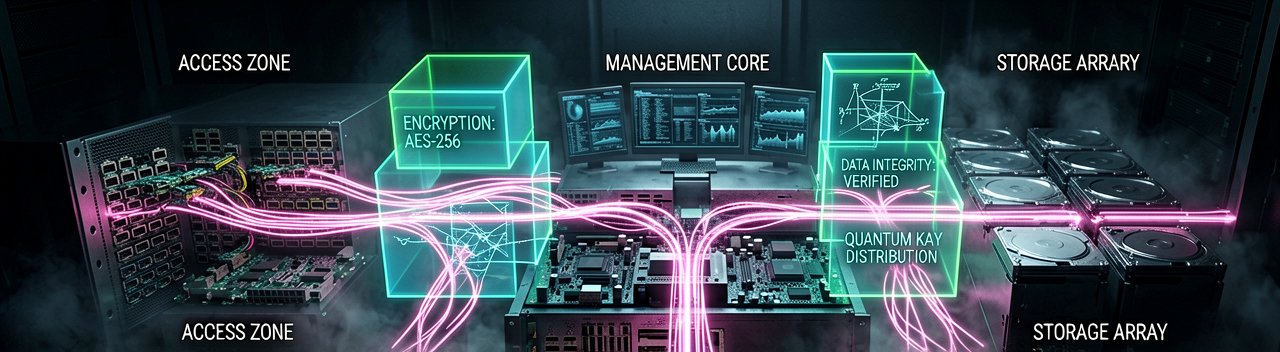
The arrival of ShorePoint’s hub coincides with a pivotal shift in federal standards, specifically the emergence of NIST SP 800-223 and 800-234. These aren't just more bureaucratic checkboxes; they represent the first time the government has codified a zone-based architecture specifically for supercomputers. Instead of trying to put a firewall around every individual node, these new frameworks—which ShorePoint is championing—advocate for securing functional zones like access, management, and storage. It’s a pragmatic admission that you can't treat a Cray supercomputer like a fleet of Dell laptops.
Stakeholders across the Department of Energy and NASA are also watching how this affects AI "provenance." As agencies use HPC to train proprietary large language models, the data itself becomes a high-value target. It's no longer just about preventing a system crash; it's about ensuring the training data hasn't been poisoned and the model weights haven't been exfiltrated. ShorePoint has positioned its hub to address this "cross-domain" risk where AI governance meets hardware security. By providing reference assets and expert perspectives, they are attempting to bridge the gap between the data scientists who build the models and the security engineers tasked with defending the metal they run on.
The hiring of Ian Lee, a veteran in the field who leads the HPC Security Technical Exchange (STX), signals that ShorePoint is playing a long game. They aren't just selling services; they are trying to lead a community of nearly 100 thought leaders from 15 different government organizations. This collaborative approach is vital because the threat landscape is moving faster than any single agency can track. As federal AI mandates like the Secure AI Act of 2024 move from paper to practice, the demand for this specialized expertise will only intensify.
Ultimately, the success of the HPC Security Hub will be measured by its ability to move the conversation from "why we can't secure HPC" to "how we secure HPC without stopping the mission." With the federal government’s doubling down on AI-enabled science, the stakes for these supercomputing environments have never been higher. ShorePoint’s move to centralize this knowledge suggests that the era of "security through obscurity" for federal supercomputers is officially over, replaced by a need for transparent, high-speed, and high-assurance architectures.
Ready to dive deeper? You can explore the technical frameworks and expert whitepapers directly at the ShorePoint HPC Security Hub to see how these standards are being applied to next-generation AI workloads.
The race for computational supremacy is officially hitting a legislative and technical bottleneck. As federal agencies scramble to integrate generative AI and massive-scale modeling into their mission-critical workflows, the infrastructure underneath—High-Performance Computing (HPC)—is facing a security reckoning. ShorePoint, a Virginia-based cybersecurity firm deeply embedded in the federal space, has officially stepped into this gap with the launch of its HPC Security Hub. This online resource isn't just a marketing landing page; it’s a direct response to the reality that traditional enterprise security "best practices" often break when applied to the specialized, high-bandwidth world of supercomputing.
Historically, HPC systems were the "walled gardens" of the scientific community, relying on physical isolation and a high-trust model among researchers. But as HPCwire reports, the push for interconnected AI ecosystems has dissolved those walls. ShorePoint CEO Matt Brown notes that while agencies are sprinting toward these interconnected systems, the available security guidance has remained sparse. The new hub aims to standardize terminology and provide a framework for organizations operating at the bleeding edge, ensuring that a security patch doesn't become a performance anchor for a multi-million dollar system.
The Performance vs. Protection Paradox
Behind the Scenes: What most casual reports miss about HPC security is the sheer technical friction between encryption and execution speed. In a standard office environment, a 5% performance hit from a security agent is a minor annoyance; in an HPC environment running climate simulations or nuclear stockpile modeling, that same 5% can equate to weeks of lost compute time and millions in wasted taxpayer dollars. For years, this led to a "security as an afterthought" culture within national labs and defense research hubs. Security teams didn't want to break the science, and scientists didn't want to deal with the "cyber police" slowing down their batch jobs.
The arrival of ShorePoint’s hub coincides with a pivotal shift in federal standards, specifically the emergence of NIST SP 800-223 and 800-234. These aren't just more bureaucratic checkboxes; they represent the first time the government has codified a zone-based architecture specifically for supercomputers. Instead of trying to put a firewall around every individual node, these new frameworks—which ShorePoint is championing—advocate for securing functional zones like access, management, and storage. It’s a pragmatic admission that you can't treat a Cray supercomputer like a fleet of Dell laptops.
Stakeholders across the Department of Energy and NASA are also watching how this affects AI "provenance." As agencies use HPC to train proprietary large language models, the data itself becomes a high-value target. It's no longer just about preventing a system crash; it's about ensuring the training data hasn't been poisoned and the model weights haven't been exfiltrated. ShorePoint has positioned its hub to address this "cross-domain" risk where AI governance meets hardware security. By providing reference assets and expert perspectives, they are attempting to bridge the gap between the data scientists who build the models and the security engineers tasked with defending the metal they run on.
The Skeptic's View of the Silicon Frontier
Reading Between the Lines: There is a persistent irony in the federal government’s sudden fixation on HPC security. For decades, these systems were essentially "black boxes" where the mission outweighed the risk, but the moment AI became a buzzword in the halls of Congress, the lack of a standardized security perimeter became a political liability. ShorePoint’s hub is a clever play for thought leadership, but it also highlights a glaring contradiction in federal policy: we are demanding "Zero Trust" architectures while simultaneously building massive, interconnected compute clusters that rely on shared, high-speed memory and low-latency interconnects—technologies that are inherently hostile to traditional Zero Trust principles.
Projecting forward, the real challenge won't be writing the standards, but enforcing them without crippling the "Big Iron." ShorePoint is betting that the community will coalesce around their hub, yet the history of federal cyber initiatives is littered with centralized repositories that researchers eventually ignore in favor of whatever gets their simulation finished faster. If the security controls proposed in these new NIST frameworks are too cumbersome, we might see a shadow-HPC movement where researchers bypass official "secure" enclaves to get work done on unmanaged clusters.
Furthermore, as we outsource more of our computational heavy lifting to private firms and hybrid cloud models, the definition of a "federal" HPC environment is blurring. ShorePoint's focus on government-specific needs is necessary, but it risks creating a specialized silo that doesn't translate to the commercial cloud environments where much of the world's AI innovation is actually happening. We are effectively building a custom security moat around a castle that is increasingly made of rented rooms.
In the end, securing a supercomputer is a bit like trying to install a doorbell camera on a particle accelerator; it feels responsible right up until you realize the sheer velocity of what’s inside was never meant to stop for a visitor.
The race for computational supremacy is officially hitting a legislative and technical bottleneck. As federal agencies scramble to integrate generative AI and massive-scale modeling into their mission-critical workflows, the infrastructure underneath—High-Performance Computing (HPC)—is facing a security reckoning. ShorePoint, a Virginia-based cybersecurity firm deeply embedded in the federal space, has officially stepped into this gap with the launch of its HPC Security Hub. This online resource isn't just a marketing landing page; it’s a direct response to the reality that traditional enterprise security "best practices" often break when applied to the specialized, high-bandwidth world of supercomputing.
Historically, HPC systems were the "walled gardens" of the scientific community, relying on physical isolation and a high-trust model among researchers. But as HPCwire reports, the push for interconnected AI ecosystems has dissolved those walls. ShorePoint CEO Matt Brown notes that while agencies are sprinting toward these interconnected systems, the available security guidance has remained sparse. The new hub aims to standardize terminology and provide a framework for organizations operating at the bleeding edge, ensuring that a security patch doesn't become a performance anchor for a multi-million dollar system.
The Performance vs. Protection Paradox
Behind the Scenes: What most casual reports miss about HPC security is the sheer technical friction between encryption and execution speed. In a standard office environment, a 5% performance hit from a security agent is a minor annoyance; in an HPC environment running climate simulations or nuclear stockpile modeling, that same 5% can equate to weeks of lost compute time and millions in wasted taxpayer dollars. For years, this led to a "security as an afterthought" culture within national labs and defense research hubs. Security teams didn't want to break the science, and scientists didn't want to deal with the "cyber police" slowing down their batch jobs.
The arrival of ShorePoint’s hub coincides with a pivotal shift in federal standards, specifically the emergence of NIST SP 800-223 and 800-234. These aren't just more bureaucratic checkboxes; they represent the first time the government has codified a zone-based architecture specifically for supercomputers. Instead of trying to put a firewall around every individual node, these new frameworks—which ShorePoint is championing—advocate for securing functional zones like access, management, and storage. It’s a pragmatic admission that you can't treat a Cray supercomputer like a fleet of Dell laptops.
Stakeholders across the Department of Energy and NASA are also watching how this affects AI "provenance." As agencies use HPC to train proprietary large language models, the data itself becomes a high-value target. It's no longer just about preventing a system crash; it's about ensuring the training data hasn't been poisoned and the model weights haven't been exfiltrated. ShorePoint has positioned its hub to address this "cross-domain" risk where AI governance meets hardware security. By providing reference assets and expert perspectives, they are attempting to bridge the gap between the data scientists who build the models and the security engineers tasked with defending the metal they run on.
The Skeptic's View of the Silicon Frontier
Reading Between the Lines: There is a persistent irony in the federal government’s sudden fixation on HPC security. For decades, these systems were essentially "black boxes" where the mission outweighed the risk, but the moment AI became a buzzword in the halls of Congress, the lack of a standardized security perimeter became a political liability. ShorePoint’s hub is a clever play for thought leadership, but it also highlights a glaring contradiction in federal policy: we are demanding "Zero Trust" architectures while simultaneously building massive, interconnected compute clusters that rely on shared, high-speed memory and low-latency interconnects—technologies that are inherently hostile to traditional Zero Trust principles.
Projecting forward, the real challenge won't be writing the standards, but enforcing them without crippling the "Big Iron." ShorePoint is betting that the community will coalesce around their hub, yet the history of federal cyber initiatives is littered with centralized repositories that researchers eventually ignore in favor of whatever gets their simulation finished faster. If the security controls proposed in these new NIST frameworks are too cumbersome, we might see a shadow-HPC movement where researchers bypass official "secure" enclaves to get work done on unmanaged clusters.
Furthermore, as we outsource more of our computational heavy lifting to private firms and hybrid cloud models, the definition of a "federal" HPC environment is blurring. ShorePoint's focus on government-specific needs is necessary, but it risks creating a specialized silo that doesn't translate to the commercial cloud environments where much of the world's AI innovation is actually happening. We are effectively building a custom security moat around a castle that is increasingly made of rented rooms.
In the end, securing a supercomputer is a bit like trying to install a doorbell camera on a particle accelerator; it feels responsible right up until you realize the sheer velocity of what’s inside was never meant to stop for a visitor.
Artūras Malašauskas is an AI Systems Integrator with 20+ years of production-grade web engineering experience. He has designed, shipped, and scaled enterprise Python/PHP systems for logistics, SaaS, and public-sector clients. For the past year, he has focused exclusively on AI integrations: deploying open-source LLMs, building generative media pipelines (image, audio, video), and engineering multi-agent workflows for real production environments. His standard: reproducibility, security, cost-efficient inference—no vaporware. He documents and evaluates emerging AI tooling, separating verified capabilities from marketing noise. Technical editor at: muza-ai.eu, ai-verslas.lt, ai-naujinos.lt Connect on LinkedIn
Comments