Qwen3.7-Preview: Alibaba Claims the Middle Ground in the Great AI Sprint
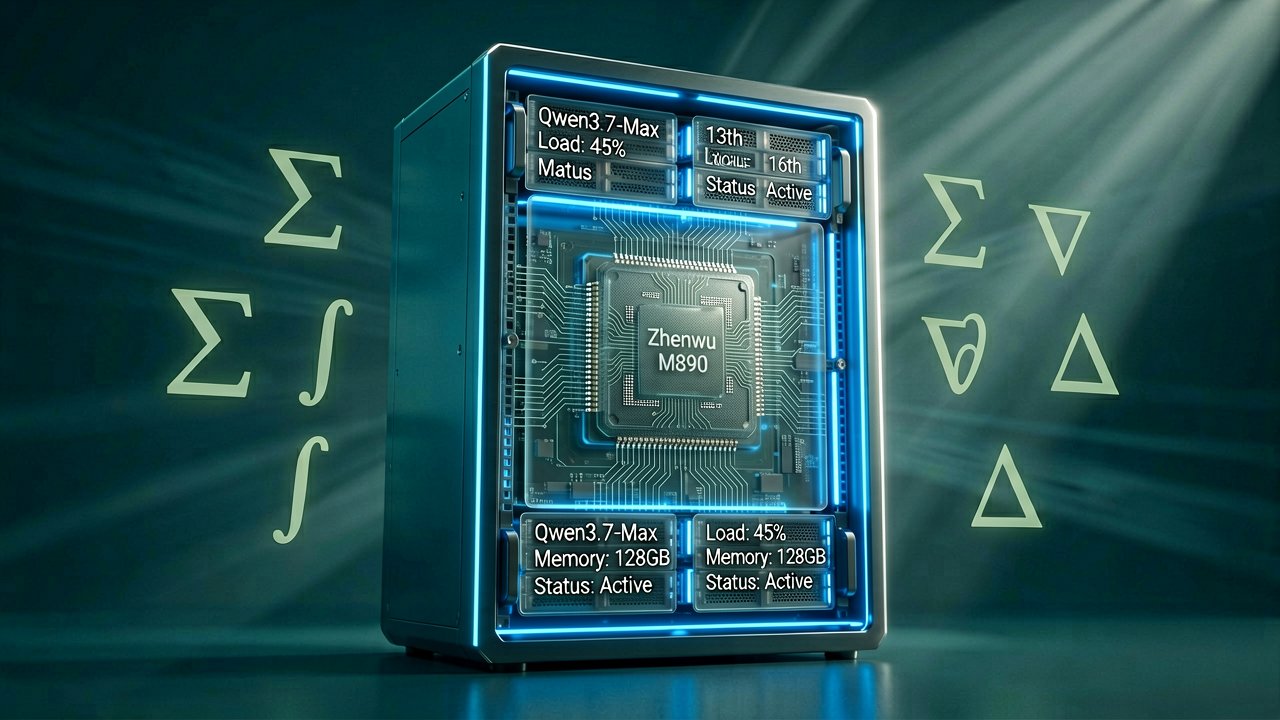
Alibaba isn't just trying to keep pace anymore; it’s attempting to dictate the tempo of the domestic race. With the quiet rollout of the Qwen3.7-Max-Preview and Plus-Preview models, the e-commerce titan has managed to leapfrog its Chinese peers, securing a top-tier domestic ranking that finally puts some daylight between it and rivals like DeepSeek or Baidu. According to recent data from the benchmark authority , these preview versions currently sit as the most capable AI systems produced by a Chinese lab, marking a significant win for a company that’s been aggressively iterating its proprietary stack every few weeks.
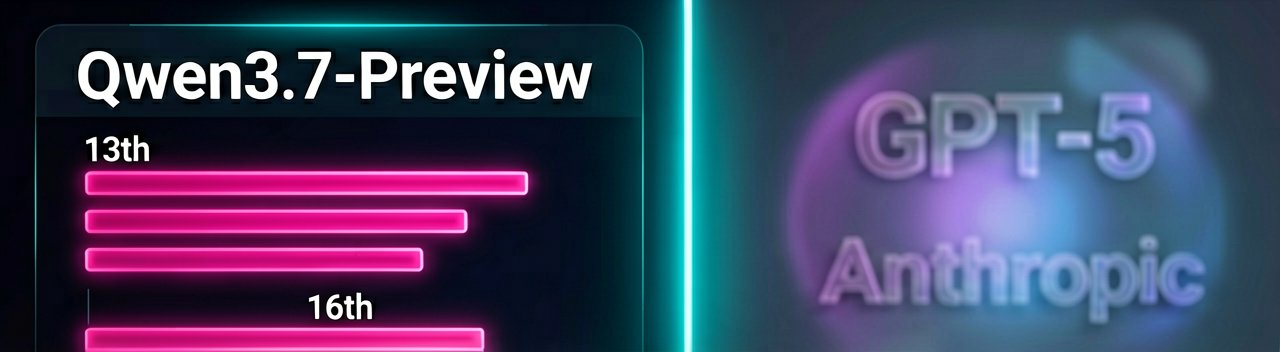
But while the "best in China" title is a nice feather in the cap, the global view is a bit more sobering. The Qwen3.7 series currently finds itself in a strange kind of purgatory—it's fast enough to scare the domestic competition, yet it hasn't quite found the gear needed to catch the American "frontier" triad of OpenAI, Anthropic, and Google. On the LM Arena leaderboard, the Max-Preview model landed a respectable 13th in text capabilities, while the Plus-Preview hit 16th for vision. It’s a solid showing, but it serves as a reminder that even with Alibaba’s massive R&D spend, the gap at the very top of the food chain remains stubbornly persistent.
Closing the Gap at Home, Chasing the Horizon Abroad
The speed at which the Qwen team is moving is nothing short of relentless. This latest drop comes just 28 days after the Qwen3.6 series, a pace that suggests Alibaba is treating model training like a live-service game rather than a traditional software cycle. Developers have already started poking at the new previews on the Startup Fortune forums, noting that the Qwen3.7-Max version is showing particular strength in reasoning and mathematics, ranking 7th globally in some specific math benchmarks. It’s clear that Alibaba isn't just aiming for general chat; they're building a tool specifically designed for the "agentic" workflows that the industry is currently obsessed with.
Despite these technical strides, the "US lag" isn't just about raw scores; it's about the depth of the ecosystem. While Qwen3.7 can trade blows with US rivals in coding and reasoning, the American giants like Claude 4.6 and GPT-5.4 still hold the high ground on complex, multi-step human instruction and broad factual knowledge. Alibaba’s strategy seems to be one of "good enough for the world, better for the region," positioning itself as a high-performance, cost-effective alternative for developers who don't want to be locked into the expensive Western proprietary models.

The Hardware Factor: A Secret Weapon in Hangzhou?
It’s impossible to separate the software gains from the hardware reality. Alongside the new models, Alibaba has been showing off its own silicon, specifically the Zhenwu M890 AI chip. As reported by the Economic Times, this processor is purpose-built to handle the heavy memory demands of the very AI "agents" that Qwen3.7 is designed to power. By vertically integrating the hardware and the software, Alibaba might be looking to bypass the chip restrictions that have long been cited as the primary reason Chinese AI remains a step behind its US counterparts.
Ultimately, Qwen3.7-Preview is a statement of intent. It proves that Alibaba can out-engineer its local rivals and stay within "spitting distance" of the global leaders. Whether they can actually close that final mile without unrestricted access to the world’s fastest chips is the question that will define the next phase of the AI war.
Alibaba isn't just trying to keep pace anymore; it’s attempting to dictate the tempo of the domestic race. With the quiet rollout of the Qwen3.7-Max-Preview and Plus-Preview models, the e-commerce titan has managed to leapfrog its Chinese peers, securing a top-tier domestic ranking that finally puts some daylight between it and rivals like DeepSeek or Baidu. According to recent data from the benchmark authority IndexBox, these preview versions currently sit as the most capable AI systems produced by a Chinese lab, marking a significant win for a company that’s been aggressively iterating its proprietary stack every few weeks.
But while the "best in China" title is a nice feather in the cap, the global view is a bit more sobering. The Qwen3.7 series currently finds itself in a strange kind of purgatory—it's fast enough to scare the domestic competition, yet it hasn't quite found the gear needed to catch the American "frontier" triad of OpenAI, Anthropic, and Google. On the LM Arena leaderboard, the Max-Preview model landed a respectable 13th in text capabilities, while the Plus-Preview hit 16th for vision. It’s a solid showing, but it serves as a reminder that even with Alibaba’s massive R&D spend, the gap at the very top of the food chain remains stubbornly persistent.
The Real Logic Behind the Iteration War
The Strategic Pivot: What most reports miss is that Alibaba’s relentless release schedule isn't just a vanity project; it is a calculated attempt to dominate the "agentic" era before Western firms can establish a total monopoly on enterprise workflows. By pushing out a "Preview" version only 28 days after the last major update, Alibaba is essentially A/B testing its neural weights in the wild. This "live-service" approach to AI development allows them to gather real-world telemetry from thousands of Chinese developers, refining the model's reasoning capabilities in ways that sterile laboratory benchmarks simply can't capture.
Industry insiders suggest that this velocity is part of a broader mandate within Alibaba Cloud to reclaim its status as the infrastructure backbone of the Asian tech economy. For years, Alibaba faced stiff competition from Tencent and Baidu, but the Qwen series has successfully pivoted the conversation toward raw compute power and algorithmic efficiency. This isn't just about building a chatbot; it's about building a digital operating system that handles everything from logistics to customer service without human intervention, a goal that aligns perfectly with the current math and coding strengths seen in the 3.7 series.
The historical context here is vital: China’s tech giants are operating under a "compute tax" necessitated by global trade restrictions. While US rivals can throw nearly infinite H100 or B200 clusters at a problem, the Qwen team has had to become masters of optimization. This has forced them to lean heavily into Mixture-of-Experts (MoE) architectures and bespoke quantization techniques. The result is a model that is remarkably "lean" for its performance level, offering a price-to-performance ratio that is increasingly attractive to startups looking to escape the high API costs of GPT-4o or Claude 3.5 Sonnet.
Stakeholders within the open-weights community have noted that Alibaba’s dual-track strategy—releasing both proprietary previews and open-source foundations—is a masterclass in market capture. By giving away the "good" models for free, they commoditize the competition’s lower-tier offerings, while keeping the "best" models behind the Alibaba Cloud paywall. This creates a gravitational pull toward their ecosystem, making it the default choice for the next generation of AI-native applications in the region.
Looking at the broader geopolitical chess board, the Qwen3.7-Max-Preview is a signal that the gap between "frontier" and "follower" is no longer a canyon, but a narrow creek. Even with limited access to the latest lithography, Alibaba’s engineers are finding ways to squeeze frontier-level performance out of older hardware and more efficient training data sets. This suggests that the next twelve months won't be defined by who has the most GPUs, but by who can most effectively translate raw math into reliable, autonomous digital agents.
The Hardware Factor: A Secret Weapon in Hangzhou?
It’s impossible to separate the software gains from the hardware reality. Alongside the new models, Alibaba has been showing off its own silicon, specifically the Zhenwu M890 AI chip. As reported by the Economic Times, this processor is purpose-built to handle the heavy memory demands of the very AI "agents" that Qwen3.7 is designed to power. By vertically integrating the hardware and the software, Alibaba might be looking to bypass the chip restrictions that have long been cited as the primary reason Chinese AI remains a step behind its US counterparts.
Ultimately, Qwen3.7-Preview is a statement of intent. It proves that Alibaba can out-engineer its local rivals and stay within "spitting distance" of the global leaders. Whether they can actually close that final mile without unrestricted access to the world’s fastest chips is the question that will define the next phase of the AI war.
Alibaba isn't just trying to keep pace anymore; it’s attempting to dictate the tempo of the domestic race. With the quiet rollout of the Qwen3.7-Max-Preview and Plus-Preview models, the e-commerce titan has managed to leapfrog its Chinese peers, securing a top-tier domestic ranking that finally puts some daylight between it and rivals like DeepSeek or Baidu. According to recent data from the benchmark authority IndexBox, these preview versions currently sit as the most capable AI systems produced by a Chinese lab, marking a significant win for a company that’s been aggressively iterating its proprietary stack every few weeks.
But while the "best in China" title is a nice feather in the cap, the global view is a bit more sobering. The Qwen3.7 series currently finds itself in a strange kind of purgatory—it's fast enough to scare the domestic competition, yet it hasn't quite found the gear needed to catch the American "frontier" triad of OpenAI, Anthropic, and Google. On the LM Arena leaderboard, the Max-Preview model landed a respectable 13th in text capabilities, while the Plus-Preview hit 16th for vision. It’s a solid showing, but it serves as a reminder that even with Alibaba’s massive R&D spend, the gap at the very top of the food chain remains stubbornly persistent.
The Real Logic Behind the Iteration War
The Strategic Pivot: What most reports miss is that Alibaba’s relentless release schedule isn't just a vanity project; it is a calculated attempt to dominate the "agentic" era before Western firms can establish a total monopoly on enterprise workflows. By pushing out a "Preview" version only 28 days after the last major update, Alibaba is essentially A/B testing its neural weights in the wild. This "live-service" approach to AI development allows them to gather real-world telemetry from thousands of Chinese developers, refining the model's reasoning capabilities in ways that sterile laboratory benchmarks simply can't capture.
Industry insiders suggest that this velocity is part of a broader mandate within Alibaba Cloud to reclaim its status as the infrastructure backbone of the Asian tech economy. For years, Alibaba faced stiff competition from Tencent and Baidu, but the Qwen series has successfully pivoted the conversation toward raw compute power and algorithmic efficiency. This isn't just about building a chatbot; it's about building a digital operating system that handles everything from logistics to customer service without human intervention, a goal that aligns perfectly with the current math and coding strengths seen in the 3.7 series.
The historical context here is vital: China’s tech giants are operating under a "compute tax" necessitated by global trade restrictions. While US rivals can throw nearly infinite H100 or B200 clusters at a problem, the Qwen team has had to become masters of optimization. This has forced them to lean heavily into Mixture-of-Experts (MoE) architectures and bespoke quantization techniques. The result is a model that is remarkably "lean" for its performance level, offering a price-to-performance ratio that is increasingly attractive to startups looking to escape the high API costs of GPT-4o or Claude 3.5 Sonnet.
Stakeholders within the open-weights community have noted that Alibaba’s dual-track strategy—releasing both proprietary previews and open-source foundations—is a masterclass in market capture. By giving away the "good" models for free, they commoditize the competition’s lower-tier offerings, while keeping the "best" models behind the Alibaba Cloud paywall. This creates a gravitational pull toward their ecosystem, making it the default choice for the next generation of AI-native applications in the region.
Looking at the broader geopolitical chess board, the Qwen3.7-Max-Preview is a signal that the gap between "frontier" and "follower" is no longer a canyon, but a narrow creek. Even with limited access to the latest lithography, Alibaba’s engineers are finding ways to squeeze frontier-level performance out of older hardware and more efficient training data sets. This suggests that the next twelve months won't be defined by who has the most GPUs, but by who can most effectively translate raw math into reliable, autonomous digital agents.
Reading Between the Lines: The Benchmark Mirage
Reading Between the Lines: There is a persistent temptation to take these rapid-fire benchmark climbs at face value, but a healthy dose of skepticism reveals a more complex reality. Alibaba’s narrow focus on "reasoning" and "math" benchmarks is a classic case of playing to one's strengths while the goalposts are being moved. While Qwen3.7-Max might beat a year-old version of GPT-4 in calculus, it often lacks the nuanced cultural resonance and creative fluidity that the US frontier models have cultivated through massive, diverse datasets that aren't easily replicated behind a Great Firewall. We are seeing a specialization of AI—one side of the Pacific is building a brilliant mathematician, while the other is perfecting a polymath.
Furthermore, the "Preview" label itself acts as a convenient safety net. It allows Alibaba to claim victory in the headlines while insulating themselves from the fallout if the model hallucinates wildly in production-grade environments. By the time a "Stable" version arrives, the narrative of dominance has already been cemented in the press, regardless of whether the final product maintains that lead. This cycle of "announcement-driven development" creates a perpetual hype loop that can mask the diminishing marginal returns of each subsequent iteration.
The contradiction lies in the hardware narrative. Alibaba touts its Zhenwu M890 chips as a domestic savior, yet the very existence of Qwen3.7’s "lag" behind US rivals suggests that software optimization can only do so much to mask a deficit in raw FLOPS. If the silicon were truly a 1:1 replacement for high-end Nvidia gear, the leaderboard wouldn't show Qwen sitting in 13th place. It suggests that Alibaba is essentially running a marathon with weights on its ankles—impressive that they are finishing near the front, but unlikely they will take the gold until the weights are removed.
Finally, we have to consider the long-term sustainability of this 28-day release cycle. At some point, the cost of training and fine-tuning these massive models will collide with the reality of enterprise adoption. Companies don't want to re-integrate their entire backend every month; they want stability. Alibaba risks alienating the very developers it seeks to attract by forcing them to chase a moving target of "Preview" models that may or may not be relevant by next quarter. The real test isn't whether they can beat Baidu this week, but whether they can build a model that people are still using two years from now.
In the current AI landscape, being 'the best in China' is a bit like being the fastest car in a traffic jam—you’re definitely moving quicker than the guy next to you, but everyone is still waiting for the American light to turn green.
Artūras Malašauskas is an AI Systems Integrator with 20+ years of production-grade web engineering experience. He has designed, shipped, and scaled enterprise Python/PHP systems for logistics, SaaS, and public-sector clients. For the past year, he has focused exclusively on AI integrations: deploying open-source LLMs, building generative media pipelines (image, audio, video), and engineering multi-agent workflows for real production environments. His standard: reproducibility, security, cost-efficient inference—no vaporware. He documents and evaluates emerging AI tooling, separating verified capabilities from marketing noise. Technical editor at: muza-ai.eu, ai-verslas.lt, ai-naujinos.lt Connect on LinkedIn
Comments