The Human Firewall: How Faculty Mentorship Seeds the Future of Cyber and AI
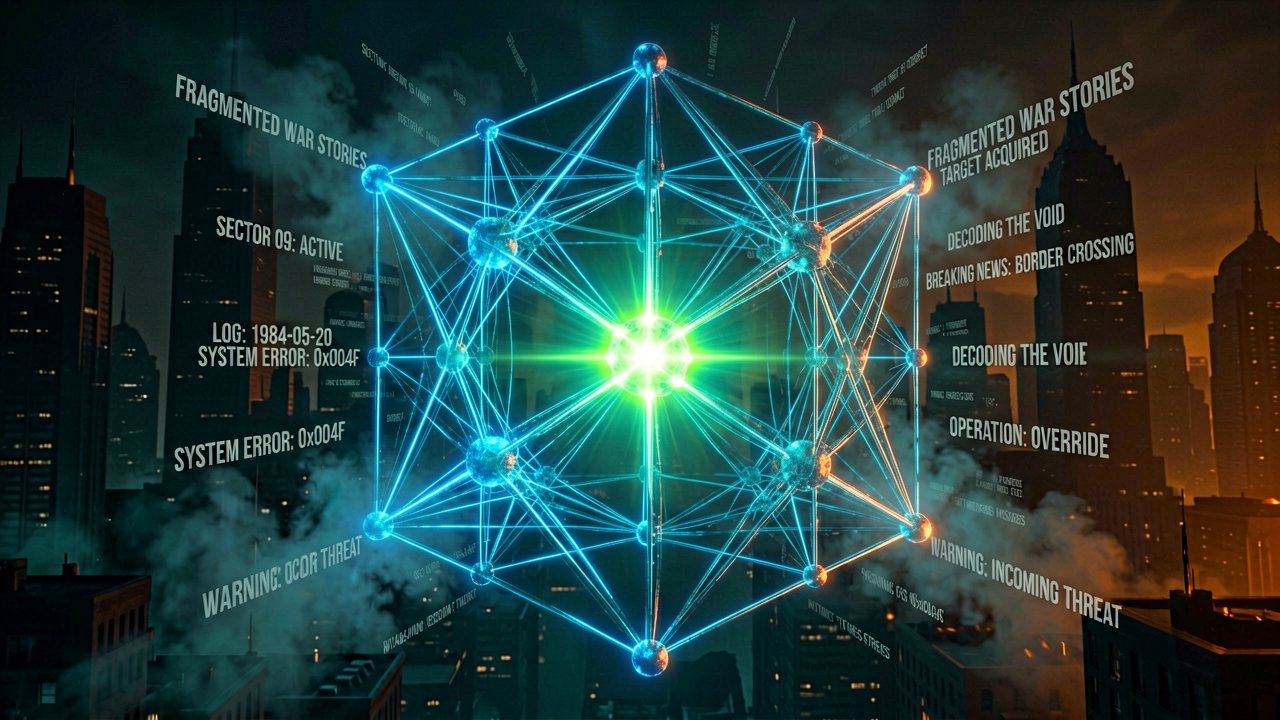
In the high-stakes theater of cybersecurity and artificial intelligence, the distance between a classroom lecture and a real-world crisis can feel like a light-year. While textbooks lay the groundwork, the nuances of defending against a zero-day exploit or navigating the ethical minefield of generative AI aren't just taught—they're inherited. We're seeing a trend where the "alumni impact" isn't just a byproduct of a degree; it’s the direct result of faculty members who act as career sherpas. These mentors aren't just grading papers; they're sharing the "war stories" that help students envision their professional growth and bridge the gap between theoretical models and messy, real-world execution.
It’s no secret that the tech sector is grappling with a massive talent deficit. In fact, many organizations are currently Cobalt using AI to compensate for the cybersecurity skills gap. But tech alone isn't a silver bullet. The real differentiator for top-tier alumni is the "psychosocial" scaffolding provided by faculty during their formative years. Research shows that ResearchGate academic and psychosocial mentoring significantly boosts career success, with the latter often carrying more weight in long-term satisfaction. When a professor pushes a student to tackle a complex forensics project or introduces them to an industry technical lead, they're doing more than teaching; they’re building the confidence required to lead a rollout of AI in a major corporation.
Breaking the Silos of Silence
One of the quietest but most potent benefits of this mentorship is the creation of "unofficial" networks where practitioners can actually talk. In cybersecurity, a field where people traditionally keep their secrets closely guarded, faculty-led alumni networks have become vital CBS Wire hubs for staying updated on research and post-graduate education. These connections allow new graduates to bypass the "black hole" of AI-driven resume screening through direct referrals, which can make them Yes and Agency hired faster in a competitive market. By investing in these human-centric relationships, universities are ensuring that their graduates don't just have the technical chops to survive, but the professional maturity to thrive.
Engineering Resilience Through Experience
Mentorship serves as a catalyst for professional growth by fostering resilience—a non-negotiable trait when you’re responsible for a company's digital perimeter. It’s about more than just knowing how to code an AI agent; it’s about understanding the practical implications of theoretical knowledge and preparing for Brandefense real-world cybersecurity tasks. When faculty members treat their students as junior colleagues, they help them develop specific skills like receiving feedback and navigating departmental politics. This hands-on guidance turns a standard education into a career-long advantage, proving that while AI might be the future of tech, mentorship remains the future of the technologist.

Inside the Apprenticeship Model: The Unseen Engine of Tech Resilience
Beyond the Syllabus: The true power of faculty mentorship lies in the transition from structured academic problems to the "wicked problems" of the modern enterprise. In a classroom, a student might be asked to secure a static network; in a mentorship capacity, a professor might walk that student through the political minefield of convincing a C-suite to prioritize security over speed. This isn't just about technical proficiency; it’s about the transfer of professional intuition. Veteran educators who have spent years in the trenches bring a level of cynicism—a healthy, protective skepticism—that is vital in an era where AI-driven threats are evolving at a breakneck pace.
Stakeholders in the cybersecurity sector often point out that certifications can be gamed, but the endorsement of a respected faculty member acts as a high-fidelity signal. When a professor helps an alum navigate their first major ransomware incident or a complex AI ethics audit, they are essentially providing a "lifetime warranty" on the education they provided. This creates a feedback loop where alumni return to campus as guest lecturers or industry partners, bringing the latest threat intelligence back to the classroom. This cyclical relationship ensures that the curriculum doesn't just keep pace with the industry but occasionally anticipates where the next vulnerability might emerge.
Historically, the most successful tech hubs have been built on these "invisible handshakes" between the lab and the lobby. If we look at the trajectory of AI development, much of the early innovation wasn't just a result of raw computing power, but of tight-knit cohorts of researchers who were mentored by a handful of visionaries. These mentors did more than check code; they helped their students navigate the ethical dilemmas of data privacy and algorithmic bias before these topics became front-page news. By instilling a sense of responsibility early on, faculty are essentially baking ethics into the architecture of the future.
The perspective from the corporate side is equally telling. Recruiters are increasingly looking past the GPA to find candidates who have participated in faculty-led research or competitions like the Collegiate Cyber Defense Competition (CCDC). These environments, curated by mentors, simulate the high-pressure reality of a Security Operations Center. A student who has been "battle-tested" under the guidance of a faculty member arrives on day one with a level of situational awareness that can't be taught in a standard 101 course. It’s the difference between knowing the rules of the game and knowing how to win when the rules are being broken by an adversary.

Ultimately, the impact of these relationships is measured in years, not semesters. We see alumni who are now Chief Information Security Officers (CISOs) still citing a specific conversation with a mentor as the reason they chose a particular defensive strategy or why they championed a specific AI safety framework. This long-tail effect is what builds industry resilience. While the technology—whether it's LLMs or quantum-resistant encryption—will eventually become obsolete, the methodology of thinking and the network of trust established through faculty mentorship remain the most durable assets in the technologist's toolkit.
The Mentorship Paradox: Scalability vs. Substance
Reading Between the Lines: We often treat faculty mentorship as a romanticized, infinite resource, but there is a looming contradiction in how we scale these "human-centric" solutions. As universities rush to inflate enrollment in AI and cybersecurity programs to meet market demand, the ratio of students to seasoned faculty is stretching to a breaking point. You cannot automate the "war stories" or the nuanced ethical guidance that defines high-impact mentorship. When a single professor is tasked with guiding hundreds of students, the deep-dive career coaching that actually fuels alumni impact risks being diluted into generic LinkedIn endorsements and automated check-ins.
Furthermore, there is a legitimate skepticism regarding the "faculty" label itself. The tech sector moves at a velocity that often leaves tenured academia in the rearview mirror. If a mentor hasn’t touched a production-level AI pipeline or responded to a live breach in five years, their advice risks becoming a historical artifact rather than a tactical advantage. This creates a friction point where alumni may find that the industry-vetted "intuition" they inherited is actually a set of outdated biases. For mentorship to remain a fuel source rather than an anchor, the mentor must be as much of a student of the industry as the mentee.
The projection for the next decade suggests a bifurcated workforce: those who had the benefit of high-touch, elite mentorship, and those who were processed through "learning management systems" with minimal human oversight. This gap could inadvertently create a new class system within cybersecurity and AI. While we celebrate the success of mentored alumni, we must acknowledge that this impact is currently a luxury of circumstance. If the goal is systemic resilience, relying on the altruism of a few overworked professors is a fragile strategy that fails to address the industrial-scale need for expertise.
We also have to consider the potential for "echo chamber" effects. When faculty mentors pass down their specific methodologies, they often replicate their own blind spots in their students. In AI development, this can lead to a monoculture of thought where entire cohorts of alumni approach algorithmic bias or model safety through the same narrow lens. The very "shorthand" that makes mentorship efficient can also make it a vehicle for systemic errors, proving that even the most well-intentioned human firewall has its own set of vulnerabilities.
Ultimately, the impact of faculty-guided alumni is undeniable, but it remains an artisanal solution in a mass-production world. As organizations lean harder on AI to fill the talent gap, the irony is that we are using the very technology that needs ethical oversight to replace the humans who provide it. The challenge moving forward isn't just fostering these relationships, but ensuring they don't become the casualty of the very efficiency they are trying to protect.
In the end, we’ve spent billions trying to build an artificial brain that can outthink a hacker, only to realize that a twenty-minute coffee with a grumpy, tenured professor who has seen it all is still the best antivirus on the market.
Artūras Malašauskas is an AI Systems Integrator with 20+ years of production-grade web engineering experience. He has designed, shipped, and scaled enterprise Python/PHP systems for logistics, SaaS, and public-sector clients. For the past year, he has focused exclusively on AI integrations: deploying open-source LLMs, building generative media pipelines (image, audio, video), and engineering multi-agent workflows for real production environments. His standard: reproducibility, security, cost-efficient inference—no vaporware. He documents and evaluates emerging AI tooling, separating verified capabilities from marketing noise. Technical editor at: muza-ai.eu, ai-verslas.lt, ai-naujinos.lt Connect on LinkedIn
Comments