Everpure Ramps Up Security Focus as AI Threat Grows

The tech world isn’t just rebranding for the sake of a fresh coat of paint; it’s arming for an arms race where the opponents are silicon-based and faster than any human operator. Everpure, the entity formerly known as Pure Storage, has fundamentally shifted its focus from merely housing data to aggressively protecting it. As artificial intelligence weaponizes zero-day vulnerabilities and automates the kind of sophisticated attacks that used to take weeks to orchestrate, the "perimeter" has become a polite fiction. Everpure's latest strategic pivot, as reported by HPCwire, recognizes that when the front door is inevitably kicked in, the storage layer must act as the ultimate "last line of defense."
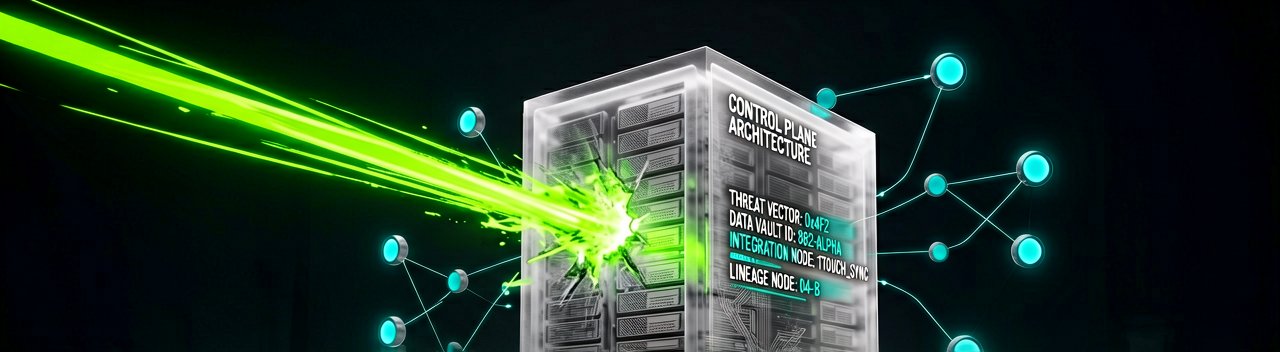
It’s a gritty reality check for CISOs who’ve spent millions on firewalls only to watch credential-based attacks walk right past them. By moving toward an "outside-in" security model, Everpure is essentially building a bunker for enterprise data that assumes the outer walls have already failed. The company’s architecture leverages immutable snapshots and a control plane that is strictly walled off from production environments. This ensures that even if an attacker—or a rogue AI—obtains global administrative privileges, they can’t touch the clean copies of data required for recovery. According to coverage from SiliconANGLE, this isolation is what allowed a Fortune 100 customer to recently restore revenue-critical operations in hours after a devastating attack that deleted thousands of virtual clusters.
The Contextual Intelligence Edge
Everpure isn't just relying on hardware isolation; it's getting smarter about what it’s actually guarding. The company recently finalized its acquisition of 1touch, a pioneer in data discovery and contextual intelligence. The goal here is simple: you can’t protect what you don’t understand. By integrating 1touch’s ability to map links between business applications and their underlying data, Everpure aims to provide a continuous, 360-degree view of the data landscape. This level of semantic context means that when a recovery is necessary, the system knows exactly which datasets are vital to the heartbeat of the business, allowing for surgical restoration rather than a blind, bulk dump of files.
Humanity at the Governance Gate
Perhaps the most interesting wrinkle in Everpure’s strategy is the "Human-in-the-Loop" (HITL) mandate. In an era where AI-driven automation can wipe out a data center in seconds, Everpure is purposefully slowing things down where it matters most. Any sensitive data action now requires multi-party, out-of-band authorization. It’s a classic "two-key" nuclear protocol for the digital age, ensuring that no single compromised account—human or machine—can trigger a catastrophic data purge. By pairing this governance with "Autonomous Resilience" tools that trigger preemptive hardening based on external threat signals, Everpure is trying to balance the lightning speed of AI defense with the sober judgment of human oversight.
The Architects of the Bunker
The Hard Truth Beneath the Hype: While the marketing gloss focuses on "AI-readiness," the engineers in the trenches at Everpure are fighting a far more ancient war: the battle against latent corruption. In a traditional recovery scenario, a business might restore a snapshot only to realize the ransomware had been sitting dormant for months, effectively backing up the infection itself. By integrating advanced heuristics directly into the storage controller, Everpure is attempting to spot the "silent encryption" phase of an attack before the ransom note ever appears on a screen. This move signals a shift from storage as a passive bucket to storage as an active, scanning sentinel that treats every write request with a degree of healthy skepticism.
Industry veterans recall a time when storage was the sleepiest corner of the data center, defined by IOPS and rack space. Today, the conversation has moved into the boardroom because the stakes have shifted from performance to survival. Analysts note that Everpure’s pivot is largely a response to the "speed-to-damage" ratio of modern AI threats. When an automated script can cycle through thousands of encryption keys per second, the human response time is no longer a factor. The system must be capable of severing its own limbs to save the torso, a level of autonomy that requires a profound degree of trust between the enterprise and its vendor.
The acquisition of 1touch isn't just about cataloging files; it’s about understanding the lineage of data in a way that mirrors a forensic investigation. For a global bank, knowing that a specific database is the authoritative source for trade settlements—and that it has dependencies on three other legacy systems—is the difference between a controlled recovery and a chaotic collapse. Everpure is betting that by owning this "contextual map," they can move away from the "all-or-nothing" recovery models of the past. They are effectively building a digital nervous system that knows which nerves to numb and which to protect when the body is under attack.
From the stakeholder perspective, this shift changes the very nature of the service level agreement (SLA). We are moving into an era where "five nines" of availability doesn't mean much if the data being served is encrypted garbage. Everpure is now pitching "Resilience SLAs" that guarantee recovery times rather than just uptime. This is a bold gamble in a market where liability is usually avoided like the plague. By leaning into the security narrative, Everpure is positioning itself as an insurance policy as much as a hardware provider, a move that forces competitors like NetApp and Dell to rethink their own security-first integrations.
Ultimately, the "Human-in-the-Loop" protocol is the most telling part of this evolution. It is a rare admission in the tech industry that more automation isn't always the answer. By requiring physical, multi-factor, and multi-person authentication for destructive commands, Everpure is acknowledging that the ultimate vulnerability remains the human element—or the AI that successfully mimics it. This belt-and-suspenders approach creates a friction point that is intentionally designed to thwart the frictionless speed of modern cyber warfare, ensuring that the most critical decisions are still made by people with skin in the game.
Reading Between the Lines
The High Cost of Paranoia: There is a certain irony in Everpure’s pivot toward "security-first" storage; namely, that we are now asking our filing cabinets to act as our bodyguards. While the technological shift is impressive, it highlights a growing contradiction in the enterprise landscape. We are told that AI will streamline operations and reduce overhead, yet the response to AI-driven threats involves adding layers of manual "Human-in-the-Loop" friction and expensive contextual mapping tools. The "AI dividend" is increasingly being paid out not in increased productivity, but in a desperate attempt to maintain the status quo of basic data integrity.
We should also cast a skeptical eye on the "immutable snapshot" as a panacea. Immutability is a powerful tool, but it assumes that the data being captured is worth saving in the first place. If an adversary or a flawed algorithm slowly poisons a dataset over months, an immutable copy simply preserves the damage with high-fidelity permanence. Everpure’s reliance on the 1touch acquisition suggests they recognize this vulnerability, but the integration of "contextual intelligence" into a storage controller adds a massive layer of complexity. History shows that complexity is often the quiet ally of the very vulnerabilities it seeks to patch.
Furthermore, the move toward "Resilience SLAs" marks a precarious shift in vendor liability. By guaranteeing recovery times in the face of cyber warfare, Everpure is stepping onto a legal minefield. It remains to be seen how these guarantees will hold up when an attack isn't just a simple encryption event, but a multifaceted, persistent threat that targets the very "isolated control planes" Everpure has built. There is a fine line between a robust defense and an attractive nuisance that invites the world’s most sophisticated hackers to prove the vendor wrong.
The transition to an "outside-in" security model also places a significant burden on the customer’s IT staff. It requires a level of cross-departmental fluency—between storage admins, security analysts, and business leads—that rarely exists in siloed corporate environments. Technology can provide the bunker, but it cannot force the inhabitants to practice the drills. If the "Human-in-the-Loop" is under-trained or suffers from "alert fatigue," the two-key protocol becomes just another administrative hurdle to be bypassed or ignored when a deadline looms.
Projecting forward, the broader implication is that data storage is losing its status as a commodity. We are entering a fractured market where the cost of "safe" storage may begin to dwarf the cost of the raw capacity itself. For smaller enterprises, the price of this level of security might prove prohibitive, creating a "security divide" where only the largest players can afford the luxury of true resilience. It suggests a future where data isn't just something you store, but something you are constantly struggling to keep from being used against you.
In the modern data center, the only thing growing faster than the AI-generated threats is the bill for the hardware required to survive them; eventually, we’ll spend so much protecting our data that we won’t have any money left to actually use it.
Artūras Malašauskas is an AI Systems Integrator with 20+ years of production-grade web engineering experience. He has designed, shipped, and scaled enterprise Python/PHP systems for logistics, SaaS, and public-sector clients. For the past year, he has focused exclusively on AI integrations: deploying open-source LLMs, building generative media pipelines (image, audio, video), and engineering multi-agent workflows for real production environments. His standard: reproducibility, security, cost-efficient inference—no vaporware. He documents and evaluates emerging AI tooling, separating verified capabilities from marketing noise. Technical editor at: muza-ai.eu, ai-verslas.lt, ai-naujinos.lt Connect on LinkedIn
Comments