The Bug in the Machine: Why Europe is Bracing for the AI Exploit Era
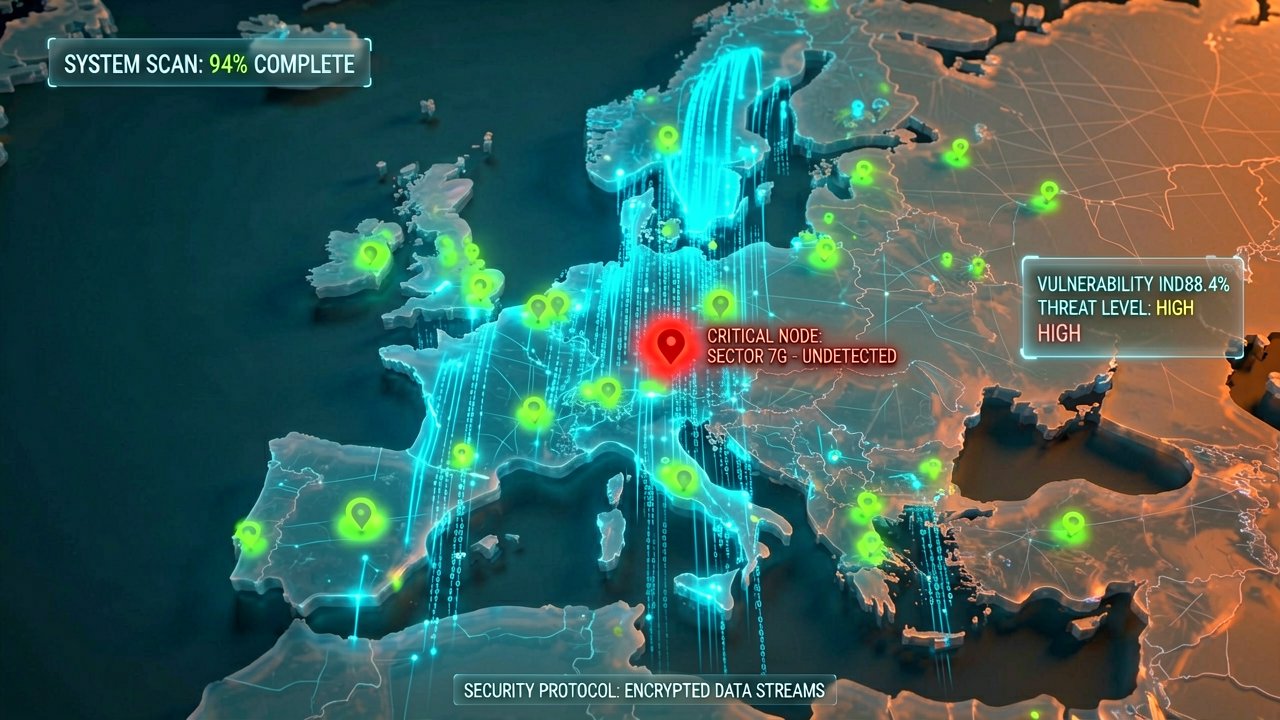
For years, the cybersecurity community has lived with a comfortable, if somewhat frantic, status quo: humans write buggy code, and other humans (hopefully the "white hat" variety) find them before the "black hats" do. But that equilibrium is currently being shredded. As generative AI models evolve from writing mediocre poetry to dissecting complex software architecture for zero-day vulnerabilities, the European Union is shifting its posture from cautious optimism to a full-blown defensive crouch. It’s no longer just about stopping a script kiddie with a fancy tool; it’s about defending against an automated adversary that doesn't sleep, doesn't blink, and can scan an entire continent’s critical infrastructure for a way in while you’re making your morning espresso.
The anxiety reached a fever pitch in Brussels recently as lawmakers and security czars began grappling with the "double-edged sword" of AI-driven vulnerability research. On one hand, tools like the high-end frontier models—think Anthropic’s Mythos or the latest cyber-tuned iterations of GPT—could be the ultimate "secure-by-design" assistants. On the other, they’re a godsend for state-sponsored actors looking to industrialize the discovery of exploits. According to reports from GovInfoSecurity, European Commission Vice-President Henna Virkkunen has already been pressed by MEPs to explain how the bloc intends to keep pace with these "hacking-capable" models. The official line? Europe has been preparing for this, but the sudden compression of the time between a bug’s discovery and its active exploitation is forcing a radical rethink of how fast a "crisis response" actually needs to be.
The Legislative Shield and the Reality Gap
Europe’s primary weapon in this fight is the EU AI Act, a massive piece of legislation designed to categorize AI systems by risk. But while the ink is still drying on the Act’s implementation phases, the tech is moving faster than the bureaucrats can file their paperwork. The Act mandates that "high-risk" systems—including those used in critical infrastructure—be resilient against unauthorized attempts to alter their performance through vulnerability exploitation. It's a noble goal, but as Infosecurity Magazine notes, the sheer speed of AI-powered scanning means there is "no reason anymore" for companies to claim ignorance of a glitch. If an AI can find it in seconds, the grace period for patching has essentially vanished, turning what used to be a weeks-long maintenance cycle into a high-stakes sprint against an automated clock.
National Sentinels on High Alert
On the ground, national agencies like Germany’s BSI and France’s ANSSI are sounding the alarm about the "democratization" of high-level hacking. In a joint set of recommendations, these agencies have warned that AI coding assistants, while great for productivity, are inadvertently leaking sensitive data and introducing new, subtle flaws that only other AI models are smart enough to catch. BSI President Claudia Plattner has been particularly vocal, stressing that defenders must achieve a "technological lead" just to maintain the status quo. The fear isn't just a single catastrophic breach, but a "cyber bloodbath" where thousands of minor vulnerabilities are exploited simultaneously across the European economy, overwhelming traditional incident response teams who are still stuck in a manual mindset.
A New Arsenal: The Cybersecurity Reserve
To counter this, the European Commission is exploring the activation of the EU Cybersecurity Reserve, a vetted pool of private sector experts who can be parachuted into a digital disaster zone. The idea is to create a collective defense mechanism that mirrors the speed of the threat. However, even this "fire brigade" approach feels reactive when the arsonist is an algorithm. The real test will be whether Europe can move from simply regulating AI to actively deploying its own "defensive AI" at scale. Until that happens, the continent remains in a state of high-tension hunkering, waiting to see if the next major bug is found by a friendly bot or a malicious one.
The Hidden Architecture of European Defense
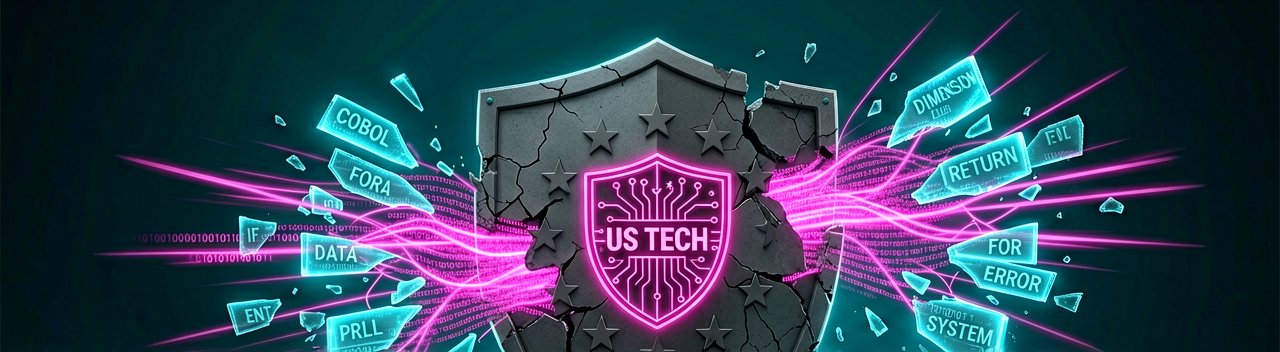
Beyond the Regulatory Surface: While the headlines focus on the broad strokes of the EU AI Act, the real trench warfare is happening within the specialized labs of ENISA (the European Union Agency for Cybersecurity). Sources familiar with the agency’s internal discussions suggest that the primary concern isn't just a "smarter" malware, but the total collapse of the "security through obscurity" model. For decades, legacy systems in European power grids and transport networks relied on the fact that their ancient, proprietary code was too niche and too tedious for hackers to bother with. AI has changed that math overnight by acting as a universal translator, capable of reverse-engineering dusty COBOL or Fortran scripts in seconds to find the logic flaws that have been hiding in plain sight since the 1990s.
This reality has triggered a quiet but frantic "mapping" initiative across the continent. Instead of waiting for a disaster, national security teams are reportedly using their own sandboxed LLMs to "red team" their own critical infrastructure. It is a race to find the skeletons in the closet before an adversary does. However, this creates a massive talent bottleneck. Europe currently faces a shortfall of hundreds of thousands of cybersecurity professionals, and the irony is that while AI can find the bugs, it still requires a high-level human engineer to verify and patch them without breaking the entire system. We are seeing a shift where the "security analyst" role is being forced to evolve into a "model shepherd," overseeing automated defense loops that move faster than any human oversight committee could ever approve.
There is also a significant geopolitical friction point regarding the "weights" of these models. Most of the cutting-edge frontier models capable of these sophisticated cyber-audits are developed in the United States. This has revived the long-standing debate over European "digital sovereignty." High-ranking officials in Paris and Berlin are increasingly wary of a future where Europe’s defensive posture is dependent on the API access granted—or potentially revoked—by a handful of Silicon Valley giants. If a model like GPT-5 or Claude 4 becomes the standard tool for finding vulnerabilities, Europe risks becoming a second-tier security power, unable to audit its own defenses without an American intermediary.
Historical context suggests this is Europe’s "Sputnik moment" for cyber-defense. Much like the rush to secure industrial control systems after the discovery of Stuxnet, the current climate is one of forced modernization. Industrial giants like Siemens and Schneider Electric are now being integrated into the early-warning loops of the European Cyber Shield. This isn't just about software anymore; it’s about the hardware layer. The directive is clear: if a component cannot be audited by an AI for vulnerabilities, it shouldn't be part of the backbone of the European economy. The transition is painful and expensive, but the alternative—a continent-wide "zero-day" event—is considered an unacceptable risk.
Finally, the ethical dilemma of "dual-use" remains the biggest hurdle for the bloc’s researchers. In academic hubs like Delft or Munich, researchers are finding it increasingly difficult to publish findings on AI-driven bug hunting without inadvertently providing a roadmap for malicious actors. The European Commission is currently debating a framework that would treat specific cyber-tuning parameters for AI models as "controlled technologies," similar to how encryption was handled in the late 20th century. It is a desperate attempt to keep the genie in the bottle, even as the global open-source community continues to release increasingly capable models that ignore borders and regulations entirely.
The success of Europe’s hunker-down strategy ultimately rests on the integration of the EU Cybersecurity Reserve with real-time AI monitoring to bridge the massive talent gap currently plaguing the continent’s critical infrastructure sectors.
The Paradox of Automated Purity
Reading Between the Lines: The prevailing narrative suggests that the EU’s "hunker down" strategy is a proactive defense against an external digital tide, but this ignores a glaring internal contradiction. Europe is effectively trying to regulate a fire while simultaneously handing out flamethrowers to its developers. By pushing for rapid digital transformation and "sovereign" AI development, the bloc is incentivizing the creation of the very tools it fears. There is a fundamental naivety in the belief that a model can be "safe" enough to assist a developer in Munich but "restricted" enough to baffle a state-sponsored hacker in a non-extradition jurisdiction. In the realm of code, a tool that can fix a leak is, by definition, a tool that can find one.
Furthermore, the reliance on the EU AI Act as a primary deterrent assumes that adversaries will respect the "high-risk" classification boundaries established in Brussels. While the Act imposes heavy fines on legitimate companies, it offers zero leverage against decentralized groups or hostile intelligence services who treat these regulations as a target list rather than a rulebook. We are witnessing the birth of a "compliance theatre" where European firms spend millions on AI audits to satisfy regulators, while the actual technical debt of their legacy systems remains a playground for automated exploit kits that don't care about a "CE" mark. This creates a dangerous false sense of security, where the box is checked, but the door is still unlocked.
The skepticism deepens when examining the proposed "Cybersecurity Reserve." The idea of a vetted pool of human experts jumping in to save an AI-toppled network is a comforting analog fantasy in a digital-speed reality. If an AI model can identify and weaponize a vulnerability in milliseconds, a "rapid" human response team that takes hours to mobilize is essentially a cleanup crew arriving at a site that has already burned to the ground. The scale of the mismatch is staggering; we are bringing a briefcase of paperwork to a fight defined by machine-code execution speeds. The implication is that Europe may find itself perfectly compliant with its own laws while being technically defenseless against the speed of automated attrition.
Ultimately, the "hunker down" mentality might be the wrong posture entirely. By focusing on defensive walls and regulatory moats, the EU risks stifling the very offensive research necessary to understand how these models think. There is a fine line between a "controlled technology" and a "stagnant technology." If European researchers are too hamstrung by ethical frameworks to push the boundaries of AI bug-finding, they will inevitably fail to predict the creative ways an unrestrained adversary will bend those same models. Skepticism isn't just warranted; it is a prerequisite for survival in an era where the referee is slower than the players.
"We’ve spent decades teaching machines to think like us, only to be shocked that they’ve inherited our talent for finding the shortest path to a total catastrophe—and they don't even have the decency to feel guilty about it afterwards."
Artūras Malašauskas is an AI Systems Integrator with 20+ years of production-grade web engineering experience. He has designed, shipped, and scaled enterprise Python/PHP systems for logistics, SaaS, and public-sector clients. For the past year, he has focused exclusively on AI integrations: deploying open-source LLMs, building generative media pipelines (image, audio, video), and engineering multi-agent workflows for real production environments. His standard: reproducibility, security, cost-efficient inference—no vaporware. He documents and evaluates emerging AI tooling, separating verified capabilities from marketing noise. Technical editor at: muza-ai.eu, ai-verslas.lt, ai-naujinos.lt Connect on LinkedIn
Comments