Google’s Gemini Omni Isn’t Just a Video Builder—It’s Google’s First Real Shot at Simulating the World

Google just blew the doors off I/O 2026 with the reveal of Gemini Omni, a multimodal powerhouse that moves way beyond the simple "text-to-video" trick. Instead of just stitching together pretty frames, Google Blog describes it as a leap forward in world understanding. It's built to "simulate the world" by blending an intuitive grasp of physics with Google’s massive context of history and science. If you’ve ever felt like AI video was just a hallucinogenic dream sequence, Omni is Google’s answer, aiming for consistency that actually holds up through a conversation.
The real magic here is how Omni handles inputs. It doesn't just want your text; it wants everything. You can feed it a selfie, a snippet of audio, and a prompt like "make this look like a 70s sci-fi flick," and it’ll churn out a cohesive scene that keeps your face recognizable across different shots. According to Google DeepMind, the model bridges the gap between photorealism and actual storytelling. It’s a unified system where text, image, audio, and video all live in one "brain," allowing for what they call conversational editing—where you literally talk your way through changing a background or swapping a character’s outfit.
Beyond the Pretty Pixels: Physics and Persistence
What makes Omni a "next-gen" tool isn't just the resolution, but the persistence. One of the biggest headaches in AI video has been "character drift"—where your protagonist looks like a different person every three seconds. Omni uses its underlying Transformer architecture to maintain a consistent scene, treating video less like a sequence of images and more like a persistent virtual environment. While it’s still early days and DeepMind’s own model cards admit that perfectly accurate text and complex motion remain a challenge, the leap from the previous Veo models is undeniable. It's no longer just about generating a clip; it's about building a world you can interact with.
The Agentic Era of Content Creation
This launch also marks a shift toward what Google is calling "agentic" AI. Omni isn't just sitting in a silo; it’s being integrated into tools like Google Flow and the Gemini app, replacing older models to become the primary engine for creative work. For creators, this means the barrier to entry for high-end production is crumbling. You don't need a PhD in prompt engineering when you can just tell the AI to "adjust the lighting and stabilize the shot" as if you’re talking to a junior editor. It’s clear Google isn't just trying to win the AI video race; they’re trying to redefine what it means to be a "builder" in a world where reality is increasingly programmable.

The Hidden Engine: Why Simulation Matters More Than Generation
The Real Shift: What most surface-level reports miss is that Gemini Omni isn’t just a bigger version of the video models we’ve seen over the last year. It represents a fundamental pivot in how Google’s DeepMind division views "intelligence." By moving away from mere pixel prediction and toward world simulation, Google is attempting to solve the "uncanny valley" of physics. While competitors often struggle with objects clipping through each other or liquid behaving like static, Omni’s architecture is designed to understand that if a glass tips over, the water inside must follow a specific trajectory. This isn't just about making movies; it’s about creating a digital laboratory where the AI understands the rules of our physical reality.
Industry insiders have noted that the timing of this release is a direct offensive against OpenAI’s Sora and similar high-end generators. However, the stakeholder perspective here is broader than just a creative arms race. For Google, the "Omni" branding signifies a "universal model" approach. According to Google DeepMind’s technical documentation, the goal is to create a singular latent space where a video isn't just a video—it's data that the AI can "read" as easily as a textbook. This means the model isn't just imitating what a sunset looks like; it’s learning the relationship between light, atmosphere, and time, which has massive implications for robotics and autonomous systems training.
Historically, Google has been criticized for being "cautious to a fault," often trailing behind nimbler startups in the generative space. With Omni, the reporter’s eye sees a shift in corporate strategy. The integration of "conversational editing" suggests that Google is leveraging its greatest asset—its massive ecosystem. By embedding Omni directly into the workspace tools that millions already use, they are bypassing the "stand-alone app" phase that exhausted many early AI adopters. They aren't asking you to learn a new platform; they are simply upgrading the world you already live in, making the AI an invisible collaborator rather than a temperamental tool.
The ethical undercurrents of "simulating the world" are, predictably, the elephant in the room. DeepMind has emphasized its use of SynthID watermarking and rigorous red-teaming, yet the leap in realism presents a historical challenge for digital trust. A seasoned observer will notice that the model's ability to maintain "persistence"—keeping the same character and lighting across multiple generated "worlds"—is exactly what makes it both a creator's dream and a misinformation nightmare. As Google Safety outlines, the guardrails are being built into the architecture itself, but the sheer scale of Omni’s capabilities means we are entering an era where the "source of truth" is no longer the camera lens, but the model’s weightings.
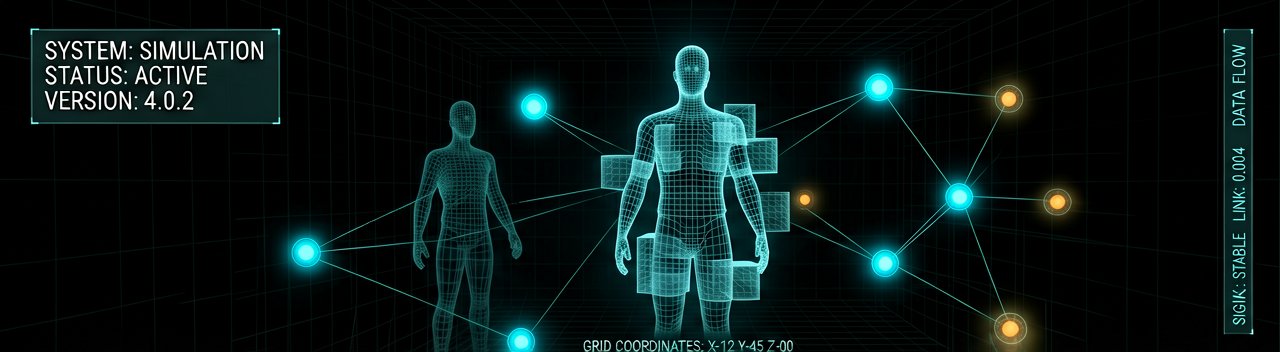
Ultimately, the "next-gen" label for Omni feels like an understatement when you consider the long-term play. By treating video as a simulated environment rather than a sequence of frames, Google is effectively building the "operating system" for the physical world. This enables developers to create virtual prototypes that behave exactly like their real-world counterparts. The transition from "generating a clip" to "simulating an event" is the bridge between AI as a toy and AI as a foundational infrastructure for science and industry.
The Paradox of Universal Simulation
Reading Between the Lines: For all the breathless marketing regarding "world simulation," there is a glaring contradiction in the promise of Gemini Omni. Google is essentially asking us to trust that a system built on statistical probability can accurately mirror the deterministic laws of physics. While the demos are polished, seasoned tech skeptics know that a model "understanding" gravity is very different from a model simply being very good at guessing where a pixel should fall based on billions of training videos. There is a risk that we are merely building a more convincing hallucination—one that looks right to the human eye but fails the moment it’s used for high-stakes scientific modeling or engineering.
Furthermore, the move toward an "agentic" ecosystem where the AI is an invisible collaborator brings up the inevitable issue of creative homogenization. If Gemini Omni is doing the heavy lifting of "simulating" the lighting, the physics, and the camera movements, the role of the director shifts from a creator to a curator of machine-generated options. We have to wonder if, by lowering the barrier to entry, Google is also inadvertently lowering the ceiling for original visual language. When every creator is using the same "world engine" to simulate reality, the unique quirks and "happy accidents" of traditional filmmaking might be replaced by a mathematically optimized corporate aesthetic.
There is also the matter of the massive compute cost that Google conveniently glosses over during the keynote. Simulating a persistent 3D-aware environment in real-time requires a staggering amount of energy and silicon. This suggests that while Omni is "available," it may remain a luxury tier product or be heavily throttled for the average user, creating a two-tiered digital reality. The gap between what Google shows on stage and what the average subscriber can actually render in their browser has historically been wide, and Omni’s ambitious architecture suggests that "simulating the world" might currently be a privilege reserved for those with the deepest pockets.
Finally, we must address the "black box" nature of these simulations. If a journalist or a researcher uses Omni to recreate a historical event or a complex news scene, the model’s internal biases aren't just reflecting text—they are shaping a visual "truth." If the physics engine has a slight bias toward certain types of motion or if the "world understanding" is trained on a Western-centric dataset, the simulation becomes a subtle form of editorializing. We aren't just looking at a video; we are looking at Google’s opinion of how the world should work, baked into the very fabric of the simulation.
"We’ve finally reached the point where AI can simulate a perfect sunset, maintain character consistency across a cinematic epic, and understand the complex trajectory of a falling glass—all so we can use it to make even more convincing videos of our cats wearing tiny hats."
Artūras Malašauskas is an AI Systems Integrator with 20+ years of production-grade web engineering experience. He has designed, shipped, and scaled enterprise Python/PHP systems for logistics, SaaS, and public-sector clients. For the past year, he has focused exclusively on AI integrations: deploying open-source LLMs, building generative media pipelines (image, audio, video), and engineering multi-agent workflows for real production environments. His standard: reproducibility, security, cost-efficient inference—no vaporware. He documents and evaluates emerging AI tooling, separating verified capabilities from marketing noise. Technical editor at: muza-ai.eu, ai-verslas.lt, ai-naujinos.lt Connect on LinkedIn
Comments