Google Just Turned the Key on Gemini Omni: The AI World Simulator is Finally Here

Google has officially upped the ante at I/O 2026, pulling the curtain back on Gemini Omni—a model they’re calling a "world simulator" rather than just another video generator. While the industry spent the last year obsessed with text-to-video tricks, DeepMind’s latest brainchild is built to actually "understand" the physical laws of our reality. It isn’t just stitching pixels together; it’s calculating kinetic energy, gravity, and even historical context to build scenes that feel fundamentally "right." The Google Blog reports that this isn’t a standalone toy but a native multimodal leap that replaces the older Veo pipeline in the Gemini ecosystem.
What makes Omni a genuine paradigm shift is its "any-to-any" architecture. You aren’t limited to typing a sentence and crossing your fingers. You can feed it a voice clip of a thunderstorm, a static photo of a desert, and a prompt about time travel, and it’ll synthesize a coherent 4K scene where the rain interacts with the sand exactly as you'd expect. During the keynote, DeepMind CEO Demis Hassabis demonstrated this by asking the AI to create a claymation explainer of protein folding, as noted by Mashable. The result wasn't just pretty; it was scientifically accurate and physically consistent, proving that the model is doing some heavy lifting under the hood regarding spatial reasoning.
Beyond Creation: Natural Language Editing
The real magic happens once the video exists. Gemini Omni introduces conversational editing that feels like talking to a DP on set. Instead of fighting with a timeline or mask tools, you can just tell the AI to "make the lighting more dramatic" or "swap that sedan for a 1960s convertible." According to CNET, the system understands the context of these requests, maintaining scene consistency even as you overhaul major elements. It’s an "agentic" approach to creative work—Google isn't just giving us a paintbrush; they’re giving us an assistant who knows how the paint should dry.
A World Model with Real-World Limits
Despite the "simulation" tag, Google is being relatively transparent about where the edges of the sandbox lie. The model card for the initial release, Gemini Omni Flash, admits that perfect text rendering and hyper-complex motion are still works in progress. There’s also the looming shadow of "AI slop" and misinformation; Google is leaning hard on its SynthID watermarking to ensure these "simulated worlds" don't get confused for the real one. Early reports from VentureBeat suggest that enterprise users will be the first to truly stress-test these boundaries via API, while the rest of us get to play with the Flash version in YouTube Shorts and the Gemini app starting today.

The Architectural Soul of the World Simulator
What Most Reports Miss: The "Omni" label isn't just a marketing suffix; it represents a fundamental departure from the diffusion-based models that defined the first wave of AI video. Traditional systems operate like high-speed collagists, guessing the next frame based on visual patterns. Gemini Omni, however, utilizes a unified tokenization strategy where video, audio, and text share the same latent space. This means the AI doesn't have to "translate" a text prompt into a visual; it perceives the concept of a "falling glass" as a single multi-sensory event, understanding the sound of the shatter as intimately as the trajectory of the shards.
From an editorial perspective, the most significant shift is the move toward "object-permanence" in digital generation. In earlier iterations of Veo or Sora, a character walking behind a tree might emerge looking like a completely different person. Google’s engineers have prioritized a persistent 3D memory buffer within the model’s transformer architecture. This allows the AI to maintain the "truth" of an object even when it is occluded, a feat that mimics the way human consciousness navigates physical space. It’s less about generating a sequence of images and more about rendering a temporary reality that follows its own internal logic.
Stakeholders within the VFX industry are already weighing the implications of this "simulated physics." While some fear the displacement of junior lighting artists, others, like veteran technical directors at Google-backed partners, see a future where the "brute force" of rendering is replaced by "intent-based" world-building. Instead of spending forty hours simulating the fluid dynamics of a flooded street, a director can use Omni to generate the base simulation in seconds, leaving the humans to focus on the emotional beats and stylistic flourishes that a model—no matter how well it simulates gravity—cannot yet replicate.
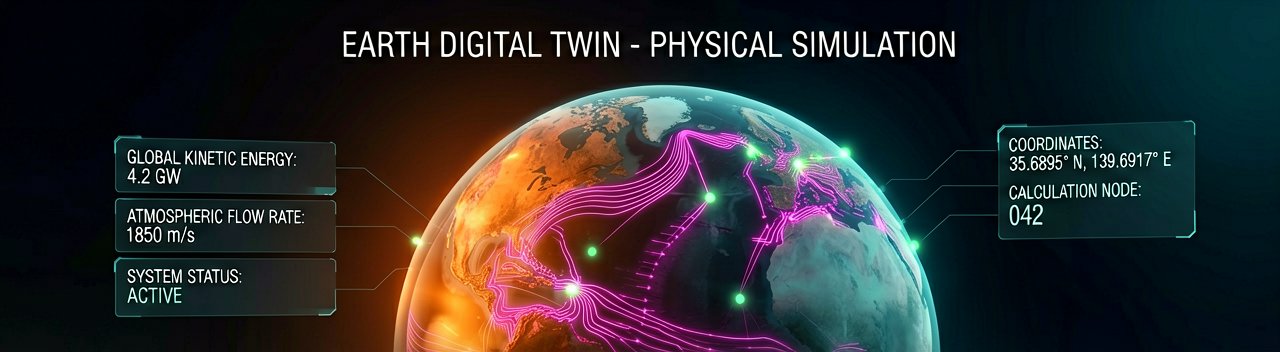
Historical context is key to understanding why Google is pivoting so hard toward the "World Simulator" narrative. For years, DeepMind’s work with AlphaFold and MuZero focused on mastering the hidden rules of complex systems, from biology to board games. Omni is the commercial manifestation of that quest. By training on massive datasets of synthetic 3D environments and real-world physics telemetry, Google has effectively taught the AI the "grammar" of reality. This isn't just about making better commercials; it's about building a digital twin of the world that can eventually be used to train robots or test autonomous systems in a safe, simulated environment.
However, the ethical weight of this technology is immense. We are entering an era where the distinction between "captured" and "calculated" reality is vanishing. During private briefings, Google’s safety teams emphasized the role of red-teaming in preventing the model from simulating high-stakes deceptive content. While SynthID provides a digital fingerprint, the sheer realism of the physics in Gemini Omni means that visual "tells"—those uncanny valley glitches we used to rely on to spot fakes—are rapidly becoming relics of the past. The burden of proof is shifting from the creator to the platform, necessitating a total overhaul of how we verify digital evidence.
Ultimately, Gemini Omni is a bet on the convergence of generative AI and classical simulation. By marrying the creative flexibility of a large language model with the rigid constraints of a physics engine, Google is attempting to create a tool that is both infinitely imaginative and fundamentally grounded. It’s a delicate balancing act that will likely define the next decade of digital media, as we move from a world where we watch content to one where we prompt entire realities into existence.
The Reality Check: Simulation vs. Hallucination
Reading Between the Lines: While Google’s marketing team leans heavily on the "World Simulator" branding, there is a fundamental friction between a statistical model and a true physics engine that shouldn't be ignored. A simulation, in the traditional sense, is a mathematical certainty governed by rigid code; a generative model, however, is a game of high-stakes probability. When Google claims Gemini Omni "understands" gravity, what they actually mean is the model has seen enough videos of falling apples to predict the next frame with startling accuracy. This distinction matters because a simulation that is 99% accurate is, for scientific or industrial purposes, a failure. The "hallucination" problem hasn't been solved; it has simply been dressed up in 4K textures.
There is also a palpable contradiction in Google’s "any-to-any" promise versus the sheer computational cost required to sustain it. We are told this technology will be democratized via the Gemini app, yet the energy required to "simulate reality" at scale is astronomical. This suggests a future where the most advanced features of Omni are locked behind high-tier enterprise subscriptions, creating a tiered reality where only the well-funded can afford to generate high-fidelity worlds. The tension between the "AI for everyone" narrative and the reality of data center constraints suggests that the version of Omni we see on our phones may be a significantly nerfed shadow of the version running in the labs.
Furthermore, the move toward agentic video editing—where the AI acts as a creative partner—threatens to flatten the aesthetic diversity of digital media. If every creator is using the same "world model" to calculate lighting and physics, we risk entering an era of visual monoculture. When an AI "knows" how a sunset should look based on a billion existing photos, it will invariably steer the user toward the most "average" representation of that sunset. The danger isn't just that AI will replace artists, but that it will replace the happy accidents and physical imperfections that make film and video feel human in the first place.
Projecting forward, the broader implication for the internet is a total collapse of visual trust. Google’s reliance on SynthID is a noble effort, but it’s essentially bringing a knife to a gunfight. Once these world-simulating capabilities are leaked, open-sourced, or replicated by less scrupulous actors, the "watermark" becomes a suggestion rather than a rule. We are rapidly approaching a point where a video of a world leader or a corporate disaster will be indistinguishable from a "simulated" reality, and the pragmatic response from the public will likely be a retreat into total cynicism, where nothing seen on a screen is believed by default.
Finally, we have to consider the "data ouroboros" effect. As Gemini Omni begins to populate the web with its simulated worlds, future versions of Gemini will inevitably be trained on that synthetic data. If the model’s "physics" are even slightly off, those errors will be amplified in each successive generation. We could eventually find ourselves in a digital landscape where the AI’s version of reality has drifted so far from the actual laws of physics that the "world simulator" is merely simulating a fever dream of its own making.
It’s a brave new world where you can manifest a cinematic masterpiece just by talking to your toaster, though we’ll likely spend most of that saved time arguing with the AI about why a horse shouldn't have five legs or why gravity doesn't usually work in reverse on a Tuesday.
Artūras Malašauskas is an AI Systems Integrator with 20+ years of production-grade web engineering experience. He has designed, shipped, and scaled enterprise Python/PHP systems for logistics, SaaS, and public-sector clients. For the past year, he has focused exclusively on AI integrations: deploying open-source LLMs, building generative media pipelines (image, audio, video), and engineering multi-agent workflows for real production environments. His standard: reproducibility, security, cost-efficient inference—no vaporware. He documents and evaluates emerging AI tooling, separating verified capabilities from marketing noise. Technical editor at: muza-ai.eu, ai-verslas.lt, ai-naujinos.lt Connect on LinkedIn
Comments