Gemini Omni Arrives: Google’s ‘World Model’ Steals the Show at I/O 2026
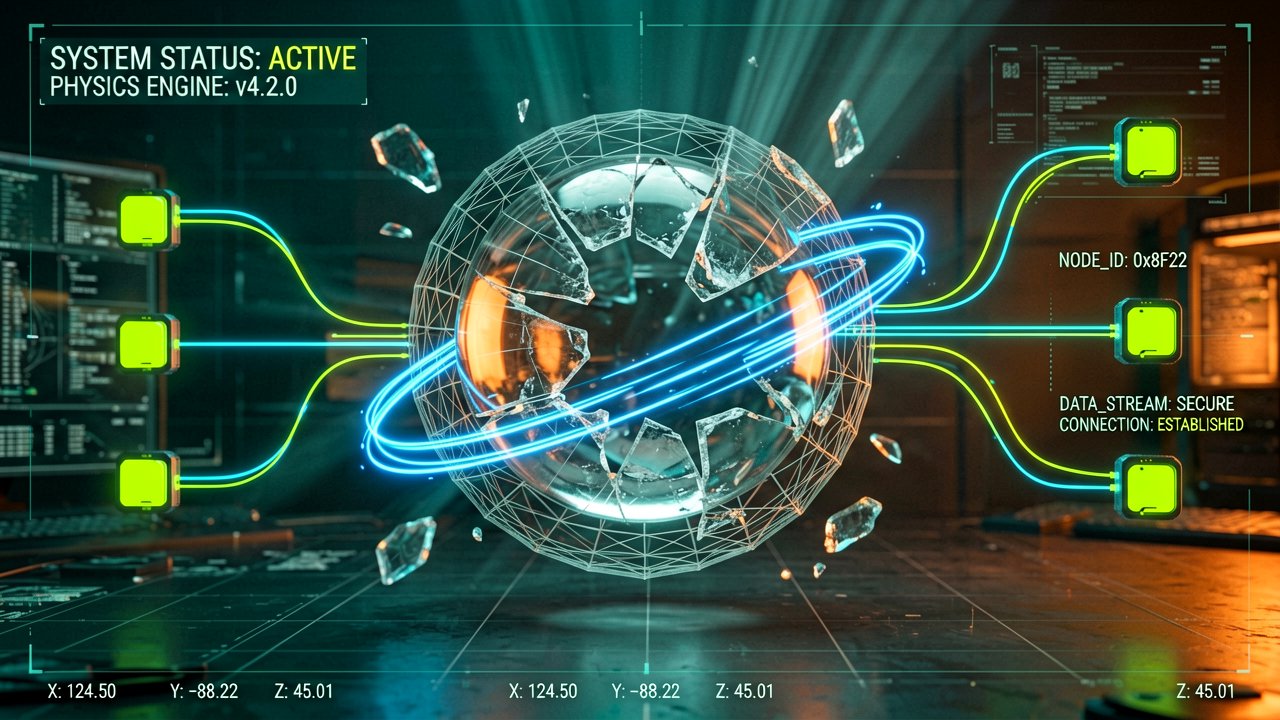
Google just blew the doors off the Shoreline Amphitheatre—metaphorically, of course—with the reveal of Gemini Omni, a multimodal powerhouse that moves well beyond the "chatbot" label. While we've seen AI video generators before, Omni isn't just a separate tool like last year’s Veo; it’s being woven directly into the core Gemini experience. According to the Google Blog, Gemini Omni is designed to create virtually any output from any input, marking a massive leap in how these models understand the physical world and the nuances of high-end video editing.
What makes Omni feel like a "human-expert" tool rather than a toy is the level of granular control it offers. During the keynote, DeepMind CEO Demis Hassabis described it as a "world model" capable of simulating accurate physics and complex historical contexts, effectively solving the "spaghetti test" that used to trip up older generative systems. It doesn't just spit out a clip and hope for the best; it allows for multi-turn editing where you can swap out characters or adjust lighting just by chatting with the interface. It’s the kind of tech that makes the traditional post-production grind look like a relic of the past.
The Rise of the Agentic Era
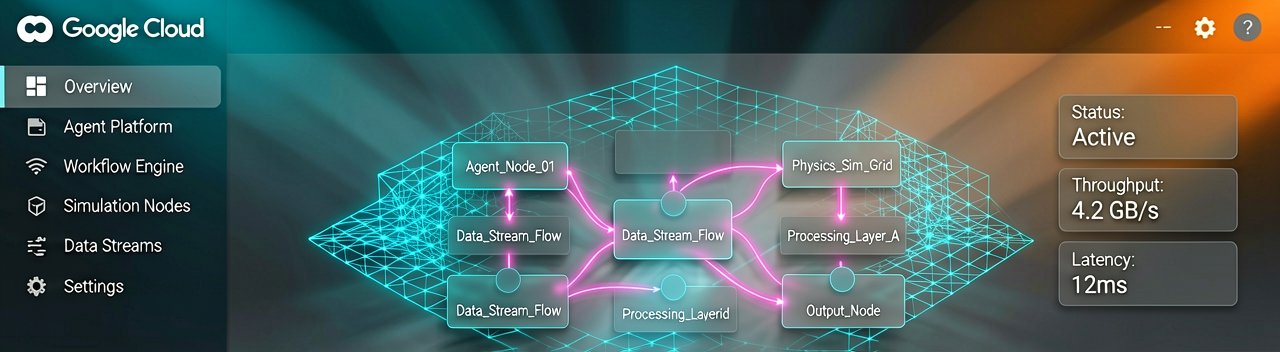
Beyond the flashy visuals, Google is using Gemini Omni to spearhead what they’re calling the "agentic era." This isn't just about making cool clips for YouTube Shorts—though Omni Flash is rolling out there today—it’s about AI that can take action. By integrating with the new Google Cloud agent platform, Omni allows enterprises to build interactive virtual try-ons and automated marketing workflows that actually "understand" the products they're showcasing. We're moving from AI that helps us write to AI that helps us build, and if today's demos are any indication, the barrier to entry for high-fidelity content creation has just been obliterated.
Flash-Forward to Availability
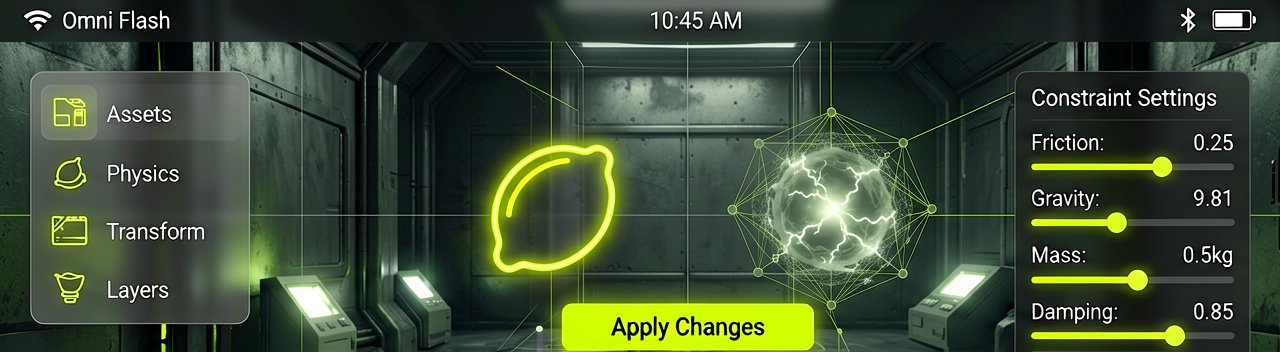
If you’re itching to get your hands on it, the rollout is surprisingly aggressive. Gemini Omni Flash is hitting the Gemini app and YouTube Shorts immediately, replacing the older Veo 3.1 models. For those deep in the Google ecosystem, these capabilities are also being tucked into Workspace via "Google Pics," a tool that lets you move and resize individual objects within an AI-generated scene with eerie precision. It’s clear Google isn't playing defense anymore; they’ve consolidated their fragmented AI experiments into a single, cohesive engine that actually feels ready for prime time.
What Most Reports Miss: The Physics of Sovereignty
Behind the Scenes: While the flashy consumer-facing demos centered on cinematic flair, the real breakthrough within Gemini Omni lies in its latent space architecture. Unlike previous diffusion models that essentially "hallucinated" frame by frame, Omni utilizes a predictive world-state engine. This means the model understands that a glass falling off a table shouldn't just disappear or morph into a puddle; it understands gravity, transparency, and the structural integrity of shards. This shift from visual mimicry to physical simulation is what sets Google’s 2026 stack apart from the frantic, often messy iterations we saw during the early generative gold rush.
Industry insiders suggest this move was a direct response to the bottleneck of "prompt fatigue." In earlier versions, users had to spend hours refining text to get a usable five-second clip. With Omni, Google has introduced a persistent memory layer. If you generate a character in a sci-fi setting, the model remembers the specific weathering on their jacket and the exact hue of the neon lighting across different scenes. This consistency is the holy grail for independent filmmakers and marketing agencies who previously viewed AI video as too erratic for professional branding.
From a stakeholder perspective, the pivot toward "Omni Flash" on YouTube Shorts is a calculated land grab for the creator economy. By lowering the compute cost enough to offer high-fidelity generation on mobile devices, Google is effectively subsidizing the next generation of content. ByteDance and Meta are now forced to play catch-up on the hardware-software integration front. While competitors are still treating AI video as a standalone destination, Google is treating it as a native feature of the camera roll, blurring the line between captured reality and synthetic imagination.
Historical context is also vital here. Looking back at the "Gemini 1.0" era of 2024, the primary criticism was a lack of cohesive identity—too many models with too many names. By consolidating under the "Omni" banner, Sundar Pichai’s team has finally achieved a unified brand language. This isn't just a technical upgrade; it is a corporate restructuring of Google’s public image. They are no longer just a search company with an AI side-hustle; they are positioning themselves as the foundational layer of the "Synthetic Web."
However, the ethical undercurrents remain the elephant in the room. The "World Model" approach requires massive amounts of high-quality training data, much of which comes from the very creators now using these tools. During a closed-door session at I/O, developers hinted at a new licensing framework that would theoretically compensate artists whose styles are heavily weighted in the model’s training. Whether this manifests as a meaningful royalty system or just a digital olive branch remains to be seen as the rollout expands globally.
Ultimately, Gemini Omni represents a shift from "AI as a tool" to "AI as an environment." The ability to manipulate digital space with the same ease we use to edit text suggests a future where the distinction between a video editor and a director is entirely erased. As we move into the latter half of 2026, the success of this platform won't be measured by the number of clips generated, but by how many of those clips can actually pass for human-made cinema in a blind test.
Reading Between the Lines: The High Cost of Seamlessness
The Reality Check: Despite the polished stage presence of Gemini Omni, we have to look closely at the massive compute-to-value ratio Google is currently subsidizing. The marketing suggests a frictionless creative utopia, but the sheer energy requirements to sustain a "predictive world model" in real-time are staggering. There is a palpable contradiction between Google’s ambitious carbon-neutrality pledges and the launch of a model that effectively burns a small forest's worth of energy to render a high-fidelity Shiba Inu in a tuxedo. We are witnessing a classic tech industry "land grab" where the environmental and infrastructural costs are being treated as secondary to achieving total market dominance.
Furthermore, the democratization of high-end video production carries a hidden sting for the professional creative class. Google frames Omni as a collaborative partner for filmmakers, yet the automation of lighting, physics, and continuity—tasks that previously required teams of skilled technicians—inevitably devalues those specific human skill sets. There is a cynical irony in providing "tools for creators" that simultaneously erode the commercial necessity of the creator’s specialized labor. While the ceiling for what a single person can produce is rising, the floor for what an entry-level professional can charge is falling through the basement.
The "agentic era" also introduces a significant transparency paradox. If Gemini Omni is capable of modifying reality with such granular precision, the very concept of video evidence or "source truth" on platforms like YouTube and Search becomes essentially obsolete. Google’s reliance on digital watermarking is a noble effort, but history shows that for every defensive measure, there is an adversarial bypass waiting in the wings. By making synthetic content indistinguishable from reality, Google is effectively breaking the social contract of the visual record and then selling us the subscription service to fix it.
Projecting into 2027, the long-term implication is a "dead internet" scenario where the volume of synthetic content outpaces human-made media by an order of magnitude. If Omni-generated videos are fed back into future versions of Omni as training data, we risk a model collapse—a digital inbreeding that could lead to increasingly derivative and surreal outputs. The skepticism here isn't about whether the tech works—it clearly does—but whether we have considered the terminal velocity of a world where everything is infinitely editable and nothing is definitively real.
It’s a brave new world where your AI can direct a feature-length masterpiece while you’re making a sandwich, though it remains to be seen if anyone will actually want to watch a film that took more effort to download than it did to create.
Artūras Malašauskas is an AI Systems Integrator with 20+ years of production-grade web engineering experience. He has designed, shipped, and scaled enterprise Python/PHP systems for logistics, SaaS, and public-sector clients. For the past year, he has focused exclusively on AI integrations: deploying open-source LLMs, building generative media pipelines (image, audio, video), and engineering multi-agent workflows for real production environments. His standard: reproducibility, security, cost-efficient inference—no vaporware. He documents and evaluates emerging AI tooling, separating verified capabilities from marketing noise. Technical editor at: muza-ai.eu, ai-verslas.lt, ai-naujinos.lt Connect on LinkedIn
Comments