The Node Revolution: Beeble’s Canvas Unlocks a New Era for AI Compositing
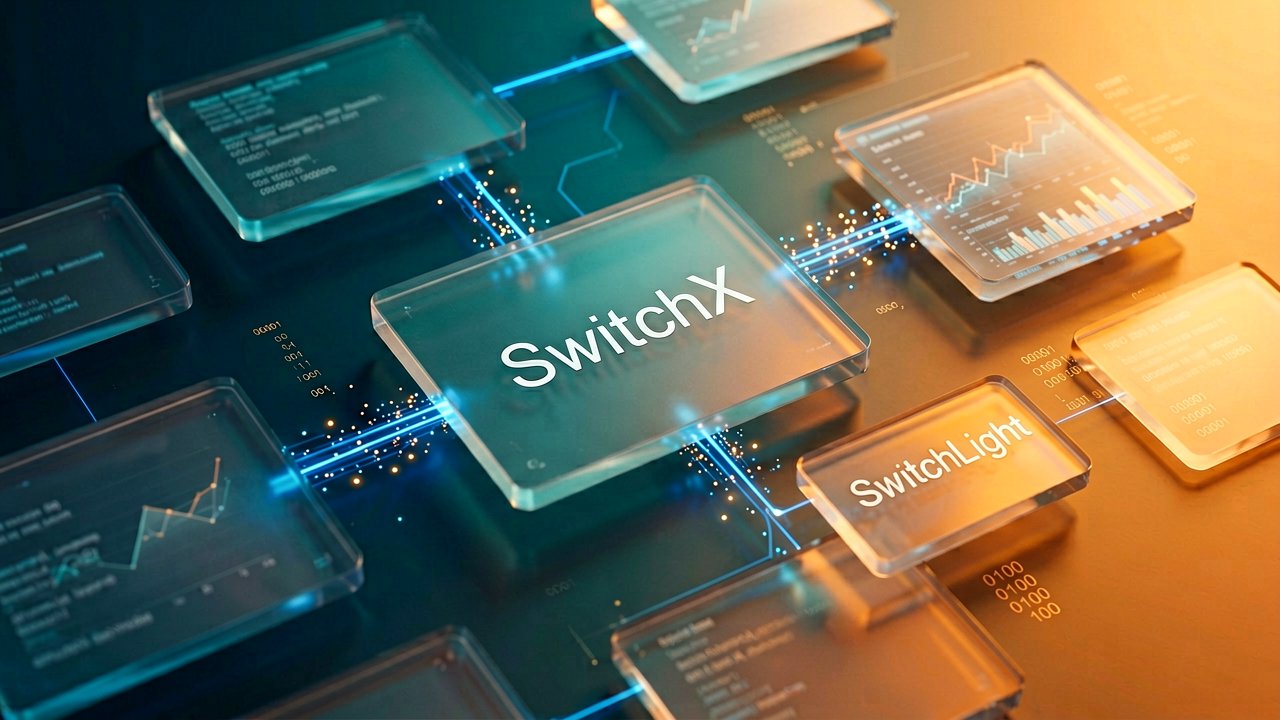
For years, the visual effects community has watched generative AI with a mix of awe and deep-seated frustration. While the "magic" of a one-click prompt is undeniable, professional artists don't need magic; they need control. Beeble AI clearly understands this tension, having just launched Canvas, a node-based compositing environment that finally treats AI models as functional modules rather than black boxes. By allowing creators to wire together various generative tools in a visual graph, Animation World Network reports that the system aims to bridge the gap between traditional VFX precision and modern machine-learning speed.
At its core, Canvas functions as a unified hub for the company's existing heavy hitters, like the SwitchX video-to-video transformer and the SwitchLight relighting engine. Instead of jumping between disconnected browser tabs or apps, users can now drag-and-drop these capabilities as individual nodes on an infinite workspace. This isn't just about convenience; it’s about pipeline logic. You can now branch off a dozen different creative variations from a single raw input, iterate on a specific lighting pass without rerendering the entire subject, and automate the kind of batch workflows that used to eat up an entire studio's weekend. It's a clear signal that Beeble is moving away from the "novelty" phase of AI and into the "infrastructure" phase.
Breaking the Linear Trap
Most current AI video tools are stubbornly linear—you prompt, you wait, you get a result, and if it's wrong, you start over. Canvas breaks this cycle by adopting the node-graph philosophy popularized by industry staples like Nuke and DaVinci Resolve. Every connection in the graph is live, meaning an artist can tweak a matte node at the beginning of the chain and see the downstream impact in real-time. This level of granularity is essential for high-end production where matching the "look" of a plate isn't optional. According to No Film School, the platform is specifically tailored to handle complex VFX, post-production, and virtual production workflows that require this type of surgical iteration.
Scalability and Studio Integration
Beeble isn't just targeting the solo creator on a laptop; they're clearly eyeing the studio market. The release includes API access for SwitchX, allowing larger facilities to bake these AI capabilities directly into their proprietary pipelines. For smaller teams, the browser-based nature of the cloud app remains a major selling point, though power users might still lean toward the local 4K processing power of Beeble Studio for privacy and speed. By centering everything on a node-based "Canvas," Beeble has effectively created a playground where the messy, unpredictable nature of AI can finally be reined in by the disciplined hands of a professional compositor.
What Most Reports Miss: While the tech world is quick to obsess over the "magic" of generative pixels, the real story here is the industrialization of the AI creative workflow. For decades, the node-graph has been the universal language of the technical artist, providing a non-destructive safety net that allows for infinite "what-ifs" without ever overwriting the original source. By wrapping AI models in this familiar architecture, Beeble is performing a clever piece of psychological engineering: they are making the radical uncertainty of neural networks feel like a controllable, predictable tool for the first time in a professional setting.
The historical context of this shift cannot be overstated. We are witnessing the "Nuke moment" for generative AI. Just as the industry moved away from the rigid, layer-based timelines of early software toward the flexible logic of nodes, Beeble is signaling that AI is ready for the rigors of a commercial pipeline. This isn't just about making cool videos; it’s about the "unbundling" of the prompt. Instead of asking a model to do everything at once—which often results in a visual mess—artists can now use a node for the geometry, a node for the lighting, and a node for the texture, keeping the AI on a much tighter leash.
From a stakeholder perspective, this release addresses the primary anxiety of studio leads: the lack of a "paper trail." In a typical AI generator, the process is a black box. If a director likes a shot but wants the lighting adjusted five percent to the left, the artist is often forced to roll the dice on a new seed. Canvas changes that math. By exposing the parameters of SwitchLight and SwitchX as distinct inputs, a lead compositor can audit the workflow, troubleshoot flickering, and ensure that the AI’s output actually adheres to the physical laws of the scene being built.
There is also a significant economic undertone to this launch. By offering API access alongside the visual interface, Beeble is positioning itself as an foundational layer rather than just another specialized app. They are betting that the future of VFX isn't a single "AI Studio" software, but rather a modular ecosystem where different models talk to each other. This interoperability is what will likely attract mid-sized production houses that need to scale their output without quintupling their render farm costs or their headcount.
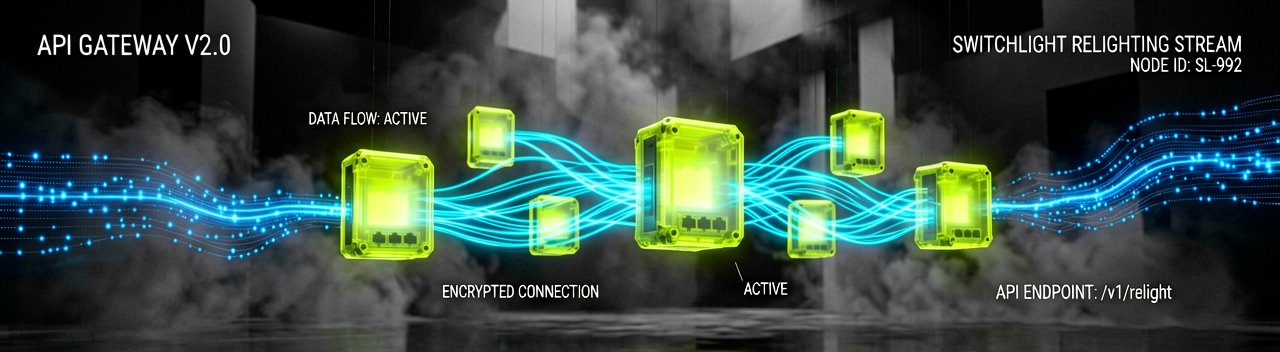
Finally, we have to consider the hardware-agnostic nature of this deployment. By leaning into a cloud-based canvas, Beeble is effectively democratizing high-end relighting and video transformation. It removes the barrier of needing a massive local GPU rig to experiment with state-of-the-art diffusion models. However, the true test will be how the system handles the "temporal consistency" problem that still plagues AI video. If Beeble’s nodes can reliably lock pixels across frames in a way that satisfies a picky colorist, they won't just have a trendy tool; they’ll have the new industry standard.
The Convergence of Traditional Logic and Neural Speed
The bridge Beeble is building rests on the idea that the "AI artist" of the future looks a lot like the technical director of today. The interface encourages a mindset of construction rather than just consumption. Instead of fighting against the model’s whims, the node-based system allows for the integration of traditional masks and mattes into the AI workflow. This hybrid approach ensures that the human artist remains the ultimate arbiter of the frame, using the AI to handle the grunt work of rotoscoping or complex relighting while maintaining the creative vision that a prompt alone can never fully capture.
Reading Between the Lines: The industry’s rush to embrace node-based AI assumes that "more control" automatically equates to "more utility," but this logic overlooks a glaring contradiction in the current tech stack. While Beeble’s Canvas provides a sophisticated dashboard for managing generative outputs, it still rests on top of underlying models that are fundamentally stochastic. We are effectively building a high-precision steering wheel for an engine that occasionally decides to drive through a wall. Providing a compositor with a node-graph doesn’t inherently solve the "hallucination" problem; it simply gives them a more organized way to watch it happen.
There is also the matter of the "latency tax" that often accompanies these cloud-based modular systems. In a traditional Nuke script, the math is local and predictable. When you move that logic to a browser-based canvas reliant on remote GPUs and API calls, the friction of "near real-time" becomes a significant hurdle for high-pressure deadlines. If the connection drops or the server farm throttles, the artist’s "infinite workspace" becomes an expensive digital paperweight. Beeble is betting that the efficiency of their specific models, like SwitchX, can offset this architectural lag, but seasoned editors remain skeptical until they see it survive a 48-hour delivery crunch.
Furthermore, the democratization narrative here is a double-edged sword. By making complex compositing more accessible, Beeble risks contributing to the commoditization of the craft. If any junior artist can wire together a relighting node and a transformation node to achieve a "pro" look in minutes, the market value of that specific skill set inevitably dips. The tension lies in whether Canvas serves as a tool to empower the veteran artist or as a shortcut to bypass them. It projects a future where the distinction between "filmed" and "generated" content is not just blurred, but entirely irrelevant to the bottom line of the studio.
Looking forward, the long-term viability of Canvas will depend on its ability to remain "model agnostic" in a rapidly shifting landscape. If a superior open-source model launches tomorrow, a proprietary node system can quickly feel like a gilded cage. For Beeble to truly dominate, they must ensure their canvas isn't just a wrapper for their own internal tools but a true open standard that can ingest the best of the research community. Without that flexibility, they are simply building a very pretty, very expensive walled garden in a world that is increasingly tearing down fences.
The Skeptic’s Guide to the AI Pipeline
We must also question the environmental and logistical cost of moving the entire VFX pipeline to the cloud. While Beeble Studio offers local processing for the elite, the vast majority of the "Canvas" user base will be burning carbon in remote data centers to perform tasks that, five years ago, were handled by local silicon. This shift creates a new kind of dependency on the platform provider that goes beyond a standard software subscription. It’s a move toward "VFX-as-a-Service," where the artist owns the logic of the graph, but the company effectively owns the means of execution.
It’s a truly remarkable achievement: we’ve finally reached the point where an artist can spend six hours meticulously wiring together thirty-two complex nodes just to save themselves thirty minutes of manual rotoscoping.
Artūras Malašauskas is an AI Systems Integrator with 20+ years of production-grade web engineering experience. He has designed, shipped, and scaled enterprise Python/PHP systems for logistics, SaaS, and public-sector clients. For the past year, he has focused exclusively on AI integrations: deploying open-source LLMs, building generative media pipelines (image, audio, video), and engineering multi-agent workflows for real production environments. His standard: reproducibility, security, cost-efficient inference—no vaporware. He documents and evaluates emerging AI tooling, separating verified capabilities from marketing noise. Technical editor at: muza-ai.eu, ai-verslas.lt, ai-naujinos.lt Connect on LinkedIn
Comments