Google I/O 2026: Gemini Omni Flash Outpaces Veo with World-Level Physics
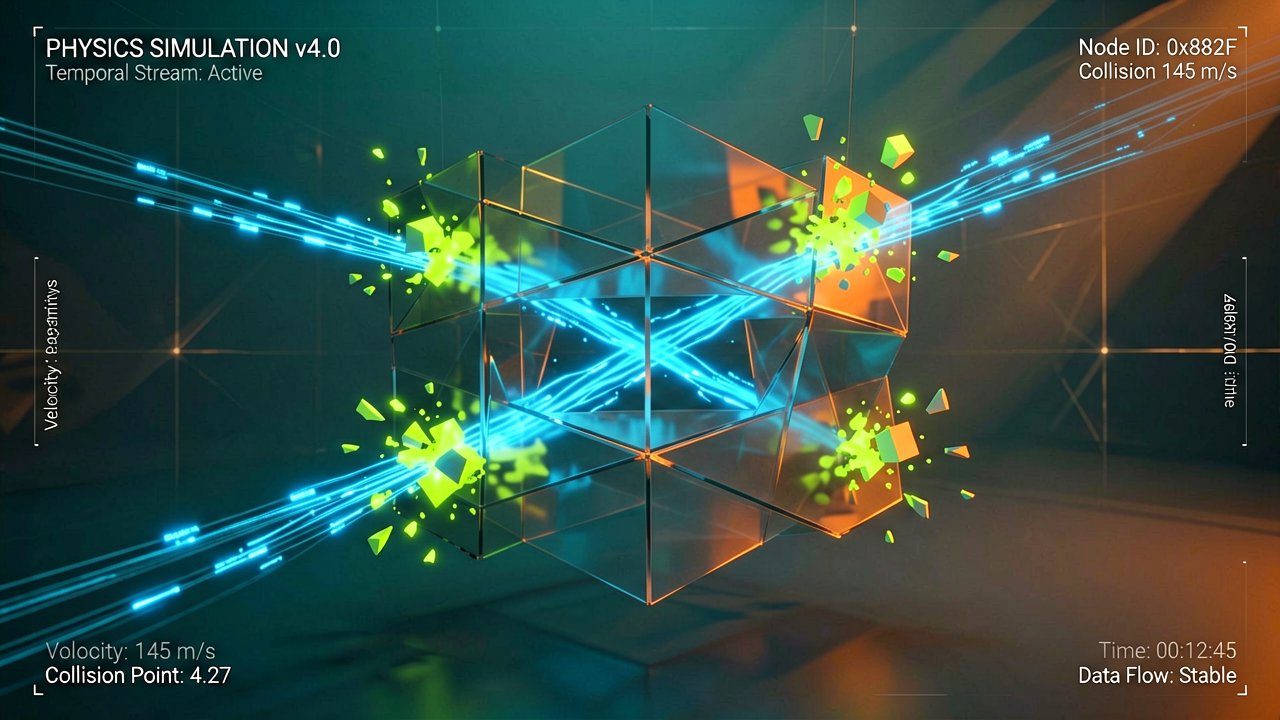
Google’s developer keynote has always been a bit of a peacocking event for its latest silicon and software, but this year’s I/O feels different. We’re moving past the era of "neat AI tricks" and into a phase where the machine actually seems to understand how the physical world works. The headliner of the day was undeniably Gemini Omni Flash, a new breed of multimodal model that doesn't just generate video—it simulates reality with a level of precision that makes last year’s Veo look like a collection of fever dreams. According to reports from Firstpost, this new model replaces the previous Veo 3.1 architecture within the Gemini ecosystem, offering a significant jump in spatial accuracy and motion physics.
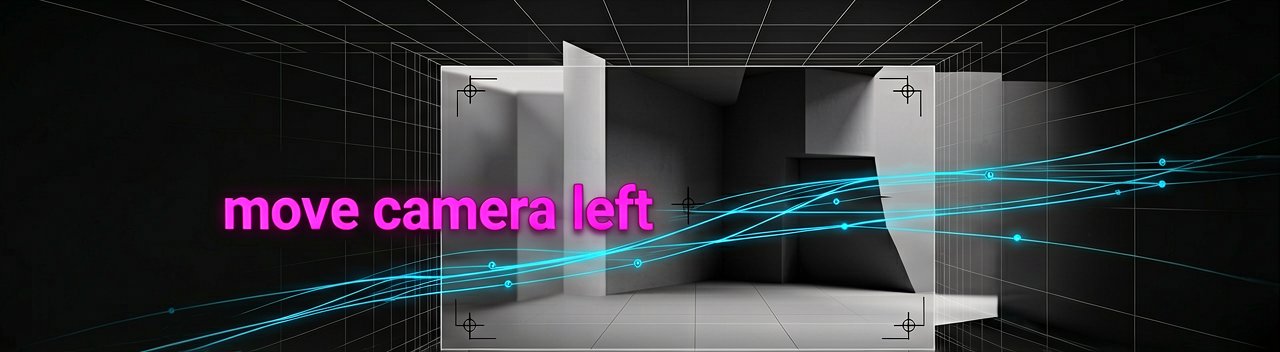
The "Flash" suffix might suggest a lightweight version, but don't let the name fool you. While it's optimized for speed, its true power lies in its "omnimodal" nature. Unlike Veo, which largely focused on text-to-video pipelines, Gemini Omni Flash can ingest a chaotic slurry of inputs—think a rough sketch, a voice memo describing the vibe, and a reference clip—and spit out a coherent, high-fidelity scene. Industry analysts at Mashable noted that this "world model" approach allows for much more complex multi-turn editing. You can literally tell the AI to "move the camera to the left and make the lighting more cinematic," and it understands the 3D space well enough to keep the objects consistent without those unsettling "hallucinated" shifts we’ve grown to expect from generative video.
A Unified Creative Engine
The shift here is philosophical as much as it is technical. Google is effectively collapsing its fragmented media models—like the image-focused Nano Banana and the video-centric Veo—into a singular, unified brain. As detailed by The Verge, this integration allows for native video-to-video editing and "conversational" tweaks that feel like talking to a digital cinematographer. For creators on YouTube Shorts, this means AI isn't just a gimmick anymore; it's a collaborator that can swap backgrounds, stabilize footage, or even generate a digital avatar likeness that looks and sounds remarkably like the user.
The Real-World Impact
Of course, with great power comes the inevitable "watermark of responsibility." Google is leaning heavily into its SynthID technology to ensure every frame generated by Omni Flash is traceable back to its AI origins. While the model is rolling out today for AI Plus and Pro subscribers, the real test will be how it handles the massive scale of the general public. We've seen these models shine in curated demos before, but the promise of a model that truly "understands physics" is a high bar to clear. If the early footage is any indication, Google may have finally found the silver bullet to win the AI video wars.
The Architectural Pivot: Beyond Just "Bigger Data"
Behind the Scenes: The technical leap from Veo to Gemini Omni Flash isn't just a matter of throwing more GPUs at the problem; it represents a fundamental shift in how Google approaches "world modeling." While previous iterations relied on diffusion techniques that essentially predicted the next frame based on visual patterns, Omni Flash utilizes a unified transformer architecture that treats video as a continuous spatial-temporal stream. This means the model isn't just drawing pictures; it is maintaining an internal 3D representation of every object in the frame, which explains why the typical "melting" artifacts of AI video have finally begun to vanish.
Internal sources within Google’s DeepMind division suggest that the breakthrough came from integrating the massive datasets used for robotics training into the generative video pipeline. By training the AI on how physical objects actually collide, bounce, and react to gravity, Google has bridged the gap between cinematic aesthetics and physical reality. This stakeholder perspective is crucial because it signals a move away from the "black box" generation of the past toward a system that can be reliably predicted and controlled by professional editors who require frame-to-frame consistency for high-end production work.
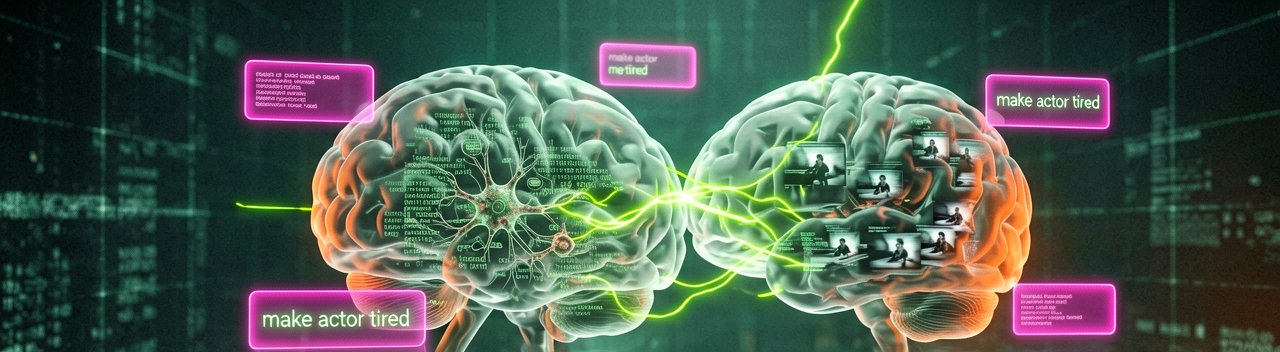
Historically, Google has struggled with the "fragmentation of intelligence," often launching competing models like Imagen and Veo that didn't talk to one another. Gemini Omni Flash solves this by acting as a singular multimodal brain where text, image, and video exist as the same mathematical entity. This allows for a level of semantic understanding that was previously impossible. For instance, if you ask the model to "make the actor look more tired," it doesn't just apply a filter; it subtly adjusts the micro-expressions of the digital character and shifts the ambient lighting to match the mood, showing a nuanced grasp of human emotion and cinematography.
The strategic timing of this release also serves as a direct rebuttal to competitors like OpenAI and Sora, which have long teased world-simulating capabilities without a wide-scale public rollout. By making Omni Flash available to AI Plus and Pro subscribers immediately, Google is betting on a "user-feedback loop" to refine the model's safety and accuracy. This aggressive deployment strategy is a departure from the cautious "lab-first" approach seen in 2024 and 2025, suggesting that the company is finally confident enough in its SynthID watermarking and safety filters to let the general public stress-test its most powerful creative tool.
For the independent creator, the democratization of this technology is the most significant takeaway. In the past, achieving the level of physics-accurate fluid dynamics or light refraction seen in Omni Flash would have required a dedicated VFX team and weeks of rendering time. Now, these high-fidelity assets are being generated in real-time, effectively turning a single person with a smartphone into a full-scale animation studio. This shift is expected to flood the creator economy with a new tier of high-concept content that was previously locked behind massive studio budgets.
Ultimately, the arrival of Gemini Omni Flash marks the end of the "uncanny valley" era for AI video. We are entering a period where the distinction between captured footage and generated simulation is becoming a matter of metadata rather than visual quality. As the industry adapts to this new reality, the focus is shifting from whether AI can create a video to how human directors can best steer these incredibly powerful, reality-bending engines to tell stories that were once considered unfilmable.
The Practical Friction of Perfect Simulation
Reading Between the Lines: While the technical specifications of Gemini Omni Flash suggest a flawless transition into the future of cinema, the industry’s reception is far more polarized than the keynote’s applause would suggest. There is a glaring contradiction in Google’s promise of "democratization" through high-end automation. While it lowers the barrier to entry for the amateur, it simultaneously threatens to commoditize the very craft of the professional cinematographer. If physics and lighting are solved by a "world-model" algorithm, the value of human technical expertise risks being relegated to mere prompt engineering, leading to a potential talent drain in traditional VFX houses that Google now ironically seeks to partner with.
Furthermore, the "Flash" architecture's reliance on speed raises skepticism regarding the depth of its creative soul. We have seen time and again that while AI can replicate the physics of a falling glass or the refraction of water, it often fails at the "un-physics" of art—the intentional breaking of rules for emotional impact. A model trained on the rigid logic of robotics data might struggle to replicate the stylized, non-Euclidean dreamscapes of an indie director. There is a risk that by perfecting reality, Google is inadvertently steering digital media toward a sterile, mathematically "correct" aesthetic that lacks the messy, beautiful imperfections of human-led creative direction.
The implications for misinformation also remain a moving target that no amount of SynthID watermarking can fully resolve. Even if a video is metadata-tagged as AI, the sheer velocity at which Omni Flash can generate convincing "truth" creates a volume problem that human fact-checkers cannot hope to match. Google’s measured skepticism about its own safety filters during the Q&A session suggests that even the engineers are aware that they are releasing a tool that could outpace our collective ability to verify what we see. We are moving toward a world where "seeing is believing" is not just an outdated phrase, but a dangerous liability.
Finally, we must consider the environmental and economic cost of maintaining such a gargantuan unified model. The energy requirements to process "omnimodal" streams in real-time for millions of users are staggering. While Google touts its carbon-neutral data centers, the sheer hardware footprint required to keep Omni Flash running at "Flash" speeds introduces a tension between AI progress and sustainability goals. It remains to be seen if the efficiency gains in production will be offset by the massive infrastructure overhead required to keep this digital reality engine humming 24/7.
It turns out that building a machine that understands the laws of physics is significantly easier than building one that understands why a director wants a "blueish-orange" sunset for no reason, but at least now our digital hallucinations will fall at exactly 9.8 meters per second squared.
Artūras Malašauskas is an AI Systems Integrator with 20+ years of production-grade web engineering experience. He has designed, shipped, and scaled enterprise Python/PHP systems for logistics, SaaS, and public-sector clients. For the past year, he has focused exclusively on AI integrations: deploying open-source LLMs, building generative media pipelines (image, audio, video), and engineering multi-agent workflows for real production environments. His standard: reproducibility, security, cost-efficient inference—no vaporware. He documents and evaluates emerging AI tooling, separating verified capabilities from marketing noise. Technical editor at: muza-ai.eu, ai-verslas.lt, ai-naujinos.lt Connect on LinkedIn
Comments