Cinematic AI: Lightricks Unveils LTX SDR-to-HDR LoRA
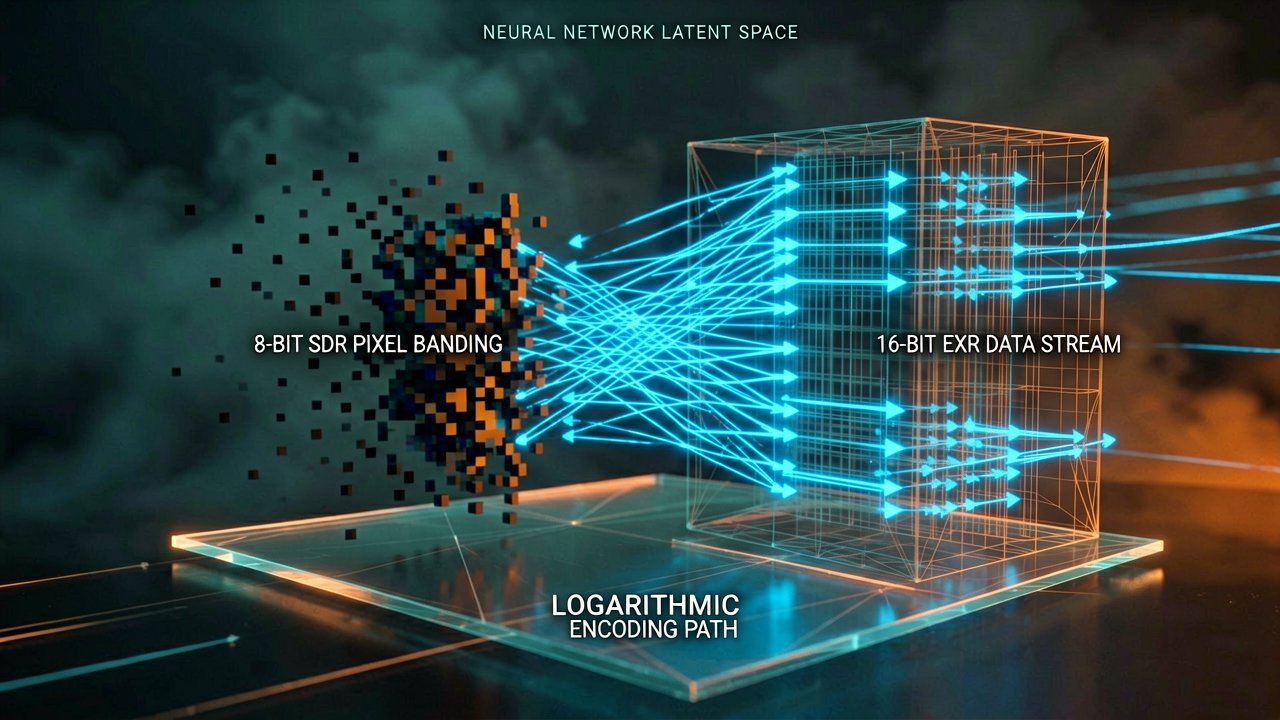
For years, the "AI video" aesthetic has been synonymous with a certain plasticky sheen—vibrant, sure, but technically shallow. While resolution has climbed to 4K, the actual color data has remained stubbornly trapped in 8-bit SDR. That’s fine for a quick Instagram reel, but for anyone working in a professional color suite, those files are a nightmare. The moment you push a shadow or try to pull back a highlight, the image shatters into a mess of banding and noise. Lightricks is looking to kill that limitation for good with their new LTX-2.3 HDR IC-LoRA, a specialized adapter designed to turn standard dynamic range footage into production-ready 16-bit HDR.
This isn’t just a simple brightness boost or a filter that "looks" like HDR; it’s a fundamental reconstruction of pixel data. By using what researchers call Latent Alignment with Logarithmic Encoding, the model maps HDR signals into a space the AI already understands. The result is a workflow that outputs scene-linear EXR files—the industry standard for high-end VFX and color grading. It means AI-generated clips can finally sit alongside footage from an ARRI or RED camera without looking like a second-class citizen in the timeline. According to LTX, the tech is already being stress-tested by studios like Magnopus and Gear Productions for real-world broadcast and virtual production workloads.
The Tech Behind the Tones
The magic here lies in the "In-Context LoRA" (IC-LoRA) architecture. Unlike traditional fine-tuning that might break a model’s core logic, this adapter is lean—affecting less than 1% of the model’s parameters. It leverages the "visual priors" the model already has about how light and shadow behave in the real world. When you feed it a clipped, overexposed SDR video, the AI doesn't just guess; it reconstructs the missing highlight detail based on context. It’s a bridge between the generative world and the rigid requirements of professional post-production pipelines like DaVinci Resolve and Nuke.
Beyond the Hype: What Most Reports Miss
The Latent Alignment Gamble: What’s truly wild about this release is that Lightricks didn't need a massive, multimillion-dollar dataset of HDR footage to make this work. Instead, they took a shortcut through LogC3 encoding. By remapping HDR data into a distribution that mimics what the model already learned during its initial 8-bit training, they essentially "tricked" the AI into speaking HDR. It’s a brilliant bit of engineering that allowed them to train the model with just a few hundred clips in a single day. For the tech-savvy crowd, this proves that the bottleneck for cinematic AI isn't always data volume—it's how you align that data with the model's existing internal "logic."
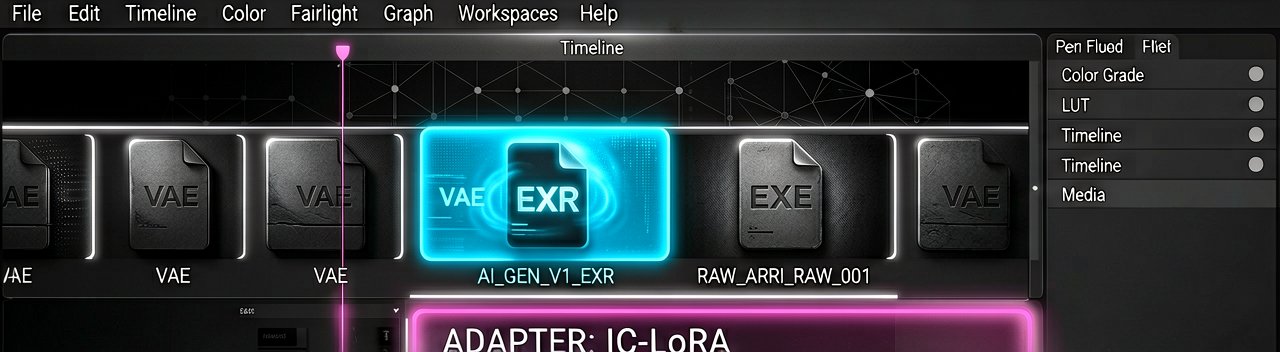
But it's not all smooth sailing in the beta. Early adopters on and GitHub have noted that while the highlight recovery is genuinely impressive, the tiled VAE decoding can sometimes introduce a subtle "strobing" effect every eight frames. It’s the kind of technical quirk that reveals how experimental this still is. Colorists are finding that they have to bypass standard preview renders and dive straight into the raw EXR frames to avoid these artifacts. It’s a "some assembly required" situation that keeps the tool firmly in the hands of power users for now.
The broader strategy for Lightricks is clear: they’re moving away from being a "cool app company" and toward being a core infrastructure provider. By open-sourcing the weights for LTX-2.3 on platforms like Hugging Face, they are courting the VFX industry. They know that if they can make AI footage gradeable, it becomes a viable tool for actual filmmakers rather than just a curiosity for social media. This HDR LoRA is the olive branch to the professional community, offering a way to integrate generative assets into high-stakes environments like LED volumes and broadcast commercials.
Historically, AI tools have been "black boxes"—you put in a prompt and hope for the best. Lightricks is trying to hand the knobs and dials back to the creators. By providing scene-linear output, they’re acknowledging that AI is just one step in a much longer creative chain. If you can’t control the exposure or the white balance of an AI clip in post, it’s useless for a professional. This update isn't about making the AI "smarter" at generating cats in space; it’s about making it "disciplined" enough to work in a real studio.
Looking ahead, the success of this HDR push will depend on how quickly the community can iron out the "beta" kinks. The shift to 16-bit half-float EXR is a massive leap in file size and compute requirements, which might alienate some casual users. However, for the professional who needs their AI-generated background to match the 14 stops of dynamic range on their lead actor’s face, those extra gigabytes are a small price to pay. It’s a pivot from "generative art" to "computational cinematography."
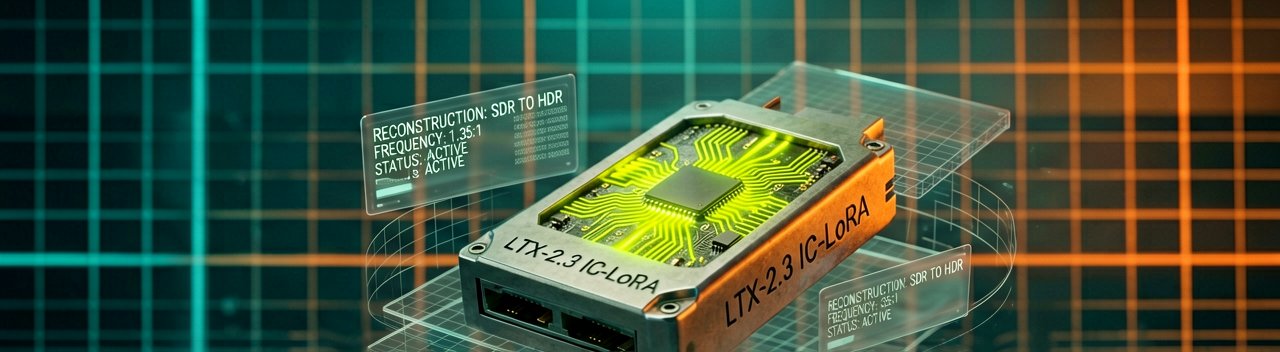
For years, the "AI video" aesthetic has been synonymous with a certain plasticky sheen—vibrant, sure, but technically shallow. While resolution has climbed to 4K, the actual color data has remained stubbornly trapped in 8-bit SDR. That’s fine for a quick Instagram reel, but for anyone working in a professional color suite, those files are a nightmare. The moment you push a shadow or try to pull back a highlight, the image shatters into a mess of banding and noise. Lightricks is looking to kill that limitation for good with their new LTX-2.3 HDR IC-LoRA, a specialized adapter designed to turn standard dynamic range footage into production-ready 16-bit HDR.
This isn’t just a simple brightness boost or a filter that "looks" like HDR; it’s a fundamental reconstruction of pixel data. By using what researchers call Latent Alignment with Logarithmic Encoding, the model maps HDR signals into a space the AI already understands. The result is a workflow that outputs scene-linear EXR files—the industry standard for high-end VFX and color grading. It means AI-generated clips can finally sit alongside footage from an ARRI or RED camera without looking like a second-class citizen in the timeline. According to LTX, the tech is already being stress-tested by studios like Magnopus and Gear Productions for real-world broadcast and virtual production workloads.
The Tech Behind the Tones
The magic here lies in the "In-Context LoRA" (IC-LoRA) architecture. Unlike traditional fine-tuning that might break a model’s core logic, this adapter is lean—affecting less than 1% of the model’s parameters. It leverages the "visual priors" the model already has about how light and shadow behave in the real world. When you feed it a clipped, overexposed SDR video, the AI doesn't just guess; it reconstructs the missing highlight detail based on context. It’s a bridge between the generative world and the rigid requirements of professional post-production pipelines like DaVinci Resolve and Nuke.
Behind the Scenes: The Invisible Engineering
What Most Reports Miss: The Latent Alignment gamble is the real story here. Lightricks didn't need a massive, multimillion-dollar dataset of HDR footage to make this work. Instead, they took a shortcut through LogC3 encoding. By remapping HDR data into a distribution that mimics what the model already learned during its initial 8-bit training, they essentially "tricked" the AI into speaking HDR. It’s a brilliant bit of engineering that allowed them to train the model with just a few hundred clips in a single day. For the tech-savvy crowd, this proves that the bottleneck for cinematic AI isn't always data volume—it's how you align that data with the model's existing internal "logic."
But it's not all smooth sailing in the beta. Early adopters on and GitHub have noted that while the highlight recovery is genuinely impressive, the tiled VAE decoding can sometimes introduce a subtle "strobing" effect every eight frames. It’s the kind of technical quirk that reveals how experimental this still is. Colorists are finding that they have to bypass standard preview renders and dive straight into the raw EXR frames to avoid these artifacts. It’s a "some assembly required" situation that keeps the tool firmly in the hands of power users for now.
The broader strategy for Lightricks is clear: they’re moving away from being a "cool app company" and toward being a core infrastructure provider. By open-sourcing the weights for LTX-2.3 on platforms like Hugging Face, they are courting the VFX industry. They know that if they can make AI footage gradeable, it becomes a viable tool for actual filmmakers rather than just a curiosity for social media. This HDR LoRA is the olive branch to the professional community, offering a way to integrate generative assets into high-stakes environments like LED volumes and broadcast commercials.
Reading Between the Lines: The Reality of the Render
Reading Between the Lines: There is a seductive fiction at play when we talk about "reconstructing" missing data. While the LTX HDR LoRA is technically brilliant, it highlights a fundamental contradiction in the "AI for Hollywood" narrative. We are asking an algorithm to invent information that was never there—to hallucinate the specific luminance of a sun-drenched cloud that an 8-bit sensor clipped into a flat white blob. While this might pass the eye test on a calibrated monitor, it remains a mathematical guess rather than a captured reality. For a DP who spent twelve hours lighting a scene to preserve a specific stop of dynamic range, replacing that intent with a "best guess" from a LoRA might feel less like progress and more like a surrender to algorithmic average.
Furthermore, the move to 16-bit EXR output creates a massive infrastructure friction point that many ignore. Generating these files isn't just about "better pixels"; it’s about a gargantuan increase in computational overhead. The average hobbyist running a mid-tier GPU is going to find their VRAM choking on the increased latent space required for these transforms. There is a risk that by chasing the "cinematic" tag, Lightricks is moving the goalposts into a territory where only high-end render farms can play, effectively gatekeeping the very democratized creativity they originally championed with their earlier apps.
We should also be skeptical of the "production-ready" label. In a traditional VFX pipeline, every pixel has a lineage and a reason for being there. When an AI generates a scene-linear file, that lineage is a black box. If a director asks for a specific adjustment to the specular highlights on a generated car, a colorist can push the EXR, but they can’t "fix" the AI’s fundamental misunderstanding of the light source if the LoRA guessed wrong. The industry is currently enamored with the novelty of high dynamic range AI, but the novelty will wear thin the first time an unfixable artifact forces a five-figure reshoot.
"We’ve finally reached the era where AI can produce 16-bit files that look good enough to convince a producer, but just weird enough to give a veteran colorist a twitchy eyelid and a sudden urge to update their LinkedIn profile."
Artūras Malašauskas is an AI Systems Integrator with 20+ years of production-grade web engineering experience. He has designed, shipped, and scaled enterprise Python/PHP systems for logistics, SaaS, and public-sector clients. For the past year, he has focused exclusively on AI integrations: deploying open-source LLMs, building generative media pipelines (image, audio, video), and engineering multi-agent workflows for real production environments. His standard: reproducibility, security, cost-efficient inference—no vaporware. He documents and evaluates emerging AI tooling, separating verified capabilities from marketing noise. Technical editor at: muza-ai.eu, ai-verslas.lt, ai-naujinos.lt Connect on LinkedIn
Comments