Google’s Gemini Omni is the ‘Any-to-Any’ Breakthrough Enterprises Have Been Waiting For

Google just dropped a bombshell at I/O 2026 with the debut of Gemini Omni, a brand-new model family designed to "create anything from any input." While we’ve spent the last few years stitching together disparate AI tools for text, images, and video, Omni marks a pivot toward a unified "world model" architecture. This isn't just another incremental update; it’s a fundamental shift that collapses the messy, multi-vendor workflows many enterprises have been struggling to manage.
The star of the show is Gemini Omni Flash, the first model in this lineage to hit the market. It effectively replaces the standalone Veo line, moving Google’s high-fidelity video generation directly into the core Gemini ecosystem. According to early reports from VentureBeat, the real value for businesses lies in "collapsing procurement and observability" into a single Vertex AI-backed model. Instead of juggling separate contracts for lip-sync, text-to-video, and image editing, teams can now handle the entire creative pipeline through one native interface.
The End of the "Stitched" Workflow
In the past, building a high-quality video ad meant jumping between models: one for the script, another for the voiceover, and a third for the visual generation. Gemini Omni changes the economics of this process by treating all media types as unified "creative context." This native multimodality means the model doesn't just generate a video; it reasons across text, audio, and images simultaneously to ensure the physics and characters remain consistent across every frame. As noted by The Verge, Omni Flash allows users to insert their own likeness into videos or perform complex conversational editing—think of it as the video equivalent of the conversational image editing we saw with Nano Banana last year.
Enterprise Availability and Agentic Integration
For the C-suite, the most critical detail is how this fits into existing infrastructure. Gemini Omni Flash is rolling out via the Google Cloud Blog and the Agent Platform API, specifically targeting developers and enterprise customers. This isn't just about making pretty videos for YouTube Shorts; it's about building "agentic" workflows. With the new Gemini Spark and Antigravity tools, businesses can deploy autonomous AI agents that use Omni’s world-understanding to handle everything from interactive virtual try-ons in e-commerce to complex post-production tasks that used to take human teams weeks to refine.
Cost and Implementation Realities
While the tech is flashy, the billing is becoming more standardized. Gemini Enterprise pricing typically sits around $30 per user per month for large organizations, providing the governance and "Model Armor" protection that IT departments demand. For developers looking to build custom tools on top of Omni, Google’s Developer API has shifted toward a token-based pricing model, including specific tiers for "thinking tokens" and grounding with Google Search. It’s a clear signal that Google wants Omni to be the operating layer for the next decade of enterprise AI, moving us away from "chatbots" and toward truly multimodal personal assistants.
Should your business pivot to Gemini Omni? If you’re currently paying for four different AI subscriptions to produce one piece of content, the consolidation alone makes it a compelling argument.
The Architectural Shift: Moving Beyond the "Wrapper" Era
The Strategic Pivot: What most surface-level reports miss is that Gemini Omni represents the final death knell for the "wrapper" phase of enterprise AI. For the last two years, businesses have been forced to act as systems integrators, duct-taping text-based LLMs to separate image generators and audio processors. This created a massive "latency tax" and fragmented data governance. By moving to a native any-to-any architecture, Google is essentially offering a unified nervous system where the model doesn't translate between modalities—it understands them as a singular stream of information. This reduces the error rate in complex tasks, such as ensuring a brand logo in a generated video remains geometrically consistent with the lighting in the scene.
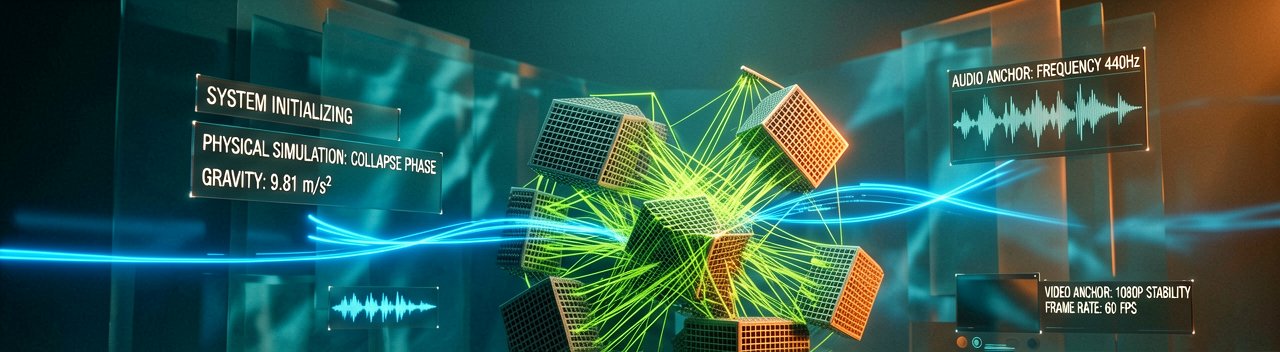
From a stakeholder perspective, the internal shift at Google Research suggests a move toward "World Models." Unlike previous iterations that were trained primarily on tokens of text, Omni has been fed massive datasets of video and physics-based simulations. This allows the model to predict how objects should move and interact in a three-dimensional space. For an enterprise in the manufacturing or logistics sector, this means the AI can potentially "simulate" warehouse workflows or retail floor plans with a level of spatial awareness that text-heavy models like GPT-4 simply cannot match. It’s no longer just about generating content; it’s about modeling reality.
Historical context is also at play here. Google’s decision to fold the Veo video line into Gemini Omni mirrors their 2023 move to merge the Brain and DeepMind units. The goal is total synchronization. Early adopters in the creative industry, particularly those using VentureBeat's documented insights, are finding that this consolidation solves the "style drift" problem. When the script and the visual output are generated by the same weights and measures, the creative output feels intentional rather than a lucky hallucination. This reliability is what will finally move AI from the "experimental" budget to the "core operations" budget.
The role of "Gemini Spark" and the "Antigravity" toolkit cannot be overstated for IT leads. These aren't just fancy marketing names; they represent the API layer that handles "Agentic Reasoning." Instead of a user giving a prompt and getting a static file, these tools allow the Omni model to iterate. For example, a marketing manager could give a vague directive like "Adjust the lighting in the third act to feel more like a sunset," and the model understands the temporal and atmospheric context of that request. This move toward interactive, conversational media editing is the primary differentiator Google is betting on to stave off competition from specialized startups.
Finally, we have to look at the "Observability" factor. Large-scale enterprises are terrified of the "black box" nature of AI. Google is addressing this by embedding its "Model Armor" and grounding capabilities directly into the Omni pipeline. According to the Google Cloud Blog, every frame of video and every snippet of audio generated by Omni contains invisible watermarking and metadata that traces back to the source model. This level of provenance is a requirement for legal departments in the Fortune 500, providing a safety net that smaller, more agile competitors often overlook in favor of speed.
Reading Between the Lines: The Friction of Total Integration
The Reality Check: While Google’s "any-to-any" narrative paints a picture of a frictionless creative utopia, the technical reality for enterprises is often far messier. There is a glaring contradiction in the promise of consolidation: the more a company relies on a single "world model" like Gemini Omni, the deeper the vendor lock-in becomes. For an organization to fully utilize the "Agentic Reasoning" of Omni, they must feed their proprietary data, brand guidelines, and creative history into Google’s specific ecosystem. This creates a high-stakes dependency where switching costs become astronomical, effectively handing Google the keys to the entire creative and operational stack of a business.
Furthermore, we must address the "Grounding Gap." Google claims that Gemini Omni reduces hallucinations through its Search-grounding and Model Armor, yet the leap from text-based fact-checking to "physical" fact-checking in video and 3D space is unproven at scale. A model might know that the sky is blue, but can it consistently simulate the complex aerodynamics required for an industrial training video without creating "uncanny valley" physics? Measured skepticism is required here; there is a significant risk that enterprises will trade the human-led precision of specialized tools for the "good enough" speed of a generalist model, potentially diluting brand quality in the long run.
The economic implications also deserve a cold, hard look. While VentureBeat highlights the collapse of procurement costs, it overlooks the hidden "compute tax." Generating high-fidelity video and reasoning across multiple modalities simultaneously is an energy-intensive process that will inevitably lead to complex, tiered pricing structures that may baffle even the most seasoned CTO. If history is any indication, the initial "standardized" pricing will eventually sprout surcharges for high-priority rendering or expanded context windows, making the "consolidation" play a potential Trojan horse for rising infrastructure costs.
Finally, there is the human element. Google’s push toward "agentic" workflows—where AI handles post-production and creative iteration—assumes that creative professionals want to become prompt engineers and "feedback loops" for a machine. There is a psychological friction in moving from a creator to a curator. If Gemini Omni becomes the primary tool for enterprise content, we may see a homogenization of corporate aesthetics, where every marketing campaign and internal training module bears the unmistakable, slightly-too-perfect sheen of the same underlying weights and biases. The competitive advantage of "AI-speed" quickly evaporates when every competitor is using the exact same "any-to-any" engine to produce their reality.
"We’ve spent decades teaching humans how to use computers, only to reach a point where we’re paying Google $30 a month to teach computers how to ignore the humans and just finish the PowerPoint on their own."
Artūras Malašauskas is an AI Systems Integrator with 20+ years of production-grade web engineering experience. He has designed, shipped, and scaled enterprise Python/PHP systems for logistics, SaaS, and public-sector clients. For the past year, he has focused exclusively on AI integrations: deploying open-source LLMs, building generative media pipelines (image, audio, video), and engineering multi-agent workflows for real production environments. His standard: reproducibility, security, cost-efficient inference—no vaporware. He documents and evaluates emerging AI tooling, separating verified capabilities from marketing noise. Technical editor at: muza-ai.eu, ai-verslas.lt, ai-naujinos.lt Connect on LinkedIn
Comments