Nuclear Precision Meets Algorithmic Ambition: The RegLab Deep Dive in Korea
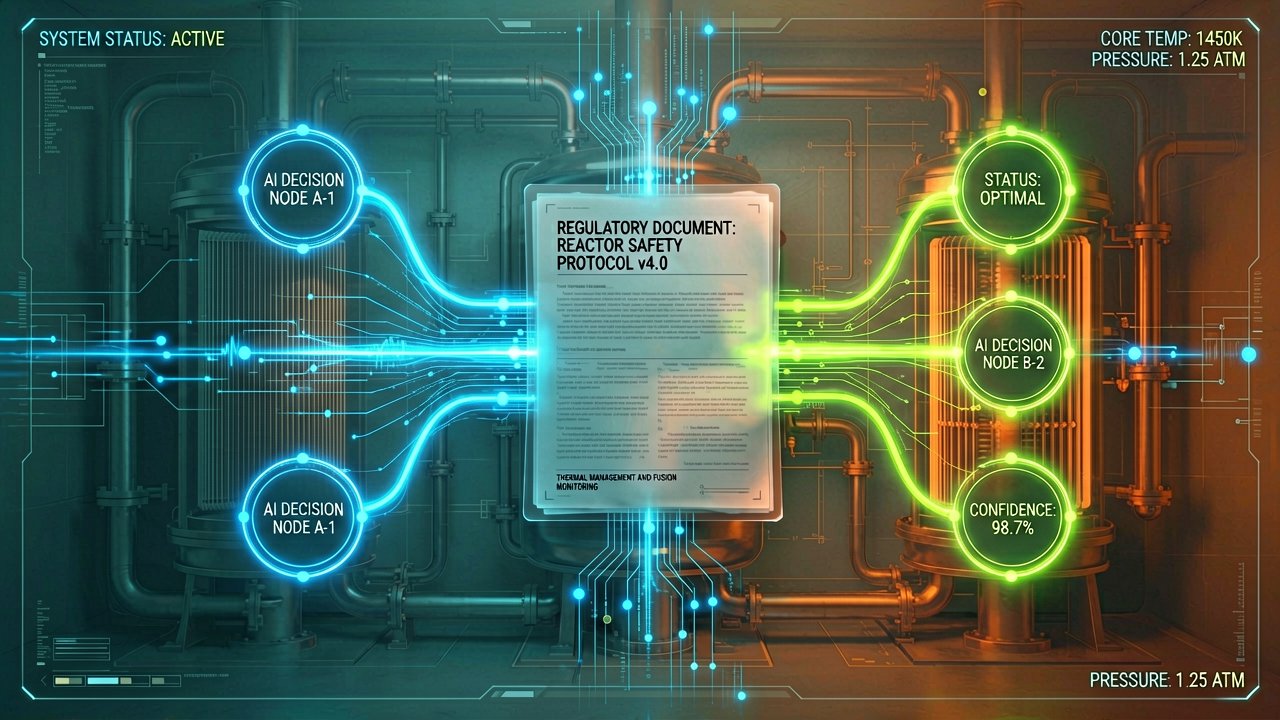
When we talk about artificial intelligence, the conversation usually drifts toward silicon valley boardrooms or the latest chatbot glitz. But in Jeju, Korea, the stakes were considerably heavier. The International RegLab Project recently wrapped up its second "Deep Dive" workshop, a high-stakes "sandbox" exercise co-hosted by the OECD Nuclear Energy Agency (NEA) and the Korea Atomic Energy Research Institute (KAERI). This wasn't your average tech seminar; it was a gathering of the minds responsible for ensuring that as we hand more control to algorithms, our nuclear plants don't just get smarter—they stay unshakeably safe.
The core of the workshop centered on a provocative question: can we trust AI to manage the critical guts of a nuclear reactor? Industry veterans, regulators, and tech pioneers spent their time stress-testing scenarios ranging from human-supervised machine learning to fully autonomous AI agents. Specifically, they looked at how AI might optimize equipment reliability and maintenance planning, essentially trying to find the sweet spot where efficiency meets the rigorous safety standards of the nuclear world. It’s a delicate dance between the "move fast and break things" ethos of AI and the "never, ever break anything" reality of nuclear energy.
What makes the RegLab approach unique is its focus on "regulatory sandboxing." It’s a safe space where innovators can pitch disruptive tech without the immediate hammer of compliance falling, allowing regulators to understand the tech before they have to rule on it. In Korea, the focus wasn't just on the code, but on the "explainability" of these systems. After all, if an AI decides to throttle a cooling system, the human operators—and the regulators—need to know exactly why. As the industry looks toward 2026 for the next phase of virtual workshops on remote operations, it’s clear that the "AI playbook" for nuclear is being written in real-time, with Korea serving as a critical testing ground for the global stage.
Breaking Down the Sandbox: How Regulators Are Catching Up
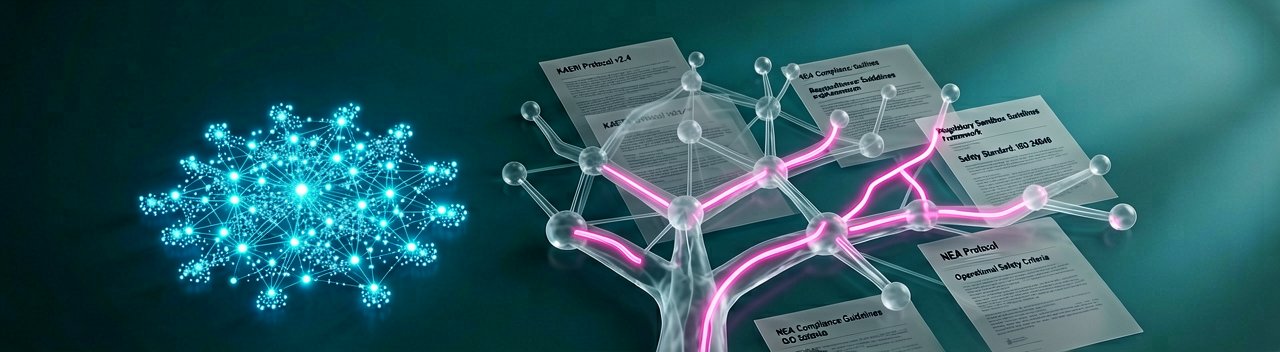
The traditional regulatory process is, by design, slow and methodical. AI, however, is anything but. The RegLab initiative bridges this gap by bringing together diverse representatives from national laboratories and private licensees to identify "blockers" early. During the Jeju sessions, the group dug into the weeds of the INPO AP-913 and AP-928 processes—industry-standard frameworks for equipment reliability—to see where AI agents could shave off risk without introducing new, unforeseen vulnerabilities. It's about building a framework where "regulatory-grade evidence" is baked into the AI development lifecycle from day one.
The Road Ahead: From Jeju to Global Standards
The findings from this Korean deep dive aren't destined for a dusty shelf; they’re slated for a public report that will likely influence how international bodies like the IAEA approach digital twins and autonomous systems. There's a growing consensus that the biggest hurdle isn't the math behind the AI—it’s the data governance and the cultural shift required to integrate these tools into existing engineering workflows. As the sector eyes the deployment of Small Modular Reactors (SMRs), the lessons learned in Korea about balancing innovation with public trust will be the foundation for the next generation of carbon-free power.
Beyond the Regulatory Red Tape: The real drama of the RegLab Deep Dive in Korea wasn't found in the lines of code, but in the intense negotiations between two very different worlds: the "fail-safe" veterans of nuclear engineering and the "optimization-first" data scientists. Historically, the nuclear sector has been an island of isolation, relying on deterministic models where every outcome is predicted by rigid physics. Introducing AI agents into this environment is more than a technical upgrade; it is a fundamental shift in the philosophy of control. A seasoned observer would note that the tension in Jeju wasn't about whether AI works, but whether its decision-making processes can ever be truly "auditable" in the event of a catastrophic edge case.
Stakeholders from the Korea Atomic Energy Research Institute (KAERI) brought a unique perspective to the table, rooted in the country's aggressive pursuit of advanced reactor designs. While Western regulators often lean toward extreme caution, the Korean context involves a strategic push to integrate "Digital Twins" that simulate reactor behavior in real-time. This creates a fascinating laboratory for global policy. During the workshop, the discussion pivoted frequently to the "black box" problem—the inherent difficulty in tracing how a deep-learning model arrives at a specific maintenance recommendation. For a regulator, a recommendation that cannot be explained is a recommendation that cannot be approved, regardless of its accuracy.
What most dry reports miss is the psychological shift required for the human operators. We are moving toward a "human-on-the-loop" rather than "human-in-the-loop" architecture. In this new paradigm, the AI monitors thousands of sensors simultaneously—a task impossible for a human brain—and only flags the operator when a deviation occurs. The experts in Korea spent significant time debating the "automation bias" where operators might stop questioning the AI's prompts. To counter this, the OECD Nuclear Energy Agency is pushing for frameworks that require AI systems to present "counter-factuals," essentially forcing the machine to explain what it would do if the sensor data were slightly different.
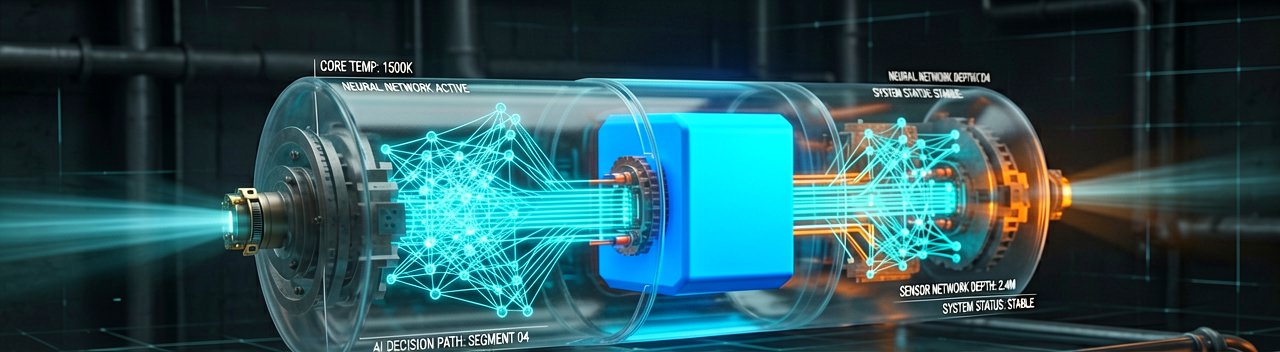
The historical context of the industry also looms large over these discussions. The nuclear field is still haunted by the legacy of past accidents where human error or misinterpreted data led to disaster. This history makes the adoption of AI a double-edged sword. On one hand, AI can eliminate the fatigue and oversight that lead to human mistakes; on the other, it introduces a new category of "algorithmic risk" that the industry has no historical data to quantify. The Jeju deep dive served as a reality check, forcing developers to map their algorithms against the "Defense in Depth" principle—a layered safety strategy that has been the bedrock of nuclear safety for half a century.
Ultimately, the "sandbox" exercise in Korea proved that the path to autonomous nuclear operations is paved with incrementalism. Rather than jumping to AI-controlled control rods, the consensus is to start with "Equipment Reliability" and maintenance scheduling—low-stakes areas where the AI can prove its worth without compromising the reactor core. This conservative approach allows regulators to build a library of evidence and trust. By the time the project moves to its 2026 milestones, the goal is to have a standardized global language for AI safety, ensuring that a "safe" algorithm in Korea meets the same rigorous scrutiny as one in France or the United States.
The Architecture of Trust: Explainable AI in High-Hazard Zones
The technical takeaway from the workshop focused heavily on the distinction between "narrow AI" and "general AI." For nuclear applications, the focus is strictly on narrow models trained on specific sensor suites. The challenge remains the quality of training data; nuclear plants are so safe that there is very little "failure data" to train a machine on what a meltdown actually looks like in its early stages. Engineers are now looking at synthetic data—simulations of accidents—to teach the AI. This creates a meta-layer of risk: if the simulation is wrong, the AI’s understanding of safety is flawed from the start, making the validation of these simulators the next great frontier for nuclear regulators.
Reading Between the Lines: There is a seductive, almost dangerous optimism in the idea that AI can solve the nuclear industry’s "efficiency problem" without introducing a catastrophic new variable. While the RegLab Deep Dive in Korea is being lauded as a milestone in international cooperation, a more cynical eye reveals a fundamental contradiction. The nuclear industry is built on the bedrock of total predictability, yet the very nature of modern machine learning—specifically deep neural networks—is probabilistic and often opaque. We are essentially trying to fit a "black box" into a system that, by law and logic, requires absolute transparency. The industry’s insistence that AI will enhance safety assumes that we can accurately model every failure mode, yet history teaches us that nuclear incidents almost always stem from the "unknown unknowns" that no training set can fully capture.
The reliance on "regulatory sandboxes" also warrants a healthy dose of skepticism. While these controlled environments allow for a free exchange of ideas between entities like KAERI and the NEA, they risk becoming an echo chamber for tech-evangelism. There is a palpable pressure to "digitize or die" as nuclear energy fights to remain relevant in a decarbonizing world increasingly enamored with renewables. By accelerating the adoption of AI to lower operational costs, the industry may be trading manageable human error for systemic algorithmic fragility. If an AI agent optimizes a cooling cycle to the razor’s edge of efficiency to save costs, the margin for error effectively vanishes, leaving human operators with less time to react when the "optimized" system eventually encounters a real-world anomaly.
Furthermore, the projection toward 2026 for remote operations and fully autonomous maintenance implies a level of digital infrastructure maturity that simply doesn't exist in many aging reactor fleets. Most currently operating plants are analog relics; retrofitting them with the thousands of high-fidelity sensors required for an AI "Digital Twin" is a Herculean task that is often glossed over in workshop summaries. The cost of this digital overhaul could ironically negate the very financial efficiencies the AI was intended to provide. We must ask whether the push for AI is a genuine safety evolution or a sophisticated marketing pivot intended to make a 70-year-old technology look "modern" to venture capitalists and green-energy advocates.
Finally, the geopolitical dimension cannot be ignored. As Korea leads the charge in these workshops, a fragmented global regulatory landscape remains the biggest hurdle. An AI safety protocol developed in Jeju may mean very little if the underlying data sovereignty laws in Europe or the liability frameworks in the United States remain incompatible. The dream of a "universal AI reactor pilot" is a noble one, but it ignores the reality that nuclear regulation is as much about national pride and local politics as it is about physics. Without a unified global enforcement mechanism, these deep dives remain academic exercises in a world where the next generation of reactors—Small Modular Reactors (SMRs)—will need to be deployed at scale to make a difference.
The Ghost in the Reactor: When Algorithms Meet Atomic Reality
The most profound implication of the RegLab findings is the eventual erosion of human agency in the control room. As we train machines to monitor equipment reliability, we are inadvertently training the next generation of nuclear engineers to trust the dashboard over their own intuition. This "de-skilling" of the workforce is a silent risk factor that rarely makes it into the high-level policy briefs. If the future of nuclear safety depends on an algorithm that was trained on a simulator rather than decades of hands-on mechanical experience, we have fundamentally changed the nature of what it means to "safeguard" a reactor. The industry is betting that the precision of the machine will always outweigh the unpredictability of the human, a wager that has historically high stakes in the atomic age.
"We are currently teaching computers how to manage nuclear reactors because humans are prone to making mistakes—ironically forgetting that it was humans who wrote the code, humans who picked the training data, and humans who decided that 'efficient' was a good synonym for 'safe' in a building filled with uranium."
Artūras Malašauskas is an AI Systems Integrator with 20+ years of production-grade web engineering experience. He has designed, shipped, and scaled enterprise Python/PHP systems for logistics, SaaS, and public-sector clients. For the past year, he has focused exclusively on AI integrations: deploying open-source LLMs, building generative media pipelines (image, audio, video), and engineering multi-agent workflows for real production environments. His standard: reproducibility, security, cost-efficient inference—no vaporware. He documents and evaluates emerging AI tooling, separating verified capabilities from marketing noise. Technical editor at: muza-ai.eu, ai-verslas.lt, ai-naujinos.lt Connect on LinkedIn
Comments