Google I/O 2026: Gemini Finally Gets to Work in the Agentic Era

For years, we’ve been told that AI would eventually stop just chatting and start doing. At Google I/O 2026, that "eventually" finally arrived with a focused, almost obsessive pivot toward what Mountain View is calling the "agentic era." It’s a shift from the reactive chatbots we’ve grown accustomed to toward proactive agents that don't just answer your questions but actually execute your to-do list. The star of the show was undoubtedly Gemini Spark, a 24/7 personal agent that lives in the cloud, meaning it keeps grinding away at your spreadsheets and unread emails even after you’ve shut your laptop for the night.
The technical backbone of this leap is the new Gemini 3.5 Flash, a model engineered specifically for "long-horizon" tasks—industry speak for jobs that require multiple steps and a bit of actual reasoning. According to the Google Blog, these agents aren't just limited to the browser; they’re deeply woven into the fabric of Android through a new UI space called Android Halo. It’s a clear signal that Google isn’t just adding features; it’s attempting a full platform reset that merges the utility of an assistant with the autonomy of a digital employee.
The Rise of the Autonomous Assistant
While the keynote had its share of the usual hype, the meat was in the autonomous capabilities. Gemini Spark is designed to handle the "high-stakes" stuff—think booking travel or managing a small business inbox—while checking in for permission before it actually hits "buy" or "send." It’s a delicate balance between helpfulness and overreach. For those deep in the ecosystem, the integration with Google Antigravity and the new Gemini Omni model means the AI can now understand and manipulate video and real-world environments with a level of "world understanding" that makes previous versions look like simple text predictors.
Hardware Finds Its Voice
We also saw Google finally lean into wearable AI without the "glasshole" baggage of a decade ago. The new "audio glasses," born from collaborations with brands like Warby Parker, focus on being stylish first and techy second. They deliver information directly to your ears—summarizing notifications or translating signs in real-time—without the need for a bulky visor. As noted by Mashable, these are essentially Google’s answer to the Meta Ray-Bans, but with a much heavier emphasis on agentic integration through Gemini. It’s a subtle but significant step toward a post-smartphone future where your agent is always on, even when your screen is off.
A Search Engine That Builds Itself
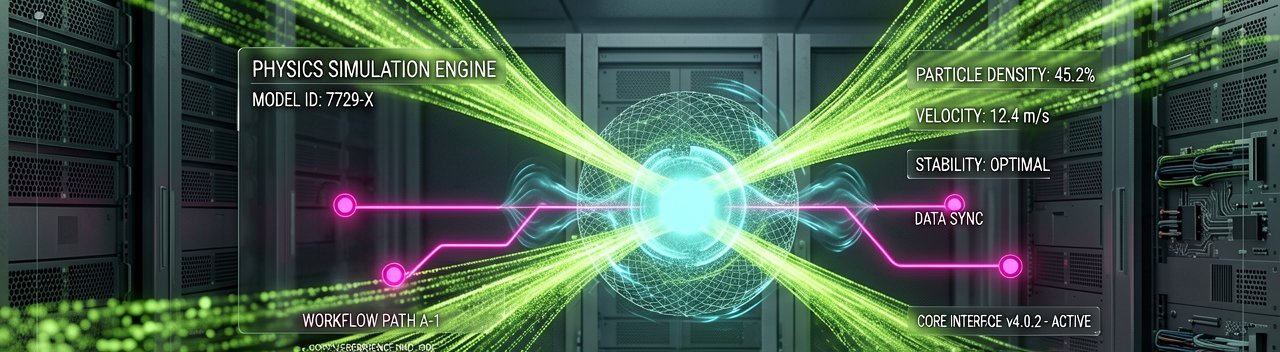
Even Search isn't immune to the agentic makeover. Google introduced "generative UI," a feature where Search doesn't just find an answer; it builds a custom widget or interactive visualization on the fly to explain it. If you're asking about complex physics, it won't just give you a link; it'll code a real-time simulation you can play with right there in the results. It feels like the search engine is finally graduating from being a librarian to becoming a tutor, marking a definitive end to the era of the static blue link.
The Hidden Architecture of Autonomy
Beyond the Keynote Glitz: What the shiny stage demos didn't emphasize is the radical restructuring of Google’s data centers required to keep Gemini Spark humming in the background. For an agent to be truly "agentic," it needs more than just a large context window; it requires a persistent memory state that doesn't reset every time a session ends. This "Long-Term Memory Tier" represents a departure from the stateless architecture of early LLMs, allowing the AI to remember your preference for boutique hotels or your specific formatting quirks in Google Sheets from three months ago. It is a monumental shift toward personalization that turns the AI into a living digital twin rather than a temporary utility.
Industry insiders have pointed out that this push into autonomy is as much about defending the moat as it is about innovation. As startups like Perplexity and OpenAI's Sora have nipped at Google’s heels, Mountain View has pivoted to the one thing it owns that no one else does: the entire productivity stack. By locking Gemini into Workspace, Google is betting that users won't switch to a competitor if it means losing an agent that already knows their calendar, their budget history, and their team’s communication style. This "platform stickiness" is the quiet subtext of the agentic era, designed to make the Google ecosystem feel like an indispensable nervous system for modern work.
However, the stakeholder perspective isn't entirely rosy. Privacy advocates and regulatory bodies are already eyeing the "Android Halo" integration with skepticism. Granting an agent permission to act on a user’s behalf—essentially giving it the keys to the credit card and the inbox—creates a massive security surface area. During the post-keynote briefings, Google engineers stressed the implementation of "Human-in-the-Loop" checkpoints, but the tension remains: the more an agent asks for permission, the less useful it becomes. Balancing that friction is the technical and ethical tightrope Google must walk over the next fiscal year.
Historically, Google’s greatest struggle has been the transition from experimental labs to consumer-ready reliability. We saw this with the early days of Google Assistant, which often felt like a series of disjointed voice commands rather than a cohesive intelligence. Gemini Spark is the first real attempt to solve that fragmentation by using a unified multimodal backbone. According to analysis from The Verge, the success of this era depends on whether Google can move past its reputation for "beta-testing in public" and deliver a service that doesn't just hallucinate tasks into existence. The stakes are higher now because a hallucinated email to a boss is far more damaging than a wrong answer about trivia.
The move toward "generative UI" in Search also signals a fundamental change in the internet’s economy. If Gemini is building custom widgets to answer queries, the flow of traffic to independent websites—the very fuel that powered Google for decades—could dry up. This creates a parasitic dilemma where the agent relies on the web for training data while simultaneously making it unnecessary for users to ever visit the source. Publishers are already demanding a "compute-for-content" exchange, a negotiation that will likely define the legal landscape of the agentic era well into 2027.
Ultimately, I/O 2026 wasn't just about faster chips or smarter code; it was a philosophical statement on the role of the machine. Google is no longer content being the world’s index; it wants to be the world’s executor. Whether users are ready to hand over the steering wheel to an algorithm that never sleeps is the trillion-dollar question hanging over the Googleplex. For now, the "agentic" label serves as both a promise of productivity and a warning that the line between tool and teammate has officially vanished.
The Friction of the Frictionless Future
Reading Between the Lines: The industry’s sudden obsession with "frictionless" agents ignores a fundamental truth about human-computer interaction: friction is often where our agency lives. Google’s vision of a proactive Gemini that handles the drudgery of life assumes that we all share a universal definition of what constitutes a "minor task." By automating the small decisions—the wording of a RSVP, the scheduling of a haircut, the sorting of a folder—Google is essentially deciding what parts of our lives are worth our attention. This isn't just a technical upgrade; it’s an editorialization of the human experience, mediated by a model that prioritizes efficiency over the nuance of personal touch.
There is also a glaring contradiction in the business model of an autonomous search engine. Google’s primary revenue remains tethered to an auction system built on clicks, yet Gemini Spark is designed to ensure you never have to click again. If the agent successfully bookings your flight and buys your groceries within the "Android Halo" interface, the traditional ad-supported web becomes a ghost town. We are witnessing a company in the midst of a high-stakes pivot, attempting to cannibalize its own search monopoly before a competitor does it first. The result is a messy middle ground where the AI tries to be your loyal servant while still finding ways to whisper "sponsored" suggestions into your digital ear.
Projecting into 2027, the real bottleneck won't be the intelligence of the models, but the "trust gap" inherent in multi-step execution. It’s one thing to trust an AI to summarize a meeting; it’s quite another to let it negotiate a contract or manage a household budget. One poorly timed "hallucination" in a financial transaction could set the agentic movement back by years. While the keynote focused on the successes, the technical reality of "long-horizon" tasks is that error rates compound with every additional step. Google is betting that the convenience will eventually outweigh the inevitable "agentic oopsies" that will flood social media the moment these tools hit the general public.
Furthermore, the environmental cost of a 24/7 "always-on" personal agent is the elephant in the room that Mountain View barely acknowledged. Running billions of background processes to keep personal agents "thinking" and "remembering" requires a staggering amount of compute power. This contradicts Google’s own sustainability goals, creating a paradox where the "efficiency" gained by the user is offset by the massive carbon footprint of the data centers powering their digital twin. The agentic era might save us ten minutes of scheduling a week, but the hidden cost is written in megawatts and specialized cooling systems.
The transition from a tool you use to a teammate you manage also shifts the burden of labor rather than eliminating it. We are moving from being "doers" to being "editors-in-chief" of our own lives. You still have to review the agent's work, verify its sources, and double-check its bookings. For many, this "managerial overhead" might prove more exhausting than just doing the task themselves. Google’s hope is that Gemini will eventually become so reliable that we stop checking its work, but that level of blind faith in a black-box algorithm feels more like a vulnerability than a feature.
Google has finally given us a digital assistant that can do everything we’re too busy to do ourselves, which is great, because now we can spend all that saved time watching the assistant to make sure it doesn't accidentally join a cult or buy a fleet of jet skis on our behalf.
Artūras Malašauskas is an AI Systems Integrator with 20+ years of production-grade web engineering experience. He has designed, shipped, and scaled enterprise Python/PHP systems for logistics, SaaS, and public-sector clients. For the past year, he has focused exclusively on AI integrations: deploying open-source LLMs, building generative media pipelines (image, audio, video), and engineering multi-agent workflows for real production environments. His standard: reproducibility, security, cost-efficient inference—no vaporware. He documents and evaluates emerging AI tooling, separating verified capabilities from marketing noise. Technical editor at: muza-ai.eu, ai-verslas.lt, ai-naujinos.lt Connect on LinkedIn
Comments