The Sentinel of Silicon: How Lichao Sun is Hardening the Future of AI

If you’ve spent any time tracking the breakneck speed of generative AI, you know the vibe: it’s a gold rush, but the floor is occasionally lava. Enter Dr. Lichao Sun, an Assistant Professor at Lehigh University who has made it his mission to ensure that as we build bigger and bolder models, we don't accidentally leave the back door wide open. Sun isn't just another academic chasing citations; he's a specialist in AI security and privacy, acting as a sort of digital locksmith for the most complex systems humanity has ever built. With a resume that spans heavyweights like Microsoft Research and Salesforce, he’s seen firsthand where the cracks begin to show in the foundation.
Sun’s work isn't confined to theoretical "what-ifs." He’s deep in the trenches of practical application, particularly through his Directorship at the LAIR Lab and his role as an Adjunct Professor at the Mayo Clinic. This dual-citizenship in both the tech and medical worlds has birthed projects like BiomedGPT, an open-source vision-language model designed to help doctors interpret images and synthesize medical literature. It's a high-stakes arena—in healthcare, an AI "hallucination" isn't just a funny quirk; it’s a liability. By focusing on "trustworthy" machine learning, Sun is pushing for a world where we can actually rely on these tools when lives are on the line.
Building the "Dr. Claw" of Research
Most recently, Sun has been making waves with "Dr. Claw," an open-source AI assistant that's basically a shot of espresso for the scientific workflow. Launched in early 2024, the tool has already gained massive traction on GitHub for its ability to help researchers navigate the increasingly crowded landscape of scientific discovery. According to reports from EurekAlert!, the goal is to transform research timelines that used to take months into weeks. It’s an ambitious play to democratize high-level research capabilities, moving them out of the exclusive hands of "Big Tech" and back into the campus labs where the next big breakthroughs are usually born.
A Legacy of Resilience
Sun’s academic journey—from his Ph.D. at the University of Illinois at Chicago to his current standing as a recipient of the 2024 OpenAI Researcher Award—is defined by a consistent thread: resilience. Whether he’s investigating how "alignment" in models might ironically increase implicit bias or developing new benchmarks for outlier detection in graphs, he’s looking for the edge cases that others miss. He doesn't just want AI that works; he wants AI that can take a punch and keep its secrets safe. In an era where "move fast and break things" is the default setting, Sun is the one reminding us to check the locks before we leave the house.
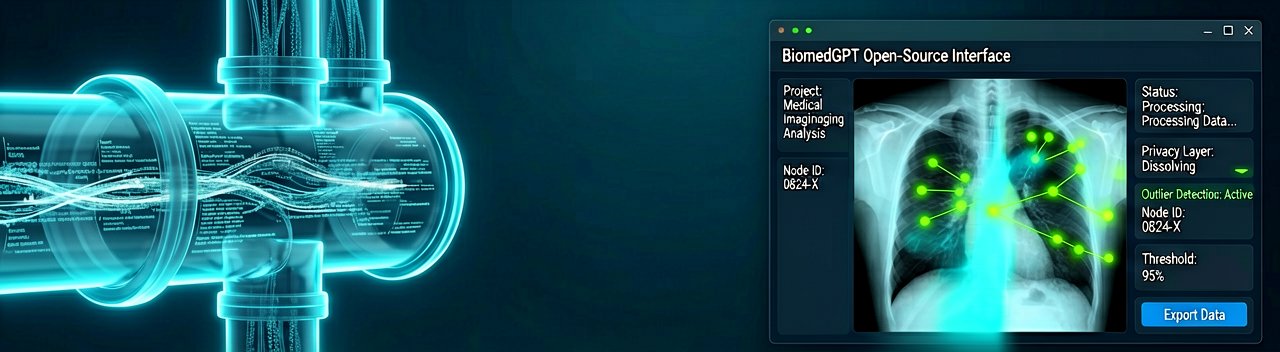
The Hidden Architecture of Trust
The High-Stakes Gamble of Alignment: While most of the tech world is obsessed with how fast a chatbot can pass the Bar Exam, Lichao Sun is focused on the uncomfortable reality of what happens when those same models are "lobotomized" for safety. A seasoned reporter looks past the polished UI and sees the friction between utility and security. Sun’s research into Large Language Model (LLM) alignment suggests that the very guardrails we install to keep AI polite might actually introduce new, subtle vulnerabilities. It is a classic engineering paradox: the more you harden a system against one specific threat, the more rigid and predictable—and therefore exploitable—it might become in an adversarial environment.
Stakeholders in the privacy sector are particularly keyed into Sun’s work regarding data leakage. In the rush to fine-tune models on proprietary medical or corporate data, there is a recurring nightmare that the model will eventually "regurgitate" sensitive training information to a clever prompter. Sun’s background with the Mayo Clinic gives him a unique vantage point on this. In clinical settings, the "black box" nature of AI isn't just a philosophical problem; it’s a regulatory wall. His push for trustworthy machine learning is essentially an attempt to build a glass box—one where the decision-making process is transparent enough to be audited but secure enough to protect patient confidentiality.
The historical context of Sun’s trajectory mirrors the broader shift in Silicon Valley from "innovation at all costs" to "defensive scaling." Ten years ago, security was often an afterthought, a patch applied after a breach occurred. Today, thanks to researchers like Sun, security is being "shifted left" into the earliest stages of model architecture. His 2024 OpenAI Researcher Award wasn't just a nod to his past papers; it was a recognition that the industry cannot move forward without a robust framework for handling outliers. If a model cannot identify when it is being fed "garbage" or malicious data, it becomes a liability rather than an asset.
Beyond the code, there is a human element to Sun’s advocacy for open-source tools like BiomedGPT and Dr. Claw. There is a palpable tension between the closed-door labs of trillion-dollar tech giants and the academic spirit of open inquiry. Sun’s decision to keep his most impactful tools open-source serves as a check on the monopolization of AI knowledge. By providing the scientific community with the equivalent of a high-powered microscope, he ensures that the next generation of researchers isn't dependent on a proprietary API to conduct life-saving work. It is a democratization of power that shifts the narrative from corporate dominance back to collaborative discovery.
Ultimately, Sun’s work sits at the intersection of extreme technicality and broad social impact. He is navigating a world where a single misplaced parameter can result in a biased medical diagnosis or a leaked social security number. His career is a testament to the fact that the most important parts of the AI revolution aren't the flashy demos, but the invisible layers of defense that prevent the whole system from collapsing under its own complexity. As we move toward more autonomous systems, the role of the "digital locksmith" becomes the most critical job in the room, ensuring the door only opens for those with the right keys.
The Paradox of the Protected Model
The Double-Edged Sword of Safety: Industry consensus often assumes that more safety training leads to a "better" AI, but Sun’s analytical deep dives suggest a more complicated trade-off. There is a simmering contradiction in the current push for model alignment: as we force AI to be more "honest" and "harmless," we may be inadvertently making it more brittle. By narrowing the statistical distribution of a model’s outputs to stay within safe bounds, we risk stripping away the creative variance that makes these systems useful for scientific discovery. Sun’s work in outlier detection highlights this tension—if an AI is trained too strictly to ignore the "weird" data, it might miss the very anomalies that signal a medical breakthrough or a novel security threat.
There is also a healthy dose of skepticism to be found in the "open-source vs. safety" debate, a theater where Sun is a central actor. While he champions open tools like Dr. Claw to democratize research, critics argue that releasing the blueprints for powerful models is essentially handing a master key to bad actors. Sun’s counter-logic, however, is grounded in the "security through transparency" school of thought. He operates on the pragmatic belief that a closed system is not necessarily a secure one—it is simply a system whose flaws haven't been found by the right people yet. By putting his frameworks in the public eye, he is betting that a thousand eyes are better at spotting a crack than a handful of corporate engineers behind a firewall.
Projecting into the next decade, the implications of Sun’s "Trustworthy AI" mission suggest a future where the role of the AI researcher shifts from creator to auditor. We are rapidly approaching a ceiling where scaling—just adding more chips and more data—yields diminishing returns. The next frontier isn't "bigger" AI, but "reliable" AI. If Sun and his peers succeed, the flashy, unpredictable chatbots of today will be replaced by boring, predictable, and incredibly safe digital infrastructure. It’s a transition from the "Magic Eight Ball" era of AI to the "Scientific Calculator" era—less entertaining, perhaps, but infinitely more consequential for the survival of industries like healthcare and national defense.
Finally, we have to look at the stakeholder struggle over "data ownership" in the age of generative models. Sun’s work with the Mayo Clinic places him at the heart of a looming legal and ethical battlefield. As models become more adept at synthesizing medical knowledge, the question of who "owns" the resulting insights remains unanswered. If a model trained on a million anonymized patient records discovers a new diagnostic pattern, does that intellectual property belong to the hospital, the model creator, or the researcher who tuned the final layer? Sun’s technical solutions for privacy are a vital stopgap, but they cannot solve the underlying power struggle over who gets to profit from the collective data of humanity.
We are currently spending billions of dollars to build machines that can outthink us, while simultaneously hiring guys like Lichao Sun to make sure they don’t actually do anything we didn't tell them to. It’s a bit like building a supersonic jet and then realizing you forgot to invent the brakes—thankfully, someone is finally reading the manual.
Artūras Malašauskas is an AI Systems Integrator with 20+ years of production-grade web engineering experience. He has designed, shipped, and scaled enterprise Python/PHP systems for logistics, SaaS, and public-sector clients. For the past year, he has focused exclusively on AI integrations: deploying open-source LLMs, building generative media pipelines (image, audio, video), and engineering multi-agent workflows for real production environments. His standard: reproducibility, security, cost-efficient inference—no vaporware. He documents and evaluates emerging AI tooling, separating verified capabilities from marketing noise. Technical editor at: muza-ai.eu, ai-verslas.lt, ai-naujinos.lt Connect on LinkedIn
Comments